Introduction
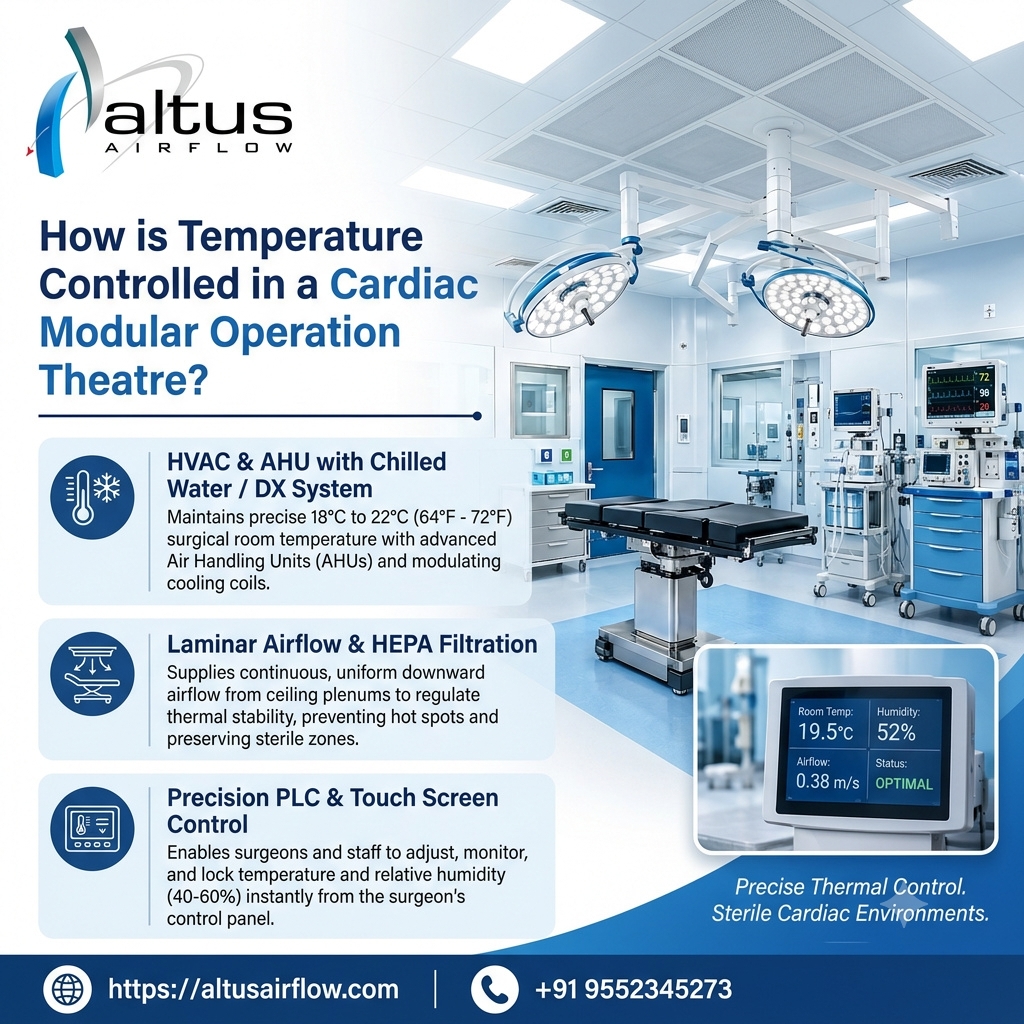
Altus Airflow specialises in modular healthcare infrastructure designed to support controlled and hygienic surgical environments. Temperature management is an essential part of a Cardiac Modular Operation Theatre because it helps maintain suitable conditions for patients, surgical teams, and sensitive medical equipment. A properly designed HVAC system, accurate sensors, automated controls, effective air distribution, and regular monitoring work together to maintain the required temperature range. Careful planning also helps manage humidity, ventilation, and pressure conditions while supporting the hospital's infection prevention and operational requirements.
1. Understanding the Importance of Temperature Control
Temperature control is a fundamental requirement in a cardiac operating theatre. Surgical procedures may involve extended operating times, specialised equipment, multiple staff members, and patients who require close environmental management.
An unsuitable room temperature can create discomfort for surgical personnel and may affect the operating environment. Excessive heat can also increase the cooling demand placed on medical equipment and ventilation systems. On the other hand, excessively low temperatures may contribute to patient discomfort and require additional clinical warming measures.
The temperature setting should therefore be determined according to the theatre's clinical use, applicable healthcare standards, equipment requirements, and hospital policies. It should not be selected using a single universal value for every cardiac procedure.
2. HVAC Systems for Accurate Temperature Regulation
The Heating, Ventilation, and Air Conditioning (HVAC) system is the primary infrastructure used to regulate operating theatre temperature. It manages the supply of conditioned air and helps maintain the environmental conditions specified for the room.
An HVAC system generally includes air-handling units, cooling and heating components, filters, fans, ductwork, dampers, and control devices. These components work together to deliver conditioned air at the required temperature and airflow rate.
During the design stage, engineers calculate the cooling and heating loads by considering room dimensions, lighting, equipment, occupancy, external heat gains, and operating conditions. Correct system sizing is important because an oversized or undersized system may struggle to maintain stable conditions efficiently.
Regular inspection and maintenance help ensure that the HVAC system continues to operate according to its approved design.
3. Temperature Sensors and Monitoring Devices
Accurate temperature measurement is necessary for effective environmental control. Temperature sensors are installed at suitable locations to measure room conditions and provide information to the HVAC control system.
The placement of sensors matters. They should be positioned where readings represent the occupied environment rather than being directly affected by supply air outlets, heat-producing equipment, or external influences.
Digital temperature displays allow authorised staff to check room conditions. Depending on the system design, monitoring devices may also record readings over time and provide alerts when values move outside approved limits.
Sensors require periodic calibration and functional checks. Incorrect readings can cause the HVAC system to respond improperly, resulting in temperature fluctuations or unnecessary energy consumption.
4. Automated Temperature Control Systems
Modern operating theatres can use automated control systems to maintain more consistent environmental conditions. These systems receive information from temperature sensors and adjust HVAC components according to programmed settings.
For example, when the room temperature rises above the approved setpoint, the control system can increase cooling output or adjust the relevant airflow controls. When the required temperature is reached, the system can reduce its output as appropriate.
Automation can also support scheduled operation, system status monitoring, and fault notifications. Integration with a building management system may allow facility teams to monitor selected parameters from a central location.
However, automated controls must be configured and commissioned correctly. Manual override arrangements, alarm procedures, and access controls should be established according to hospital operational requirements.
5. Air Distribution and Uniform Cooling
Maintaining the correct temperature throughout the operating theatre requires more than installing an air-conditioning unit. Air must be distributed appropriately so that different areas of the room do not experience significant temperature variations.
Supply air outlets, return air grilles, ductwork, and airflow patterns should be planned according to the room layout and ventilation design. Poorly positioned outlets may create uncomfortable drafts or areas where heat accumulates.
Medical pendants, surgical lights, imaging equipment, and other installations can influence airflow distribution. Engineers should consider these components while designing the ventilation arrangement.
Air balancing after installation helps verify that the system delivers the intended airflow. Measurements can identify areas requiring adjustment to improve temperature consistency and overall ventilation performance.
6. Managing Heat Generated by Surgical Equipment
Cardiac operating theatres contain several types of equipment that generate heat during operation. Surgical lights, monitors, imaging devices, computers, and other electrical systems can contribute to the room's cooling load.
If these heat sources are not considered during HVAC planning, the system may struggle to maintain the required temperature during procedures.
Engineers assess equipment specifications and expected operating conditions when calculating the cooling load. Equipment placement and ventilation clearances should also be considered to support effective heat removal.
Where appropriate, efficient lighting and energy-conscious equipment choices can reduce unnecessary heat generation. However, equipment selection must always prioritise clinical performance and compatibility with the intended procedures.
7. Controlling Humidity Alongside Temperature
Temperature and relative humidity are closely connected in operating theatre environmental management. Even when the room temperature is within its approved range, unsuitable humidity levels can affect comfort, condensation risk, and the performance of certain materials or equipment.
The HVAC system may include humidity-control components to maintain the specified relative humidity range. Depending on the design, these may involve cooling coils, dehumidification arrangements, humidifiers, and control sensors.
Humidity sensors should be positioned and maintained appropriately to provide reliable readings. Monitoring systems can alert facility teams when humidity moves outside the approved limits.
Temperature and humidity should be considered together during system design and commissioning. The required limits must follow the applicable standards and the hospital's approved specifications.
8. Maintaining Suitable Filtration and Air Quality
Air filtration is another important part of operating theatre environmental management. Filters help remove airborne particles from the air supplied to the room, while the HVAC system maintains the required ventilation and environmental conditions.
Depending on the theatre's design, filtration may include multiple stages and HEPA filters where specified. Filter selection and installation must be compatible with the air-handling unit and required airflow.
Blocked or poorly maintained filters can increase system resistance and affect airflow delivery. This may also influence the HVAC system's ability to maintain stable temperature conditions.
A preventive maintenance programme should include filter inspections, replacement according to manufacturer recommendations, and relevant testing. Filtration requirements should be established through the project's technical specifications and applicable standards.
9. Insulation and Modular Panel Design
The building envelope and modular panel system can influence how effectively an operating theatre maintains its temperature. Poor insulation or air leakage may increase heat transfer between the theatre and surrounding spaces.
Insulated modular wall and ceiling panels can help reduce unwanted heat exchange when selected and installed appropriately. Properly sealed joints and interfaces also limit uncontrolled air leakage.
Doors, windows, service openings, and ceiling penetrations should be reviewed during the design process. Gaps or damaged seals can affect both temperature stability and the intended pressure relationship between rooms.
Material selection should consider thermal performance, durability, cleanability, and compatibility with the operating theatre's hygiene requirements.
10. Door Management and Pressure Control
Operating theatre doors influence temperature stability because opening them can allow air exchange with adjacent spaces. Frequent or prolonged door openings may introduce air at a different temperature and disturb the intended pressure relationship.
Suitable door design and operating procedures help minimise these effects. Sealed doors can reduce uncontrolled leakage when closed, while automatic or hands-free operation may support convenient access.
The ventilation system must be designed to maintain the required pressure relationship under normal operating conditions. Supply and return air volumes should be balanced according to the approved design.
Hospital staff should follow access procedures that avoid unnecessary door openings during surgery. Pressure monitoring can help identify deviations that require investigation.
11. Regular Calibration and Preventive Maintenance
Temperature control depends on the continued performance of sensors, HVAC equipment, control panels, dampers, and other system components. A preventive maintenance programme helps identify faults before they cause significant environmental variations.
Maintenance activities may include:
Checking temperature and humidity sensors.
Calibrating monitoring devices as required.
Inspecting air-handling units and cooling components.
Checking filters and ductwork condition.
Reviewing control settings and alarm functions.
Inspecting dampers, fans, and air distribution outlets.
Recording maintenance activities and corrective actions.
The maintenance schedule should follow equipment manufacturers' instructions, hospital procedures, and applicable technical requirements.
12. Testing and Commissioning the Temperature Control System
Before a new or upgraded theatre is used for surgery, its environmental control systems should undergo appropriate testing and commissioning.
Commissioning verifies whether the installed HVAC system performs according to the approved design. Temperature measurements should be taken at suitable locations under defined operating conditions to assess consistency.
The testing process may also include humidity verification, airflow measurements, pressure differential checks, control-system testing, and alarm verification. The exact scope depends on the project specifications and relevant standards.
Any identified deviations should be investigated and corrected. Test results, calibration records, equipment details, and commissioning reports should be handed over to the hospital's facility management team.
Reassessment may also be necessary after significant HVAC modifications or changes to the room layout.
13. Energy-Efficient Temperature Management
Temperature control should provide the required environmental conditions without unnecessary energy consumption. Operating theatres may require continuous or carefully scheduled ventilation, so efficiency improvements must be planned without compromising clinical requirements.
Variable-speed fans, efficient motors, suitable cooling equipment, insulation, and automated controls can help reduce avoidable energy use. HVAC zoning may also support more efficient management where the building design and clinical requirements permit it.
Energy monitoring can help facility teams identify unusual consumption patterns and investigate system inefficiencies. Regular maintenance also supports energy performance by keeping filters, coils, fans, and controls in suitable working condition.
Energy-saving settings must never override required ventilation, filtration, temperature, or pressure conditions.
14. Coordination Between Engineering and Clinical Teams
Successful temperature management requires cooperation between HVAC engineers, architects, biomedical engineers, hospital administrators, and clinical personnel.
Clinical teams can explain the operational needs of the theatre, including equipment use, surgical workflows, and environmental preferences. Engineers use this information to develop an appropriate HVAC and control strategy.
The final design should coordinate air outlets, return grilles, surgical lights, pendants, equipment locations, and monitoring devices. This reduces the risk of airflow obstruction and installation conflicts.
Clear operating procedures should explain how temperature readings are monitored, how alarms are handled, and who is responsible for responding to environmental deviations.
Conclusion
Temperature control in a cardiac operating theatre depends on coordinated HVAC engineering, accurate sensors, automated controls, effective air distribution, suitable insulation, and regular maintenance. Humidity, filtration, equipment heat loads, and door management must also be considered to maintain the approved environmental conditions.
A Cardiac Modular Operation Theatre should be designed and commissioned according to its clinical requirements and applicable technical standards. Altus Airflow focuses on modular healthcare infrastructure with attention to ventilation planning, environmental control, and coordinated system integration. Through proper design, testing, and preventive maintenance, Altus Airflow supports operating environments that are planned for reliable temperature management and long-term performance.
Frequently Asked Questions
1. How is temperature controlled in a Cardiac Modular Operation Theatre?
A Cardiac Modular Operation Theatre uses an HVAC system, temperature sensors, automated controls, and balanced air distribution to maintain the approved temperature range.
2. Why is temperature control important in a cardiac OT?
It supports a suitable environment for patients, surgical teams, medical equipment, and operating theatre activities.
3. What role does HVAC play in temperature management?
HVAC regulates heating, cooling, ventilation, and air distribution to maintain specified environmental conditions.
4. Can automated systems monitor OT temperature?
Yes. Digital sensors and control systems can monitor room temperature and provide alerts when readings move outside approved limits.
5. Does humidity affect operating theatre temperature control?
Yes. Temperature and humidity are managed together to maintain suitable environmental conditions and minimise condensation risks.
Read Our Previous Blog --------------->How often should HEPA filters be replaced in a Cardiac Modular OT With Laminar Airflow?