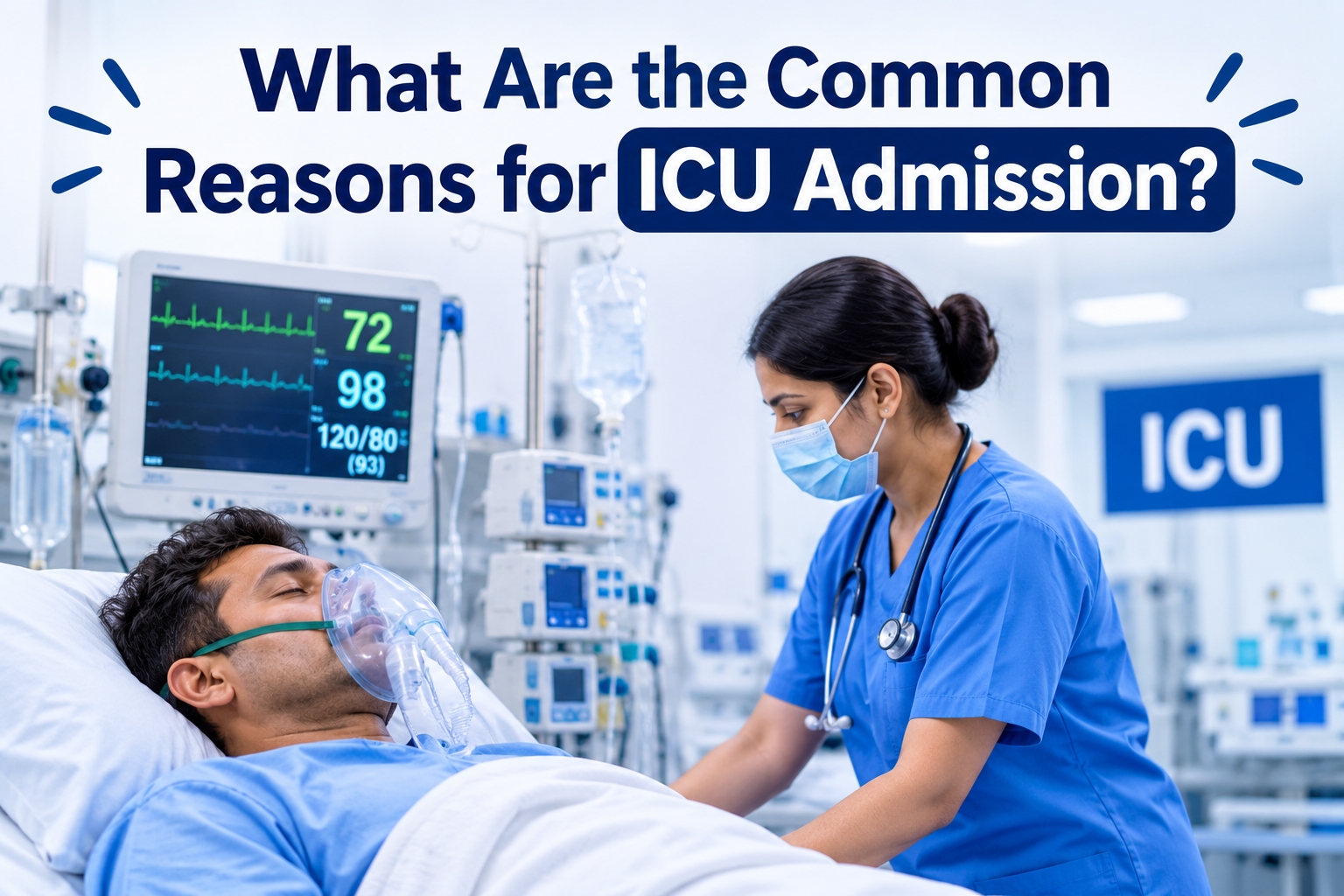
An Intensive Care Unit (ICU) is a specialised hospital department that provides care to patients with serious or life-threatening medical conditions. Patients admitted to the ICU require continuous monitoring, advanced medical support, and specialised treatment. ICU care becomes necessary when a person's health condition is too serious to be managed safely in a general hospital ward. Understanding the common reasons for ICU admission can help patients and their families recognise the importance of timely medical attention.
1. Severe Breathing Problems
One of the common reasons for ICU admission is difficulty in breathing. Certain respiratory conditions can reduce the amount of oxygen reaching the body's organs and tissues. When breathing becomes severely affected, patients may need immediate medical attention and respiratory support.
Conditions that may require ICU care include:
Severe pneumonia.
Acute respiratory distress syndrome (ARDS).
Serious asthma attacks.
Chronic obstructive pulmonary disease (COPD) complications.
Severe lung infections.
Doctors may provide oxygen therapy, medications, or ventilator support depending on the patient's condition. Continuous monitoring helps the medical team manage breathing difficulties and prevent further complications.
For patients requiring advanced respiratory support and specialised monitoring, choosing a well-equipped ICU Hospital in Jaipur can be important for receiving timely and appropriate critical care.
2. Heart-Related Emergencies
Serious heart conditions may require immediate ICU admission because they can affect the heart's ability to pump blood throughout the body.
Some common heart-related emergencies include:
Heart attack.
Severe heart failure.
Dangerous irregular heartbeats.
Cardiogenic shock.
Serious complications after cardiac surgery.
In the ICU, doctors continuously monitor heart rate, blood pressure, oxygen levels, and other important health parameters. Patients may also receive medications, specialised procedures, or other treatments depending on the severity of the condition.
3. Severe Infections and Sepsis
Infections can sometimes become serious and spread throughout the body. When the body's response to an infection causes organ dysfunction, the condition is known as sepsis. It can become life-threatening without prompt treatment.
Common infections that may lead to severe complications include pneumonia, urinary tract infections, abdominal infections, and bloodstream infections.
Patients with sepsis may experience:
High or unusually low body temperature.
Rapid heartbeat.
Difficulty breathing.
Confusion or disorientation.
Low blood pressure.
Reduced urine output.
ICU treatment may include antibiotics, intravenous fluids, oxygen support, and medications to maintain blood pressure. Doctors also monitor organ function to identify complications early.
4. Serious Accidents and Physical Injuries
Major accidents and traumatic injuries can cause damage to important organs and require immediate critical care. Patients involved in road accidents, falls, or other serious incidents may need ICU admission for close observation and specialised treatment.
Some injuries that may require intensive care include:
Severe head injuries.
Internal bleeding.
Multiple bone fractures with complications.
Chest injuries.
Damage to internal organs.
Severe burns.
The medical team monitors the patient's vital signs and provides necessary treatment to stabilise their condition. In some cases, emergency surgery may also be required.
5. Stroke and Other Neurological Emergencies
A stroke occurs when blood supply to a part of the brain is interrupted or when bleeding occurs inside the brain. It can affect movement, speech, memory, and other important body functions.
Some patients with severe strokes require ICU admission, particularly when they experience reduced consciousness, breathing difficulties, brain swelling, or other serious complications.
Other neurological conditions that may require intensive care include severe seizures, brain infections, and traumatic brain injuries.
ICU teams monitor neurological functions, breathing, and other vital signs while providing treatment to prevent further complications.
6. Complications After Major Surgery
Not every patient needs ICU care after surgery. However, some major operations may require close monitoring during the recovery period.
Patients may be admitted to the ICU after procedures such as:
Heart surgery.
Complex brain surgery.
Major abdominal surgery.
Organ transplantation.
Emergency trauma surgery.
ICU care helps doctors monitor blood pressure, heart function, breathing, bleeding, and other possible complications. It also allows medical professionals to provide immediate support if the patient's condition changes.
7. Kidney Failure and Other Organ Problems
Severe kidney problems can affect the body's ability to remove waste products and maintain fluid balance. When kidney failure occurs alongside other serious complications, ICU admission may become necessary.
Patients may require dialysis, fluid management, and continuous monitoring of important blood parameters.
Other organ-related conditions, such as liver failure and multiple organ dysfunction, may also require intensive care. Treatment depends on the underlying cause and the patient's overall health.
8. Severe Diabetes-Related Complications
Certain diabetes-related emergencies can become life-threatening and require ICU treatment.
Two examples include diabetic ketoacidosis (DKA) and hyperosmolar hyperglycemic state (HHS). These conditions can cause extremely high blood sugar levels, dehydration, and serious changes in the body's chemical balance.
Patients may experience excessive thirst, vomiting, weakness, confusion, or unconsciousness.
Treatment generally involves carefully managed fluids, insulin, electrolyte replacement, and continuous monitoring of blood sugar levels.
9. What Happens After ICU Admission?
After admission, the medical team first evaluates the patient's condition and identifies the immediate medical needs. Doctors, nurses, and other healthcare professionals work together to provide specialised treatment.
Common ICU care activities include:
Continuous monitoring of vital signs.
Oxygen therapy and ventilator support when required.
Administration of prescribed medications.
Management of fluids and nutrition.
Regular blood tests and other investigations.
Monitoring of organ functions.
Prevention of hospital-acquired infections.
The duration of an ICU stay varies depending on the patient's condition, response to treatment, and recovery progress.
Conclusion
ICU admission becomes necessary when a patient experiences a serious medical condition that requires continuous monitoring and specialised treatment. Severe infections, breathing difficulties, heart emergencies, major injuries, neurological problems, and complications after surgery are some common reasons for intensive care. Early diagnosis and timely medical support can make an important difference in managing critical illnesses. Choosing a properly equipped Critical care Hospital in Jaipur with trained medical professionals and advanced critical care facilities can help patients receive appropriate treatment during serious health emergencies.