Surya Namaskar, commonly known as Sun Salutation, is a traditional yoga sequence that brings together several postures in a continuous flow. It offers a practical way to warm up the body, develop physical coordination, and create awareness of breathing. Whether someone is new to yoga or has practiced for years, this sequence can become a meaningful part of a regular routine.
Understanding its movements, benefits, and limitations is important before beginning. Practicing with proper alignment and a comfortable pace can make the experience more effective and reduce unnecessary strain. This guide explains the traditional sequence, its twelve positions, the potential benefits of regular practice, and precautions that beginners and experienced practitioners should consider.
Introduction
Yoga includes physical postures, breathing techniques, concentration, and philosophical teachings. Among its traditional practices, Surya Namaskar holds a special place because it combines several of these elements into one coordinated sequence.
The Sanskrit word Surya means sun, while Namaskar means salutation or respectful greeting. Traditionally, practitioners perform the sequence in the morning as a gesture of gratitude toward the sun, which represents light, vitality, and life. However, its value extends beyond its traditional symbolism. The sequence also provides a structured way to move the spine, engage different muscle groups, and coordinate movement with breathing.
Unlike isolated stretching exercises, Sun Salutation follows a particular order. Each posture prepares the body for the next, creating a flowing practice that can be adapted to different experience levels.
Learning the correct technique is important because even familiar yoga movements require attention to posture, balance, and breathing. A thoughtful approach allows practitioners to develop consistency without forcing their bodies into uncomfortable positions.
1. What Is Surya Namaskar In Yoga?
Surya Namaskar is a sequence of yoga postures performed in a continuous pattern, generally consisting of twelve positions. Each movement is coordinated with either inhalation or exhalation, helping practitioners develop a connection between physical movement and breath.
The traditional sequence includes standing, forward-bending, backward-extending, lunging, and plank-like positions. Together, these movements involve the legs, arms, shoulders, abdomen, back, and spine.
Different yoga traditions may teach slightly different versions of the sequence. Some include variations in the transition between poses, while others introduce mantras or additional breathing awareness.
The twelve-position sequence is commonly practiced as follows:
Prayer Pose (Pranamasana)
Raised Arms Pose (Hasta Uttanasana)
Standing Forward Bend (Padahastasana)
Equestrian Pose (Ashwa Sanchalanasana)
Plank Pose (Dandasana)
Eight-Point Salute (Ashtanga Namaskara)
Cobra Pose (Bhujangasana)
Mountain Pose (Parvatasana)
Equestrian Pose (Ashwa Sanchalanasana)
Standing Forward Bend (Padahastasana)
Raised Arms Pose (Hasta Uttanasana)
Prayer Pose (Pranamasana)
Some traditions use Downward-Facing Dog instead of the traditional Mountain Pose transition or teach a modified sequence with Chaturanga and Upward-Facing Dog.
The central principle remains the same: move smoothly, breathe consciously, and avoid unnecessary tension.
2. How Surya Namaskar Fits Into A Structured Yoga Practice
Surya Namaskar is often introduced as part of a broader yoga routine because it prepares the body for additional asanas and movement-based practices. Its combination of forward bends, gentle extensions, and weight-bearing positions makes it useful for developing coordination and physical awareness.
For people interested in developing a deeper understanding of yoga, structured learning can provide insight into posture alignment, breathing patterns, and appropriate modifications. A yoga teacher training in india can introduce students to traditional practices while helping them understand how to guide different individuals safely.
A structured yoga teacher training course generally covers posture techniques, anatomy, breathing principles, teaching methodology, and yoga philosophy. Understanding these subjects helps future instructors explain why particular movements are performed and how they can be adapted.
Surya Namaskar can also be used to demonstrate the importance of sequencing. For example, a forward bend followed by a lunge requires controlled transitions rather than sudden movements. This awareness becomes particularly valuable when practitioners begin exploring more complex sequences.
Students undertaking a yoga training course may study how to observe alignment, identify common mistakes, and provide suitable modifications for different body types and experience levels.
The practice should not be treated as a competition to complete the maximum number of rounds. Its purpose is to develop awareness, coordination, and controlled movement.
3. Twelve Steps Of Surya Namaskar Explained
Learning each position separately makes the complete sequence easier to understand. Beginners can practice the movements slowly before attempting a continuous flow.
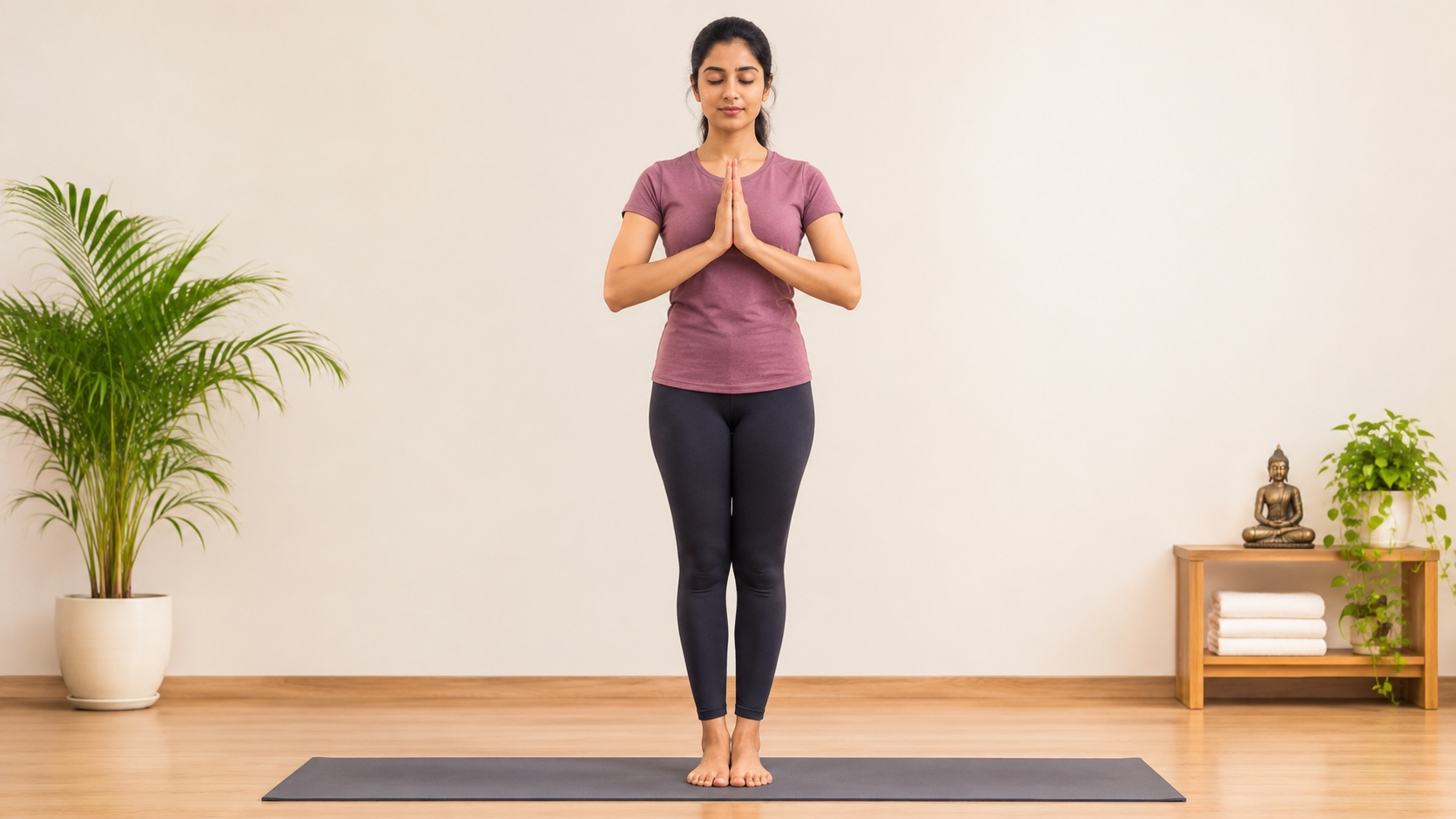
Step 1: Prayer Pose (Pranamasana)
Stand upright with your feet together or slightly apart for balance. Keep your spine naturally extended and relax your shoulders.
Bring your palms together in front of your chest. Distribute your body weight evenly across both feet.
Breathe normally and bring your attention to the present moment. This position establishes stability before beginning the sequence.
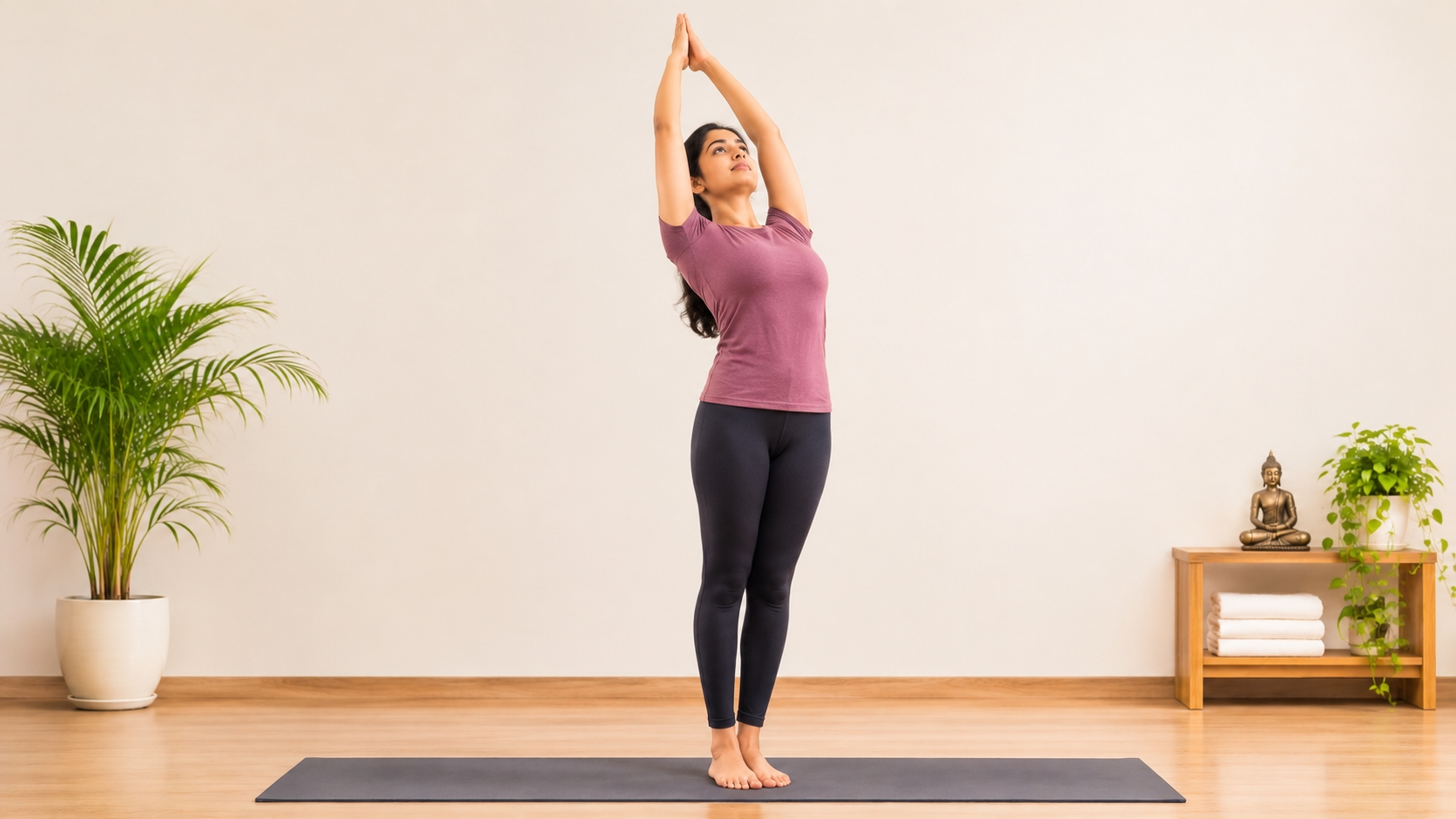
Step 2: Raised Arms Pose (Hasta Uttanasana)
Inhale and raise both arms above your head. Keep your upper arms close to your ears if comfortable.
Gently extend your upper back and lift your chest. Avoid compressing your lower back or pushing your hips too far forward.
The movement should create a comfortable stretch through the front of the body rather than a forced backbend.
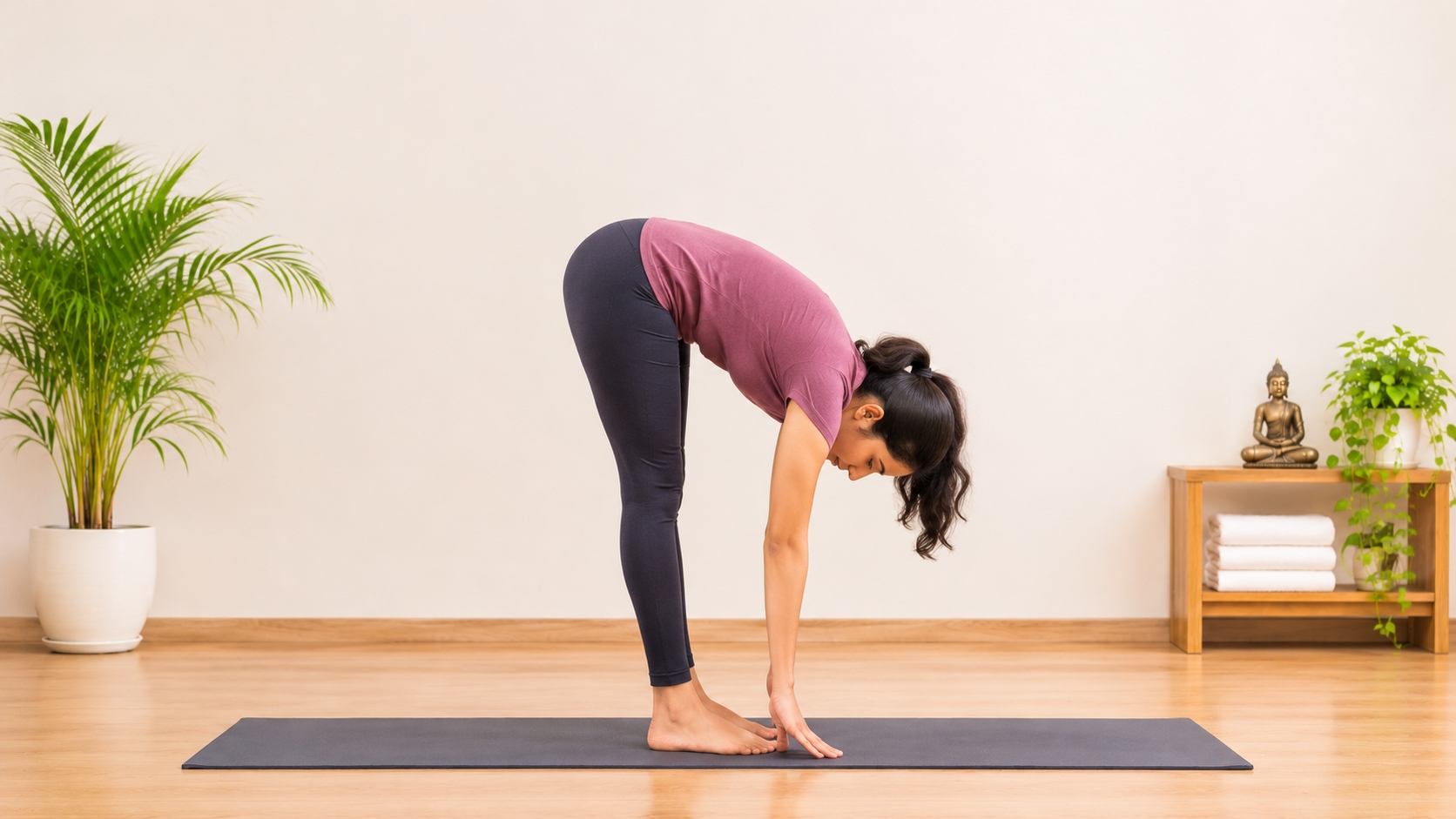
Step 3: Standing Forward Bend (Padahastasana)
Exhale and bend forward from the hips. Bring your hands toward the floor beside your feet.
Bend your knees slightly if your hamstrings feel tight. Allow your head and neck to relax without forcing your forehead toward your knees.
The objective is to maintain a comfortable forward fold while keeping the movement controlled.
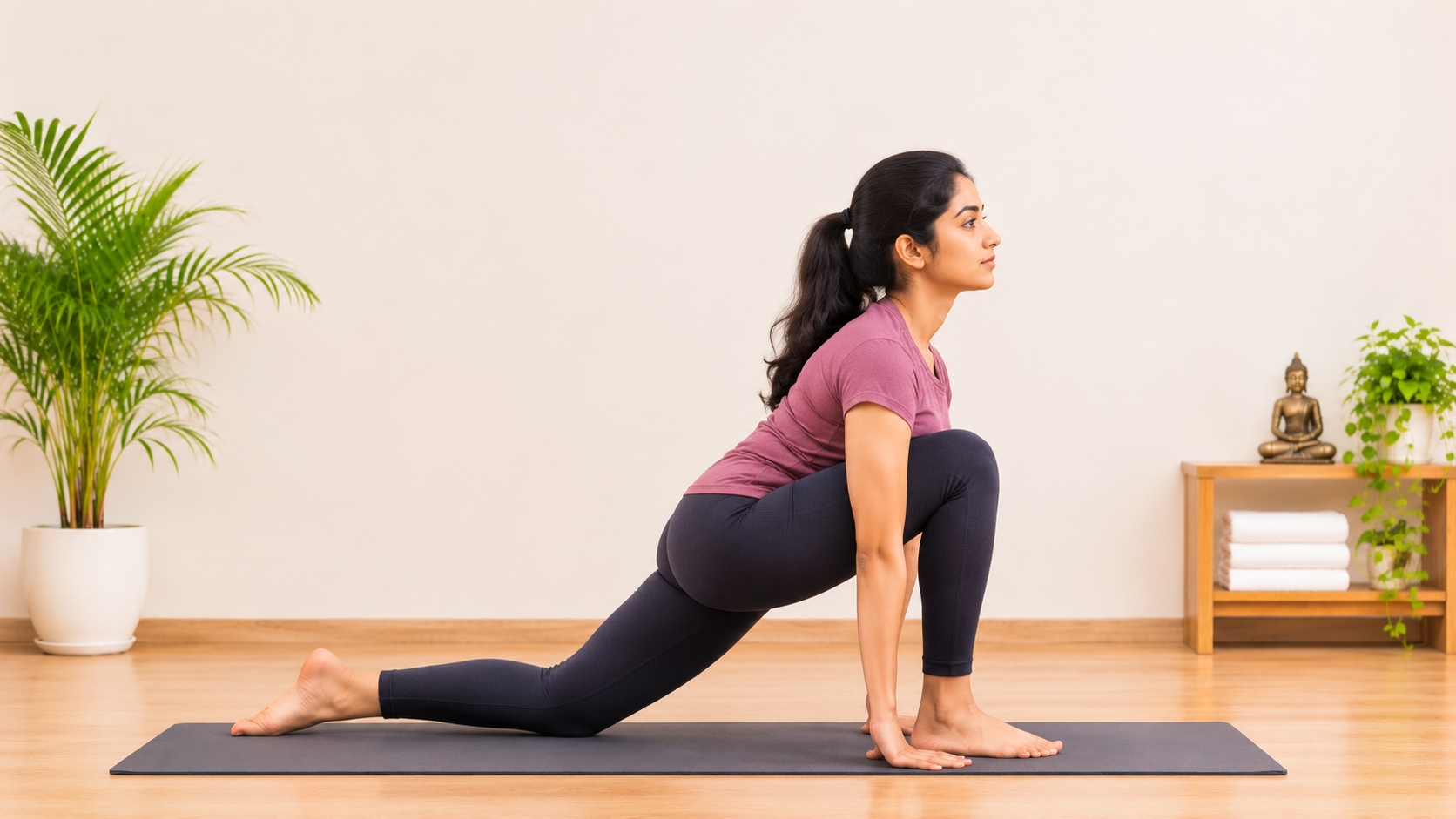
Step 4: Equestrian Pose (Ashwa Sanchalanasana)
Inhale and step your right leg backward. Lower the right knee toward the mat if needed.
Keep your left foot between your hands, with the knee generally positioned over the ankle. Lift your chest and look forward without straining your neck.
This position stretches the front of the back hip while developing awareness of balance.
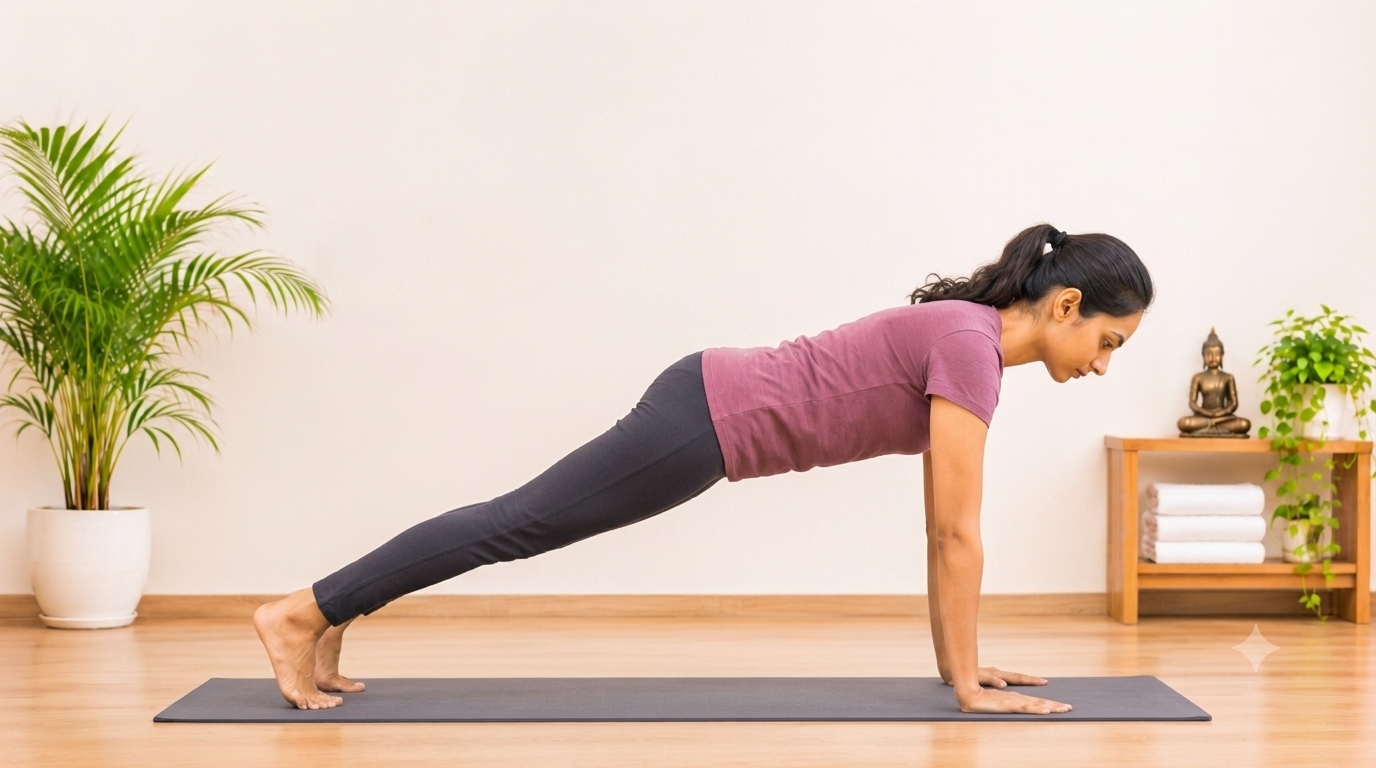
Step 5: Plank Pose (Dandasana)
Exhale and step your left leg backward to bring both feet behind you.
Position your shoulders approximately over your wrists and engage your abdominal muscles. Keep your body in a straight line from head to heels.
Beginners can lower their knees to the mat to reduce the physical demand.
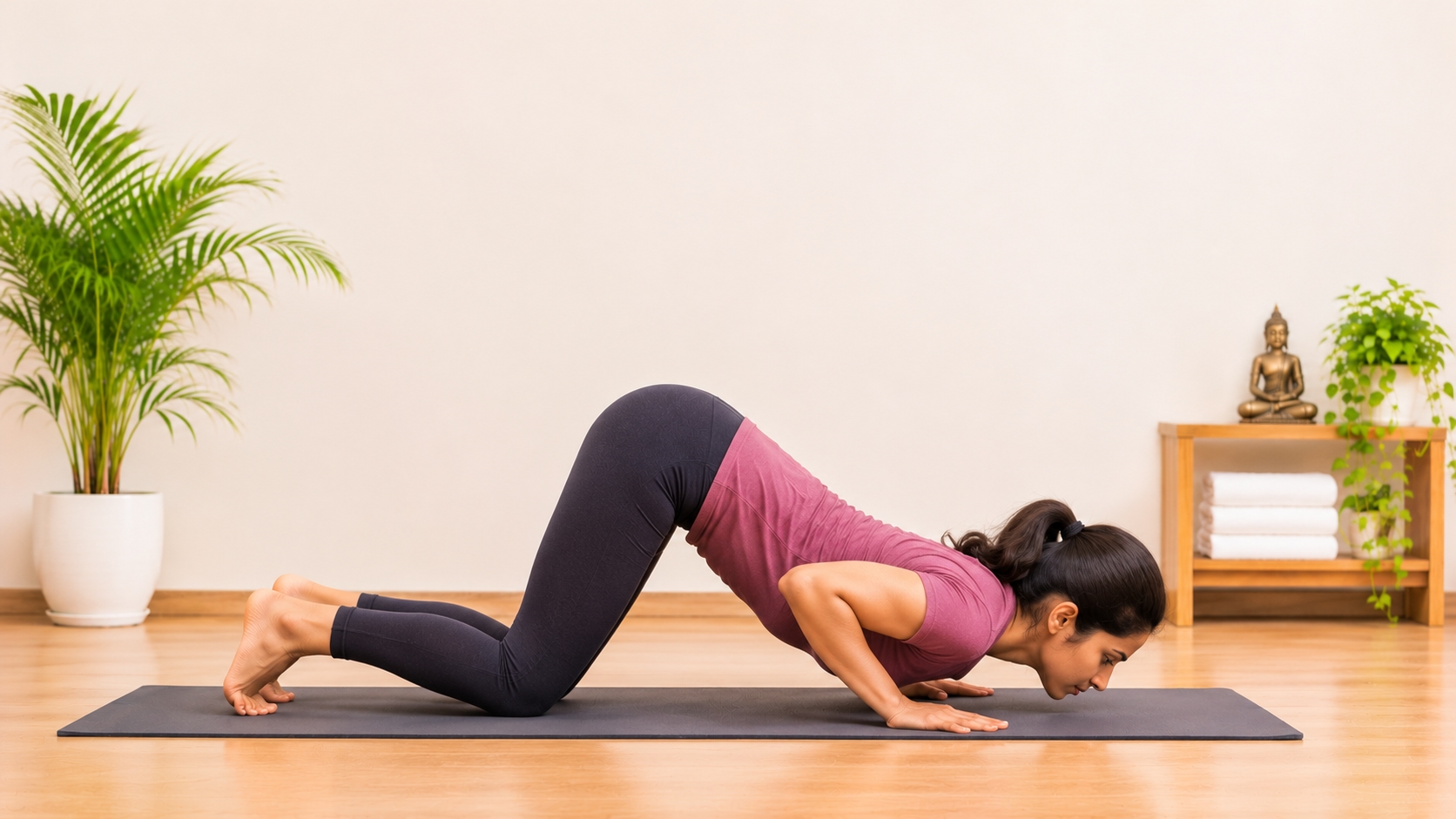
Step 6: Eight-Point Salute (Ashtanga Namaskara)
Lower your knees, chest, and chin toward the floor while keeping your hips slightly raised.
The traditional posture involves eight points touching the ground: two feet, two knees, two hands, the chest, and the chin.
Move slowly and avoid placing excessive pressure on your neck or shoulders.
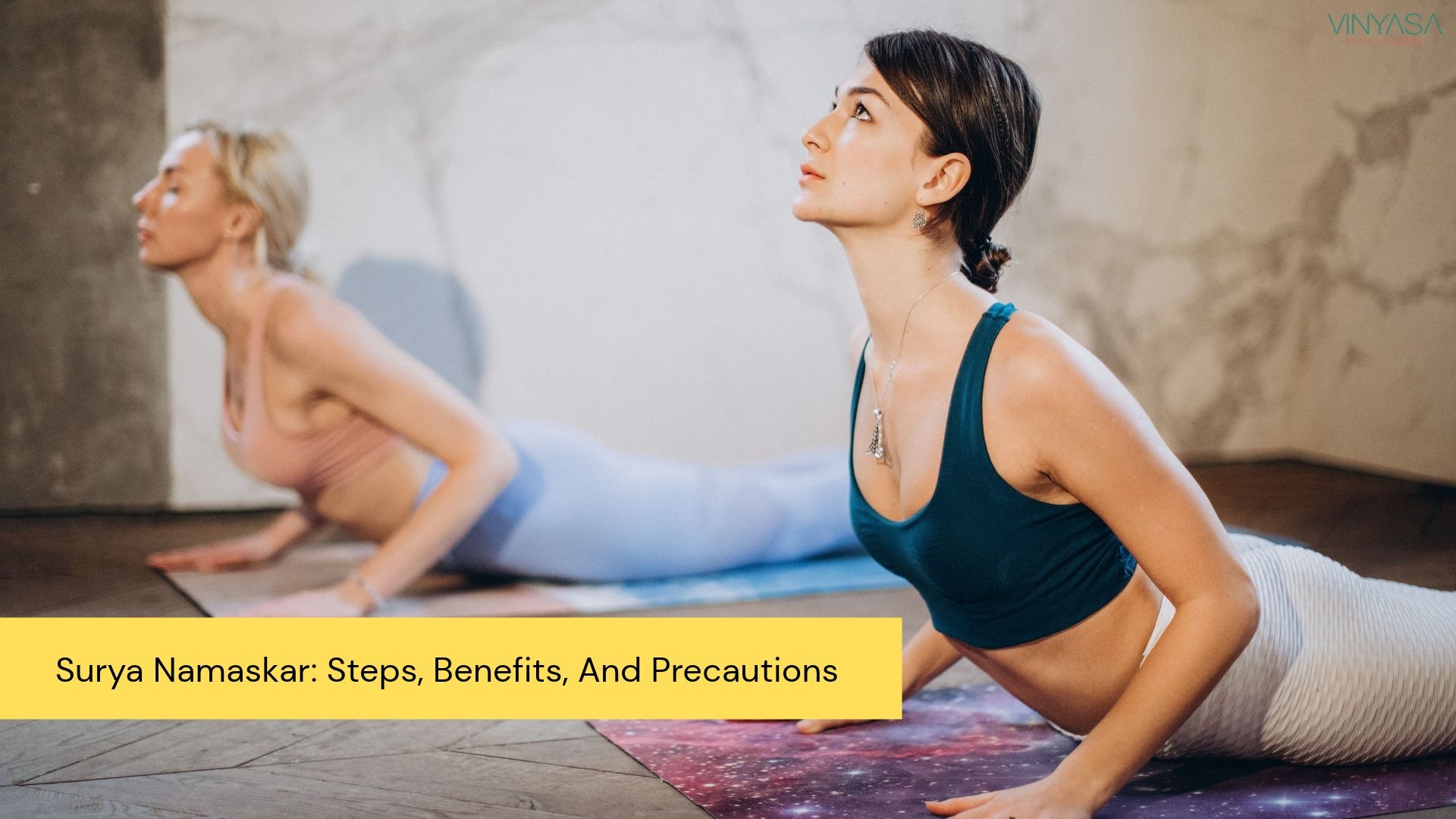
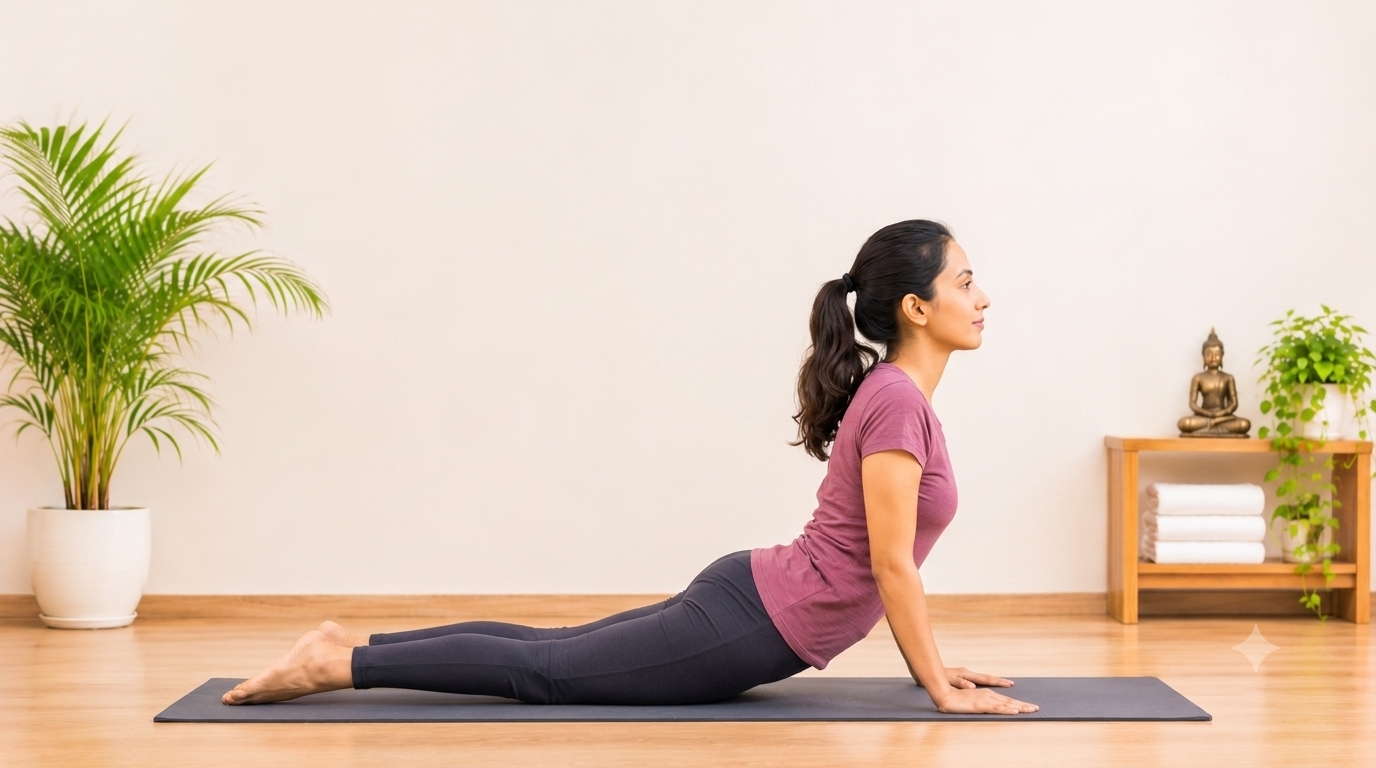
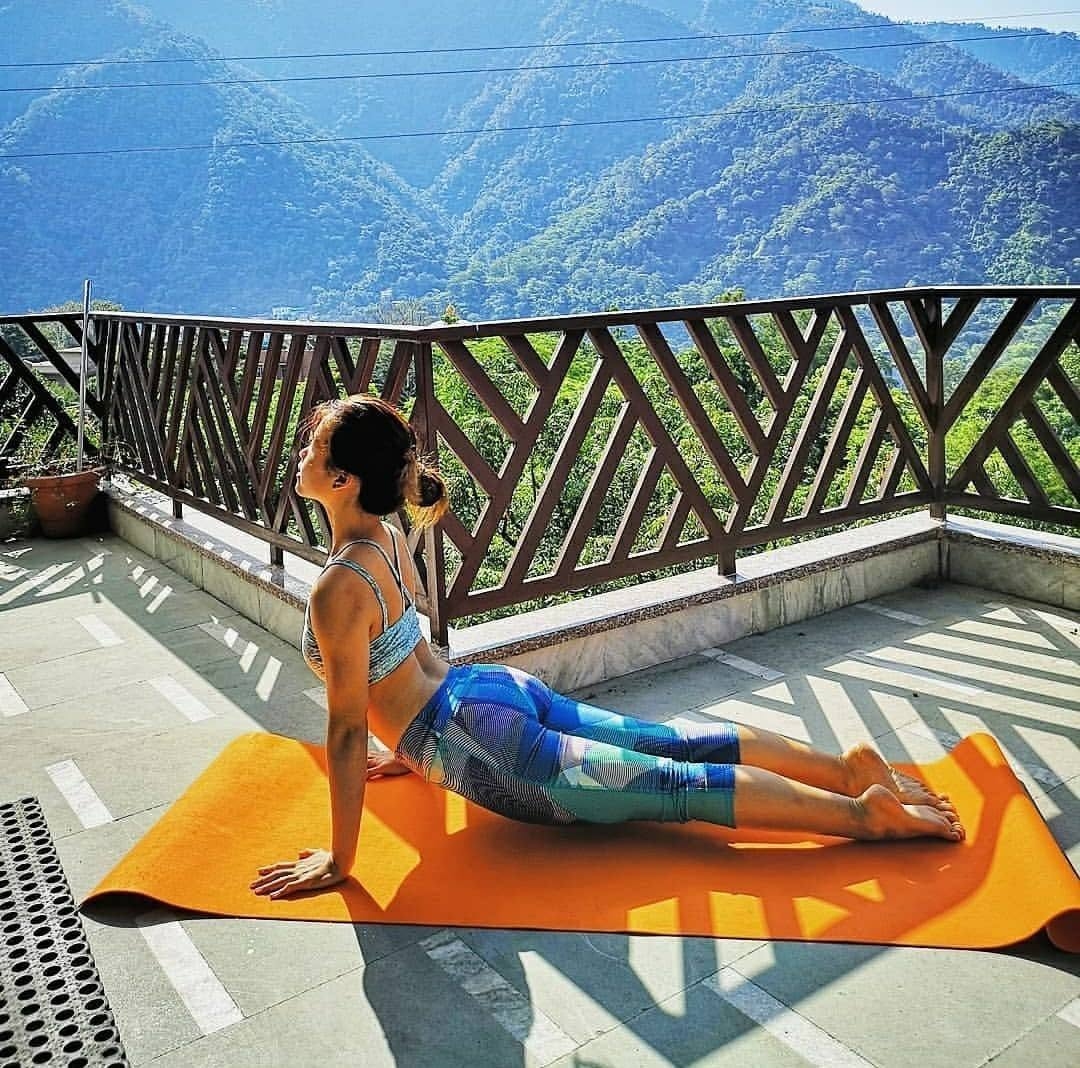
Step 7: Cobra Pose (Bhujangasana)
Inhale and slide your chest forward. Gently lift your upper body while keeping your pelvis and lower body supported by the floor.
Keep your elbows slightly bent and shoulders away from your ears.
Lift only as high as your back comfortably allows. Avoid pushing through your hands to create an excessive arch.
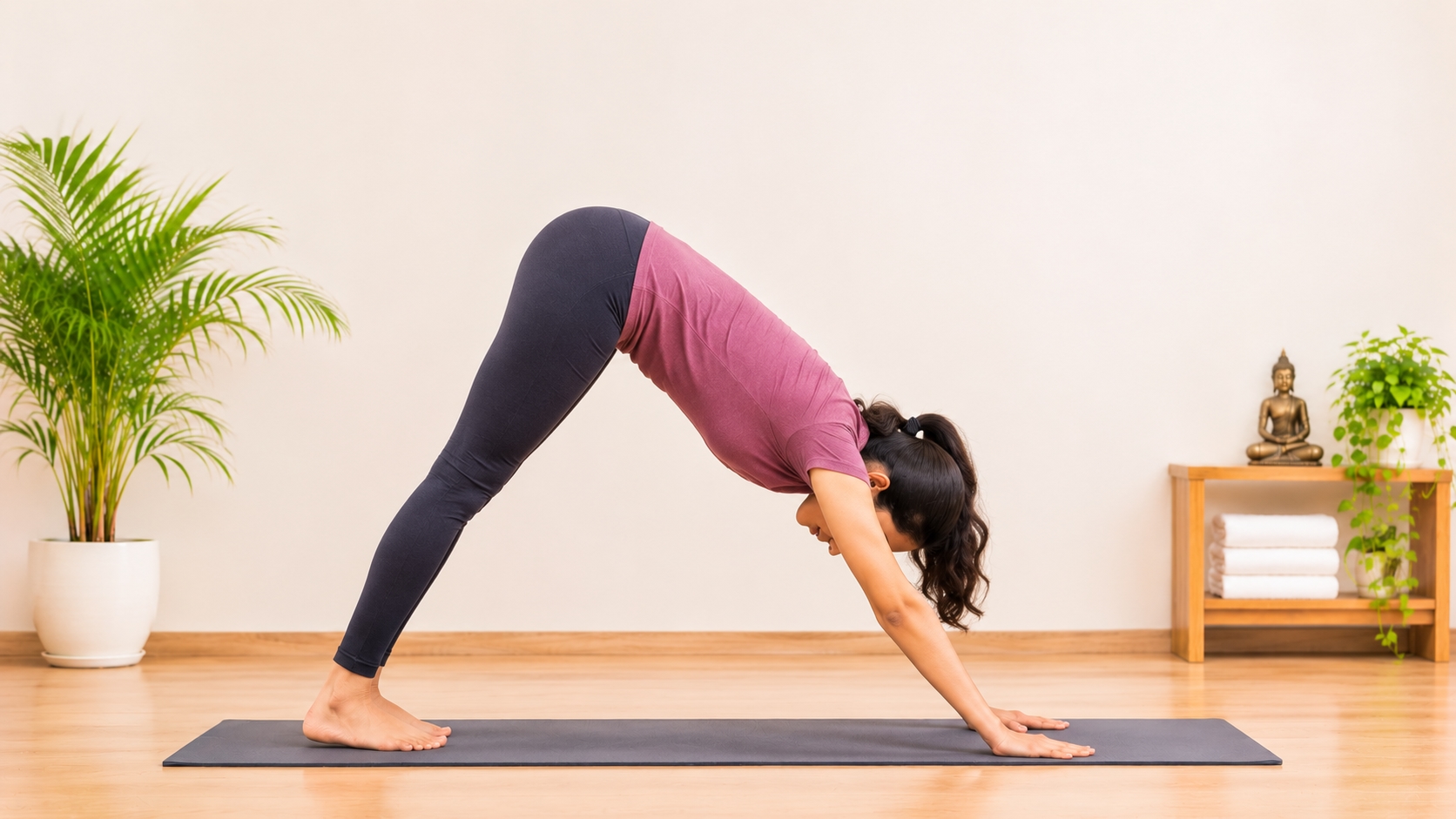
Step 8: Mountain Pose (Parvatasana)
Exhale and lift your hips upward and backward, forming an inverted V shape.
Press your hands into the mat and lengthen your spine. Keep your knees bent if necessary.
Your heels do not need to touch the floor. Prioritize a comfortable spine position over achieving a particular shape.
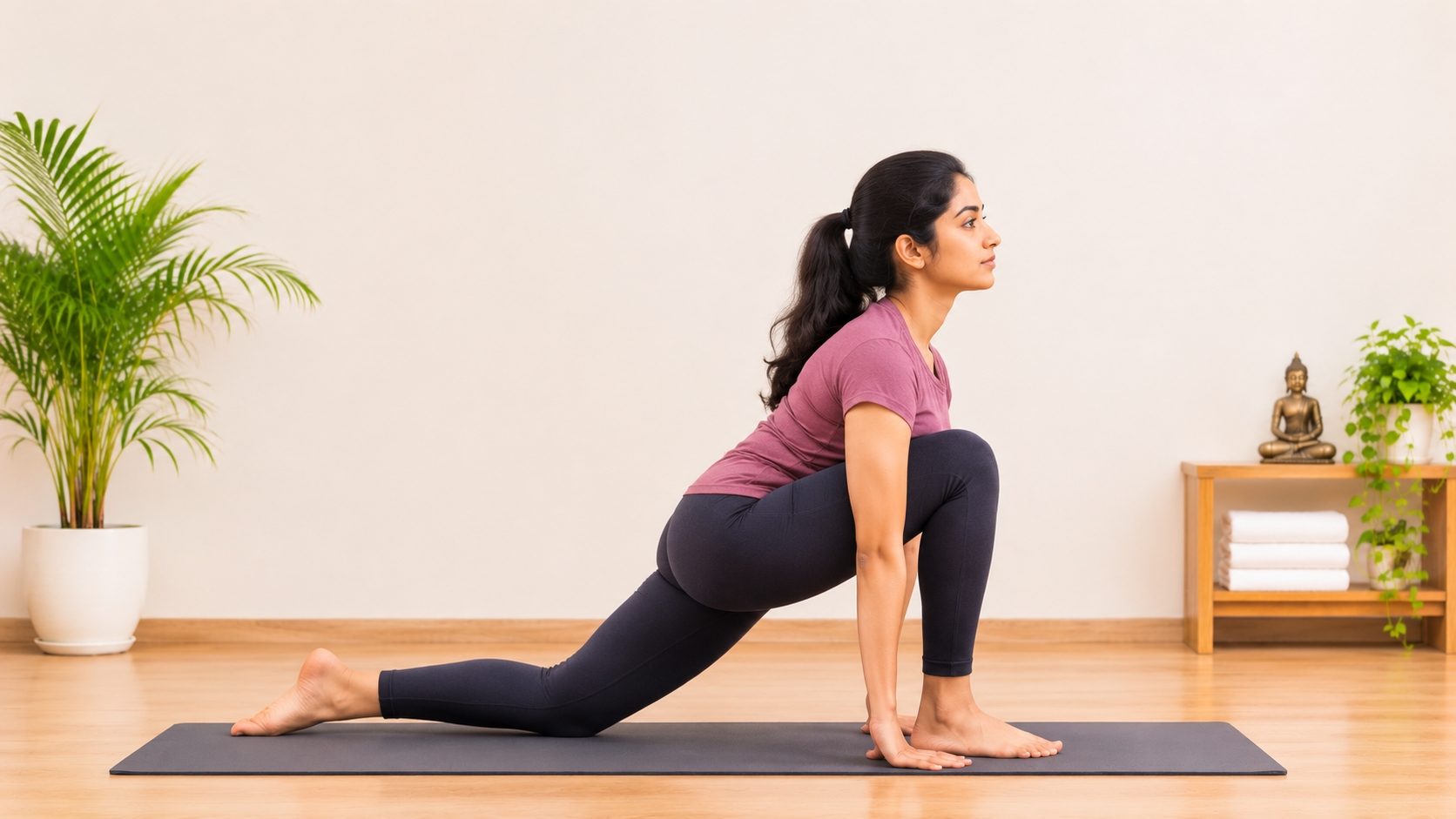
Step 9: Equestrian Pose (Ashwa Sanchalanasana)
Inhale and bring your right foot forward between your hands.
Lower your left knee if necessary and gently lift your chest. If your foot does not reach the space between your hands easily, use your hand to help guide it forward.
This position returns the body to a low lunge.
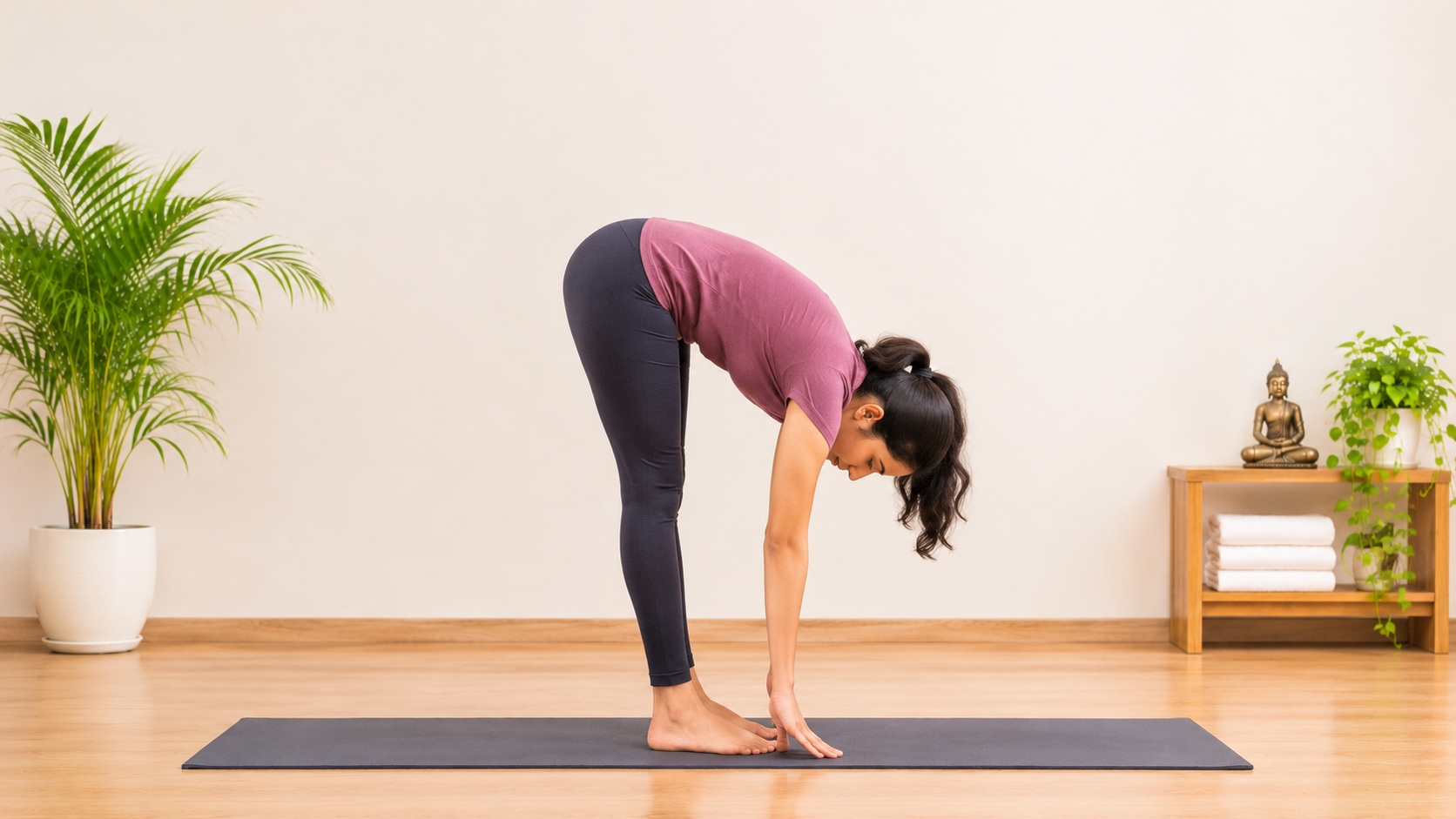
Step 10: Standing Forward Bend (Padahastasana)
Exhale and bring your left foot forward beside your right foot.
Fold your upper body toward your legs, keeping your knees soft if required.
Relax your shoulders and avoid pulling your head downward.
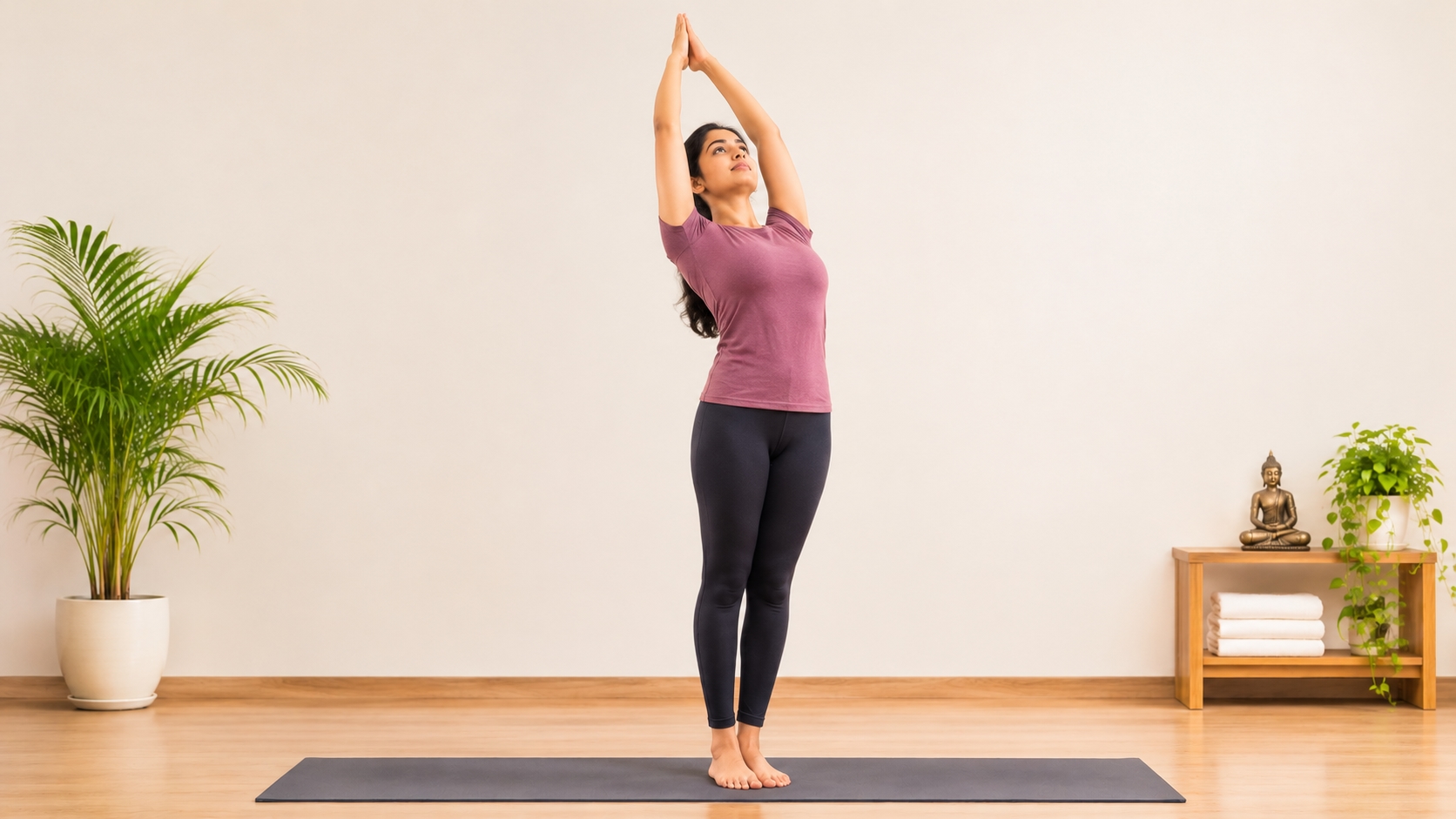
Step 11: Raised Arms Pose (Hasta Uttanasana)
Inhale and slowly rise to standing. Sweep both arms overhead and gently extend your upper body.
Engage your abdominal muscles to support your lower back. Keep the movement smooth and controlled.
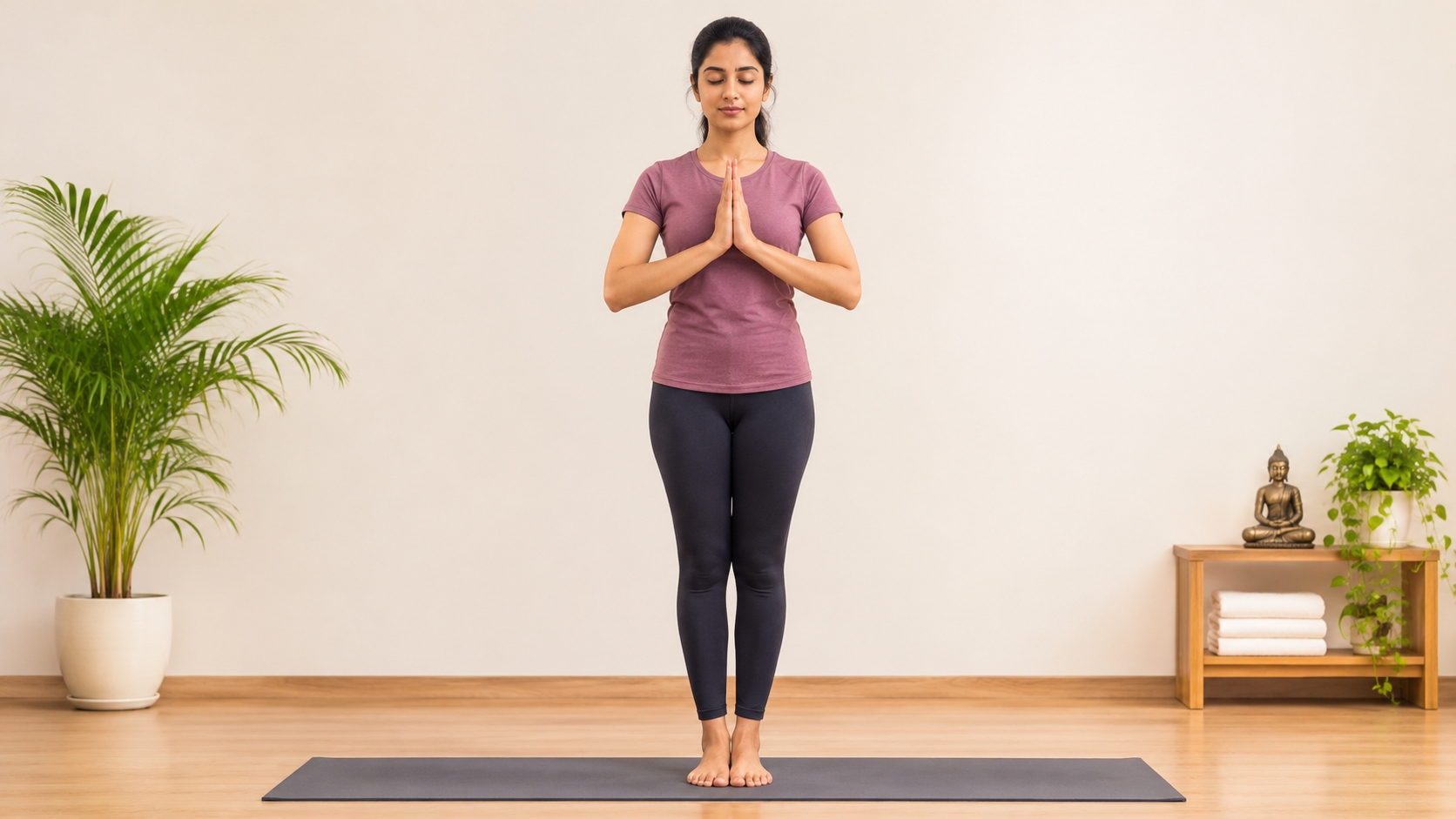
Step 12: Prayer Pose (Pranamasana)
Exhale and bring your palms together in front of your chest.
Stand upright, relax your shoulders, and return to a steady breathing pattern.
This completes one half of the traditional alternating sequence. To balance the practice, repeat the sequence with the opposite leg stepping backward during the first lunge.
4. Physical And Mental Benefits Of Surya Namaskar
When practiced regularly and within individual physical limits, Sun Salutation can contribute to several aspects of fitness and well-being.
1. Supports Flexibility
The sequence includes forward folds, lunges, and gentle spinal extensions. These movements take different muscle groups through a range of motion.
Regular practice may help maintain mobility in the hips, shoulders, hamstrings, and spine. Improvements depend on consistency, technique, and individual flexibility.
2. Develops Muscular Strength
Several positions require practitioners to support their body weight through their arms, shoulders, and abdominal muscles.
Plank Pose, for example, engages the core and upper body, while lunges involve the legs and hips.
The sequence can therefore contribute to muscular endurance when performed with appropriate technique.
3. Encourages Cardiovascular Activity
Because Surya Namaskar involves continuous movement, performing multiple rounds at a suitable pace can increase physical activity and heart rate.
The intensity varies according to movement speed, the number of rounds, and individual fitness. It should not be considered a replacement for all forms of cardiovascular exercise.
4. Improves Coordination
Coordinating inhalation and exhalation with changing postures requires attention and timing.
With practice, individuals may become more comfortable transitioning between movements while maintaining balance and control.
5. Supports Mental Awareness
Concentrating on breathing and posture can help practitioners become more attentive to their physical and mental state.
The repeated sequence may also provide a structured opportunity to step away from distractions and focus on the present moment.
5. Provides A Full-Body Movement Routine
Unlike exercises that target only one muscle group, Sun Salutation involves several regions of the body.
It can serve as a practical movement routine or as preparation for a longer yoga session.
A systematic review of Surya Namaskar research has reported promising findings related to physical fitness and psychological well-being, although differences in study methods mean that results should be interpreted cautiously.
5. Best Time To Practice Surya Namaskar
Traditionally, Surya Namaskar is practiced in the morning, often around sunrise.
Morning practice can provide a calm setting and a consistent starting point for a daily yoga routine. Some practitioners also appreciate the opportunity to move their bodies after waking up.
However, sunrise is not a strict requirement. The sequence can be practiced at another convenient time when the stomach is relatively empty and the body feels comfortable.
Consider these practical guidelines:
Practice in a clean, ventilated, and quiet space.
Avoid practicing immediately after a heavy meal.
Allow time for gentle warm-up movements.
Wear comfortable clothing that does not restrict movement.
Keep water available and stay hydrated throughout the day.
Finish with a short relaxation period.
Consistency matters more than choosing a particular time. A manageable routine that fits daily life is generally easier to maintain.
6. Common Mistakes To Avoid During Sun Salutation
Even a familiar yoga sequence can become uncomfortable when movements are rushed or performed without attention.
1. Forcing The Forward Bend
Trying to touch the floor with straight knees can place unnecessary strain on the hamstrings and lower back.
Bend your knees and allow flexibility to develop gradually.
2. Compressing The Lower Back
Overarching during Raised Arms Pose may create discomfort.
Lift through the chest and keep the abdominal muscles gently engaged.
3. Misaligning The Knees
During lunges, allow the front knee to move in the direction of the toes. Avoid letting it collapse inward.
Use a shorter stance if maintaining balance is difficult.
4. Holding The Breath
Breathing should remain smooth and comfortable. Avoid holding your breath during difficult transitions.
If coordinating every movement with breathing feels challenging, slow down and practice the positions individually.
5. Rushing Through The Sequence
Moving too quickly can reduce awareness of alignment and increase the chance of losing balance.
Start with a slow pace and increase the number of rounds only when the movements feel controlled.
7. Precautions And Who Should Modify The Practice
Although Surya Namaskar is accessible to many healthy adults, it is not suitable in the same form for everyone.
The practice combines forward bending, spinal extension, lunges, and weight-bearing positions. Certain health conditions may require medical advice or individualized modifications.
Consider the following precautions:
1. People With Back Or Spinal Conditions:
Individuals with chronic back pain, spinal injuries, or disc-related conditions should consult a qualified healthcare professional before practicing. Certain forward bends and backbends may need modification.
2. People With High Blood Pressure Or Heart Conditions:
The physical intensity and changes in body position may not be appropriate for everyone. Seek medical guidance before beginning.
3. Pregnant Women:
Pregnancy changes balance, joint mobility, and abdominal pressure. Traditional Sun Salutation may need substantial modification or replacement with pregnancy-appropriate movements under qualified supervision and healthcare guidance.
4. People With Wrist, Shoulder, Or Knee Injuries:
Plank, Cobra, and lunge positions can place pressure on these joints. Use suitable alternatives or avoid movements that aggravate symptoms.
5. During Illness Or Physical Exhaustion:
Avoid strenuous practice when experiencing fever, significant weakness, dizziness, or acute illness.
Stop immediately if you experience sharp pain, chest discomfort, unusual breathlessness, or dizziness.
The National Center for Complementary and Integrative Health advises people with health conditions, injuries, and other individual risk factors to discuss appropriate yoga modifications with healthcare providers and qualified instructors.
8. How Beginners Can Build A Consistent Practice
Beginners should focus on understanding the sequence rather than completing many rounds.
Start by learning each posture separately. Pay attention to where the feet, hands, knees, and shoulders are positioned.
Once the individual movements become familiar, connect them gradually with inhalation and exhalation.
A practical starting approach may include:
Five minutes of gentle warm-up movements.
One or two slow rounds of Surya Namaskar.
Short breaks whenever needed.
A few minutes of comfortable relaxation.
Increase the number of rounds gradually according to your fitness and comfort.
If you want to understand the traditional foundations of yoga more deeply, a structured yoga teacher training course can provide opportunities to study asana alignment, teaching methodology, and modifications. Students exploring a yoga ttc in rishikesh can also learn how traditional practices are incorporated into broader yoga education.
When evaluating a yoga school in india, consider the instructors' qualifications, curriculum, class structure, practical teaching opportunities, and approach to student safety.
A suitable yoga teacher training schedule should allow sufficient time for learning, practice, rest, and discussion rather than focusing only on physical performance.
Frequently Asked Questions About Surya Namaskar
1. How Many Steps Are There In Surya Namaskar?
The traditional Surya Namaskar sequence consists of twelve positions. Some yoga schools teach variations, but the twelve-position format is widely recognized.
2. Can Beginners Practice Surya Namaskar?
Yes. Beginners can learn the sequence by practicing each posture separately and using modifications where necessary. Starting slowly helps develop coordination, balance, and confidence.
3. How Many Rounds Of Surya Namaskar Should Beginners Do?
Beginners can start with one or two comfortable rounds and gradually increase the number as their stamina and technique improve. There is no universal number suitable for everyone.
4. Is Surya Namaskar Better In The Morning Or Evening?
Morning practice is traditional, but the sequence can be practiced at another convenient time. Avoid practicing immediately after eating, and adjust the intensity according to your energy level.
5. Does Surya Namaskar Help With Weight Management?
It can contribute to physical activity and energy expenditure. However, weight management depends on several factors, including overall activity, nutrition, sleep, and individual health.
6. Can Surya Namaskar Be Practiced Every Day?
Many healthy individuals can practice a suitable version regularly. However, intensity and frequency should depend on physical condition, recovery, and professional guidance when needed.
7. Is Surya Namaskar A Complete Yoga Practice?
It combines several physical postures and coordinated breathing patterns, making it a useful sequence. However, a comprehensive yoga practice may also include meditation, relaxation, philosophy, and other techniques.
Conclusion
Surya Namaskar is more than a sequence of twelve yoga positions. It is a structured practice that connects movement, breathing, and awareness while offering opportunities to develop flexibility, muscular endurance, and coordination.
The most important part of practicing it is understanding your body's current abilities. Correct alignment, gradual progression, and appropriate modifications are more valuable than completing a large number of rounds.
For anyone interested in exploring yoga beyond physical postures, learning from experienced teachers can provide a deeper understanding of traditional practices and their applications. Those considering yoga teacher training in india can explore structured learning opportunities that cover asana practice, yoga philosophy, anatomy, and teaching methodology.
Vinyasa Yoga Academy offers an opportunity to explore traditional yoga education and develop a more informed approach to personal practice and teaching. Visit Vinyasa Yoga Academy to learn more about its yoga programs and educational offerings.
With patience, awareness, and consistent effort, Surya Namaskar can become a valuable part of a balanced yoga routine.