
Breathing is something most people do without thinking about it. We inhale and exhale throughout the day, whether we are walking, working, sleeping or practising yoga. However, we rarely pay attention to the condition of our nasal passages, even though they play an important role in the breathing process.
Traditional yoga includes several simple practices that encourage people to become more aware of their bodies. One such practice is Jala Neti, a traditional nasal cleansing technique that uses lightly salted water to rinse the nasal passages.
Jala Neti has been practised for generations as part of Hatha Yoga. It is often introduced to students who want to understand traditional cleansing techniques and develop greater awareness of their breathing. Although the method may look unusual to someone seeing it for the first time, its basic principle is easy to understand.
What Is Jala Neti, And Why Is It Studied In Yoga Teacher Training?
Jala Neti is a traditional yogic cleansing practice in which saline water is gently passed through one nostril and allowed to flow out through the other. A specially designed pot, commonly called a Neti pot, is used for this purpose.
The word Jala means water, while Neti refers to a cleansing technique. Together, Jala Neti describes nasal cleansing with water.
Students exploring traditional yoga practices through a 200 hrs yoga teachers training in rishikesh may come across Jala Neti while studying Shatkarma, the group of cleansing practices described in Hatha Yoga traditions. Learning about such techniques helps students understand that yoga is not limited to physical postures. It also includes breathing practices, personal discipline and traditional methods of maintaining cleanliness.
Jala Neti should not be confused with a regular face wash or simply pouring water into the nose. It is a specific technique that requires suitable equipment, safe water and careful preparation.
Understanding The Place Of Jala Neti In Traditional Yoga
In traditional Hatha Yoga, Shatkarma refers to six groups of cleansing practices. These methods are described in classical yoga texts as ways of preparing the body for further yogic practices.
The six traditional cleansing techniques are:
Dhauti: A group of cleansing practices traditionally associated with the digestive tract.
Basti: A traditional cleansing technique associated with the lower digestive tract.
Neti: Cleansing of the nasal passages.
Trataka: Steady gazing at an object or point.
Nauli: A traditional abdominal cleansing practice involving controlled abdominal movements.
Kapalabhati: A cleansing breathing practice involving active exhalation.
Jala Neti belongs to Neti. Another traditional form is Sutra Neti, which uses a specially designed thread or catheter. These practices are not interchangeable, and Sutra Neti requires specific instruction from a qualified teacher.
The inclusion of Jala Neti in traditional yoga shows how much attention earlier yoga practitioners gave to personal cleanliness and preparation.
What Equipment Is Needed For Jala Neti?
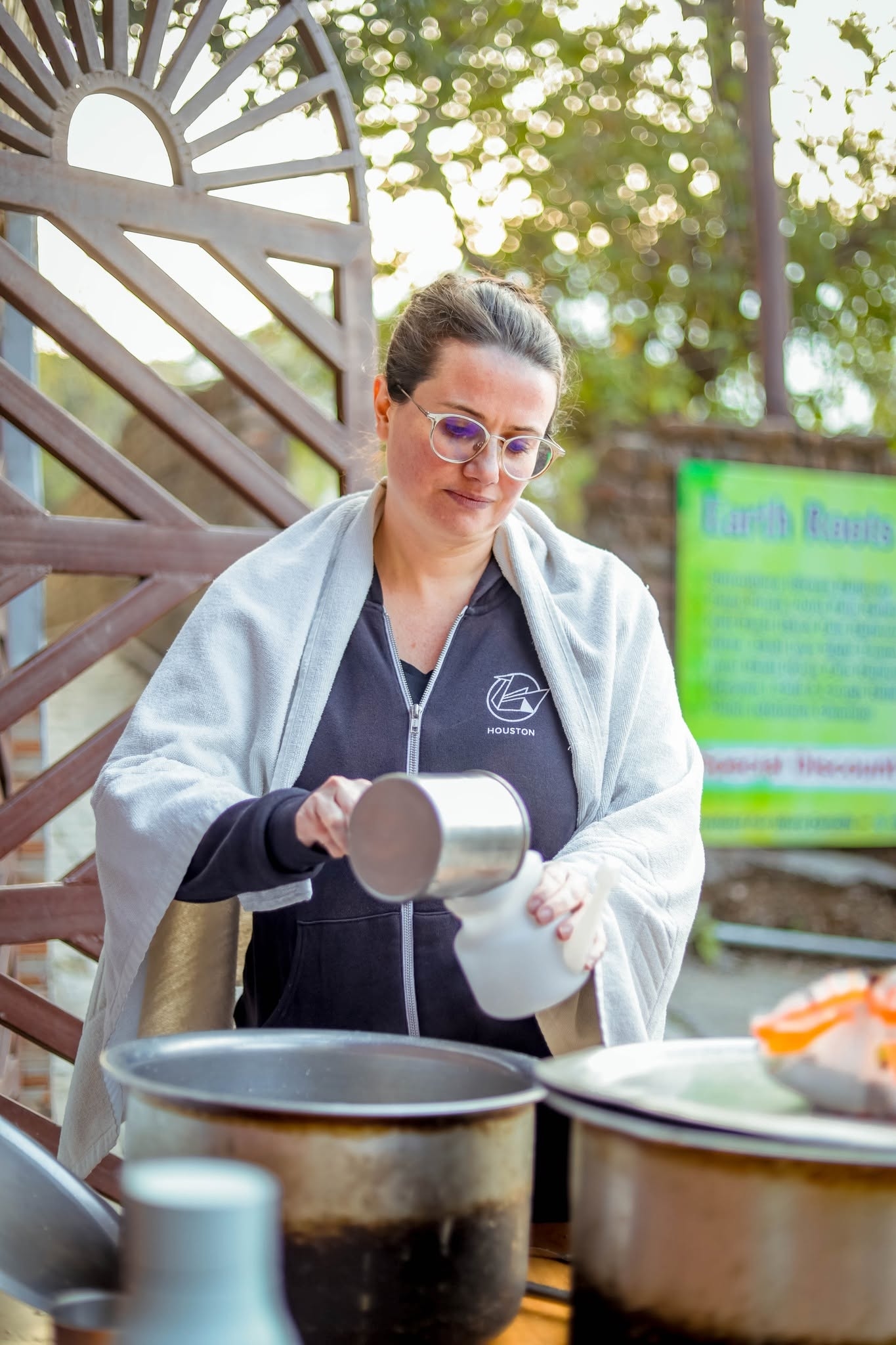
A few basic items are needed before beginning the practice.
Neti Pot: A small container with a narrow spout that fits comfortably against the nostril. It may be made from ceramic, stainless steel or food-safe plastic.
Safe Water: Use distilled, sterile or previously boiled and cooled water. Ordinary untreated tap water should never be used for nasal rinsing because it may contain microorganisms that can cause serious infections.
Salt: Use plain, non-iodised salt without added flavours or unnecessary ingredients. A properly prepared saline solution is generally close to isotonic, meaning its salt concentration is similar to that of body fluids.
Clean Towel: Keep a clean towel nearby to wipe away remaining water.
The equipment should be washed after use and allowed to dry properly. Never share a Neti pot with another person.
How To Perform Jala Neti Step By Step
Beginners should learn the method from a trained instructor or healthcare professional, particularly if they have never performed nasal rinsing before.
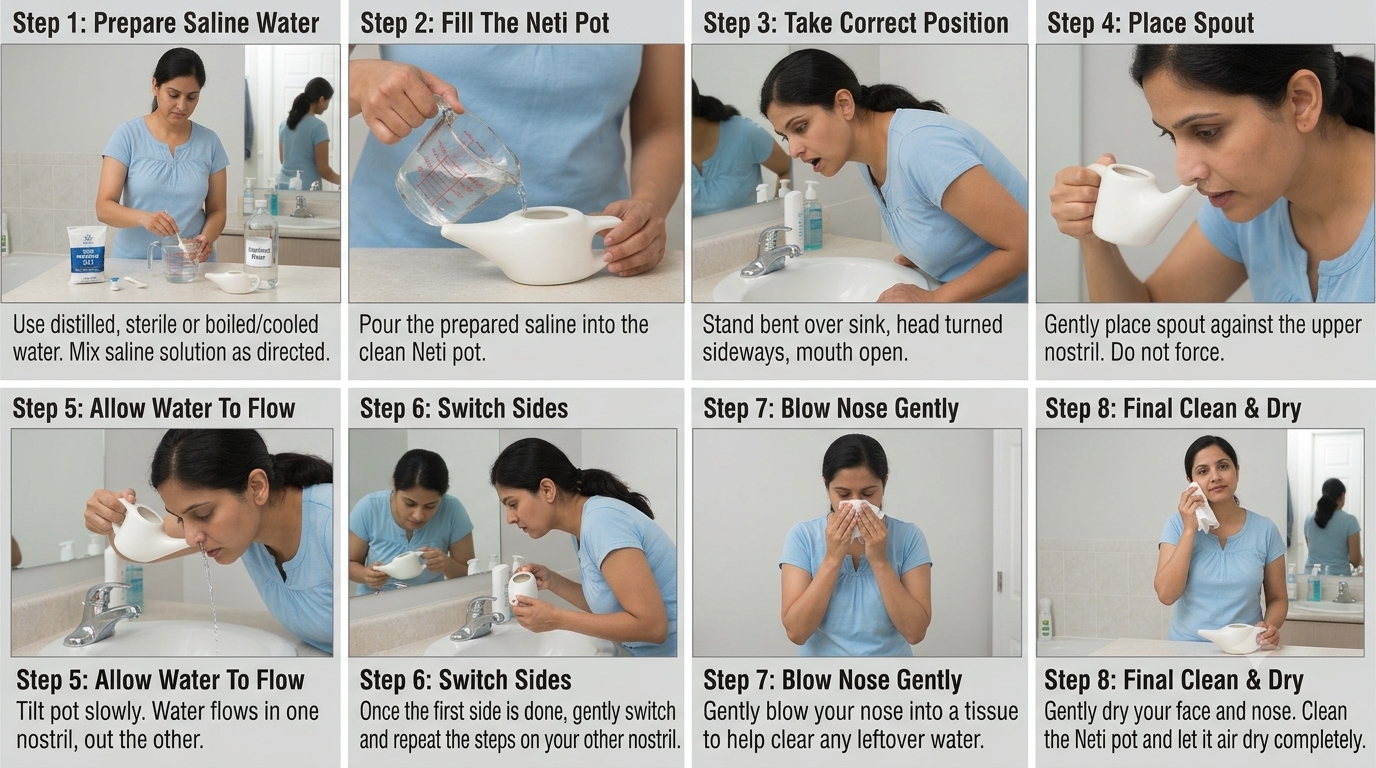
Step 1: Prepare The Saline Water
Use distilled, sterile or boiled and cooled water. Prepare the saline solution according to the instructions provided with the Neti pot or guidance from a qualified healthcare professional.
The water should be comfortably lukewarm, never hot. Too much salt or too little salt may cause discomfort.
Step 2: Fill The Neti Pot
Pour the prepared saline solution into the clean Neti pot. Check that the spout is clean and that the water temperature feels comfortable.
Step 3: Take The Correct Position
Stand over a sink and bend your upper body slightly forward. Turn your head gently to one side while keeping your forehead and chin at a comfortable angle.
Keep your mouth open and breathe normally through it.
Step 4: Place The Spout At The Nostril
Gently place the Neti pot spout against the upper nostril. Avoid pushing it forcefully inside.
Step 5: Allow The Water To Flow
Tilt the pot slowly. If the head position is correct and the nasal passage is open, the saline water should flow through one nostril and come out through the other.
Do not force the water. Stop if you experience pain, significant pressure or discomfort.
Step 6: Repeat On The Other Side
Once the first side is complete, change the head position and repeat the process using the other nostril.
Step 7: Allow Remaining Water To Drain
After rinsing, return your head to a comfortable upright position. Gently exhale through the nose to remove remaining water. Avoid forceful blowing.
What Are The Possible Benefits Of Jala Neti?
Jala Neti is traditionally valued for nasal cleanliness. Modern nasal irrigation is also used by some people to help manage nasal symptoms.
Some possible benefits include:
1. Helps Remove Nasal Mucus: Saline rinsing can help wash away excess mucus from the nasal passages.
2. Clears Certain Irritants: It may help remove dust, pollen and other particles from the nose.
3. Supports Nasal Moisture: A suitable saline solution may help reduce dryness and irritation in some people.
4. Encourages Awareness Of Breathing: Practising Jala Neti can encourage people to pay more attention to their nasal breathing.
5. Supports Traditional Yoga Preparation: In Hatha Yoga, cleansing practices are traditionally studied as part of preparation for other yogic techniques.
These benefits should be understood carefully. Jala Neti does not cure every respiratory condition, prevent all infections or replace medical treatment.
Important Safety Precautions Before Practising Jala Neti
Safety is more important than completing a traditional practice.
Never use untreated tap water.
Use distilled, sterile or previously boiled and cooled water.
Keep the Neti pot clean and dry between uses.
Avoid sharing nasal cleansing equipment.
Do not force water through a blocked nostril.
Stop if you experience pain, bleeding, ear pressure or significant discomfort.
Seek medical advice if you have frequent nosebleeds, recent nasal surgery, a completely blocked nasal passage or an active ear infection.
Consult a healthcare professional before beginning if you have an existing nasal or sinus condition.
People should also avoid performing nasal irrigation when they cannot follow the instructions properly. If symptoms become worse after rinsing, stop the practice and seek medical advice.
Common Mistakes Beginners Should Avoid
Many beginners assume that Jala Neti is simply about pouring water through the nose. However, the position of the head, quality of water and preparation of the saline solution all matter.
Common mistakes include using water that has not been made safe, preparing a solution with too much salt, tilting the head incorrectly and applying pressure to force the water through.
Another mistake is practising too frequently without understanding whether the technique is suitable for one's needs. More practice does not automatically mean better results.
A beginner should first understand the method, observe a demonstration and learn when the practice should be avoided.
How Jala Neti Connects With Broader Yoga Education
Yoga education introduces students to more than physical flexibility. A complete yoga learning experience may include traditional philosophy, anatomy, breathing methods, cleansing practices and teaching skills.
A structured yoga teacher training course can introduce students to the historical background and practical understanding of different yogic techniques. Those researching yoga teacher training india may find that schools offer different approaches to Hatha, Ashtanga, Vinyasa and other traditions.
A yoga certificate course may also introduce basic concepts, although students should always check the course syllabus, teaching hours and recognition before enrolling.
Anyone considering a yoga instructor course should understand that traditional cleansing techniques require additional care and should never be taught casually.

A 200 hour yoga teacher training in india can provide a foundation in asana, pranayama, anatomy and yoga philosophy. However, students should check whether Shatkarma and Jala Neti are actually included in the syllabus rather than assuming every school teaches them.
A certified yoga instructor course should explain the difference between traditional practices and methods supported by current health guidance. Similarly, yoga instructor certification should not be understood as medical qualification.
Students exploring yoga trainer certification should look for practical demonstrations, supervised learning and clear safety instructions. A good yoga teachers training program should encourage responsible teaching rather than simply memorising techniques.
For people interested in learning how to become a yoga instructor india, studying the background and limitations of traditional practices is an important part of developing a responsible teaching approach.
At Vinyasa Yoga Academy, the study of different yoga traditions can help students understand how practices such as cleansing techniques, asana and pranayama fit into the wider field of yoga education.
Conclusion
Jala Neti is a traditional yogic nasal cleansing technique that uses a suitable saline solution to rinse the nasal passages. It forms part of the wider Shatkarma system and provides an example of how traditional yoga includes practices beyond physical postures.
Although the method is relatively simple, safe water, clean equipment and correct technique are essential. Beginners should learn it carefully and understand when it may not be suitable.
Studying practices such as Jala Neti can also deepen a person's understanding of traditional yoga. Whether someone is exploring yoga for personal learning or considering a 200 hrs yoga teachers training in rishikesh, understanding the purpose, method and limitations of each practice is far more important than simply learning its name.
Frequently Asked Questions
1. What Is Jala Neti In Yoga?
Jala Neti is a traditional Hatha Yoga cleansing technique that uses saline water to rinse the nasal passages through a specially designed Neti pot.
2. What Is The Purpose Of Jala Neti?
Its main purpose is nasal cleansing. Saline rinsing may help remove mucus, dust and certain irritants from the nasal passages.
3. Can Beginners Practise Jala Neti?
Yes, many beginners can learn the basic technique, but they should receive proper instructions and understand the safety requirements before trying it.
4. Can Tap Water Be Used For Jala Neti?
No. Use distilled, sterile or previously boiled and cooled water. Untreated tap water is not safe for nasal rinsing.
5. Is Jala Neti A Form Of Pranayama?
No. Jala Neti is a cleansing technique known as Neti. Pranayama refers to yogic breathing practices.
6. How Often Should Jala Neti Be Practised?
There is no single frequency suitable for everyone. Follow professional guidance and avoid excessive rinsing, particularly if it causes dryness or irritation.
7. What Is The Difference Between Jala Neti And Sutra Neti?
Jala Neti uses saline water to rinse the nasal passages, while Sutra Neti uses a specially designed thread or catheter. Sutra Neti requires specific expert instruction.
8. Can Jala Neti Replace Medical Treatment?
No. It may help with certain nasal symptoms, but it does not replace medical diagnosis, prescribed medication or professional treatment.