
Yoga is often associated with flexibility, balance, strength, and relaxation. However, there is much more to yoga than simply performing different postures. Every movement involves muscles, bones, joints, and different body systems working together. Understanding how these parts function can help practitioners develop a safer and more balanced yoga practice. This is where yoga anatomy becomes important.
Yoga anatomy helps students understand how their bodies move during different asanas, why certain movements feel challenging, and how to adjust postures according to their physical abilities. It also helps yoga teachers guide students with greater awareness and confidence.
Whether someone is new to yoga or planning to become a yoga teacher, learning basic anatomy can make a meaningful difference in their practice. It creates a connection between traditional yoga techniques and the scientific understanding of the human body.
What Is Yoga Anatomy?
Yoga anatomy is the study of the human body's structure and movement in relation to yoga practice. It explains how muscles, bones, joints, ligaments, and other body systems work when a person performs different yoga postures.
For example, when practising Trikonasana (Triangle Pose), the body uses several muscle groups to maintain balance, lengthen the spine, and support the legs. Understanding these movements helps practitioners recognise how to enter and hold the posture without putting unnecessary pressure on their joints.
For students considering a 200 hour yoga teacher training bali, understanding yoga anatomy is an important part of developing practical knowledge. It allows them to learn not only how to perform an asana but also how the body responds to it.
Yoga anatomy does not require advanced medical knowledge. Beginners can start by learning the basic names and functions of muscles, bones, joints, and body systems.
Why Is Understanding Anatomy Important In Yoga?
Anatomy gives practitioners a better understanding of their physical abilities and limitations. Every person's body is different. Two people may perform the same yoga posture, but their range of movement, flexibility, and body structure may not be identical.
Here are some important reasons why anatomy matters in yoga.
1. Helps Practise Yoga Safely
One of the main purposes of learning anatomy is to understand safe movement.
Certain yoga postures involve bending, twisting, stretching, or placing body weight on the hands and feet. Without proper awareness, practitioners may place unnecessary pressure on their knees, shoulders, wrists, or lower back.
Understanding the body's structure helps students recognise when a movement feels uncomfortable and when they should modify a posture.
2. Improves Body Awareness
Yoga encourages people to become more aware of their bodies. Anatomy adds another layer to this awareness by explaining what happens inside the body during movement.
For example, when lifting the arms in Urdhva Hastasana (Upward Salute), students can learn how the shoulder joints and surrounding muscles contribute to the movement.
This understanding encourages mindful practice rather than simply copying someone else's posture.
3. Helps Improve Posture Alignment
Alignment refers to how different body parts are positioned in relation to one another during an asana.
Good alignment does not mean that every student must look exactly the same in a posture. Instead, it means finding a position that supports stability, comfort, and appropriate movement for that person's body.
Anatomy helps practitioners understand why certain adjustments are useful and why forcing the body into a particular shape may not be appropriate.
4. Supports Better Teaching
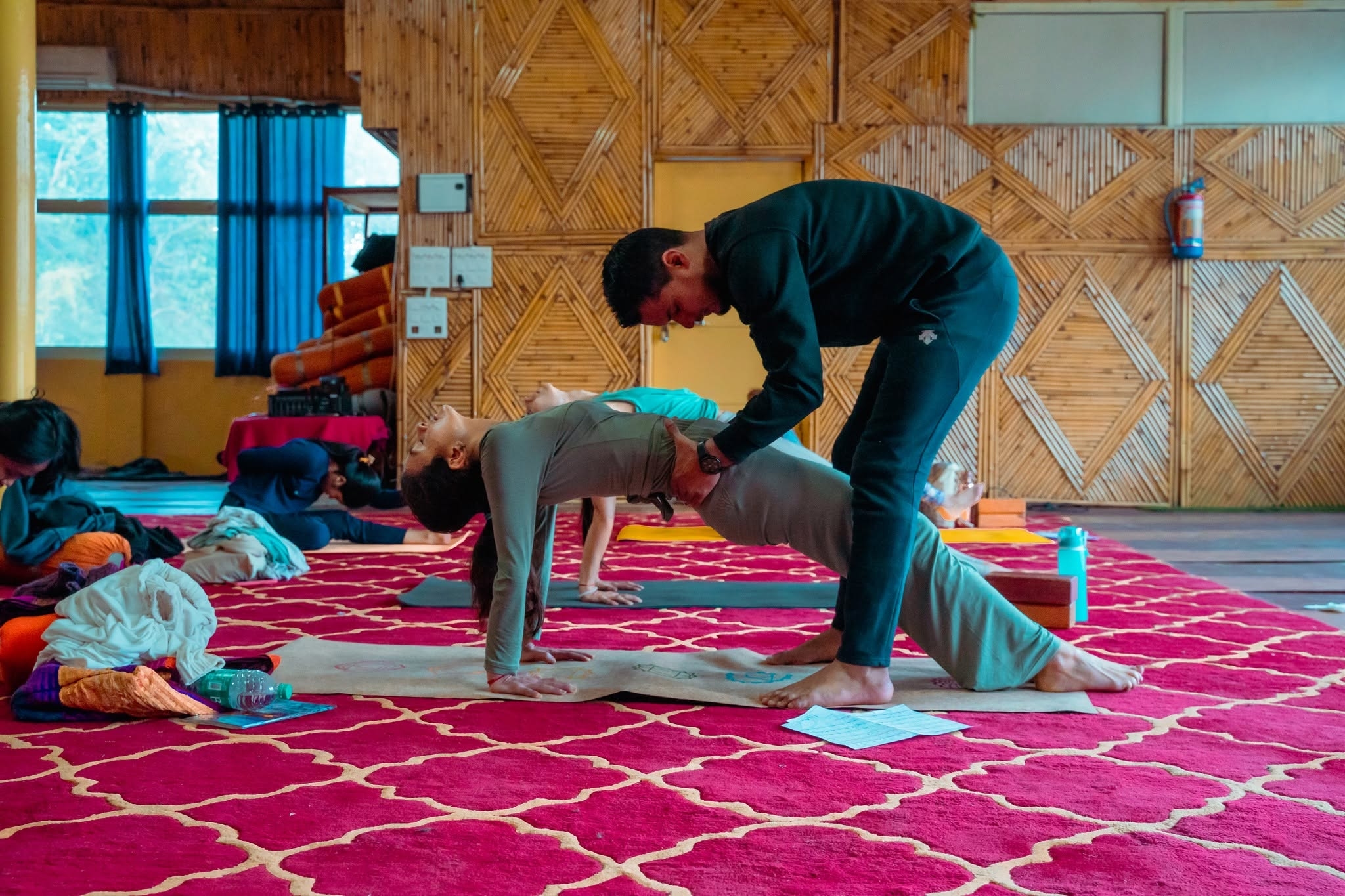
A yoga instructor needs more than the ability to demonstrate postures. They should also understand how to explain movements clearly and help students practise according to their individual abilities.
Basic anatomical knowledge allows teachers to give meaningful instructions, recognise common movement difficulties, and suggest suitable modifications.
Understanding The Main Parts Of The Body Used In Yoga
To understand yoga anatomy, beginners should first become familiar with the major structures involved in movement.
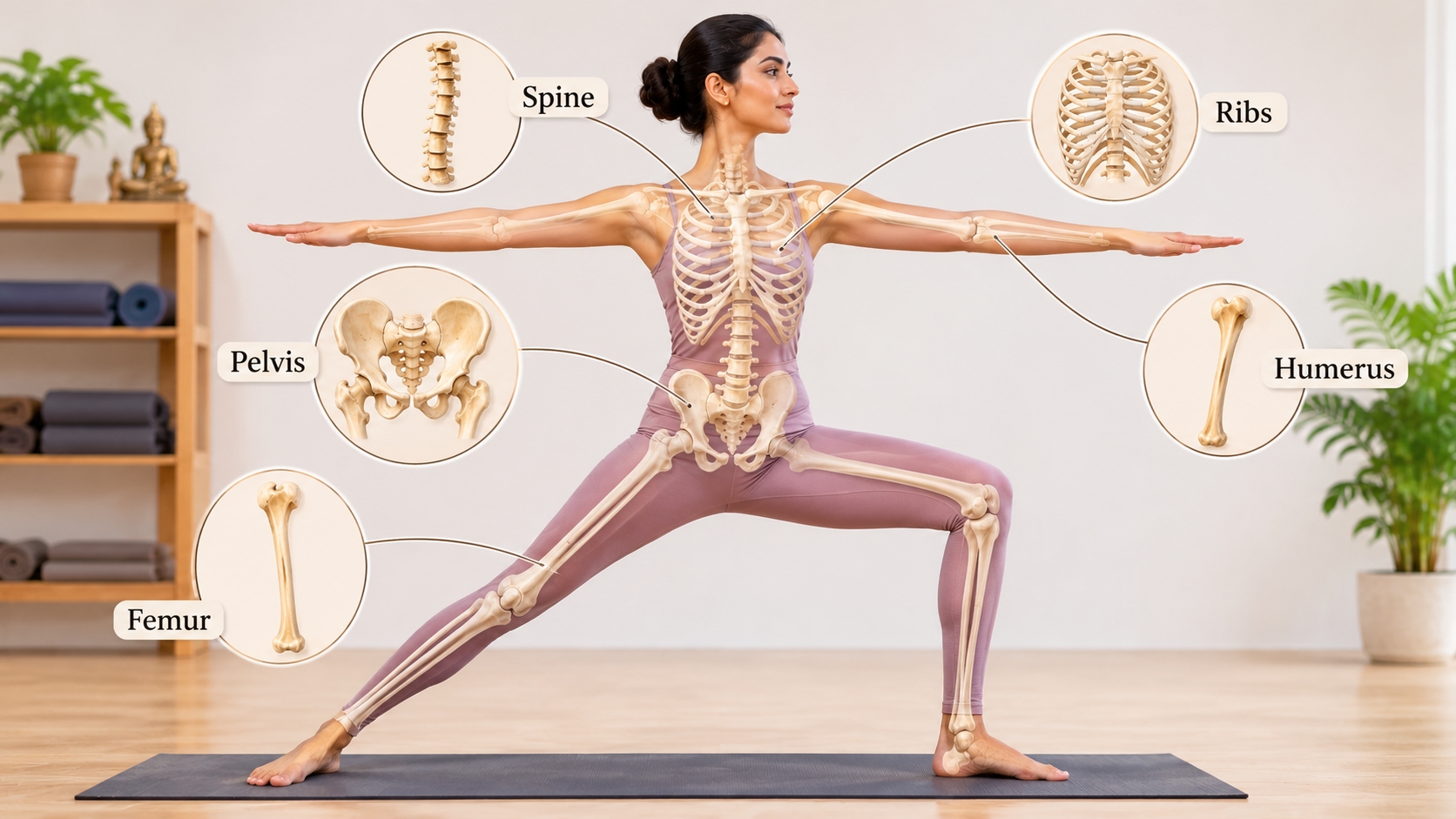
1. Bones And The Skeletal System
The skeletal system provides the body's basic framework. It gives the body shape, supports its weight, and protects important internal organs.
Bones also work with muscles and joints to make movement possible.
Some important bones involved in yoga practice include:
Spine: Supports the upper body and helps with bending, twisting, and maintaining posture.
Pelvis: Connects the spine with the legs and plays an important role in standing and seated postures.
Femur: The thigh bone, which helps support body weight during standing and balancing poses.
Humerus: The upper arm bone, which is involved in shoulder and arm movements.
Ribs: Protect important organs and move during breathing.
Understanding the skeletal system helps students recognise how different parts of the body are connected.
2. Muscles And The Muscular System
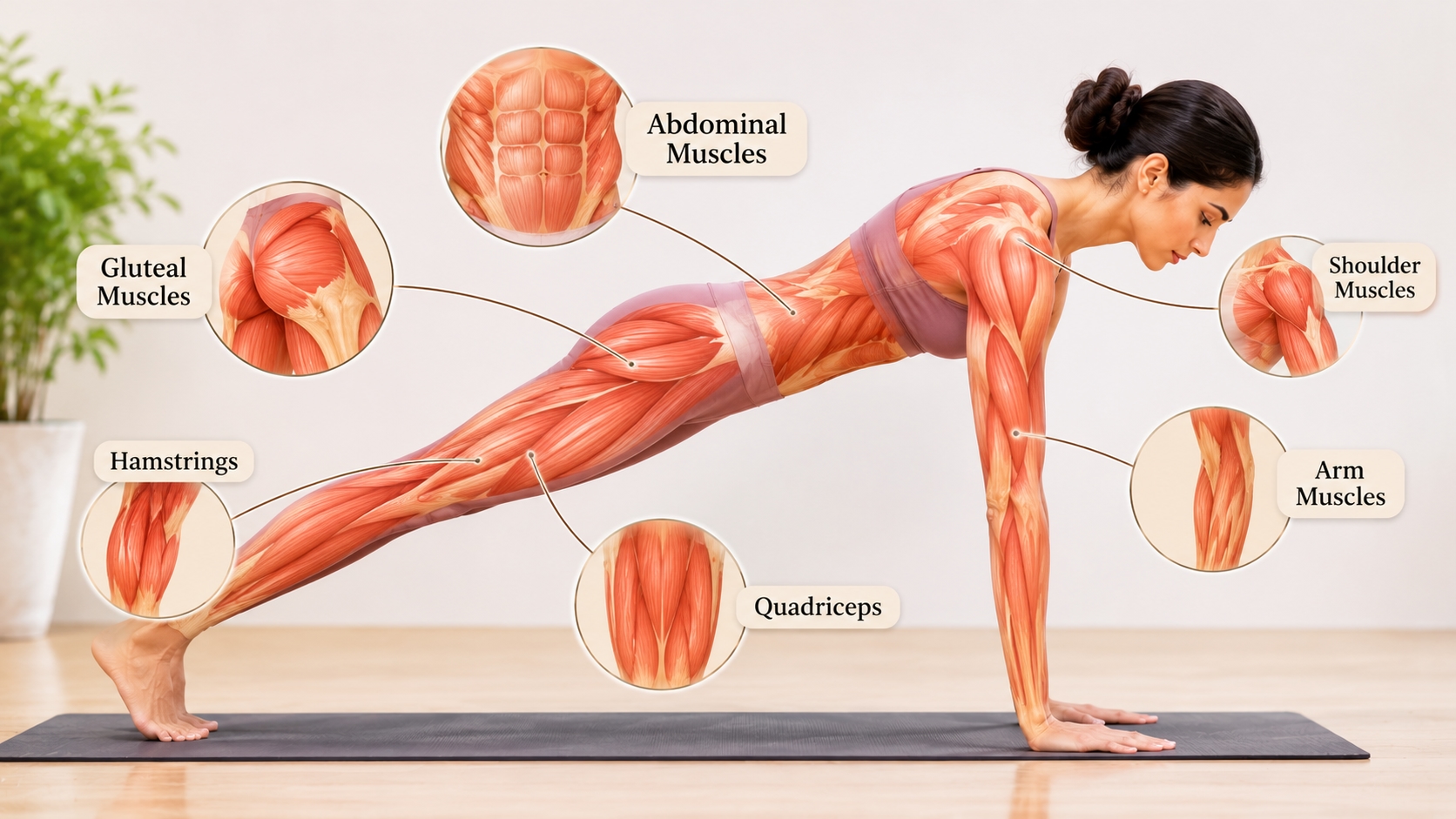
Muscles help the body move by contracting and relaxing. They support posture, create movement, and help maintain stability.
Different muscle groups are active during different yoga postures.
For example:
The abdominal muscles help support the trunk.
The quadriceps help straighten the knees.
The hamstrings contribute to hip movement and knee bending.
The gluteal muscles help stabilise the pelvis and hips.
The shoulder muscles support arm movements and upper-body stability.
In Phalakasana (Plank Pose), several muscle groups work together to keep the body stable. The abdominal muscles, shoulders, arms, and legs all contribute to maintaining the posture.
3. Joints And Their Role In Movement
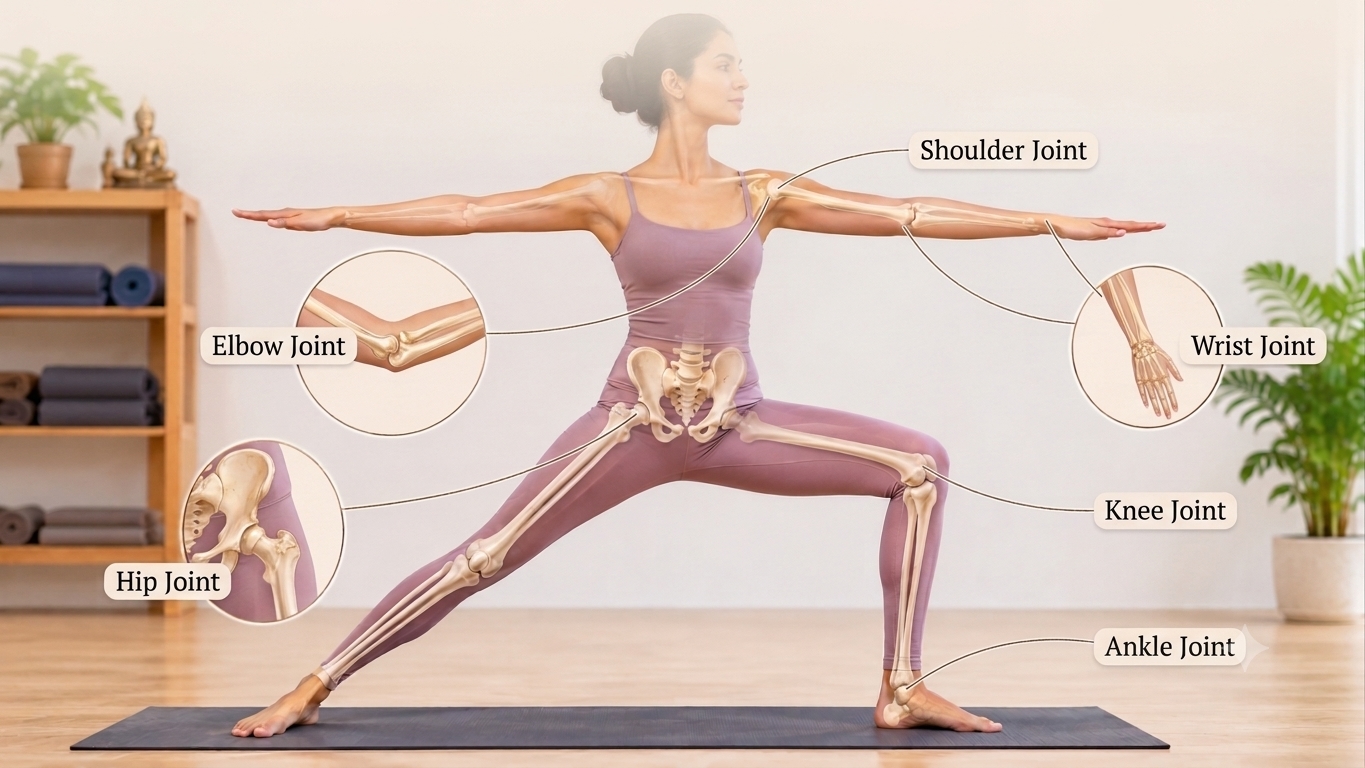
Joints are the places where two or more bones meet. They allow the body to bend, rotate, and move in different directions.
Some major joints used in yoga include:
Shoulder joints
Hip joints
Knee joints
Elbow joints
Wrist joints
Ankle joints
Different joints have different structures and movement abilities. The shoulder allows a wide range of movement, while the knee mainly supports bending and straightening.
Understanding these differences helps practitioners avoid forcing joints into movements they are not designed to perform.
4. Ligaments And Tendons
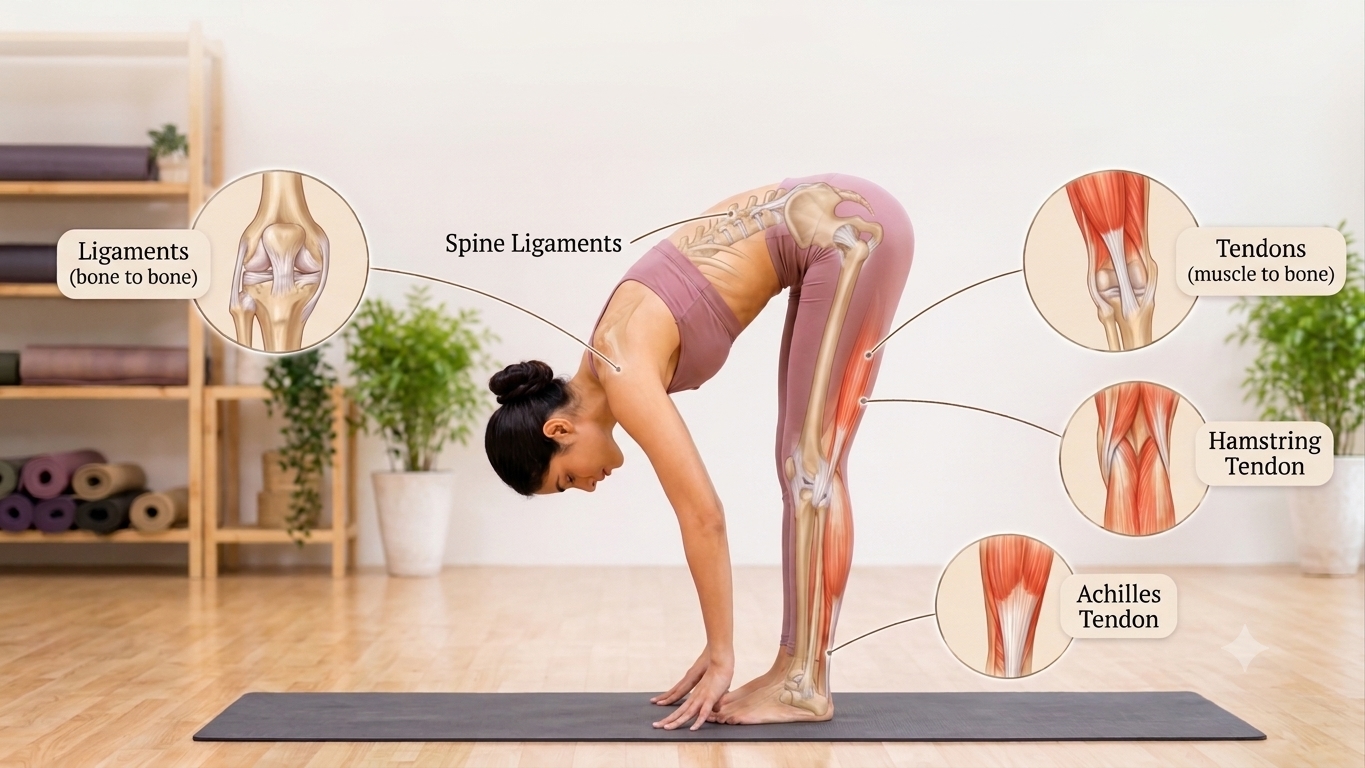
Ligaments connect bones to other bones and help support joints. Tendons connect muscles to bones and transfer the force created by muscles to produce movement.
Both are important during yoga practice.
For example, when performing a standing forward bend, muscles and tendons contribute to the movement while ligaments help support the joints.
Stretching should be gradual and controlled. Practitioners should never force a posture simply to achieve a deeper stretch.
How Does The Body Move During Yoga Asanas?
Every yoga posture involves a combination of movement, muscle activity, joint action, and balance.
Understanding some common movement patterns makes anatomy easier to learn.
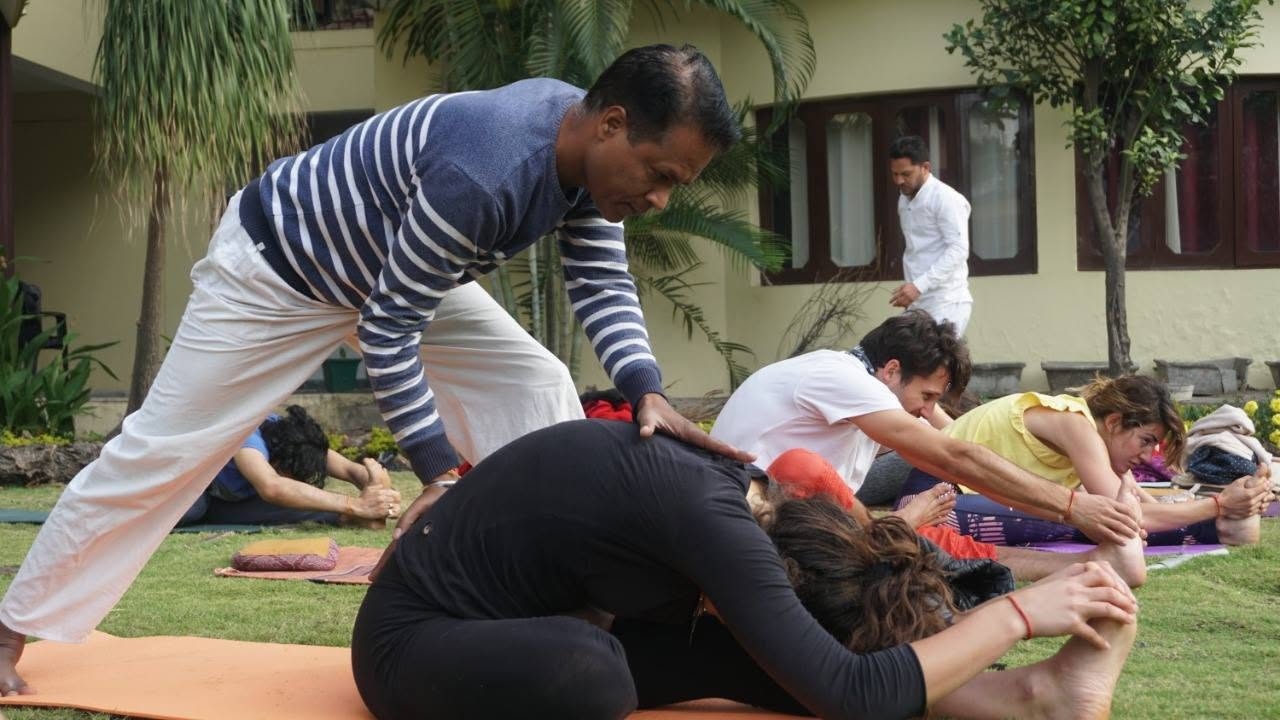
1. Forward Bending
Forward bends involve bringing the upper body towards the legs.
Examples include:
Uttanasana (Standing Forward Bend)
Paschimottanasana (Seated Forward Bend)
These postures involve movement at the hip joints, while the muscles around the back and legs help control the position.
Beginners should avoid forcing the spine or trying to touch their toes at any cost. Bending the knees slightly can make the movement more comfortable.
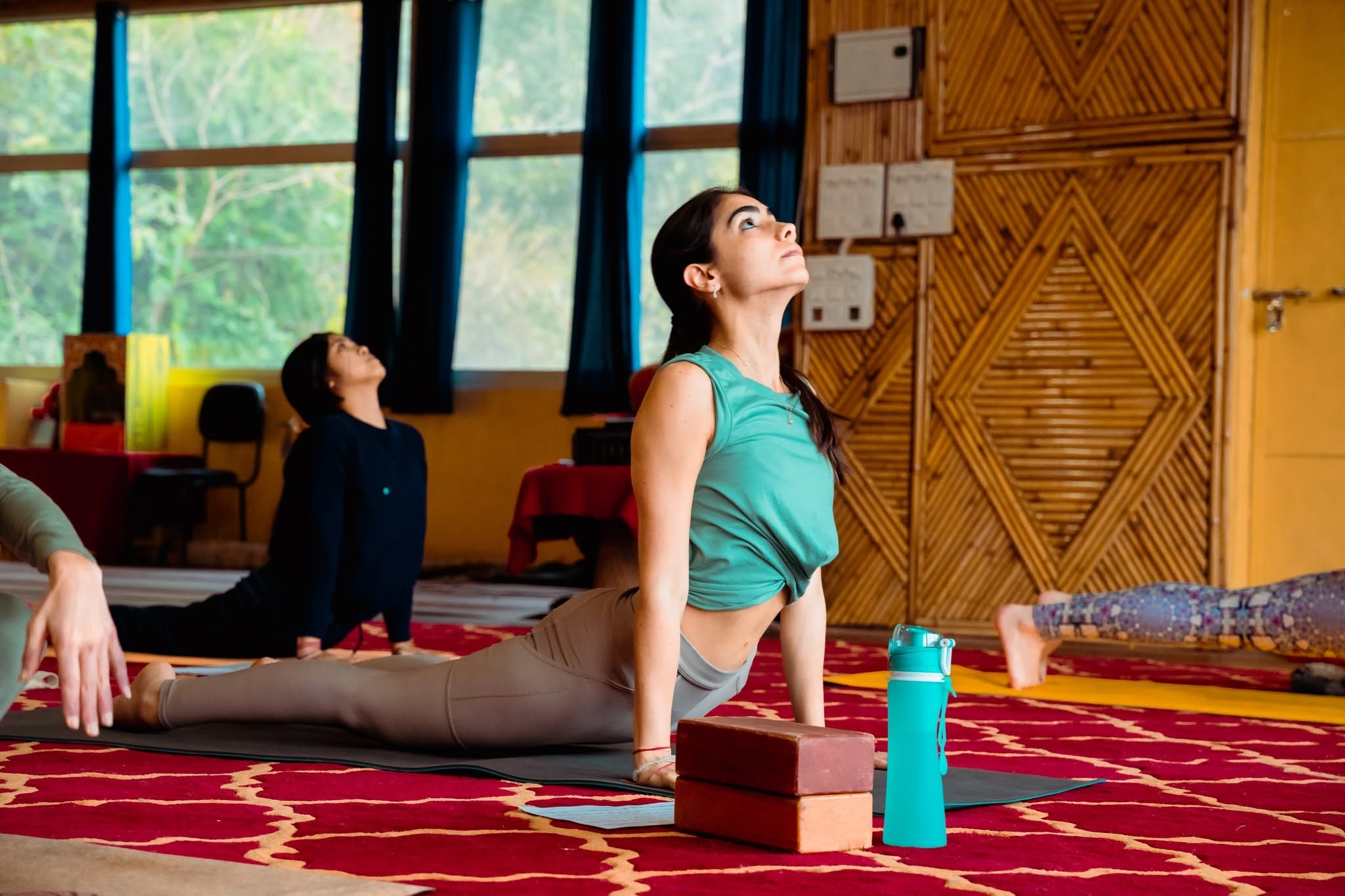
2. Backward Bending
Backbends involve extending the spine and opening the front of the body.
Examples include:
Bhujangasana (Cobra Pose)
Setu Bandhasana (Bridge Pose)
Ustrasana (Camel Pose)
These movements involve the spine, hips, shoulders, and surrounding muscles. A backbend should be distributed comfortably rather than forced into the lower back.
3. Twisting Movements
Twisting postures involve rotating the trunk.
Examples include Ardha Matsyendrasana (Half Spinal Twist) and seated spinal twists.
These movements involve the spine and muscles around the trunk. Twists should be gentle, with attention to spinal length and comfortable breathing.
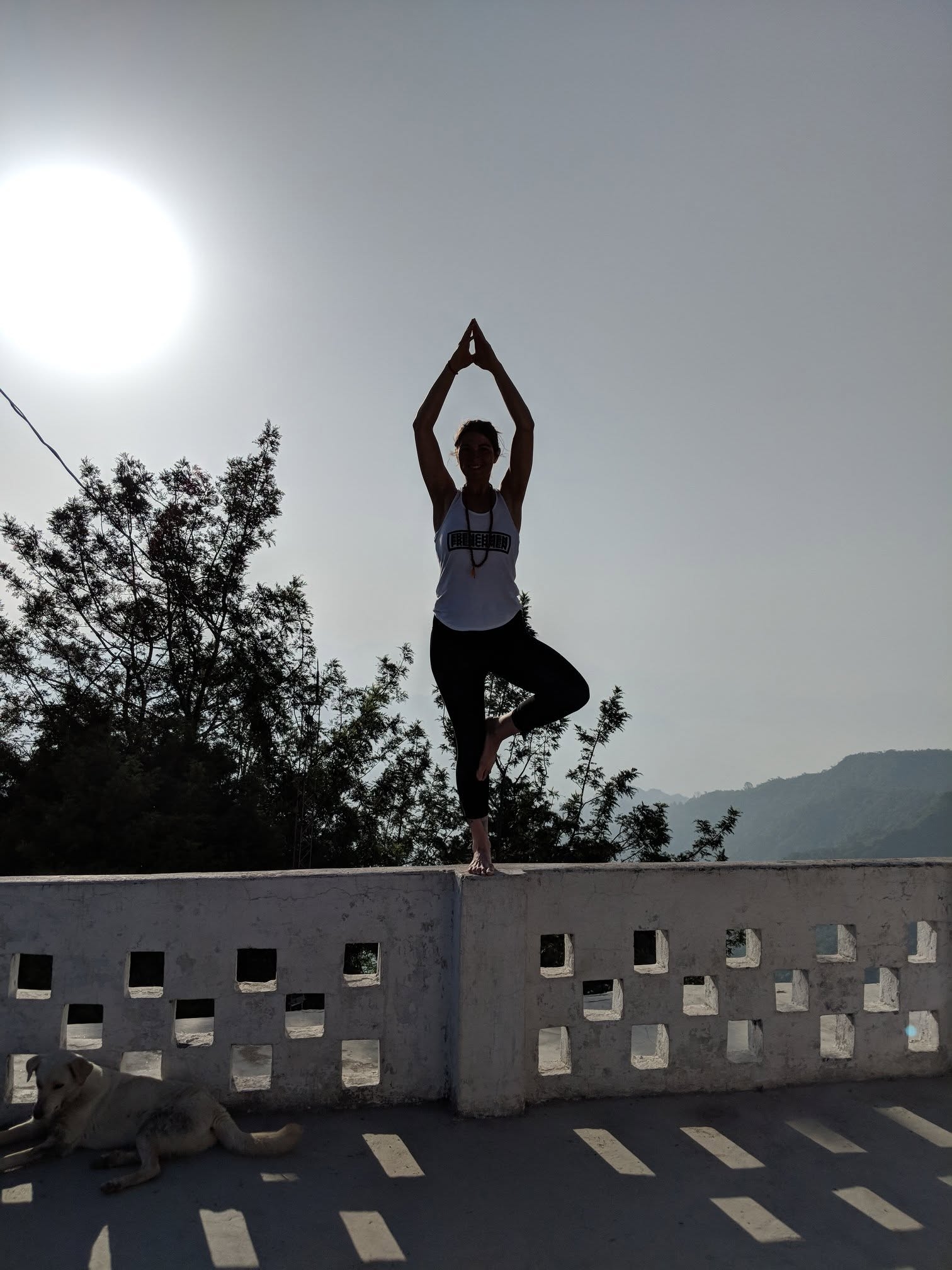
4. Balancing Movements
Balancing postures require coordination between the muscles, joints, and nervous system.
Examples include:
Vrikshasana (Tree Pose)
Garudasana (Eagle Pose)
Natarajasana (Dancer Pose)
The muscles around the ankles, hips, and trunk help maintain stability. Focusing the eyes on one steady point can also help improve balance.
The Role Of Breathing In Yoga Anatomy
Breathing is an important part of yoga because it connects movement with awareness.
The respiratory system includes the lungs, airways, diaphragm, and other muscles that help move air in and out of the body.
The diaphragm is a dome-shaped muscle located below the lungs. During inhalation, it contracts and moves downward, helping the lungs expand. During exhalation, it relaxes and moves upward.
In yoga, breathing is often coordinated with movement. For example, practitioners may inhale while raising their arms and exhale while folding forward.
However, breathing patterns can differ according to the practice. Students should avoid holding their breath unnecessarily, especially during challenging postures.
How Yoga Anatomy Helps Prevent Common Practice Mistakes
Many beginners make mistakes because they focus more on achieving the final shape of an asana than understanding the movement.
Some common examples include:
Rounding the lower back excessively during forward bends.
Locking the knees forcefully in standing postures.
Placing too much pressure on the wrists during weight-bearing poses.
Lifting the shoulders unnecessarily towards the ears.
Holding the breath during difficult movements.
Pushing beyond a comfortable range of motion.
Anatomical awareness helps practitioners recognise these patterns and make suitable adjustments.
It is important to remember that discomfort, sharp pain, numbness, or tingling should not be ignored. Students with injuries or medical concerns should seek advice from an appropriate healthcare professional before continuing challenging practices.
The Importance Of Yoga Anatomy In Teacher Training
Anatomy is an essential area of study in professional yoga education. A teacher must understand how the body moves to guide students responsibly.
During a 200 hour yoga teacher training bali, students can explore the relationship between asanas, muscles, joints, breathing, and body alignment.
At Samadhi Yoga Ashram, yoga education combines traditional yogic learning with practical instruction. Students studying yoga in Rishikesh or Bali can develop a broader understanding of yoga through subjects such as asana practice, anatomy, pranayama, meditation, and yoga philosophy.
Anatomical knowledge also supports the development of teaching skills.
A teacher should be able to explain how to enter and leave a posture, identify common alignment difficulties, and offer modifications when needed.
People interested in a 200 hour yoga teacher training in bali should consider whether the programme includes practical anatomy and physiology lessons.
What Should Beginners Learn First In Yoga Anatomy?
Beginners do not need to memorise every muscle and bone. They can start with a few basic areas.
Basic Skeletal Structure: Learn the major bones and how they support the body.
Major Muscle Groups: Understand the muscles used in common yoga postures.
Joint Movements: Learn bending, straightening, rotation, and other basic movements.
Spinal Anatomy: Understand the natural curves of the spine and its role in movement.
Breathing Anatomy: Learn the basic function of the diaphragm and lungs.
Body Alignment: Understand how to position the body comfortably during asanas.
These foundations can make yoga practice more meaningful and help students develop the confidence needed for further learning.
How To Develop A Better Understanding Of Yoga Anatomy
Learning anatomy becomes easier when theory is connected with practice.
Start by observing your body during simple postures. Notice which muscles feel active and which joints are moving. Practise slowly and pay attention to the relationship between breathing and movement.
You can also:
Study basic anatomy diagrams.
Learn the names of important muscles and bones.
Observe how different postures affect body movement.
Practise with suitable modifications.
Ask qualified teachers to explain alignment.
Review anatomy concepts regularly.
Those exploring how to become a yoga trainer should understand that teaching involves both practical experience and a sound foundation in anatomy.
A structured yoga training teacher course can help students develop these skills. However, the quality of education matters more than simply completing a course.
Yoga Anatomy And The Journey To Becoming A Yoga Teacher
Learning yoga anatomy can be especially valuable for people who want to teach yoga professionally.
The journey to become a certified yoga teacher involves more than learning a sequence of postures. Students should develop knowledge of anatomy, teaching methods, yoga philosophy, breathing practices, and safe class management.
When considering yoga instructor qualifications, students should review the programme curriculum, teaching hours, practical experience, and recognition of the certification.
The eligibility for yoga teacher education may vary according to the school and course. Many beginner-level foundational programmes accept students without previous teaching experience, although applicants should always check the specific admission requirements.
A suitable yoga instructor certification programme should help students understand the responsibilities of teaching, including how to guide different students safely.
Conclusion
Yoga anatomy helps practitioners understand how their bodies move, respond, and maintain stability during yoga practice. It explains the role of muscles, bones, joints, breathing, and body alignment in different asanas.
This knowledge is useful not only for beginners but also for experienced practitioners and aspiring teachers. It encourages mindful movement, improves body awareness, and supports safer instruction.
For anyone exploring a 200 hour yoga teacher training bali, anatomy is an important subject to consider when choosing a programme. It provides a foundation for understanding the human body and developing responsible teaching skills.
At Samadhi Yoga Ashram, the study of traditional yoga alongside practical subjects can help students develop a more complete understanding of yoga as both a personal practice and a teaching discipline.
Frequently Asked Questions
1. What Is Yoga Anatomy?
Yoga anatomy is the study of the human body's structure and movement during yoga practice. It explains how muscles, bones, joints, and body systems work together during different postures.
2. Why Is Anatomy Important For Yoga Beginners?
Anatomy helps beginners understand their physical abilities, practise postures more safely, and recognise when a movement needs modification. It also improves awareness of body alignment.
3. Which Body Parts Are Most Important In Yoga?
The spine, shoulders, hips, knees, wrists, ankles, and major muscle groups play important roles in yoga. Their involvement depends on the posture being practised.
4. Do Yoga Teachers Need To Study Anatomy?
Yes. Basic anatomy knowledge helps yoga teachers understand body movements, explain alignment, offer modifications, and guide students more responsibly.
5. Is Yoga Anatomy Included In A 200 Hour Yoga Teacher Training Course?
Anatomy and physiology are commonly included in structured 200-hour yoga teacher training programmes. Students should check the individual school's syllabus to understand the subjects covered.