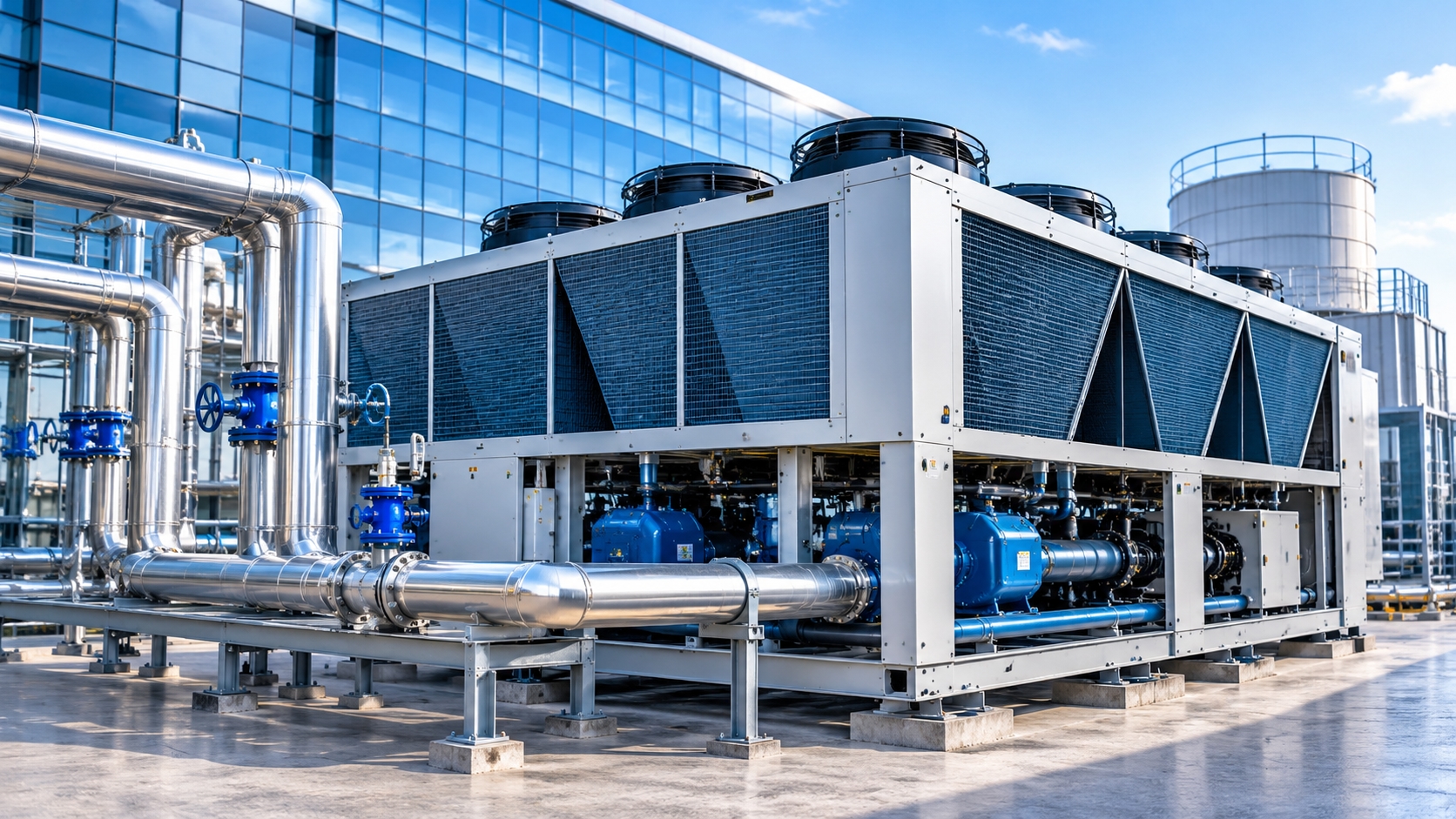
Maintaining consistent temperatures is essential for businesses that depend on reliable cooling. From hotels and restaurants to supermarkets, food processing facilities, hospitals, and commercial buildings, the right cooling equipment helps protect products, maintain operating conditions, and support daily operations. This is where Commercial Chillers play an important role.
A properly selected chiller provides controlled cooling according to the application's requirements. However, choosing suitable equipment involves more than comparing prices or cooling capacities. Businesses must consider operating conditions, energy consumption, temperature requirements, installation space, and long-term maintenance.
Understanding Commercial Chillers and Their Applications
Commercial chillers are refrigeration systems designed to remove heat from water, air, or specific processes to maintain required temperatures. Depending on their design and application, they support different commercial cooling requirements.
Common applications include:
Hotels and restaurants: Supporting food storage, beverage cooling, and air-conditioning requirements.
Supermarkets and retail stores: Maintaining suitable temperatures for perishable products and refrigerated displays.
Hospitals: Supporting HVAC systems and specialised cooling applications.
Food processing facilities: Helping maintain controlled temperatures during manufacturing and storage.
Commercial buildings: Providing centralised cooling for offices, shopping centres, and other large facilities.
Selecting equipment according to the actual application helps businesses achieve dependable cooling without unnecessary energy consumption.
Different Types of Commercial Chillers
Understanding available chiller configurations makes it easier to identify the right system for a particular facility.
1. Air-Cooled Chillers
Air-cooled chillers use ambient air to remove heat through condenser coils and fans. They are suitable for facilities where water availability is limited or where a cooling tower installation is not practical. Their comparatively straightforward installation makes them a popular choice for many commercial applications.
2. Water-Cooled Chillers
Water-cooled chillers use water and a cooling tower arrangement to reject heat. They are commonly considered for larger facilities with substantial cooling requirements and suitable water infrastructure. Their efficiency depends on operating conditions, condenser water temperature, maintenance, and system design.
3. Commercial Blast Chillers
Blast chillers rapidly reduce the temperature of cooked or processed food. They are particularly useful in commercial kitchens, catering operations, hotels, and food processing environments where controlled cooling supports food quality and safe handling practices.
4. Commercial Display and Beverage Chillers
These systems are used in supermarkets, restaurants, cafes, bars, and hospitality facilities to maintain suitable temperatures for beverages and selected food products.
Each configuration serves a different purpose, so equipment selection should begin with the intended application rather than the product category alone.
6 Important Factors to Consider Before Buying Commercial Chillers
Choosing an appropriate cooling system can influence operating costs, productivity, and equipment reliability. Businesses should evaluate the following factors before making an investment.
1. Required Cooling Capacity
Cooling capacity should be calculated according to the facility's actual heat load. Consider equipment loads, occupancy, product temperature, ambient conditions, and operating hours. An undersized chiller may struggle to maintain the required temperature, while an oversized unit can increase initial investment and cause inefficient operation.
2. Energy Efficiency
Electricity consumption is a major consideration for commercial cooling systems. Compare efficiency at realistic operating conditions rather than relying only on nominal ratings. Compressor selection, heat exchanger design, condenser performance, and control systems all influence overall energy consumption.
3. Temperature Requirements
Different applications require different temperature ranges. Food storage, beverage cooling, HVAC systems, and industrial processes cannot necessarily use the same operating settings. Clearly define the required supply and return temperatures before selecting equipment.
4. Installation Environment
Available space, ventilation, ambient temperature, noise restrictions, water availability, and accessibility should influence the choice between air-cooled and water-cooled configurations.
5. Maintenance and Technical Support
Regular inspection of compressors, filters, heat exchangers, refrigerant circuits, pumps, and electrical components helps maintain dependable performance. Access to technical support and replacement components is equally important.
6. Long-Term Operating Costs
Evaluate the complete ownership cost, including purchase price, electricity, water consumption where applicable, maintenance, installation, and expected equipment lifespan. A lower initial price does not always represent the best long-term investment.
Why Choosing Experienced Commercial Chillers Manufacturers Matters
Working with experienced Commercial Chillers Manufacturers can help businesses select equipment that matches their actual cooling requirements. A knowledgeable manufacturer should understand application-specific heat loads, operating conditions, equipment configurations, and installation limitations.
Before finalising a purchase, buyers should review technical specifications, compressor details, cooling capacity, electrical requirements, control features, warranty conditions, and available after-sales support.
Aquatech Plus focuses on designing, manufacturing, and installing industrial cooling systems, including customised chiller solutions. With more than 15 years of experience in industrial equipment, the company serves businesses seeking reliable and application-oriented cooling solutions.
Its commercial chiller solutions can be explored through its product page: Commercial Chillers.
Businesses evaluating suitable equipment can also connect with Commercial Chillers Manufacturers to understand available configurations and discuss their application requirements.
Future Trends in Commercial Cooling Technology
Commercial cooling is increasingly focused on reducing energy consumption, improving temperature control, and simplifying equipment monitoring. Variable-speed compressors, intelligent controllers, improved heat exchangers, and advanced monitoring systems are helping businesses manage cooling operations more effectively.
As commercial facilities expand, customised cooling systems are becoming increasingly important. Selecting equipment based on actual operating conditions can help businesses balance performance, energy efficiency, and long-term reliability.
Frequently Asked Questions (FAQs)
1. What are commercial chillers used for?
Commercial chillers are used to provide controlled cooling in hotels, restaurants, supermarkets, hospitals, commercial buildings, and food processing facilities.
2. Which type of commercial chiller is suitable for businesses?
The right type depends on cooling capacity, temperature requirements, installation conditions, water availability, and the intended application. Air-cooled and water-cooled systems are common options.
3. How do I calculate the required chiller capacity?
Chiller capacity is determined by evaluating the total heat load, including equipment, products, occupancy, ambient temperature, and operating conditions. A proper load calculation helps prevent undersizing or oversizing.
4. Why is energy efficiency important when selecting a commercial chiller?
Energy-efficient equipment can help reduce electricity consumption and operating expenses. Buyers should compare performance under realistic working conditions.
5. How can I choose reliable Commercial Chillers Manufacturers?
Evaluate manufacturing experience, technical expertise, product specifications, customisation capabilities, installation support, warranty conditions, and after-sales service before making a decision.
Conclusion
Selecting suitable commercial cooling equipment requires careful evaluation of capacity, temperature control, energy efficiency, installation requirements, and maintenance support. Businesses that consider these factors can make more informed purchasing decisions and build reliable cooling infrastructure.
Aquatech Plus offers customised industrial cooling solutions designed around different application requirements. Explore its commercial chiller range to identify suitable cooling options for your business.