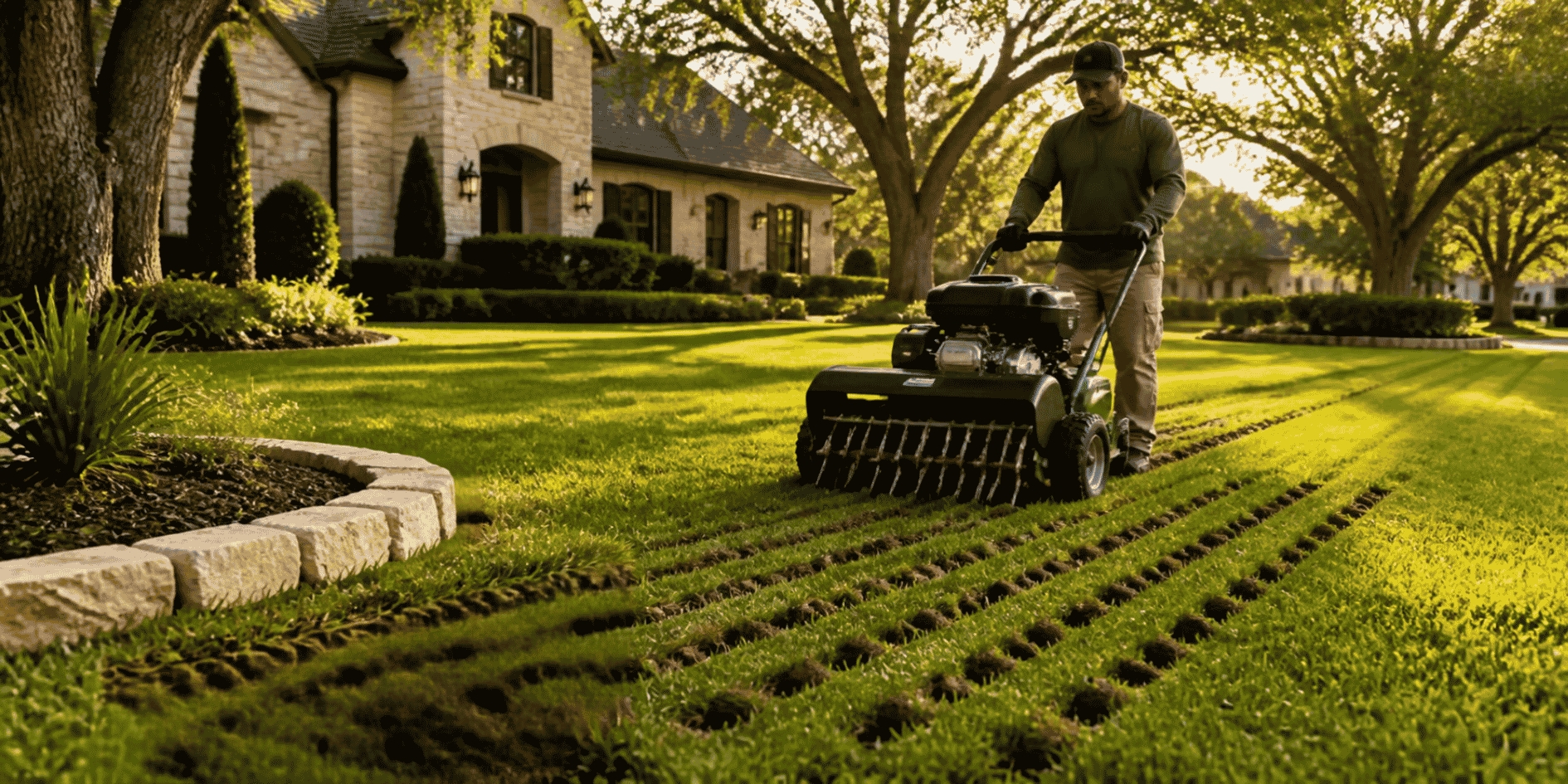
A lawn can receive regular mowing, watering, and fertilization and still struggle to look its best. One reason may be hiding below the surface. When soil becomes compacted, the spaces that normally allow air, water, and nutrients to move through the ground can become restricted, making it harder for grass roots to develop properly.
This is where lawn aeration Arlington becomes an important part of a well-planned lawn care routine. By opening up compacted soil, aeration can create better conditions for roots and help water reach areas that may otherwise remain difficult to penetrate.
What Soil Compaction Does to a Lawn
Soil naturally becomes compacted over time. Walking across the same areas, children playing outside, pets using the yard, outdoor gatherings, landscaping work, and even regular maintenance equipment can gradually press soil particles closer together.
The problem becomes more noticeable when the ground no longer has enough open space between those particles. Grass roots need access to moisture, oxygen, and nutrients, so restricted soil can make normal growth more difficult.
A compacted lawn may show several signs before the homeowner realizes what is happening underground:
Water sits on the surface instead of soaking in quickly.
Grass looks thin despite regular mowing and watering.
Certain areas become hard and difficult to penetrate.
Bare or weak patches appear in heavily used sections.
Roots remain shallow rather than developing deeper into the soil.
These symptoms can have several possible causes, so aeration should not be treated as a universal answer to every lawn problem. However, when compaction is contributing to poor growing conditions, addressing the soil can make a meaningful difference.
Why Arlington Lawns Can Develop Compaction
Different parts of a property experience different levels of pressure. A front lawn near a sidewalk may receive regular foot traffic, while a backyard may deal with children, pets, outdoor furniture, or frequent family activities.
Clay-heavy or dense soil can also become particularly challenging when it is repeatedly compressed. Once compacted, the surface may shed water instead of allowing it to move downward efficiently.
High-Traffic Areas Need Extra Attention
Not every square foot of a lawn needs the same treatment. A quiet section behind a fence may remain relatively loose, while the route between a driveway and backyard gate could receive constant traffic.
Homeowners can identify these areas by looking for differences in grass performance. If one part of the lawn consistently looks thinner, dries differently, or feels harder underfoot than nearby sections, the soil conditions may deserve closer attention.
A useful inspection should consider:
Where people regularly walk
Where pets spend the most time
Areas affected by runoff
Sections where grass repeatedly becomes thin
Places where water appears to drain slowly
This kind of observation makes lawn care more targeted. Instead of treating the entire property exactly the same, homeowners can pay closer attention to areas that are actually experiencing stress.
How Lawn Aeration Arlington Opens the Soil
The basic purpose of aeration is straightforward: create openings in the soil so that air, water, and nutrients have better pathways into the root zone.
Depending on the equipment and method used, aeration may involve removing small cores or creating openings through the surface. Core aeration is commonly used because it physically removes small plugs of soil rather than simply pushing the soil aside.
Those openings can provide more room for roots to expand and can improve the movement of moisture through compacted areas. The removed soil plugs may remain on the lawn temporarily and gradually break down, returning some material to the surface.
Lawn aeration Arlington is most useful when it is considered part of a larger maintenance strategy. Aeration alone cannot correct every issue. Soil type, grass variety, drainage, watering habits, mowing practices, and other conditions all influence how a lawn responds.
Timing Matters More Than Many Homeowners Realize
Aeration is not simply a task that should be performed whenever the lawn looks tired. Timing can affect how effectively grass responds afterward.
The ideal period depends on the turfgrass variety, weather conditions, soil moisture, and local growing patterns. Aerating when the grass is actively able to recover generally makes more sense than disturbing the root zone during a period when the turf is under significant environmental stress.
Before scheduling lawn aeration Arlington, homeowners should consider the condition of the ground. Soil that is extremely dry can be difficult to work, while excessively wet soil may become messy and can sometimes compact further under equipment.
Good preparation starts with observing the lawn rather than following a calendar blindly.
Preparing the Yard Before Aeration
A little preparation can make the process more efficient. Homeowners do not need to completely redesign their maintenance routine, but they should make sure the area is accessible and any obvious obstacles are addressed.
Before aeration, it is useful to:
Mark irrigation components or other hidden obstacles.
Remove toys, furniture, hoses, and decorations.
Identify areas with unusual drainage.
Note particularly compacted sections.
Make sure the lawn is accessible to the equipment being used.
Underground irrigation lines deserve particular attention. Even when homeowners know where visible sprinkler heads are located, underground components may extend beyond what can be seen from the surface.
If there is uncertainty about buried systems, professional guidance is preferable to guessing.
What to Do After Aeration
The work does not end when the equipment leaves the property. The period after aeration can be important because the newly opened soil provides an opportunity to improve growing conditions.
Watering should be adjusted according to current weather and the needs of the turf. The goal is not simply to add as much water as possible. Homeowners should pay attention to whether moisture is actually moving into the soil rather than collecting on the surface.
Aeration can also be a useful time to evaluate other lawn practices.
Consider Overseeding Where Appropriate
If the lawn contains thin areas, aeration may be paired with overseeding when appropriate for the turf type and season. The openings created during aeration can provide improved contact between seed and soil.
However, overseeding should not automatically be added to every aeration project. Grass variety, existing turf density, weather, and seasonal timing all matter.
Review Fertilization Practices
Aeration can also fit into a broader nutrient-management plan. If the soil has been compacted, improving physical conditions around the roots may help create a more favorable environment for future growth.
That does not mean more fertilizer is always better. Applying unnecessary nutrients can create additional problems. A thoughtful lawn care plan considers what the turf actually needs instead of relying on repeated applications.
Watering Habits Can Reveal Soil Problems
One of the easiest ways to notice a potential compaction issue is to watch what happens after irrigation or rainfall.
If water disappears into the ground fairly evenly, the soil may be accepting moisture well. If water repeatedly pools in one location or runs toward another section, there may be an issue with soil structure, grading, drainage, or another underlying condition.
Homeowners should watch for patterns rather than reacting to a single rainy day.
Signs worth monitoring include:
Persistent puddles after ordinary rainfall
Water running across the surface
Dry patches beside unusually wet areas
Grass that wilts despite frequent watering
Soil that remains hard for extended periods
These observations can help determine whether aeration is appropriate or whether a different solution should be investigated.
The Role of Professional Lawn Care
Aeration equipment is available to homeowners, but choosing the right approach can be more complicated than simply running a machine across the lawn. Soil moisture, turf condition, equipment weight, depth, coverage, and timing all influence the result.
A professional lawn care provider can evaluate the property before recommending aeration and can consider it alongside mowing, irrigation, seasonal maintenance, and other services. The Grounds Guys Of Arlington is one example of a local lawn care provider homeowners may consider when looking for professional assistance with outdoor maintenance.
The main benefit of professional input is having the work connected to the property's actual conditions rather than treating aeration as a routine task with the same schedule for every yard.
Common Aeration Mistakes to Avoid
A lawn can be disturbed unnecessarily when homeowners focus on completing a task instead of understanding why it is needed.
One common mistake is aerating extremely dry soil. Hard, dry ground can make the process difficult and may prevent equipment from working as intended. Another is working soil that is excessively saturated, which can create a muddy surface and potentially contribute to additional compaction.
Other mistakes include:
Aerating without checking for underground irrigation components.
Choosing timing based solely on convenience.
Ignoring severe drainage problems.
Expecting aeration to fix pest, disease, or nutrient issues by itself.
Repeating aeration without evaluating whether the lawn actually needs it.
A better approach is to assess the lawn first and choose a treatment based on observable conditions.
Making Aeration Part of a Bigger Lawn Strategy
Healthy turf rarely depends on one service. Mowing height, watering frequency, soil conditions, sunlight, seasonal weather, and traffic patterns all interact.
Aeration makes the most sense when it supports these other practices. For example, opening compacted soil may be useful, but repeatedly driving heavy equipment over the same areas can gradually create new compaction. Likewise, improving soil conditions will not compensate for consistently improper mowing or poor irrigation practices.
A long-term lawn plan should therefore look at the property as a whole.
Build a Simple Seasonal Checklist
Homeowners can keep lawn maintenance more organized by checking a few basic conditions throughout the year:
Inspect grass density and color.
Look for compacted or unusually hard areas.
Watch how rainfall moves across the property.
Adjust mowing practices as grass growth changes.
Review watering rather than following a fixed schedule year-round.
This does not require constant attention. A short inspection every few weeks can reveal changes before they become major problems.
When Should Homeowners Consider Aeration?
There is no single schedule that works perfectly for every Arlington property. Some lawns experience enough traffic or soil pressure to need more attention, while others may remain in good condition for longer periods.
The better question is whether the soil is restricting the lawn's ability to grow.
If the surface feels unusually hard, water struggles to penetrate, and grass repeatedly performs poorly despite otherwise reasonable care, lawn aeration Arlington may be worth discussing with a lawn care professional.
On the other hand, if the lawn has healthy root development and no obvious compaction concerns, aeration may not need to be a priority at that moment.
Looking Beyond the Immediate Improvement
The purpose of aeration is not simply to make holes in the ground. The larger goal is to improve the environment where grass roots grow.
Once compacted areas are addressed, homeowners should protect those improvements by paying attention to traffic, watering, mowing, and soil conditions. Heavy use cannot always be avoided, but paths and activity areas can sometimes be managed differently to reduce unnecessary pressure on turf.
Over time, this approach can make lawn maintenance more deliberate. Instead of reacting whenever grass begins to decline, homeowners can pay attention to the conditions that influence turf performance in the first place.
Frequently Asked Questions
What is lawn aeration?
Lawn aeration is a process that creates openings in compacted soil. These openings can improve the movement of air, water, and nutrients around the grass root zone.
How do I know if my lawn needs aeration?
Hard soil, poor water penetration, standing water, thin grass, and shallow roots can indicate possible compaction. A professional assessment can help determine whether aeration is appropriate.
Can aeration help with heavy foot traffic?
It can help address soil compaction associated with repeated traffic. However, reducing unnecessary traffic and protecting high-use areas can also be important for maintaining the improvement.
Should I water immediately after aeration?
Post-aeration watering depends on soil conditions, turf type, weather, and the broader lawn care plan. Follow the recommendations provided for your particular property rather than using a fixed watering amount.
Can aeration fix a damaged lawn by itself?
No. Aeration addresses soil compaction, but thin or declining turf can have many causes, including irrigation problems, pests, disease, poor mowing, or unsuitable growing conditions.
How often should a lawn be aerated?
Frequency depends on soil type, traffic, turf conditions, and how quickly compaction returns. Rather than following a universal schedule, homeowners should evaluate the lawn's condition and consult a professional when needed.
Conclusion
Compacted soil can quietly limit what a lawn is able to accomplish above the surface. When air and water have difficulty moving through the root zone, even consistent mowing and watering may not produce the results homeowners expect.
Lawn aeration Arlington can help open compacted areas and create more favorable conditions for grass roots, particularly when the property experiences heavy traffic or dense soil. The key is to approach aeration as one part of a broader lawn care strategy.
By watching how water moves, identifying high-traffic sections, choosing appropriate timing, preparing the property, and following up with sensible maintenance, homeowners can make more informed decisions about their turf. A lawn that receives attention below the surface as well as above it is better positioned for steady growth through changing conditions.