
Osteomyelitis is an infection and inflammation of bone that can damage bone tissue and nearby structures. When it affects the upper or lower jaw, it may cause persistent dental pain, swelling, fever, or drainage. Osteomyelitis in jaw bone often begins when bacteria spread from an infected tooth or surrounding gum, although surgery, injury, or infection elsewhere can also be responsible.
Early assessment matters because treatment may require antibiotics, dental treatment, or surgery. This guide explains common causes, warning signs, diagnosis, treatment choices, recovery, coding, and supportive care. It is educational information, not a substitute for an examination by a dentist, oral and maxillofacial surgeon, or medical clinician.
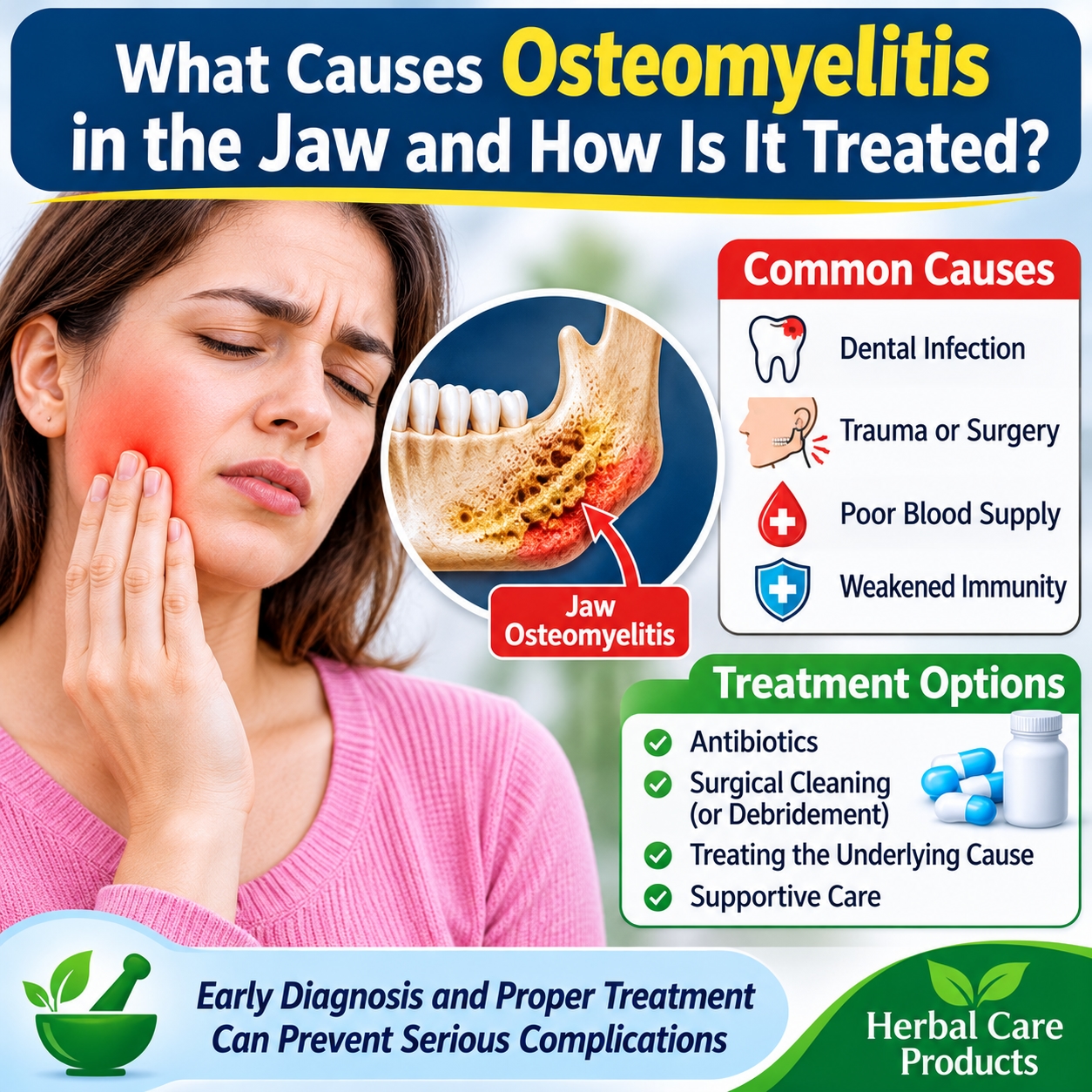
What Is Osteomyelitis in Jaw Bone?
Osteomyelitis means infection within bone, including its marrow and surrounding tissues. In the jaws, infection can involve the mandible (lower jaw), maxilla (upper jaw), or both. Bacteria trigger inflammation, and swelling inside the bone can impair its blood supply. Severe or prolonged infection may cause areas of bone to die. These fragments are called sequestra.
Jaw infections are often described as acute or chronic. Acute disease develops over days or weeks and may produce marked pain, swelling, and fever. Chronic disease persists or returns over a longer period; it can involve dead bone, draining passages, or repeated episodes of discomfort. Some chronic inflammatory jaw conditions have different causes and do not behave like a typical bacterial infection, so accurate diagnosis is important.
The lower jaw is affected more often than the upper jaw. Osteomyelitis in jaw tissue can progress when treatment is delayed.
What Causes Osteomyelitis in the Jaw?
The most frequent starting point is a bacterial infection in the teeth or gums. Dental professionals assess osteomyelitis in jaw bone when pain persists beyond an ordinary toothache. Bacteria can move from an untreated dental abscess into the nearby jawbone. Advanced periodontal disease, infected tooth roots, and severe dental decay can also provide a route for infection.
Other possible causes of osteomyelitis in jaw bone include:
A tooth extraction or other oral surgery, particularly when infection is already present.
A fracture, penetrating injury, or wound involving the jaw.
Infection spreading through the bloodstream from another site. This route is less common in adults.
Poorly controlled diabetes, reduced circulation, or a weakened immune system, which can make infection more likely or harder to treat.
Previous radiation treatment to the head or neck, which can damage bone and its blood supply.
Certain medicines that affect bone turnover, although medication-related jaw osteonecrosis is a distinct condition rather than ordinary bacterial osteomyelitis.
Common bacteria include oral streptococci and anaerobic organisms that normally live in the mouth. Staphylococcus aureus and other bacteria may be involved in some cases. The exact organism cannot be reliably identified from symptoms alone; a sample taken from deep tissue or bone may be needed.
Smoking, poor oral hygiene, untreated dental disease, malnutrition, and delayed care can add to risk. These factors may complicate osteomyelitis in jaw patients. They do not prove that a person has a bone infection, but they can complicate healing.
What Symptoms Should You Watch For?
Symptoms vary according to the cause, location, and duration of infection. Possible signs include:
Deep, persistent pain in the jaw, teeth, or face.
Swelling, tenderness, warmth, or redness around the jaw.
Fever, chills, fatigue, or a general feeling of illness.
Gum swelling, pus, a bad taste, or fluid draining through the gum or skin.
Loose teeth or discomfort when chewing.
Difficulty opening the mouth, swallowing, or moving the jaw.
Numbness or altered sensation in the lower lip or chin.
Exposed bone or a wound in the mouth that does not heal.
Not everyone has a fever, and chronic disease may cause relatively mild symptoms between flare-ups. Pain that seems to improve does not always mean the infection has cleared. Persistent swelling, drainage, unexplained numbness, or exposed bone needs prompt dental or medical assessment. These symptoms warrant evaluation for osteomyelitis in jaw structures.
Seek urgent care if you develop rapidly increasing facial or neck swelling, difficulty breathing or swallowing, confusion, severe weakness, or a high fever with worsening symptoms. These can indicate a spreading infection or another emergency.
How Is a Jaw Bone Infection Diagnosed?
A dentist, oral surgeon, or physician will ask about symptoms, dental treatment, medical conditions, medicines, and previous radiation. The examination may include the teeth, gums, mouth, jaw movement, facial swelling, lymph nodes, and sensation.
Imaging helps show whether bone is inflamed, damaged, or separated into fragments. It can map osteomyelitis in jaw areas before a procedure. A dental X-ray or panoramic radiograph may be an initial test, but early infection can be difficult to see on plain films. Cone-beam CT or conventional CT can show bone destruction, sclerosis, and sequestra. MRI is useful for detecting marrow inflammation and the spread of infection into nearby soft tissues.
Blood tests may include a complete blood count and inflammatory markers such as C-reactive protein or erythrocyte sedimentation rate. These results can support an assessment and help monitor response, but normal results do not always exclude a localised infection.
When possible, clinicians may collect pus, deep tissue, or a bone sample for culture and laboratory testing. A culture helps identify the bacteria and guide antibiotic selection. A biopsy may also be needed when the appearance is unusual or another condition, such as cancer or a non-infectious inflammatory disorder, must be excluded. If a patient is seriously ill, urgent antibiotics should not be delayed while waiting for samples.
How Is Osteomyelitis in Jaw Treated?
Treatment of osteomyelitis in jaw bone depends on the infection's severity, cause, duration, affected bone, and the patient's general health. Care often involves a dentist or oral and maxillofacial surgeon, with input from an infectious disease specialist when the infection is complicated.
Antibiotics and infection control
Antibiotics are a central part of treatment for bacterial disease. They are selected to treat the organisms most likely to cause osteomyelitis in jaw infections. The clinician may start an empiric medicine that covers likely oral bacteria, then adjust it when culture results become available. The choice depends on allergies, local resistance patterns, kidney function, severity, and test findings. Some patients can take oral antibiotics; people who are seriously unwell or unable to take oral medicine may need hospital treatment and intravenous antibiotics.
Treatment may last several weeks, but there is no single duration suitable for everyone. The plan may change after surgery, culture results, and clinical review. Take prescribed medicine exactly as directed. Do not use leftover antibiotics, share medication, stop early without medical advice, or assume that a shorter course is safer. A Natural Treatment for Bone Infection cannot replace antibiotics, drainage, or surgery when clinicians judge these treatments necessary.
Dental treatment and surgery
Antibiotics alone may not clear infection if an abscess, infected tooth, foreign material, or dead bone remains. The dental source must be addressed because osteomyelitis in jaw bone may persist while an infected tooth or abscess remains. Treatment may include root canal therapy or removal of a tooth that cannot be saved. An abscess may need drainage.
For persistent or advanced infection, a surgeon may perform debridement, removing infected and non-viable bone while preserving healthy structures where possible. A sequestrum may need removal. Extensive disease can require more substantial resection and, in selected cases, reconstruction with bone grafts or other techniques. Surgery is not necessary for every patient; the decision is based on imaging, examination, response to treatment, and the amount of damaged bone.
Pain relief and supportive care
A clinician may recommend suitable pain relief after considering allergies, kidney or liver disease, stomach ulcers, pregnancy, and other medicines. Gentle oral hygiene and any prescribed mouth rinse can help keep the mouth clean. Follow the treating team's instructions about brushing near a surgical site, rinsing, eating, and follow-up appointments.
Can Natural or Home Approaches Treat the Infection?
Home care can support comfort, but it cannot sterilise infected bone or replace antibiotics and necessary surgery. Warm salt-water rinses may be recommended after certain dental procedures, but patients should ask their clinician when rinsing is safe. A soft diet, adequate fluids, rest, and avoiding tobacco can support general recovery. Do not place aspirin, alcohol, essential oils, or irritating substances directly on the gum or exposed bone.
Searches for Natural Remedies for Osteomyelitis often lead to advice about herbs, supplements, or special diets. There is no reliable evidence that these approaches eradicate a bacterial bone infection. Some supplements can interact with antibiotics, blood thinners, or other medicines, and some products may be contaminated or inaccurately labelled. Discuss every supplement with the treating clinician before using it.
A balanced diet containing enough calories, protein, vitamins, and minerals supports tissue repair, especially after surgery. Nutrition supports tissue repair, but it cannot clear infection. People with diabetes should follow their diabetes care plan because blood glucose control can affect infection management and wound healing.
What Does ICD-10-CM Code M27.2 Mean?
In United States ICD-10-CM, M27.2 describes inflammatory conditions of the jaws. Its inclusion terms list jaw osteitis, neonatal jaw osteomyelitis, periostitis, osteoradionecrosis, and sequestrum of jaw bone. Because the osteomyelitis inclusion is qualified as neonatal, do not assume M27.2 automatically applies to every adult bacterial case; verify the Alphabetic Index and documentation with a qualified coder.
Medication-related osteonecrosis of the jaw is distinguished in the classification and may be coded separately, including M87.180 when applicable. A radiation-related condition may require an additional external-cause code, according to the coding instructions. Do not assume that every exposed or infected jaw lesion receives the same code.
Right-foot specificity is not relevant to a jaw diagnosis. The M86 category contains site-specific osteomyelitis codes for bones of the limbs. For example, M86.171 refers to other acute osteomyelitis of the right ankle and foot; it must not be used to describe infection in the mandible or maxilla. The correct code depends on the documented anatomical site, type, cause, and applicable national coding system. ICD-10 versions outside the United States may use different code structures.
Frequently Asked Questions
Is osteomyelitis in the jaw serious?
It can be serious if infection spreads, damages bone, or affects nearby tissues. Prompt diagnosis and appropriate treatment reduce the risk of complications. Facial swelling with fever, drainage, or worsening pain should be assessed quickly.
Can a tooth infection spread to the jawbone?
Yes. Bacteria from an untreated tooth abscess or advanced dental infection can spread into nearby bone. Dental assessment and treatment of the original source are important to prevent ongoing infection.
Does every patient need jaw surgery?
No. Some patients respond to antibiotics and treatment of the dental source. Surgery may be needed to drain an abscess or remove dead and infected bone, particularly in chronic or extensive disease.
Are herbal products effective for bone infection?
There is no good clinical evidence that herbal products cure bacterial osteomyelitis. Herbal Care Products should never replace prescribed antibiotics, dental procedures, or surgical care. Ask a healthcare professional about safety and possible interactions before taking any supplement.
When should I seek emergency help?
Get emergency care for difficulty breathing or swallowing, rapidly spreading facial or neck swelling, severe illness, confusion, or high fever with worsening symptoms. These signs may indicate a dangerous spreading infection.
Conclusion
Jaw osteomyelitis is a potentially serious condition, most often linked to bacteria spreading from dental disease, although injury, surgery, and other health factors can contribute. Early assessment, suitable imaging, culture when needed, antibiotics, and treatment of the original dental source form the foundation of care. Some patients also need drainage or removal of damaged bone. Home measures may support comfort and recovery, but they cannot cure an established bone infection. If you have persistent jaw pain, swelling, drainage, fever, numbness, or exposed bone, arrange prompt professional assessment and follow the treatment plan recommended for your diagnosis.






