Yoga includes several sequences that connect physical movement with breathing and focused awareness. One such practice is Chandra Namaskar, commonly known as Moon Salutation. While Surya Namaskar, or Sun Salutation, is widely recognised in modern yoga classes, Chandra Namaskar offers a different sequence that is traditionally associated with the symbolism of the moon.
The moon has long held significance in Indian culture and yogic traditions. It is commonly associated with calmness, reflection, rhythm, and the changing cycles of nature. Chandra Namaskar draws inspiration from these associations and provides an opportunity to explore a more measured style of movement.
For practitioners who want to understand different yoga sequences, learning about Moon Salutation offers an interesting perspective on how movement, breath, and traditional symbolism come together.
What Is Chandra Namaskar In Yoga?
Chandra Namaskar is a sequence of yoga postures performed in a flowing order, generally coordinated with breathing.
The Sanskrit word Chandra means moon, while Namaskar means salutation or respectful greeting.
The sequence is commonly associated with gentle, controlled movements and side-to-side patterns. Unlike many familiar Sun Salutation variations, which move predominantly through forward-facing positions, some Moon Salutation sequences include lateral movements and wide standing postures.
Understanding sequences such as Chandra Namaskar can also broaden the practical knowledge developed through yoga teacher training in india, where students may study different asana sequences, their traditional background, breathing coordination, and teaching methods.
There is no single universally standardised Moon Salutation sequence. Different yoga traditions and teachers may use different postures and arrangements. Therefore, practitioners should understand the specific version being taught rather than assuming that every sequence is identical.
The Symbolism Of The Moon In Yogic Traditions
In Indian philosophical and cultural traditions, the moon is associated with various symbolic meanings. It is frequently connected with coolness, reflection, cycles, and the changing nature of experience.
The sun and moon also appear in traditional discussions of Hatha Yoga. The term Hatha is often explained through symbolic associations between Ha, representing the sun, and Tha, representing the moon.
These associations are part of a traditional philosophical framework rather than a literal description of biological processes.
Chandra Namaskar draws on this symbolism by offering a sequence that is often practised at a slower pace. Its movements may encourage practitioners to pay attention to their breathing, body position, and transitions between postures.
Common Postures In A Chandra Namaskar Sequence
Chandra Namaskar is generally practised through a sequence of yoga postures performed in a slow and controlled manner. Different yoga traditions may follow slightly different versions of the sequence. One commonly taught variation includes the following postures:
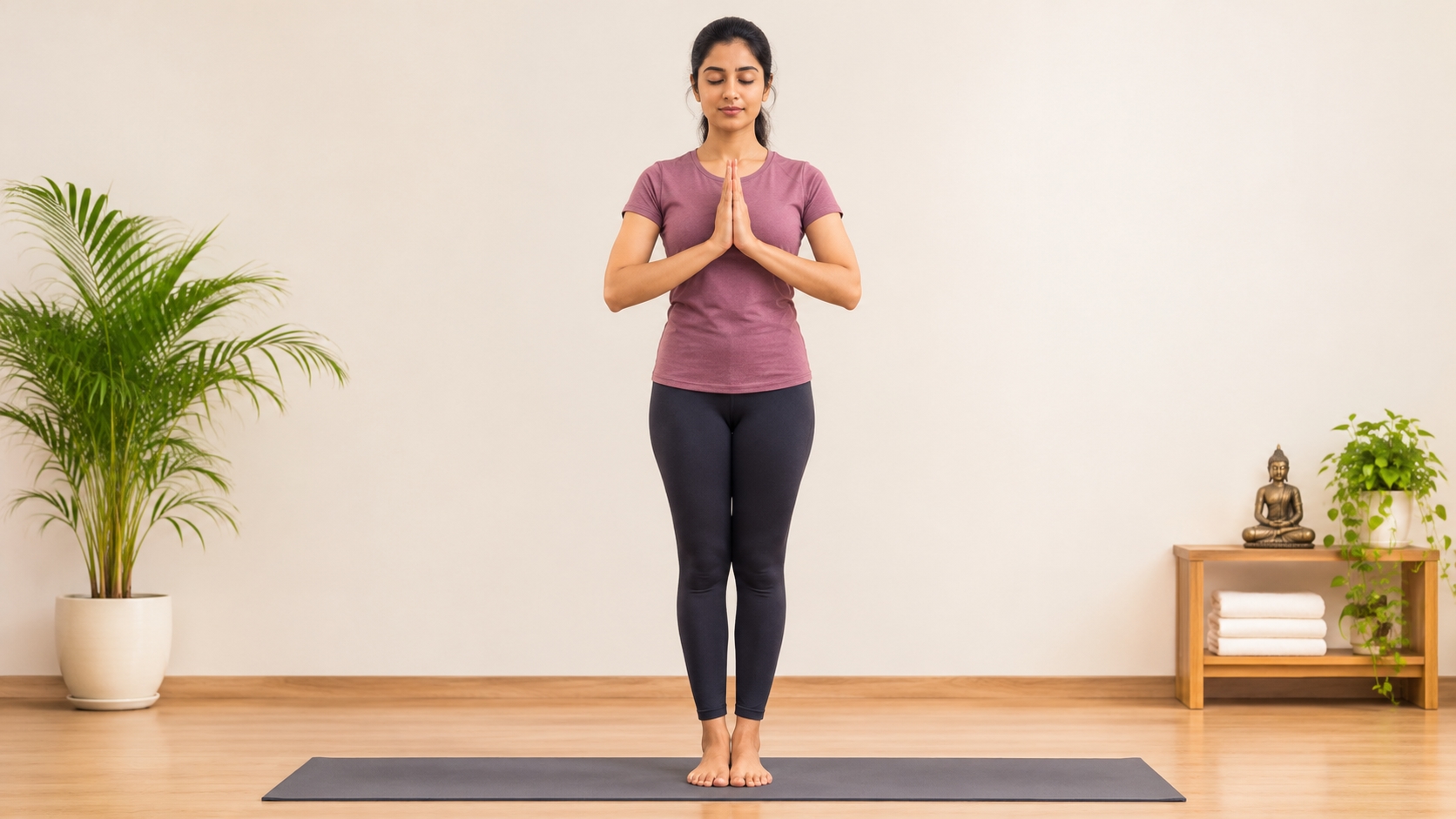
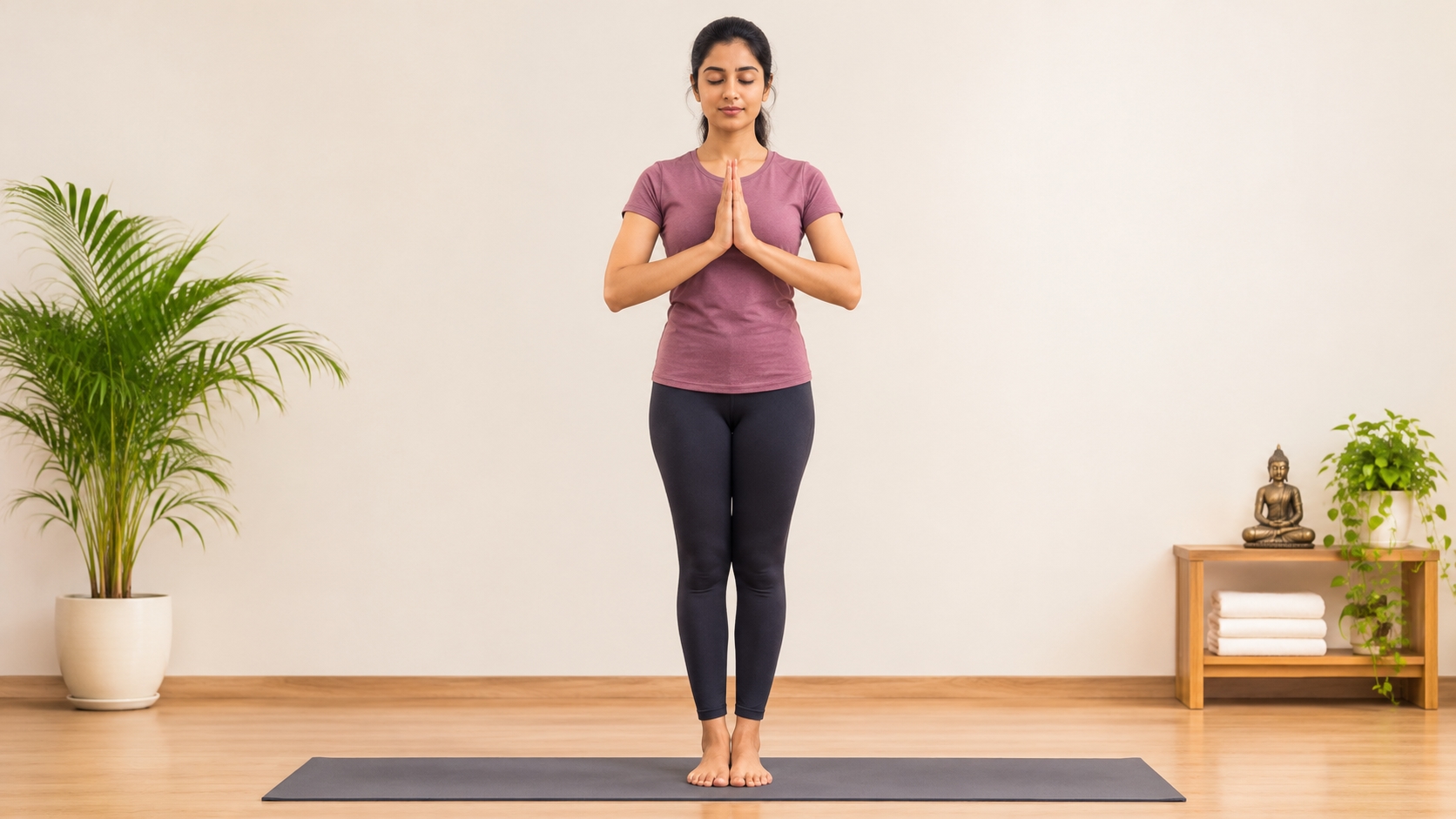
1. Pranamasana (Prayer Pose)
Stand straight with your feet together or slightly apart. Keep your spine upright, relax your shoulders, and bring your palms together in front of your chest. Close your eyes if comfortable and take a few steady breaths. This posture helps you settle your attention before beginning the practice.
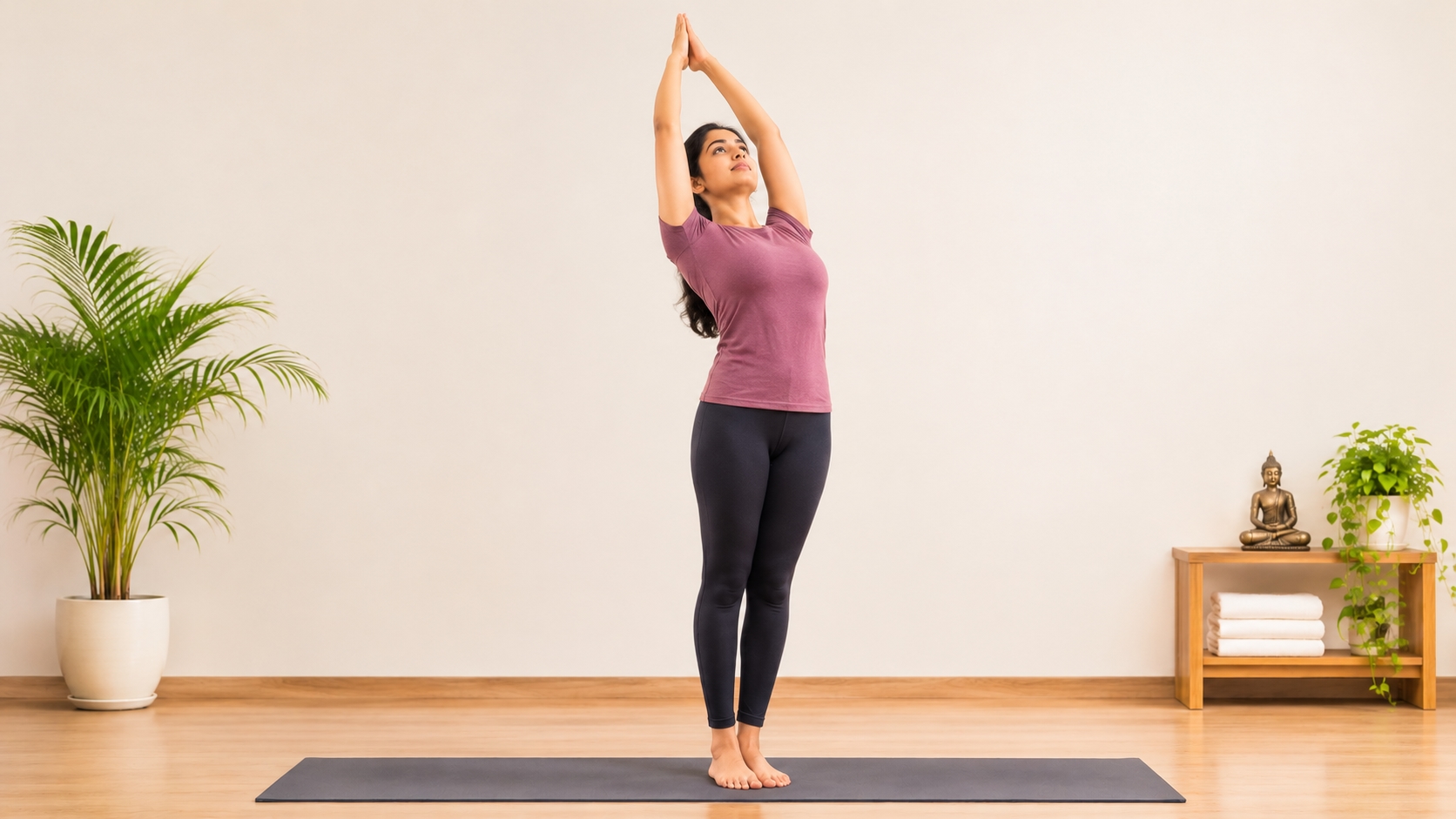
2. Hasta Uttanasana (Raised Arms Pose)
Inhale and slowly raise both arms above your head. Keep your palms facing each other or joined together. Gently stretch your arms upward and slightly bend your upper body backward without putting pressure on your lower back. Keep your legs straight and look forward or slightly upward.
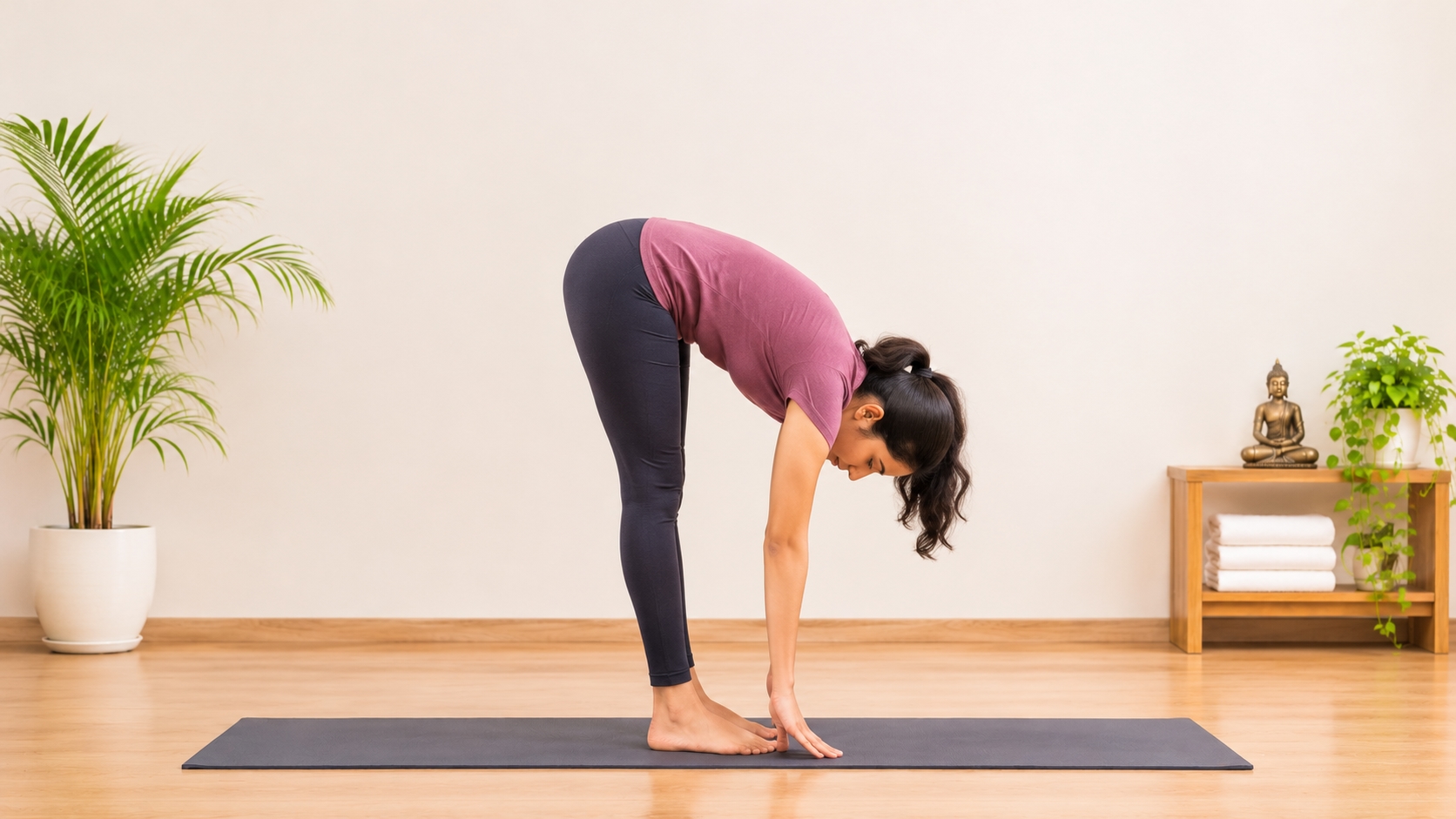
3. Padahastasana (Standing Forward Bend)
Exhale and slowly bend forward from your hips. Bring your hands towards the floor beside your feet. If your flexibility is limited, you can bend your knees slightly or rest your hands on your shins. Allow your head and neck to relax instead of forcing your forehead towards your knees.
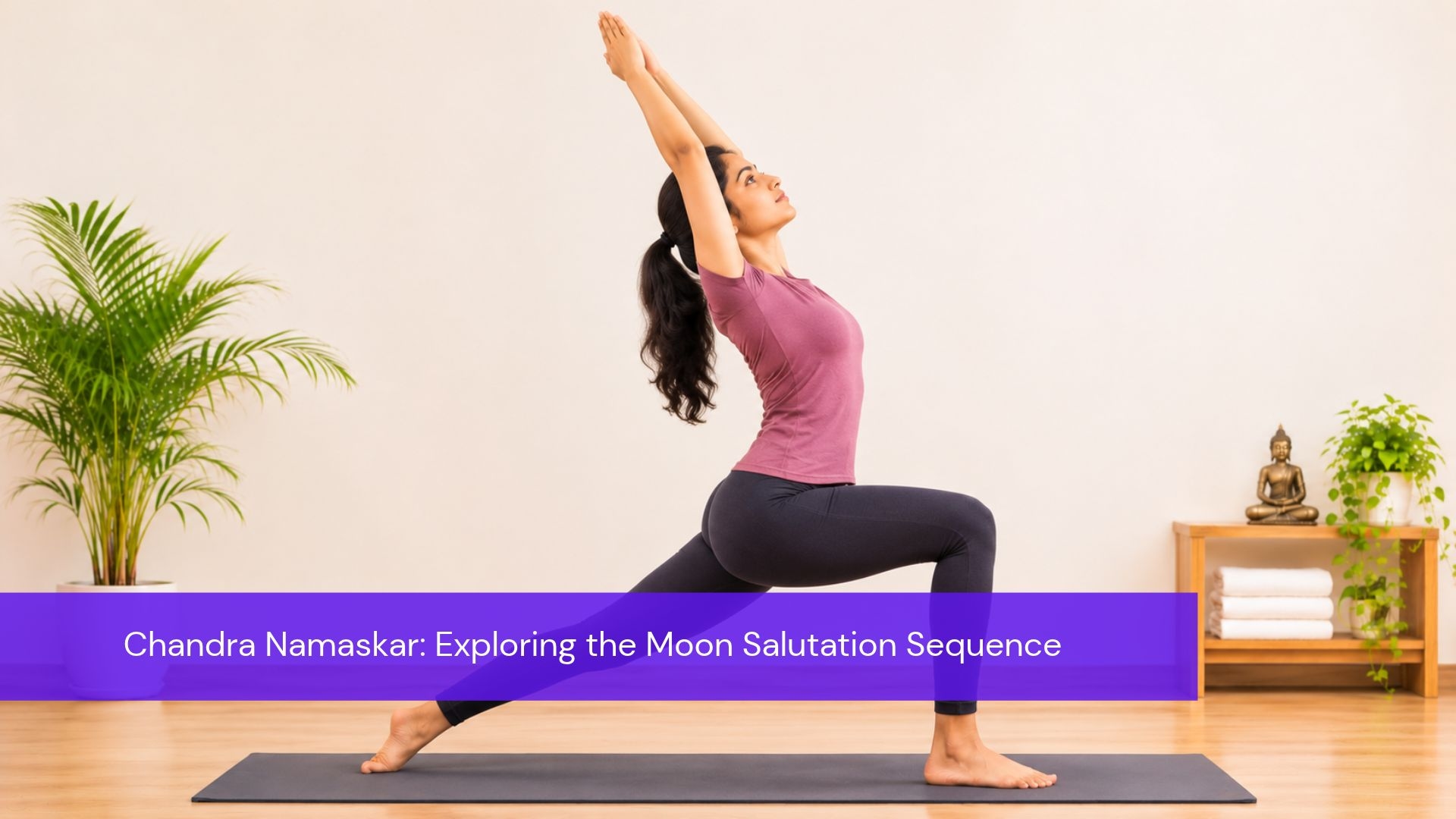
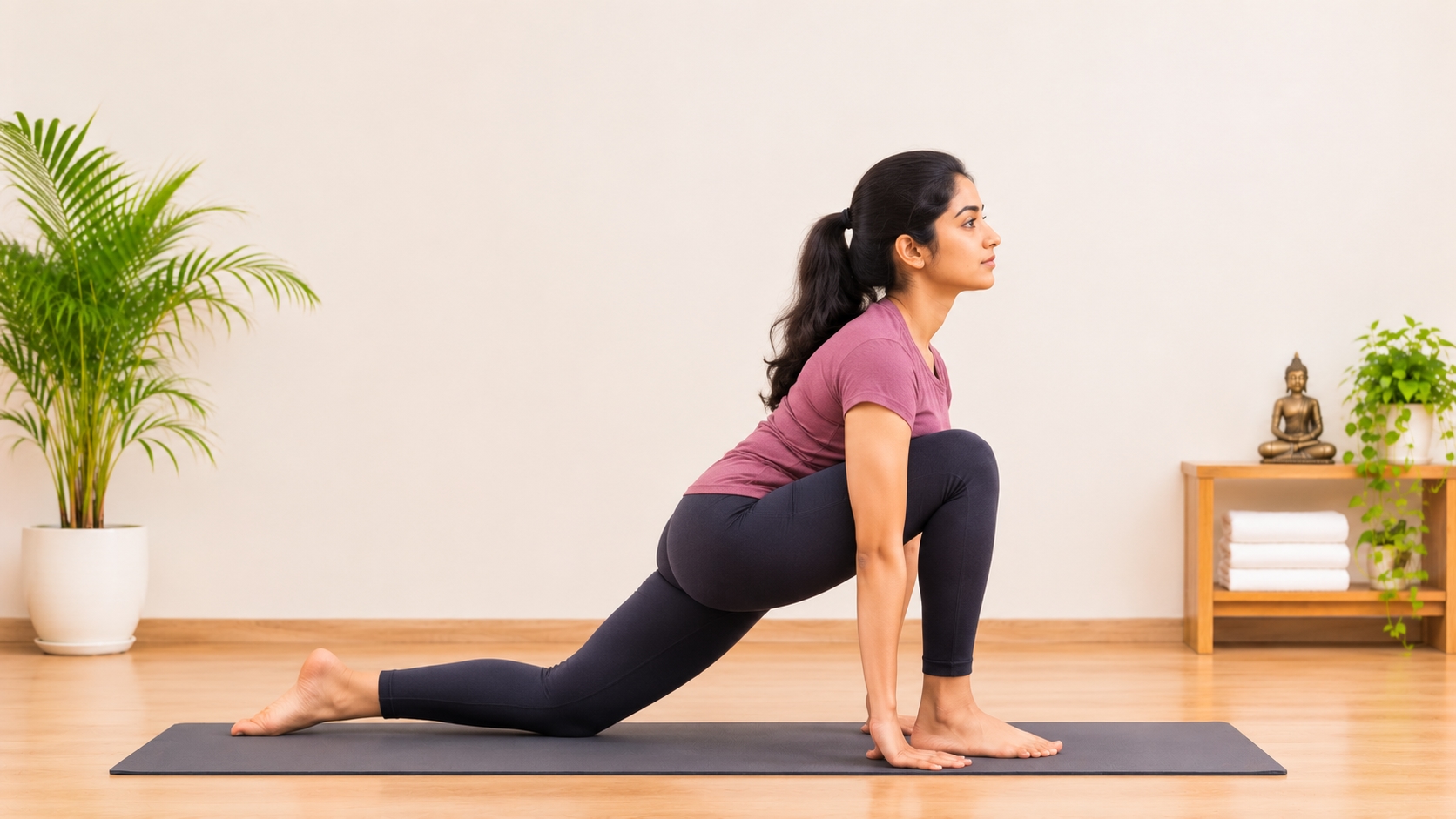
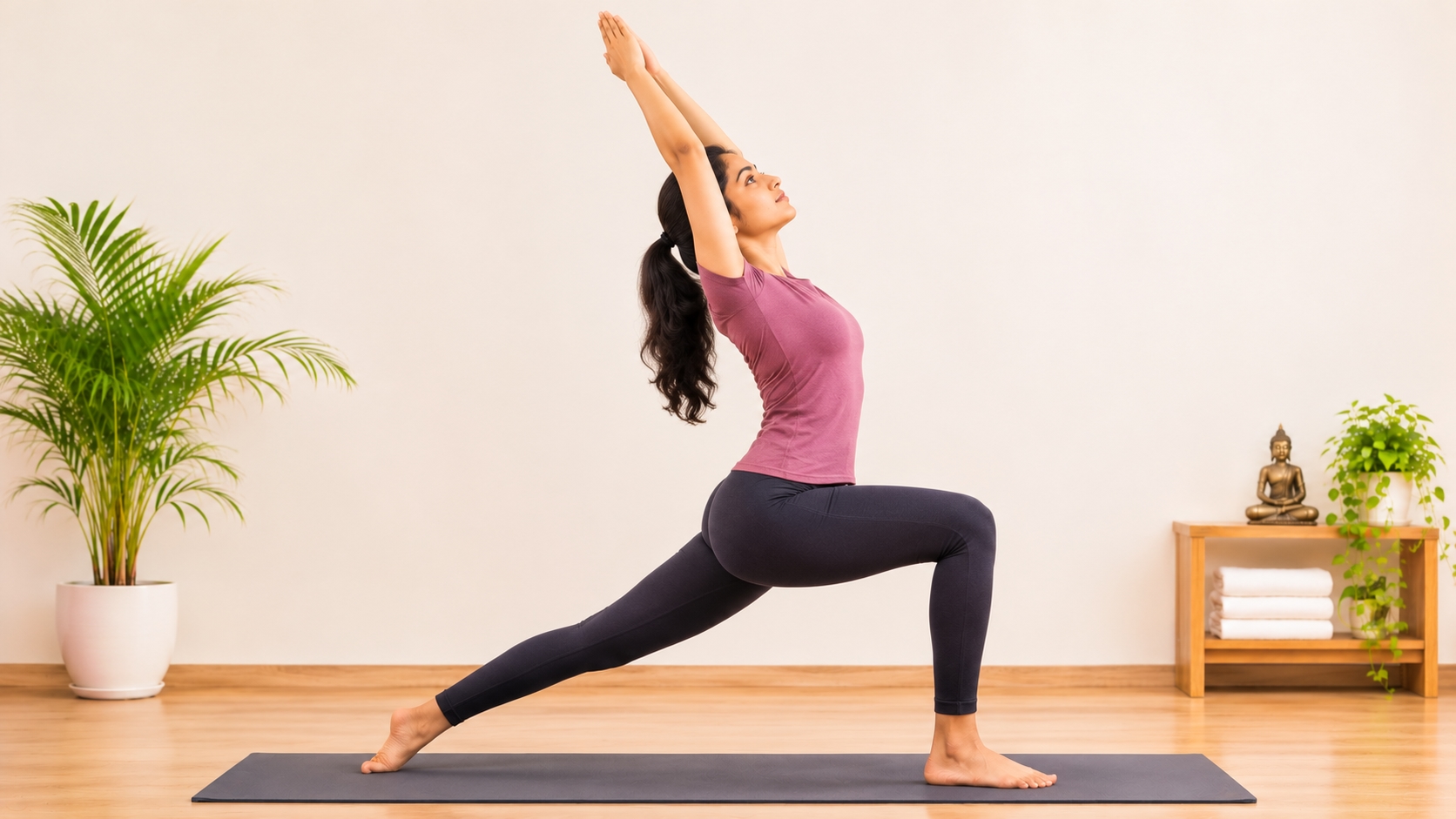
4. Ashwa Sanchalanasana (Equestrian Pose)
Place both hands on the floor beside your feet. Inhale and move your right leg backward, keeping your left foot between your hands. Lower your right knee towards the floor and gently lift your chest. Look forward while keeping your balance. This posture stretches the front of the hip of the leg moved backwards.
5. Ardha Chandrasana (Half Moon Pose)
From the low lunge position, gently raise your upper body and lift both arms above your head. Stretch upward and slightly arch your back while keeping your hips stable. Avoid pushing your lower back too far. This variation of Half Moon Pose creates an open, upward stretch through the front of the body.
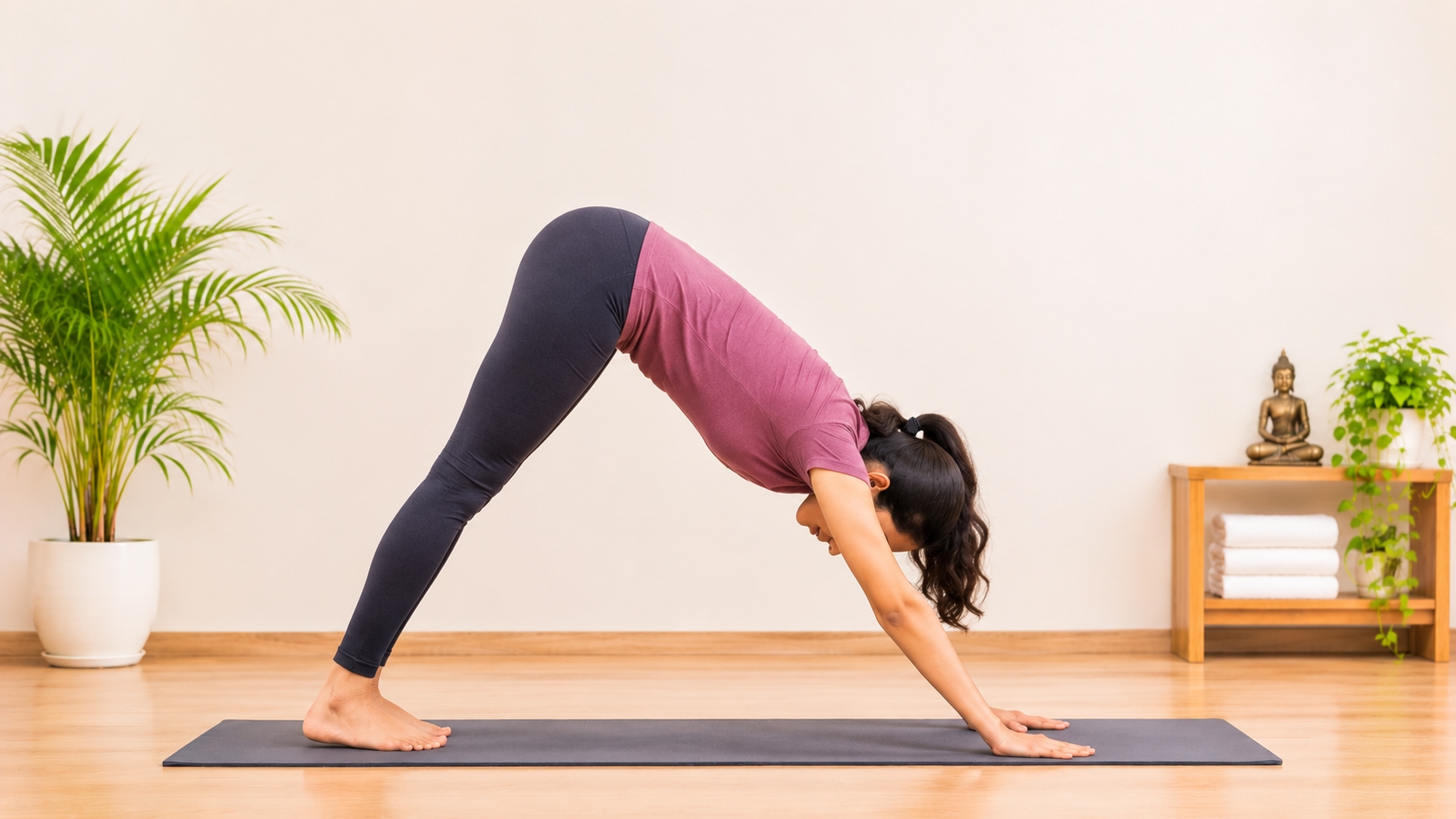
6. Parvatasana (Mountain Pose)
Place your hands back on the floor and step your front leg backwards. Lift your hips upward and move your chest gently towards your thighs, forming an inverted V shape with your body. Keep your hands shoulder-width apart and your feet comfortably positioned. Bend your knees if your hamstrings feel tight.
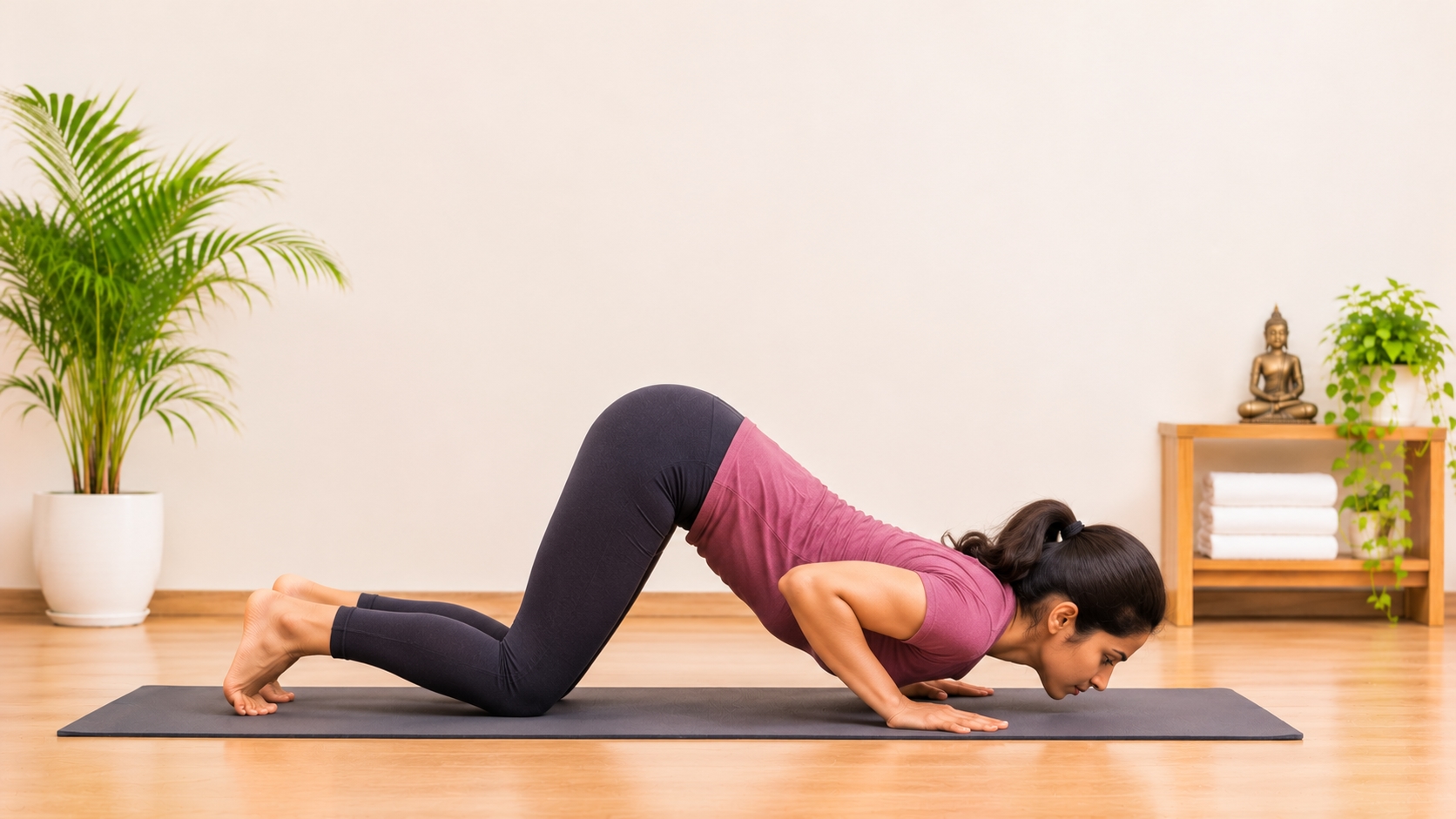
7. Ashtanga Namaskara (Eight-Point Salute)
From Mountain Pose, lower your knees to the floor. Bring your chest and chin down towards the mat while keeping your hips slightly raised. Your two hands, two knees, two feet, chest, and chin form the eight points of contact with the floor. Move slowly and avoid putting unnecessary pressure on your neck.
8. Bhujangasana (Cobra Pose)
Slide your chest forward and lower your hips towards the mat. Place your palms beneath your shoulders and gently lift your chest by using your back muscles. Keep your elbows slightly bent and your shoulders away from your ears. Your lower body remains in contact with the floor. Do not force a deep backbend.
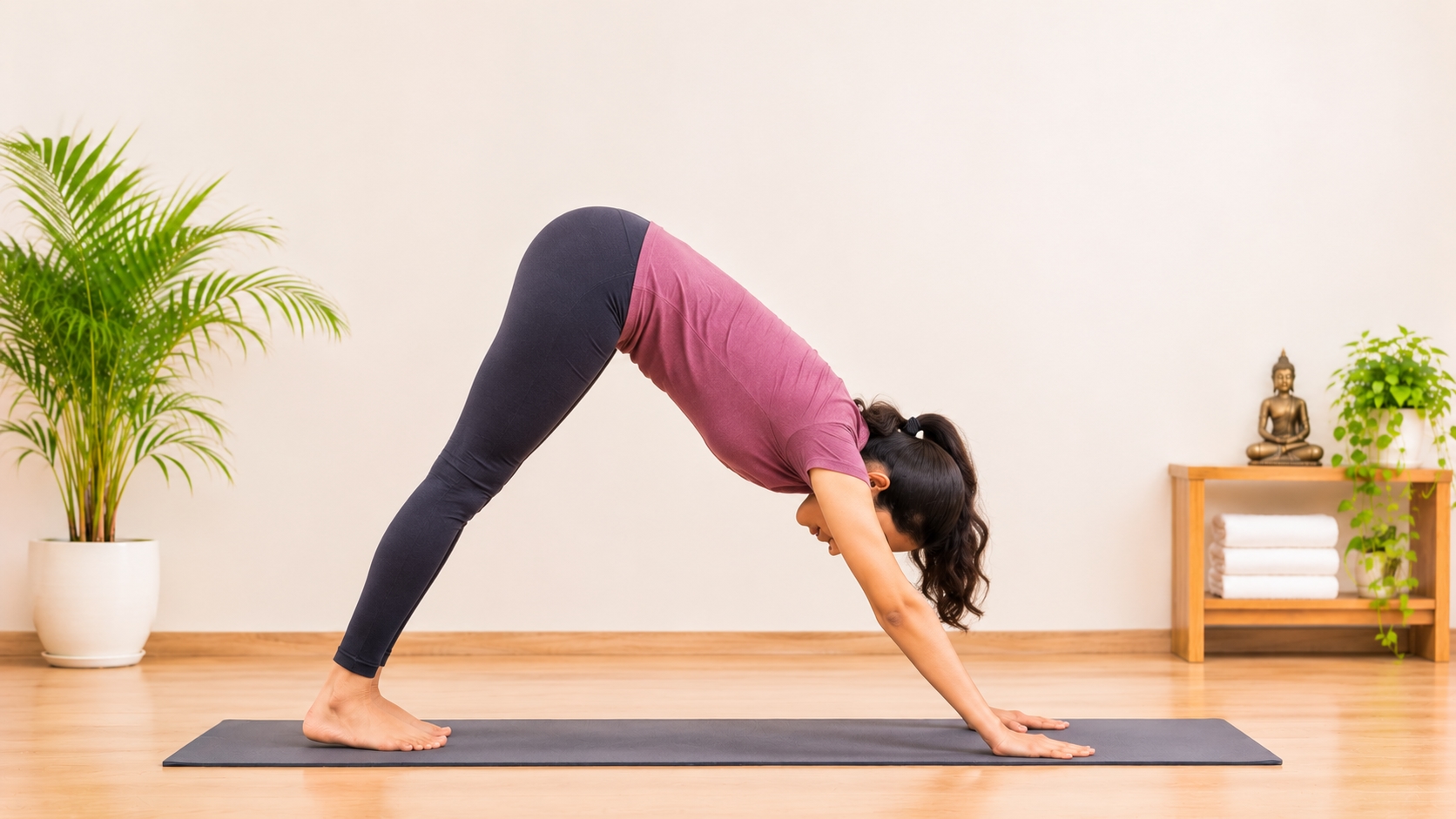
9. Parvatasana (Mountain Pose)
Exhale and lift your hips upward again, returning to the inverted V-shaped position. Press your palms gently into the floor and lengthen your back. Keep your head relaxed between your arms. This posture provides a gentle stretch to the back of your legs, shoulders, and spine.
10. Ashwa Sanchalanasana (Equestrian Pose)
Inhale and bring your right foot forward between your hands. Lower your left knee towards the floor and gently lift your chest. Look forward while keeping your hands on the mat for support. In the next round, bring the opposite foot forward to maintain balance between both sides of the body.
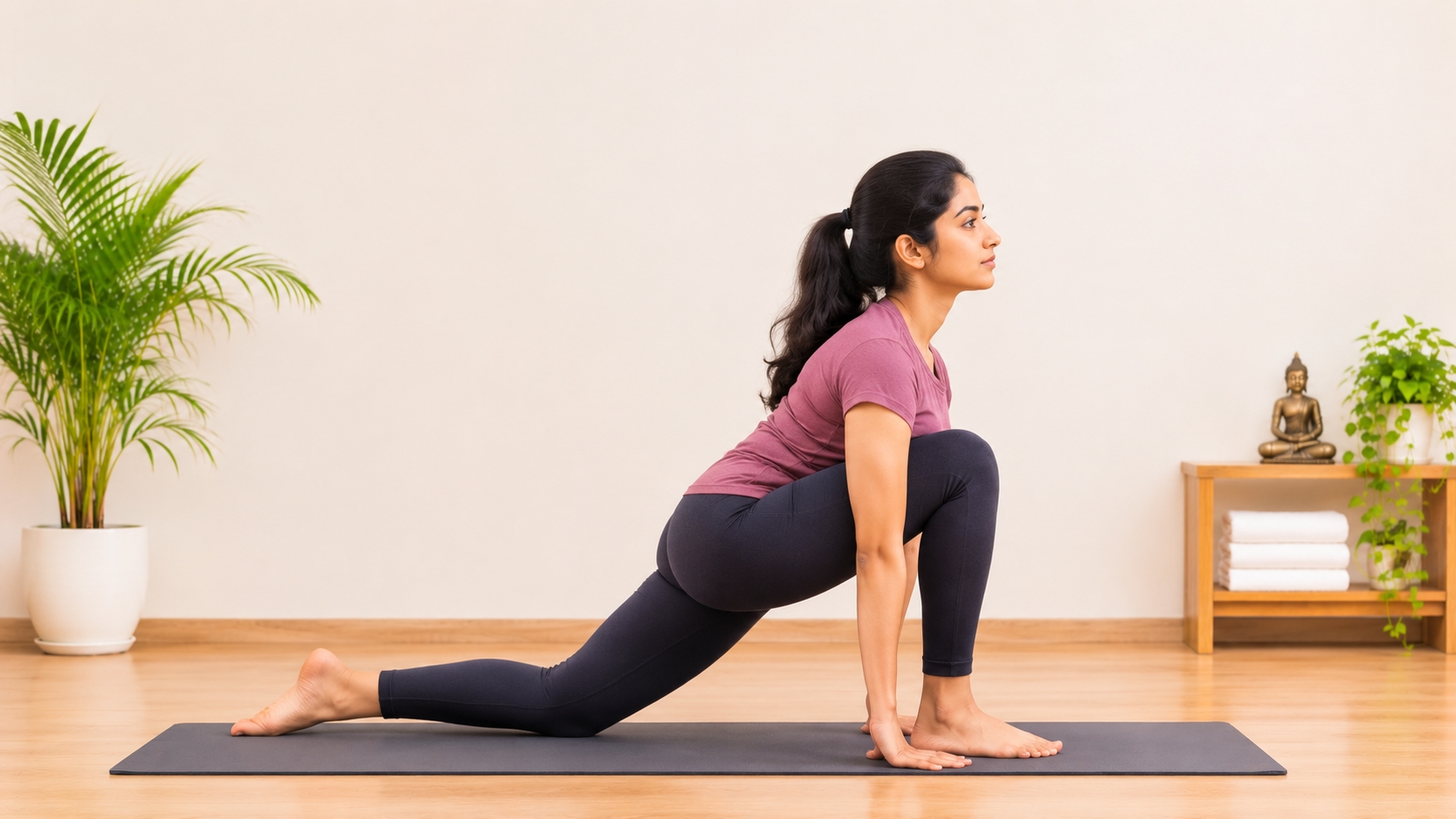
11. Ardha Chandrasana (Half Moon Pose)
Raise your upper body from the lunge position and extend both arms overhead. Stretch your body upward and gently open your chest. If comfortable, create a small backward curve without compressing your lower back. Keep your breathing steady and maintain balance.
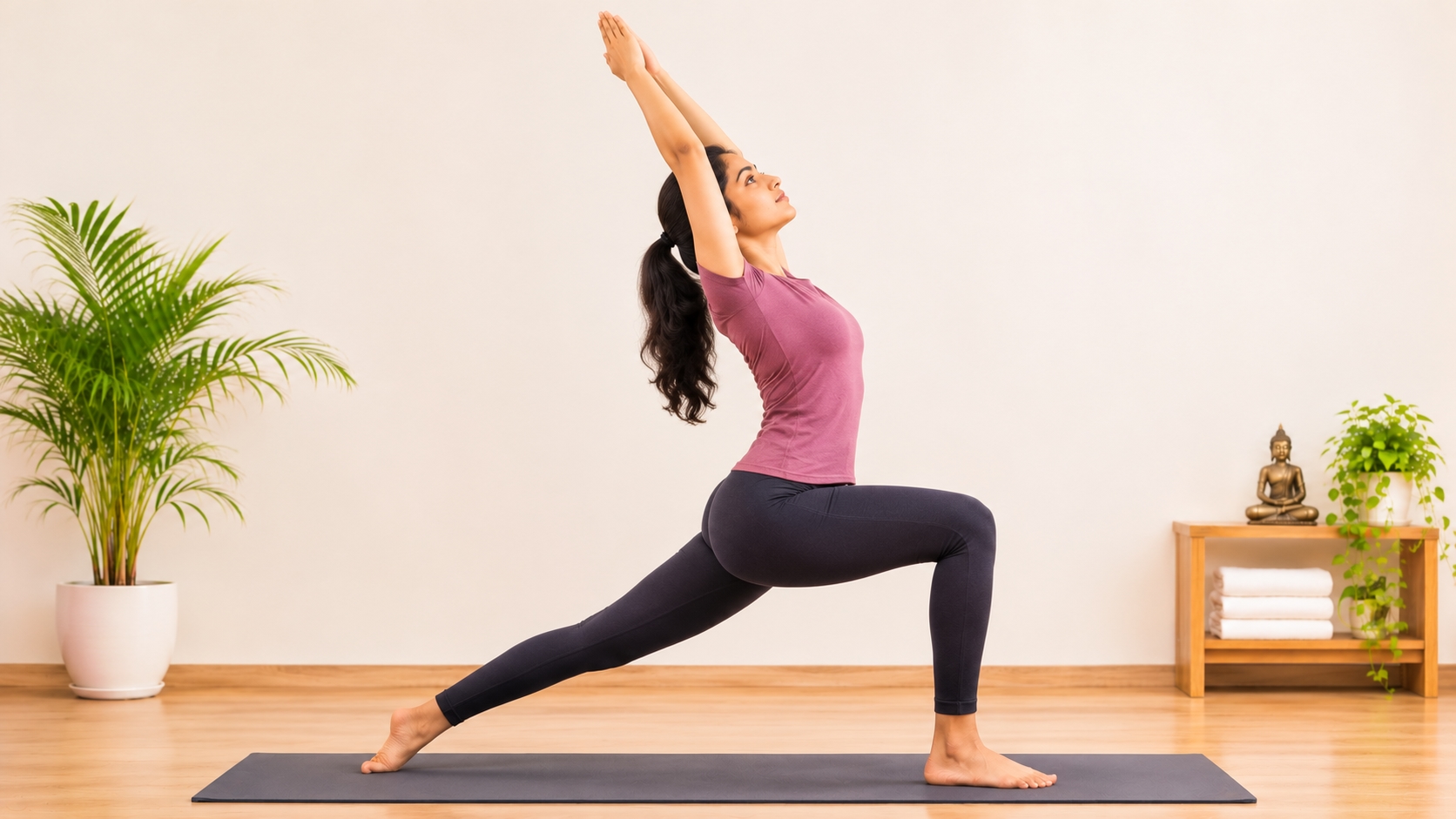
12. Padahastasana (Standing Forward Bend)
Exhale and bring your hands down towards the floor. Step your back foot forward to meet the front foot. Slowly fold your upper body over your legs, keeping your knees slightly bent if needed. Allow your neck and shoulders to relax.
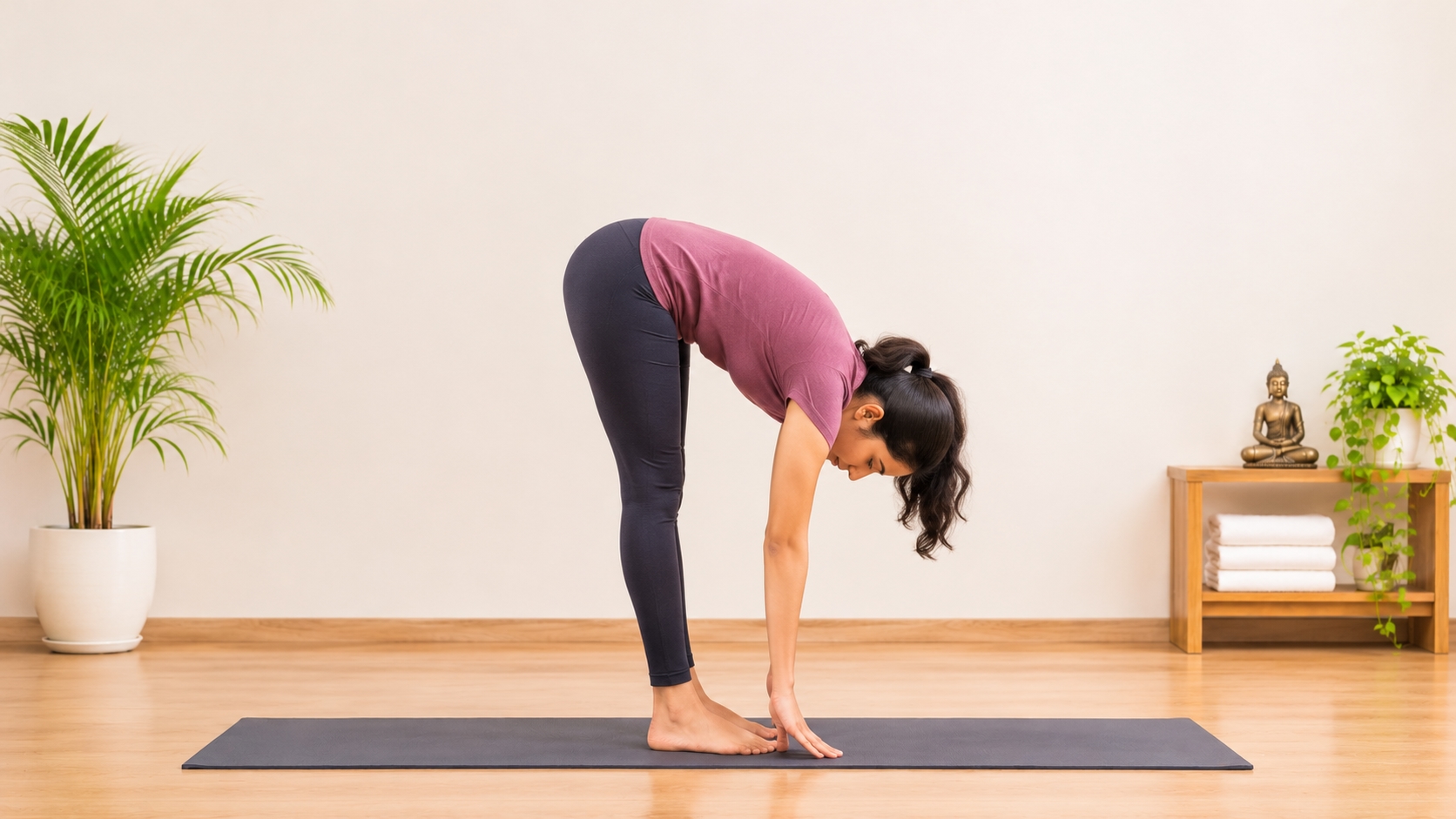
13. Hasta Uttanasana (Raised Arms Pose)
Inhale and slowly rise to a standing position. Extend both arms above your head and gently stretch your body upward. You may add a slight backward bend while keeping your abdomen engaged and your lower back comfortable.
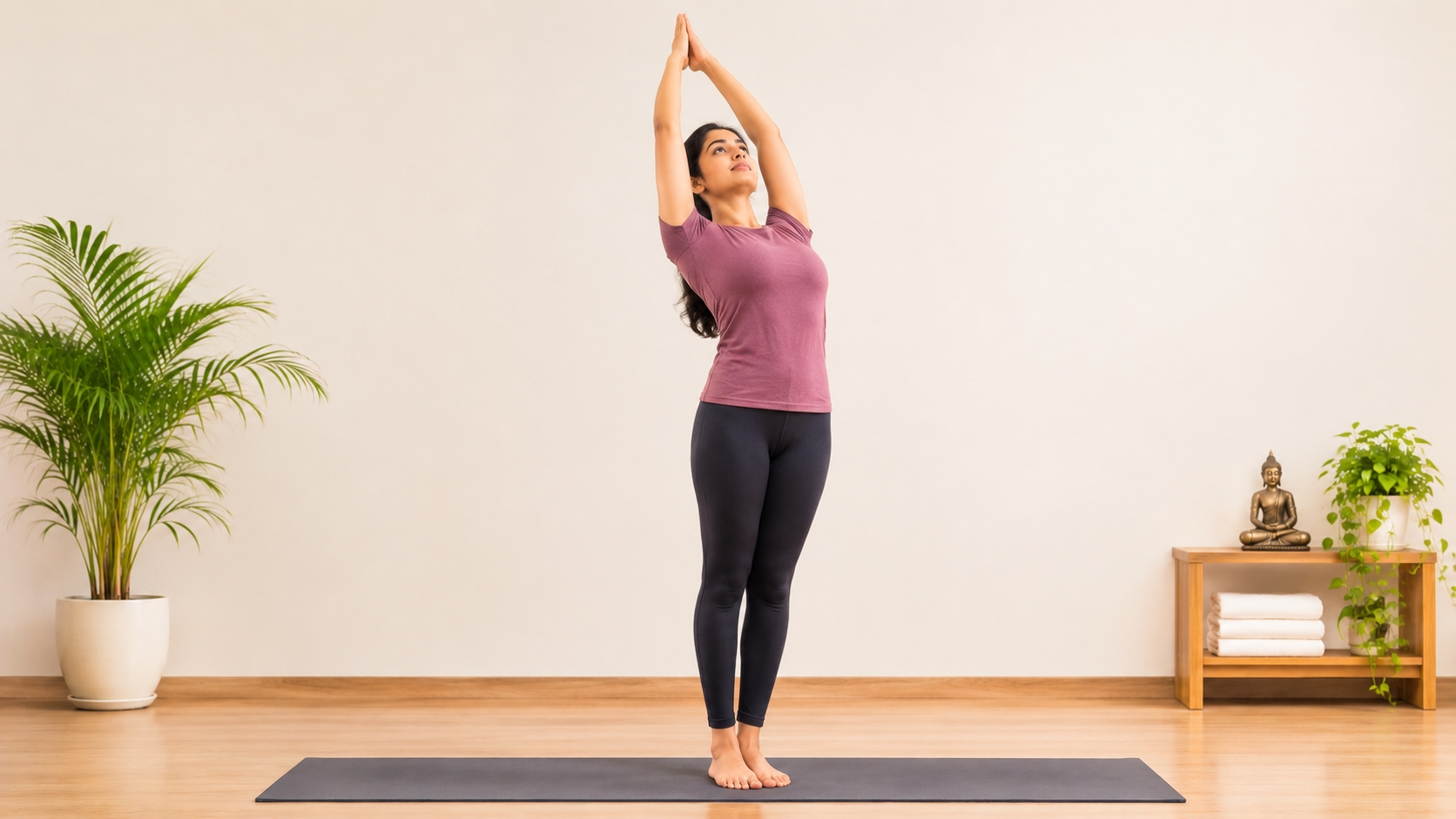
14. Pranamasana (Prayer Pose)
Exhale and bring your palms together in front of your chest. Stand upright, relax your shoulders, and return to your natural breathing rhythm. Take a moment to notice how your body feels before completing the round.
Repeating The Sequence On The Other Side
After completing one round, practise the sequence again by changing the leg used in the lunging postures. For example, if you moved your right leg backwards first in the initial round, begin the next round by moving your left leg backwards. This helps both sides of the body receive a similar amount of movement and stretching.
Throughout Chandra Namaskar, move slowly and coordinate each movement with your breathing. Avoid rushing through the postures or forcing your body into a deeper stretch. Beginners can use yoga blocks or place their hands on their thighs for additional support. The aim is to practise with comfort, awareness, and steady breathing rather than trying to achieve perfect postures.
How To Practise Chandra Namaskar Safely
Before beginning, choose a comfortable space with a non-slip yoga mat. Wear clothing that allows free movement and avoid practising immediately after a heavy meal.
A gentle warm-up can prepare the hips, shoulders, ankles, and spine. Begin with a simple version of the sequence rather than attempting deeper variations immediately.
Some useful guidelines include:
Coordinate each movement with a comfortable inhalation or exhalation.
Avoid forcing the knees, hips, or lower back into unfamiliar positions.
Use blocks or other appropriate supports when needed.
Keep the movements controlled and maintain steady breathing.
Stop if you experience sharp pain, dizziness, or unusual discomfort.
People with knee injuries, balance difficulties, or significant hip and ankle limitations should seek suitable guidance before attempting deeper side lunges or wide-legged postures.
Chandra Namaskar And Its Place In A Balanced Yoga Practice
Chandra Namaskar can be included in different types of yoga sessions depending on the practitioner's experience and the teacher's approach.
Some practitioners choose to practise it in the evening because its slower movement pattern can provide a change of pace from more vigorous sequences. However, it is not necessary to follow a particular time of day unless the chosen yoga tradition recommends it.
The sequence can also be adapted to different experience levels. Beginners may use shorter stances, smaller ranges of motion, and supportive props. More experienced practitioners may explore additional variations while maintaining appropriate alignment.
It is important not to assume that Moon Salutation automatically produces specific hormonal, therapeutic, or medical effects. Its value as a yoga sequence lies in its combination of movement, breath awareness, coordination, and traditional symbolism.
Why Yoga Teachers Should Understand Different Salutation Sequences
Learning multiple yoga sequences helps teachers offer variety and respond to different classroom needs.
People researching how to become a yoga instructor should understand that teaching involves more than remembering the order of postures. Teachers need to understand alignment, transitions, contraindications, breathing patterns, and appropriate modifications.
A comprehensive yoga teacher training programme can introduce students to different yoga styles and sequencing principles. When selecting a yoga instructor certification, it is useful to examine whether the course includes supervised teaching practice and instruction in anatomy and methodology.
An instructor of yoga should also understand that not every sequence is appropriate for every student. Clear demonstrations and accessible alternatives make classes more inclusive.
At Samadhi Yoga Ashram, traditional yoga education brings together asana practice, pranayama, meditation, anatomy, and yoga philosophy. These subjects provide a wider context for understanding sequences such as Chandra Namaskar.
Students and practitioners interested in exploring different approaches can also attend yoga classes in rishikesh, where they may encounter a variety of traditional and contemporary yoga sequences.
Chandra Namaskar And The Broader Meaning Of Yoga
Moon Salutation illustrates how yoga combines physical practice with symbolic and philosophical ideas. It encourages practitioners to explore movement in a controlled manner and develop awareness of how the body responds to different positions.
Its lateral movements also provide a useful contrast to more familiar forward-and-backward flowing sequences. Rather than focusing on performance, practitioners can pay attention to breathing, stability, and the quality of each transition.
Conclusion
Chandra Namaskar is a traditional-inspired yoga sequence associated with the symbolism of the moon. Its commonly taught variations include standing postures, lateral movements, and controlled transitions coordinated with breathing.
For people exploring yoga teacher training in india, learning different salutation sequences can broaden their understanding of yoga as a diverse discipline. With appropriate preparation, modifications, and instruction, Moon Salutation can become a meaningful part of a balanced yoga practice.