An NGO project report explains the problem an organisation wants to address, the activities it plans to conduct, the budget required and the results it expects to achieve. A well-prepared report helps NGOs plan their work, approach potential donors, apply for grants and demonstrate how funds will be used.
If you want to write an NGO project report, focus on clear objectives, a practical implementation plan, a realistic budget and measurable outcomes. Whether your NGO works in education, healthcare, women’s empowerment or rural development, the report should explain why the project is needed and how it will create a positive impact.
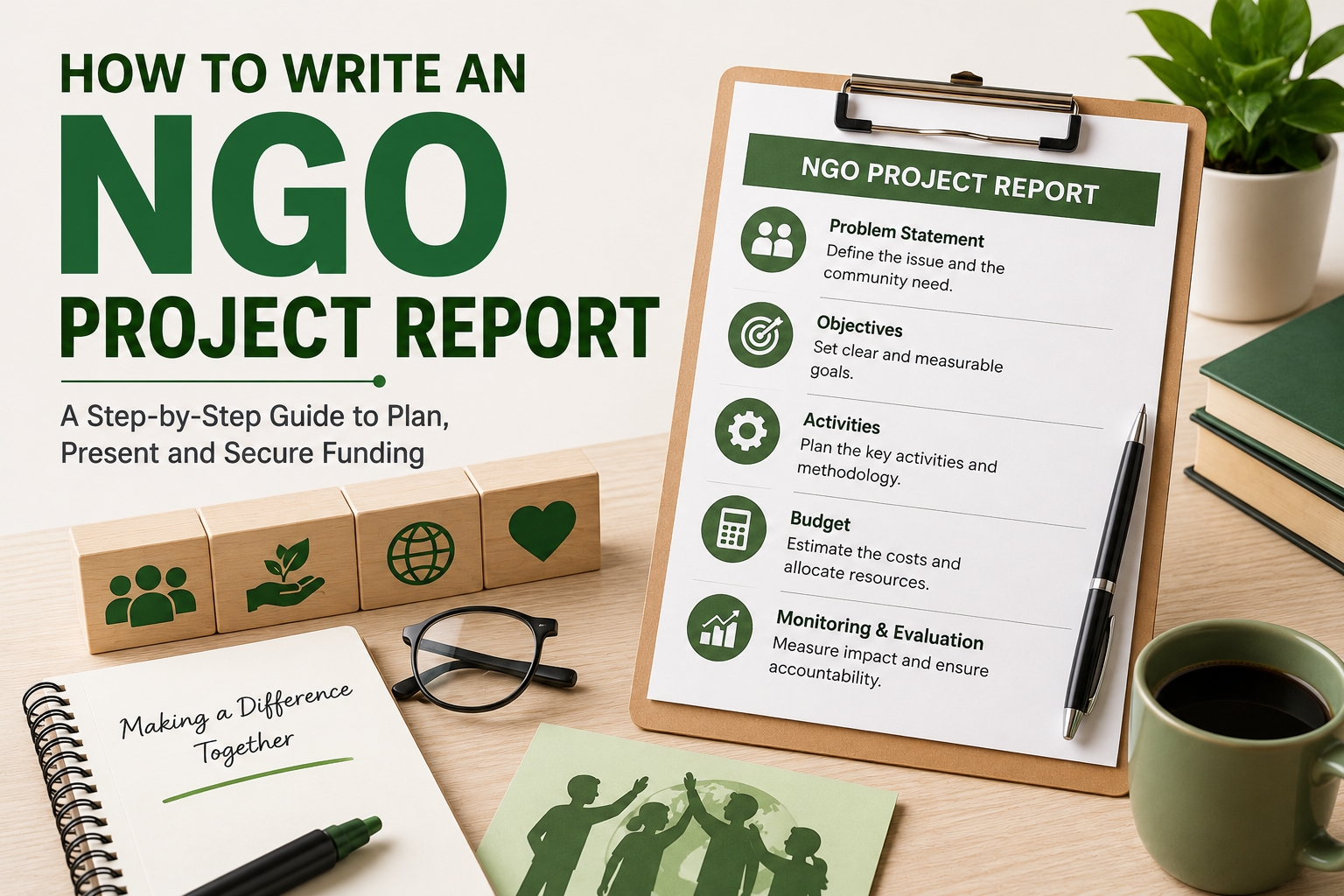
What Is an NGO Project Report?
An NGO project report is a document that describes a proposed or completed social development project. It provides details about the project’s purpose, target beneficiaries, activities, timeline, estimated expenditure and expected outcomes.
NGOs commonly prepare project reports for:
Applying for government or institutional grants.
Approaching CSR funding partners.
Requesting support from charitable trusts and foundations.
Planning educational, healthcare or community development programmes.
Monitoring project progress and reporting results.
The format and supporting documents may differ depending on the funding organisation or scheme.
Why Is an NGO Project Report Important?
A project report helps donors and other stakeholders understand the organisation’s plans before committing resources. It also gives the NGO a clear framework for implementation and evaluation.
A good report should explain the social problem, identify the people who will benefit, describe the proposed activities and show how the available funds will be spent. It should use realistic estimates instead of unsupported claims about impact.
Essential Components of an NGO Project Report
A complete NGO project report generally includes the following sections.
Section | What to Include |
|---|---|
Project title | A clear name that describes the initiative |
Executive summary | A brief overview of the project and its purpose |
NGO profile | Registration details, mission and relevant experience |
Problem statement | The issue the project intends to address |
Objectives | Specific results the project aims to achieve |
Target beneficiaries | The intended participants and their needs |
Activities and methodology | How the project will be implemented |
Timeline | Activity schedule and project duration |
Budget | Estimated costs and funding requirements |
Monitoring and evaluation | Indicators used to measure progress |
Sustainability | How benefits may continue after the project ends |
The format of writing an NGO project report can help you organise these sections into a structured document.
Step-by-Step Process to Write an NGO Project Report
1. Choose a Clear Project Title
The title should communicate the project’s main purpose. For example, an NGO planning to support children’s education could use “Improving Learning Opportunities for Children in Rural Communities.”
Avoid titles that are too broad or do not explain the proposed activity.
2. Write the Executive Summary
Summarise the project in a short section covering its purpose, target beneficiaries, location, duration, major activities and estimated budget.
Although this section appears at the beginning, writing it after completing the main report often makes it easier to summarise the project accurately.
3. Explain the Problem Statement
Describe the social issue your NGO intends to address. Support the explanation with relevant local observations, credible research or documented community needs.
For example, an educational project might identify limited access to learning materials or additional academic support as a barrier for children in a particular community.
4. Define Measurable Objectives
Objectives should describe what the project intends to accomplish within a specified period.
For example:
Provide supplementary learning support to 100 children over six months.
Conduct monthly educational activities.
Assess participants’ learning progress at regular intervals.
These are illustrative objectives. Actual targets should reflect the project’s capacity, budget and identified needs.
5. Identify the Target Beneficiaries
Specify who will benefit from the project, where they live and why they need support. Explain how beneficiaries will be identified and selected.
Use reasonable estimates and avoid overstating the number of people the project can reach.
6. Prepare the Implementation Plan
Explain the activities required to achieve the objectives. Include the responsible persons, required resources and expected completion dates.
A practical implementation plan makes the proposal easier to assess and helps the NGO monitor progress after funding is received.
7. Prepare a Realistic Project Budget
The budget should clearly explain the estimated expenditure required to complete the project.
Common budget categories include:
Staff and professional costs.
Educational or programme materials.
Equipment and supplies.
Travel and field activities.
Venue and operational expenses.
Monitoring, evaluation and reporting.
Use reasonable cost estimates and explain major expenses. Include administrative costs where applicable and follow the funding agency’s budget rules.
8. Add Monitoring and Evaluation Methods
Explain how your NGO will measure progress and determine whether the project has achieved its objectives.
Depending on the project, indicators may include attendance, participation, services delivered, beneficiary feedback or changes in learning outcomes.
9. Explain Sustainability
Describe how the project’s benefits may continue after the initial funding period. Possible approaches include community participation, local partnerships, volunteer involvement or continued access to resources.
Do not promise long-term results unless the organisation has a practical plan to support them.
10. Review the Report Before Submission
Check the report for accuracy, consistency and completeness. Ensure the budget matches the proposed activities and that the objectives align with the expected outcomes.
Depending on the application, supporting documents may include the NGO’s registration certificate, governing documents, financial records, project quotations and other documents requested by the funding organisation.
Example of an NGO Project Report
Consider an NGO planning an educational support programme for children in a rural community.
Particular | Illustrative Details |
|---|---|
Project title | Rural Education Support Programme |
Objective | Improve access to supplementary learning |
Target beneficiaries | 100 children |
Duration | Six months |
Main activities | Learning sessions, study materials and progress assessments |
Monitoring | Attendance records and periodic assessments |
Budget | Prepared using itemised local cost estimates |
This example is illustrative, not a funding-approved proposal. A real report should include the project location, evidence of need, detailed costs, implementation responsibilities and measurable indicators.
Common Mistakes to Avoid
When preparing an NGO project report, avoid these mistakes:
Using vague objectives without measurable outcomes.
Preparing a budget without supporting estimates.
Failing to explain the actual community need.
Reporting beneficiary numbers that cannot be justified.
Ignoring the funding organisation’s prescribed format.
Making unrealistic promises about project results.
Submitting incomplete or inconsistent supporting documents.
A clear, evidence-based report is more useful than a lengthy document filled with general statements.
Frequently Asked Questions
1. How do I write an NGO project report for funding?
Explain the problem, objectives, beneficiaries, activities, timeline, budget and expected outcomes. Follow the specific funding agency’s instructions and attach the required supporting documents.
2. What is the ideal length of an NGO project report?
There is no universal length. The report should be detailed enough to explain the project properly while meeting the funder’s prescribed format and requirements.
3. Can a newly registered NGO prepare a project report?
Yes. A newly registered NGO can prepare a project report based on its objectives, identified community needs, available resources and implementation capacity. Funding eligibility depends on the relevant scheme or donor.
4. Is an NGO project report necessary for CSR funding?
A project proposal or report is commonly used to explain the proposed activities, budget and expected impact. Specific documentation and eligibility requirements depend on the CSR funding arrangement and applicable rules.
5. What documents are required with an NGO project report?
Requirements vary, but funders may request registration documents, governing documents, financial statements, budget estimates, project plans and evidence supporting the identified need.
6. Who can help prepare an NGO project report?
NGO founders, project coordinators and qualified consultants can prepare reports. Organisations seeking assistance can review the guidance available from NGOExperts and ensure the final document reflects their actual project requirements.
Conclusion
Learning how to write an NGO project report helps organisations turn their social objectives into a clear and actionable plan. A strong report explains the need, defines measurable goals, identifies beneficiaries, presents a realistic budget and establishes methods for tracking progress.
Before submitting your proposal, check the funder’s requirements and verify that all figures and supporting documents are accurate. A well-structured, evidence-based report gives decision-makers a clearer understanding of the proposed project and how it will be implemented.
Word Count: Approximately 1,900 words