
A customer pays a premium, the bank confirms it, and the invoice still shows as unpaid. Someone has to work out why. That puzzle is the daily reality of Guidewire billing reconciliation, and Chennai developers and analysts who understand it are valuable on BillingCenter projects. Anyone building that skill set can start with Guidewire training in Chennai and then work through the problems below.
Why Reconciliation Problems Rarely Start Where They Appear
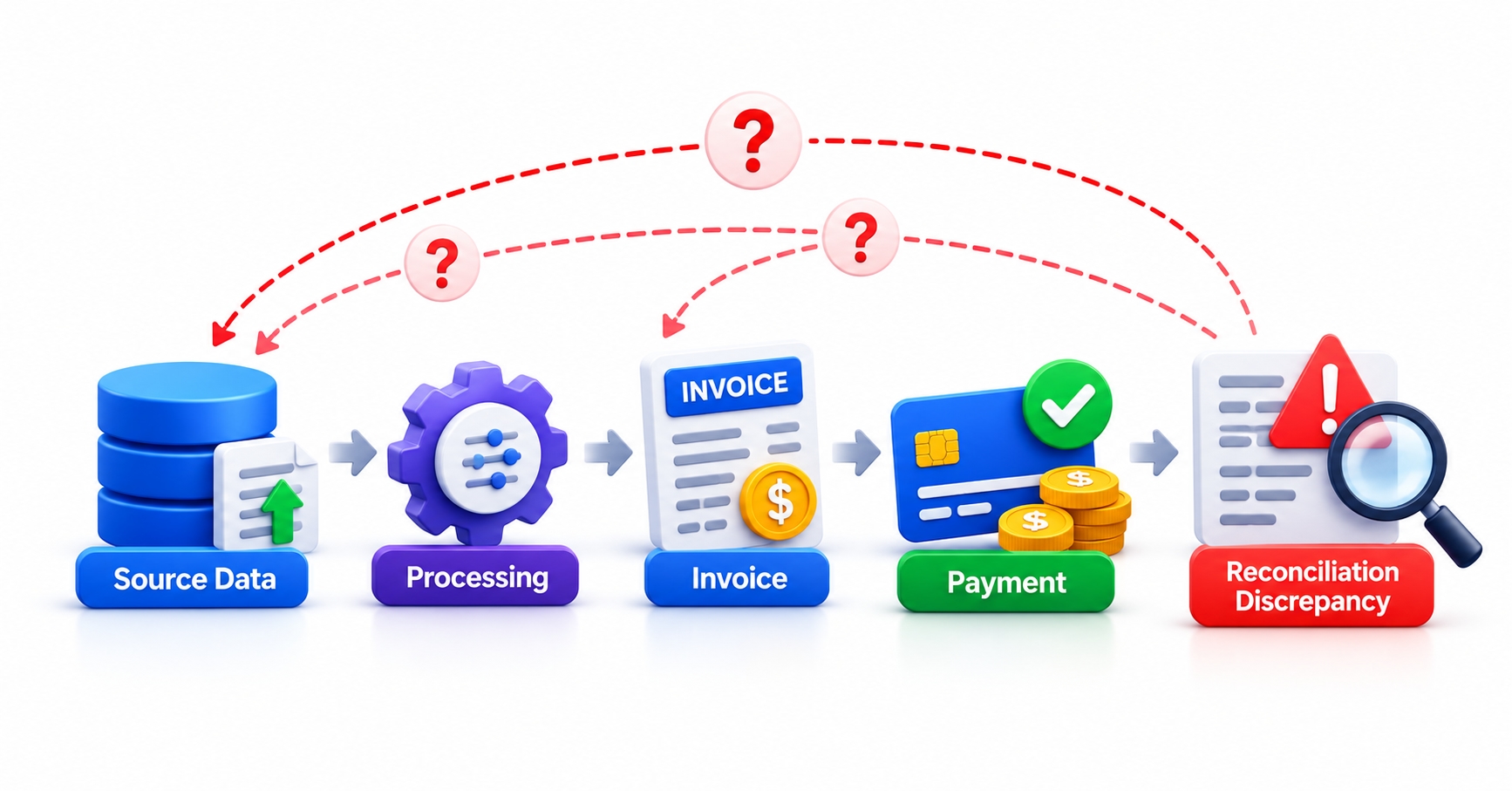
Reconciliation means proving that three things agree: what the insurer billed, what the customer paid, and what the financial records say happened. When they disagree, the visible symptom is usually an unpaid invoice, an unexpected delinquency notice, or a ledger total that is off by a small amount. The cause usually sits several steps earlier.
In BillingCenter, money moves through a chain. A policy transaction in PolicyCenter produces a billing instruction. That instruction creates charges, the charges are placed on invoices, a payment arrives, and the payment is allocated against whatever is owed. A break at any link can look like a payment problem when it is really a charge problem, or the reverse.
Take a mid-term endorsement that adds a vehicle. The additional premium should create a new charge and be spread across the remaining installments. If the payment plan logic handles it differently from what the customer was told, the invoice amount and the customer’s payment will never match. The payment was correct, and the invoice was the surprise.
This is why experienced reconcilers trace backward. They start from the symptom, find the transaction that produced it, and only then decide whether the fix is data, configuration, or a conversation with the customer.
The Usual Sources of Invoice Discrepancies
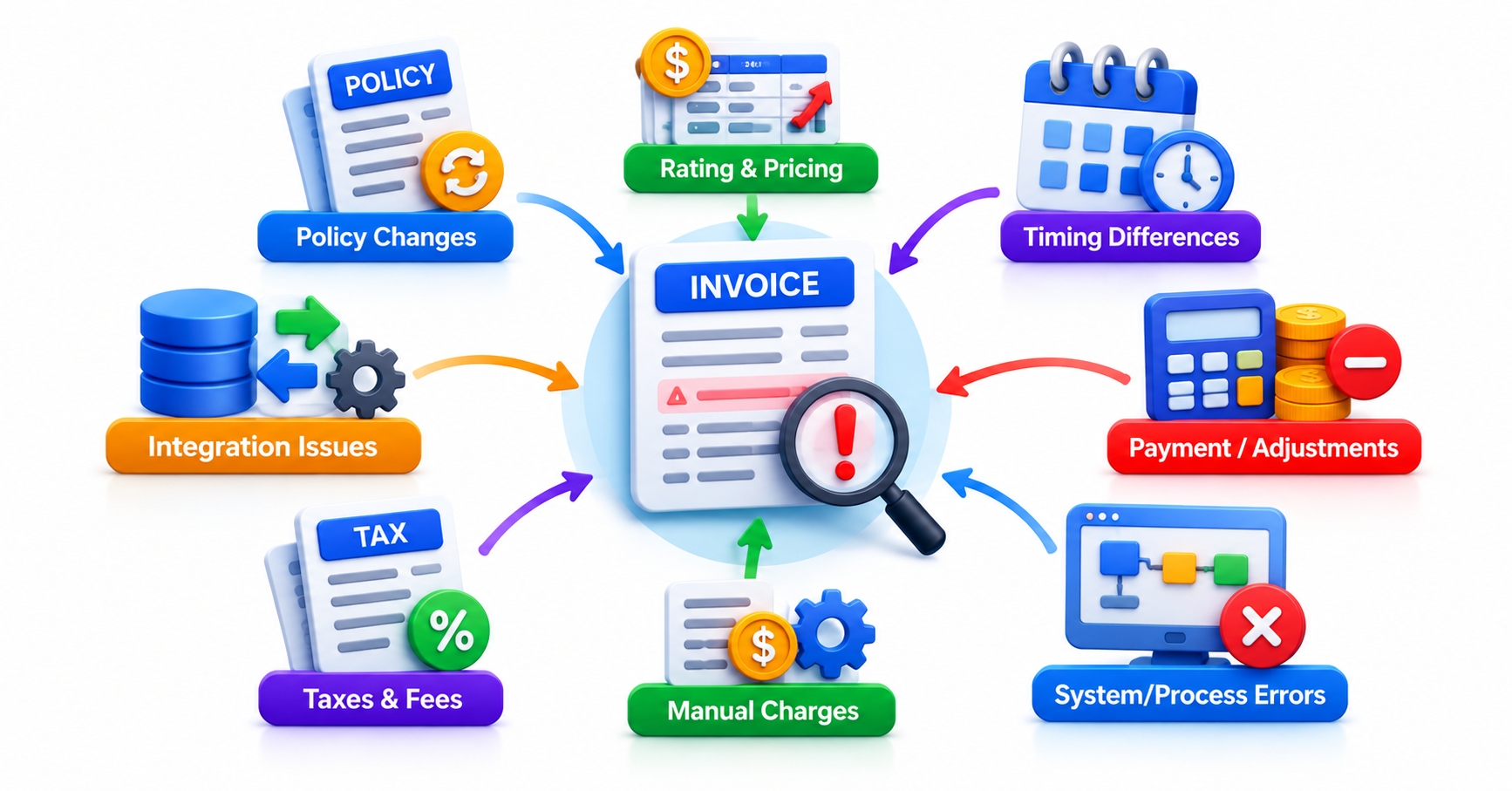
Invoice problems fall into a few recurring families, and recognizing them quickly saves hours.
Timing differences. Invoices are generated on a schedule tied to the invoice stream and the due date. A change that arrives after an invoice is billed does not rewrite that invoice. It lands on the next one, or on an off-cycle invoice depending on configuration. Customers see a total that does not match their policy documents, and support teams assume an error where there is only timing.
Charge and payment plan interactions. Payment plans decide how charges are divided across installments. Fees, taxes, and surcharges may be treated differently from base premium. A rounding rule, or a fee that is billed in full on the first invoice, can leave a few rupees or cents that never seem to disappear.
Reversals and re-bills. When a policy is cancelled and reinstated, or a premium is audited and revised, earlier charges are reversed and new ones created. The invoice history can show a reversal and a replacement side by side, and a reader who does not know the sequence may count the amount twice.
Account-level versus policy-level billing. A customer with several policies on one account may pay one combined invoice. Reconciling that against individual policy balances requires knowing how the account is set up.
A practical habit is to look at the charge history before the invoice. Invoices are the end result, and the charges explain how they got there.
Payments That Land in the Wrong Place or Nowhere
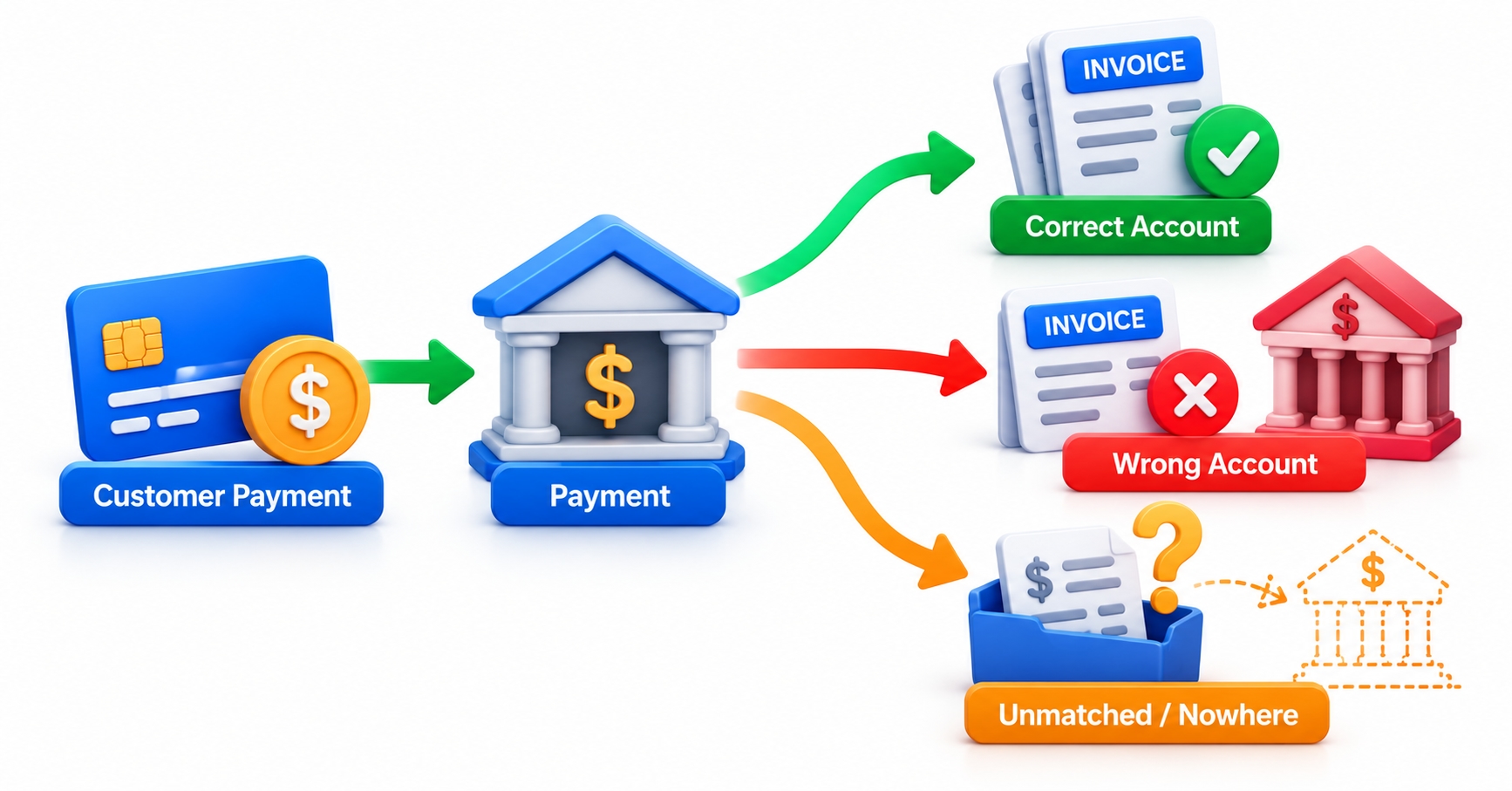
Payment discrepancies are the ones customers notice first, because they feel it in their wallets. Several situations cause most of them.
A payment can arrive without enough information to identify the account. Bank files, lockbox deposits, and online transfers sometimes carry a reference that is truncated, mistyped, or belongs to an old policy number. Those payments often sit in suspense until someone matches them manually. Until that happens, the customer is paying and the system says otherwise.
Overpayments and underpayments create a second family. A customer who pays slightly less than the invoice, perhaps because they ignored a late fee, leaves a small balance that keeps triggering delinquency logic. A customer who pays more leaves unapplied funds that need a decision: hold them for the next invoice, refund them, or move them to another policy.
A third group comes from payment returns. A bounced check or a returned electronic payment has to reverse the original application, and the invoice returns to its unpaid state. If the customer has already received a “paid” confirmation, the correction feels like an error on the insurer’s side.
Common questions a reconciler asks:
Was the payment received but never matched to an account?
Was it matched, but applied to a different invoice or policy than the customer intended?
Was it applied and later reversed?
Is the amount short or long compared with the invoice, and by how much?
Answering those four questions in order resolves most payment tickets without escalation.
When Billing Transactions and Financial Records Disagree
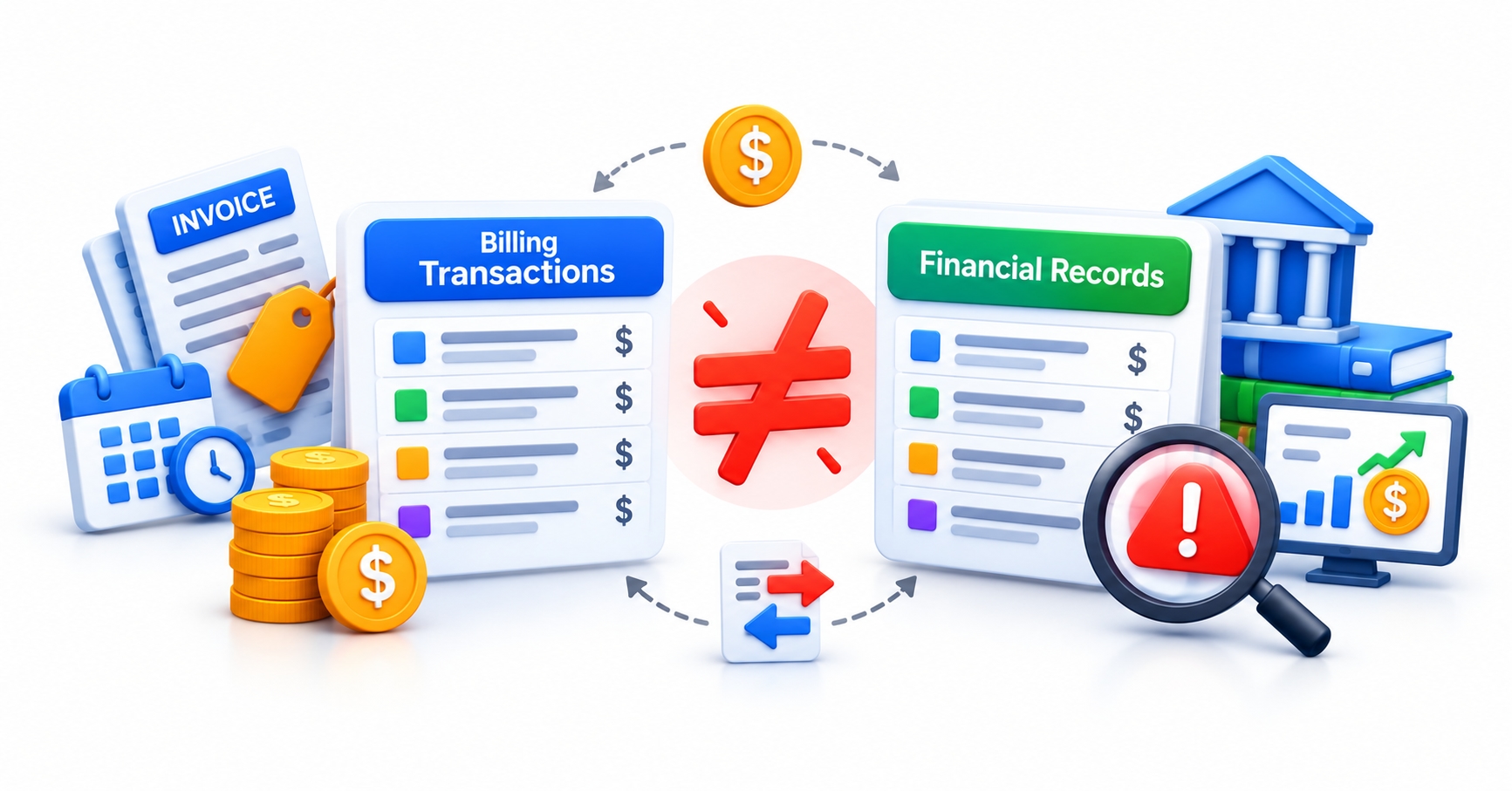
The hardest discrepancies are not between the customer and the insurer. They are between BillingCenter and the systems around it. A transaction that exists in billing but not in the general ledger, or the other way around, can pass unnoticed until a month-end close.
Integration is the usual suspect. BillingCenter exchanges information with PolicyCenter, with payment gateways, and with finance systems. Each exchange can fail partially: a message is sent but not acknowledged, a file loads with a few rejected rows, or a retry creates a duplicate. Guidewire’s own documentation on messaging and integration describes how these events are queued and retried, and developers who understand that behavior can predict where a gap might appear. The related question of choosing between messaging and web services is covered in our look at integration design patterns for InsuranceSuite.
Two checks catch most of these problems. First, compare counts and totals at each handoff, not just at the end. If PolicyCenter sent 1,200 billing instructions and BillingCenter processed 1,197, the three missing ones are the whole investigation. Second, confirm that every financial transaction has a traceable source: a payment, a charge, a write-off, or an adjustment. An entry with no parent is a sign that someone intervened manually or an integration misfired.
It also helps to separate genuine errors from expected differences. Accrual timing, unapplied funds held in a liability account, and amounts in transit between a bank and the ledger can all produce a legitimate gap that closes on its own.
A Practical Way to Work Through a Discrepancy
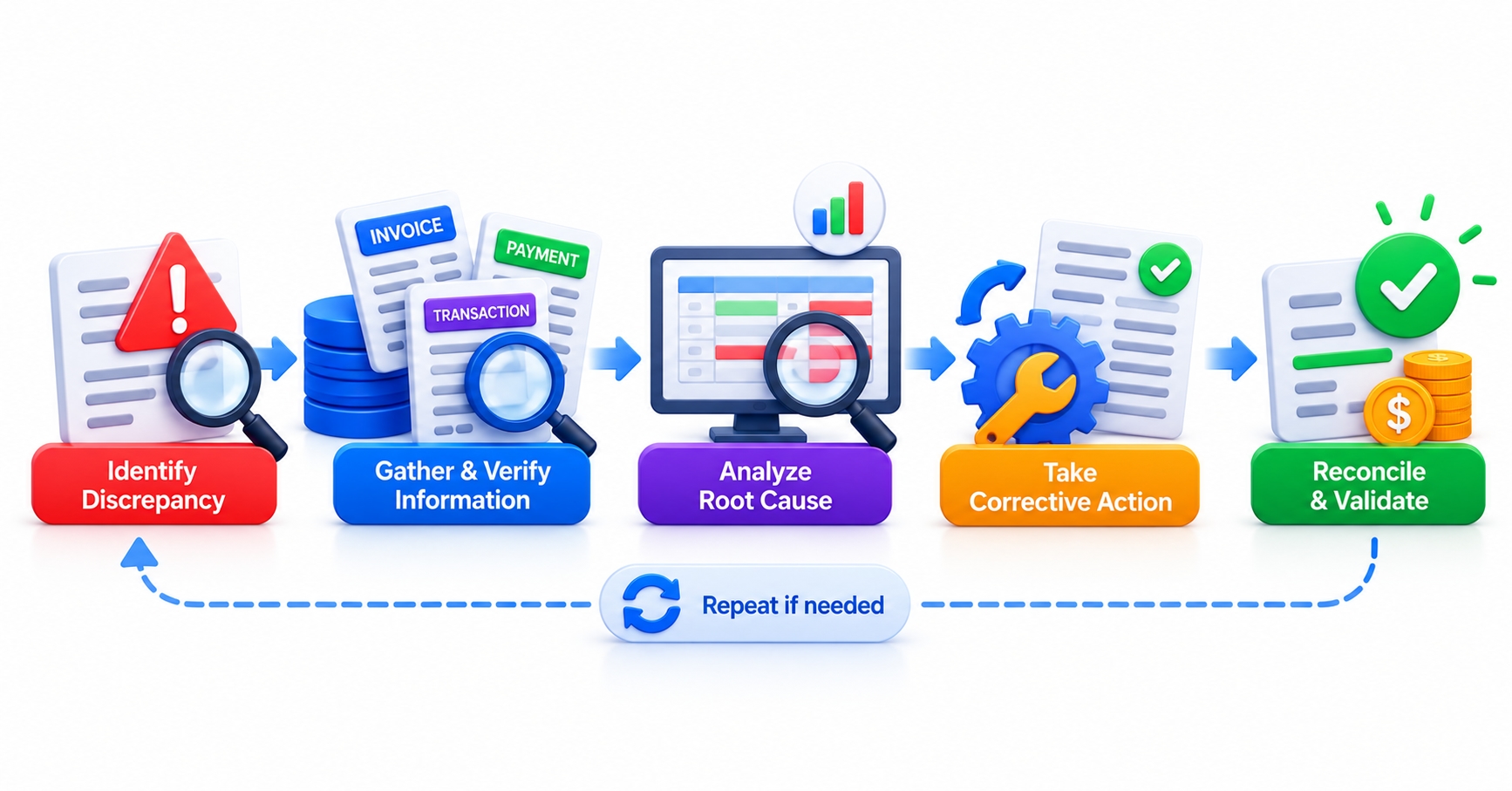
A repeatable method matters more than any single tool. The following sequence works for most billing tickets.
Define the gap precisely. Write down the expected amount, the actual amount, and the difference. A vague complaint such as “billing is wrong” cannot be investigated.
Find the account and period. Confirm the account, the policy period, and the invoice involved before opening any history.
Walk the money forward. Start at the original charge, follow it to the invoice, then to the payment and any allocation. Note each date and amount.
Look for the break. The gap usually appears at one step: a missing charge, a reversed payment, a misapplied allocation, or a failed integration message.
Classify the cause. Decide whether it is data, configuration, timing, or a process error. This determines who fixes it.
Correct and document. Fix the underlying cause where possible, not only the single record, and write down what you found.
Here is a hypothetical example. An invoice for a small commercial policy shows a balance of 340 after the customer paid in full. Tracing forward, the reconciler finds that an endorsement added a surcharge after the invoice was generated, and the surcharge was billed on a separate off-cycle invoice that the customer never received. The payment was correct, the charge was correct, and the delivery of the second invoice was the real defect.
Step 5 deserves more attention than it usually gets. If the same pattern shows up across several accounts, it points to configuration or a process gap, and fixing individual records will only produce the same ticket next month.
Direct Bill and Agency Bill Reconcile Differently
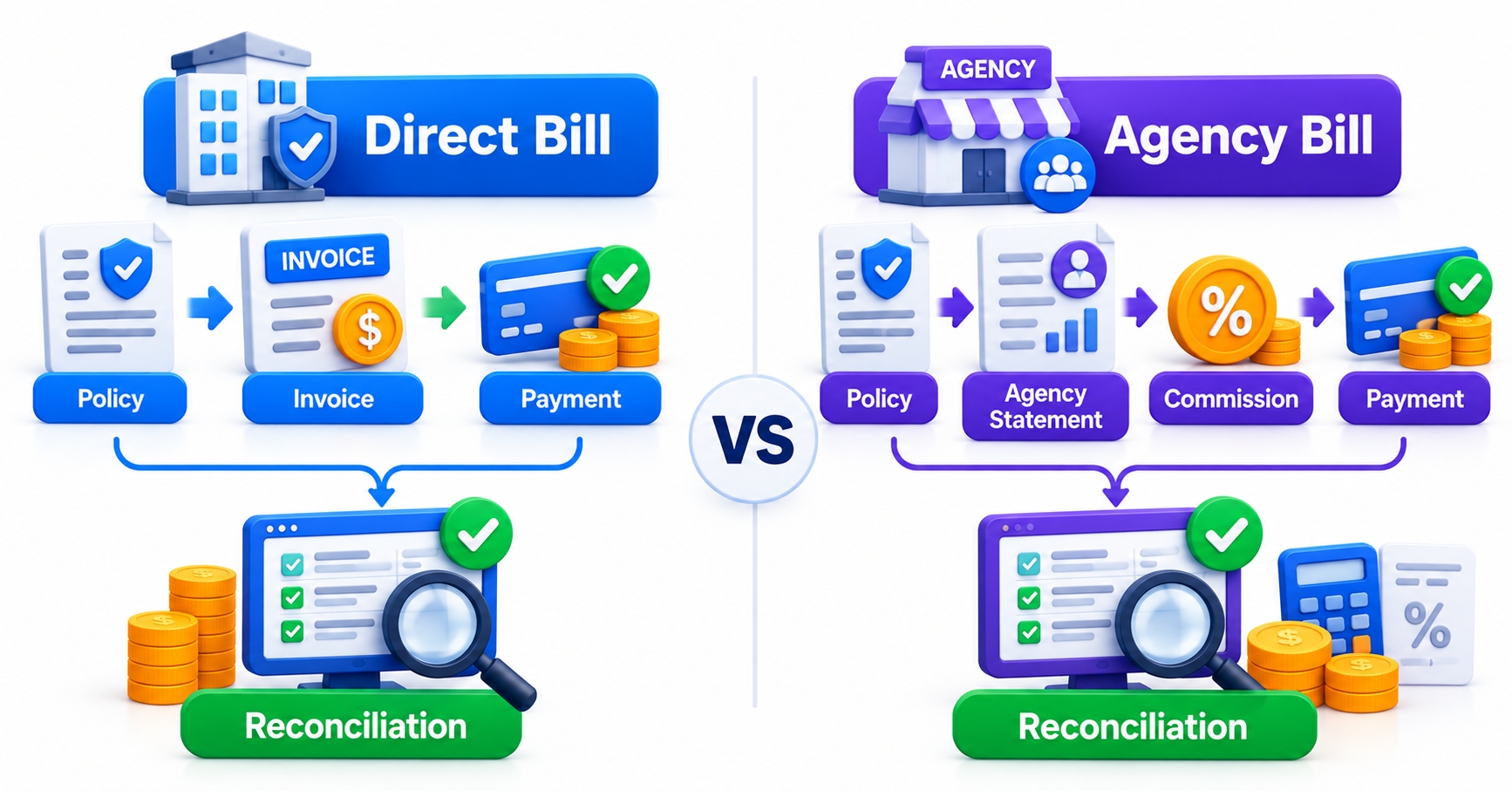
Reconciliation is not one task. In a direct bill arrangement, the insurer invoices the customer and collects payment itself, so the main questions are about invoices, payments, and delinquency. In agency bill, the producer or agency collects money from the customer and remits it to the insurer, often after deducting commission.
That changes what a discrepancy looks like. Instead of a single customer payment, the insurer may receive one remittance covering many policies, with a statement from the producer listing what it includes. If the statement and the remittance do not match, or if some items are disputed, the reconciler must decide which policies are paid, which are short, and how commission is handled.
Several issues are specific to agency bill:
A producer remits less than the statement total because of a dispute with a customer.
A single remittance covers items from different statements or periods.
Commission is calculated on a payment that is later reversed.
A producer pays early or late relative to the agreed terms, which affects delinquency and cash timing.
Beginners often learn direct bill first and assume the same logic transfers. It partly does, but agency bill adds a layer of statements and producer-level balances that rewards patient, detail-oriented work. Teams supporting carriers that use both models need people who can move between them without confusing the two.
Building the Skills That Chennai Teams Actually Use

Reconciliation work sits where functional knowledge and technical skill meet. A business analyst needs to understand why a charge was created and what the customer was promised. A developer needs to read the data model, follow a message through an integration, and write a query or Gosu logic that finds and fixes a pattern rather than a single record. A tester needs to build scenarios such as returned payments, partial payments, and mid-term changes, because those are the situations where billing breaks.
For anyone learning this area, the sensible order is to understand the billing lifecycle first, then the data behind it, then the integrations. A structured start with BillingCenter fundamentals gives the vocabulary for accounts, invoices, charges, payments, and delinquency, which every later topic depends on. Learners comparing course formats may also find a guide to choosing a Guidewire course useful for judging what a good curriculum should cover, even though it is written around another city.
Practice matters more than reading. Build small scenarios in a training environment: pay an invoice twice, reverse a payment, endorse a policy after billing, and watch what each action does to the charges and balances. Programs such as those at JastTech are most useful when they pair the concepts with exercises like these, since reconciliation is a skill learned by tracing real mistakes. Anyone who wants a systematic grounding can begin with BillingCenter fundamentals and build outward from there.
Conclusion
Guidewire billing reconciliation is detective work with a clear method: define the gap, follow the money through charges, invoices, and payments, and find the single step where reality departed from expectation. Teams in Chennai that handle invoice, payment, and transaction discrepancies well tend to treat each ticket as evidence about the system, not only a record to correct. Master that habit, and the numbers eventually agree.






