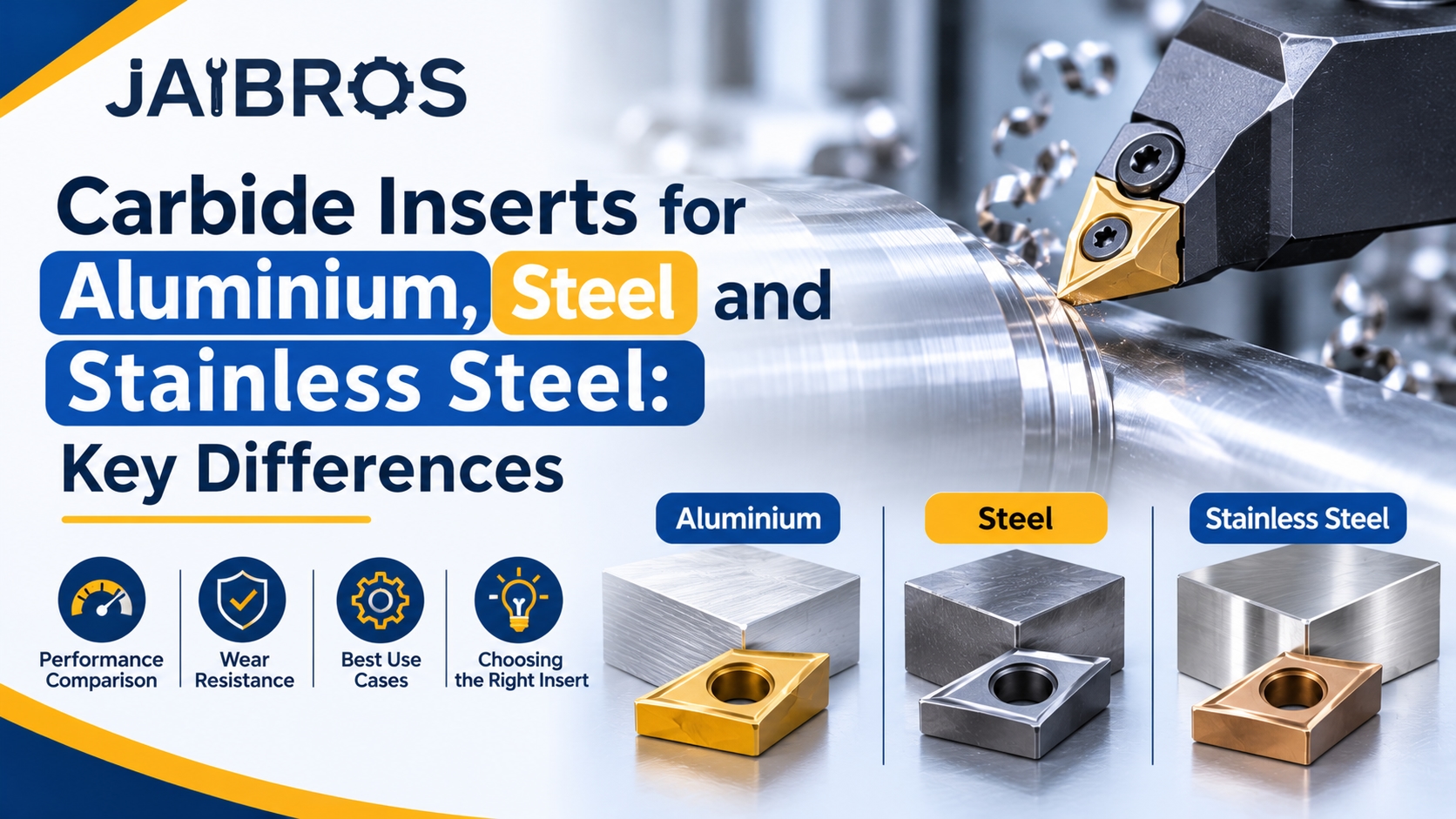
Choosing the right carbide inserts can change your tool life, surface finish and cost per part. Every metal reacts differently to the cutting edge. An insert that works well on aluminium may fail quickly on stainless steel. This guide explains the main differences in simple words so you can make better machining decisions.
What Is a Carbide Insert?
A carbide insert is a small, replaceable cutting tip made from tungsten carbide particles bonded with cobalt. It is clamped onto a tool holder. When the edge wears out, you index or replace the insert instead of the whole tool. Turning inserts are used on lathes to shape round parts, and they come in many shapes, sizes, grades and coatings.
Why Work Material Matters
Three factors change from one metal to another:
Hardness: how much force the edge must withstand
Heat: how much temperature builds up at the cutting zone
Chip behaviour: whether chips break cleanly or stick to the tool
Standards group metals by colour: blue for steel (P), yellow for stainless steel (M) and green for non-ferrous metals like aluminium (N). Matching the insert to the right group is the first step.
Inserts for Aluminium
Aluminium is soft and conducts heat well, but it is sticky. The biggest problem is built-up edge, where the metal welds onto the cutting edge and ruins the finish.
What works best:
Sharp, positive geometry that cuts smoothly with low force
Polished or uncoated surfaces, or diamond-like coatings, to stop sticking
High cutting speeds, since aluminium handles speed well
Open chip breakers that clear long, stringy chips
Avoid coatings that contain aluminium, as they can attract the workpiece material.
Inserts for Steel
Steel is harder and produces more heat. Here the main wear types are crater wear on the top face and flank wear on the side.
For steel, choose:
Coated grades with layers such as titanium carbonitride and aluminium oxide that resist heat and wear
Tougher substrates that handle interrupted cuts and shock
Strong edge preparation, such as a slight hone, to prevent chipping
Moderate speeds with steady feed and proper coolant
Carbide inserts for steel are usually the most versatile type, which is why many workshops stock them first.
Inserts for Stainless Steel
Stainless steel is the hardest of the three to machine. It work-hardens, meaning the surface becomes harder as you cut it. It also conducts heat poorly, so heat stays at the cutting edge.
Good practice includes:
Sharp, positive geometries to reduce cutting force
Tough, fine-grain substrates with strong edges
PVD coatings, which are thin and keep the edge sharp
Constant feed, because dwelling or rubbing hardens the surface
Plenty of coolant to control heat
Carbide inserts made for stainless steel balance sharpness with edge strength, which is why grade selection matters so much here.
Quick Comparison
Feature | Aluminium | Steel | Stainless Steel |
Main problem | Built-up edge | Crater and flank wear | Work hardening, heat |
Edge style | Very sharp, positive | Strong, slightly honed | Sharp but tough |
Best coating | Uncoated, polished or diamond-like | Multi-layer CVD | PVD |
Cutting speed | High | Medium | Low to medium |
Coolant need | Moderate | Moderate | High |
Tips for Longer Insert Life
Check the machine and holder for rigidity and vibration.
Use the speed and feed range suggested for the grade.
Rotate or index the edge before it is badly worn.
Keep coolant clean and directed at the cutting zone.
Store inserts in a dry, protected box to avoid edge damage.
How to Choose the Right Insert
Start with your material group. Then consider the operation (roughing, finishing or general turning), the depth of cut and the machine power. Pick the grade and coating next, then the chip breaker. If you are unsure, check the manufacturer’s cutting data charts and test on a small batch first.
Frequently Asked Questions
1. Can one insert machine aluminium, steel and stainless steel?
It is possible, but results will be average. Each metal needs different edge sharpness, coating and speed. A general-purpose insert may work for light jobs, but dedicated grades give better finish, longer tool life and fewer breakdowns. For regular production, using material-specific inserts is more reliable and economical.
2. Why do inserts wear faster on stainless steel?
Stainless steel work-hardens and traps heat at the cutting edge. This causes notch wear, chipping and quick edge breakdown. Using sharp geometry, a suitable PVD coating, steady feed and good coolant helps slow the wear and keeps the cutting zone stable.
3. What does the coating on an insert do?
A coating forms a hard, heat-resistant layer over the carbide base. It reduces friction, protects against wear and allows higher speeds. Different coatings suit different metals, so a coating that works on steel may not give good results on aluminium.
4. How do I know when to change a turning insert?
Change or index the edge when you notice a poor surface finish, rising cutting noise, burrs, vibration or visible chipping and wear. Waiting too long can damage the workpiece and holder. Checking the edge regularly under good light helps you replace it at the right time.
5. How do I choose carbide inserts for a new job?
Identify the material group first, then match the grade, coating, geometry and chip breaker to the operation. Check your machine rigidity and depth of cut. Follow the recommended cutting data and test one edge before running a full batch.
Conclusion
Aluminium needs sharp, polished edges, steel needs tough coated grades, and stainless steel needs a careful balance of sharpness and strength. Understanding these differences helps you pick the right carbide inserts, reduce downtime and improve part quality.
If you are looking for a reliable place to find quality cutting tools, you can explore Jaibros for a wide range of turning inserts and machining tools.