
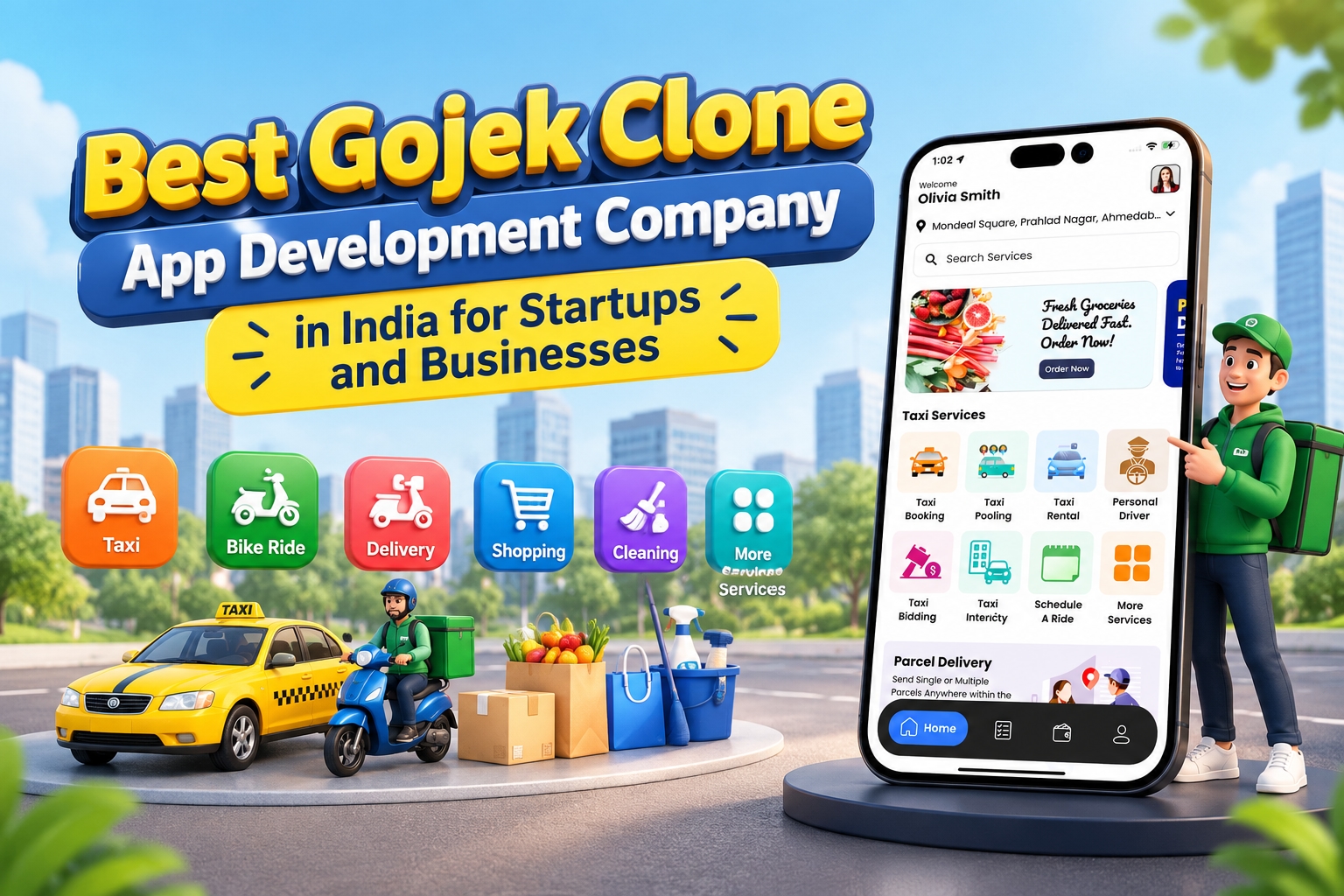
India’s digital economy is creating new opportunities for startups, entrepreneurs, and established businesses to launch app-based services. From taxi booking and food delivery to grocery shopping, courier services, and home maintenance, customers increasingly prefer platforms that allow them to access multiple services through a single application. This growing demand has made the super app business model an attractive option for businesses looking to expand their digital presence.
Inspired by platforms such as Gojek, entrepreneurs can develop a multi-service application that connects customers with service providers through one convenient platform. However, building such an application from scratch can require considerable time, technical expertise, and financial resources. A Gojek clone app development company can simplify this process by providing a ready-made or customizable solution designed to support multiple service categories.
India has become an important destination for app development services because businesses can explore a wide range of technology partners, customization options, and development approaches. Choosing the right company, however, requires careful evaluation of its technology, service capabilities, scalability, and long-term support.
This guide explains what a Gojek clone app is, why startups and established businesses consider it, which features matter most, and how to choose the right development partner in India.
What Is a Gojek Clone App?
A Gojek clone app is a multi-service application solution inspired by the business model of Gojek. It enables entrepreneurs to launch a platform that offers several on-demand services through a single digital ecosystem.
Instead of developing separate applications for every business category, a super app can bring different services together under one brand. Customers can access available services, place orders, make payments, track requests, and manage their activities from a centralized application.
Depending on the business model, a Gojek clone solution may include:
Taxi booking: Connect passengers with drivers for local and outstation transportation.
Food delivery: Allow customers to order meals from restaurants and track deliveries.
Grocery delivery: Support online grocery shopping and doorstep delivery.
Courier services: Enable users to schedule parcel pickups and deliveries.
Home services: Connect customers with professionals offering cleaning, plumbing, electrical repairs, and other household services.
Beauty and wellness: Facilitate bookings for salon treatments and personal care services.
Pharmacy delivery: Support medicine ordering and delivery where permitted by applicable regulations.
Additional on-demand services: Introduce new categories based on local demand and business objectives.
The exact services depend on the solution selected and the level of customization offered by the development company.
Why Choose a Gojek Clone App for Your Startup or Business?
A multi-service platform can help businesses explore several revenue opportunities while providing customers with a consistent digital experience. Its suitability depends on the target market, service availability, operational capacity, and customer demand.
1. Launch Multiple Services Under One Brand
A super app allows entrepreneurs to bring different service categories together. For example, a business could begin with taxi booking and food delivery before expanding into grocery shopping or home services.
This approach provides flexibility to develop the business gradually without creating an entirely separate digital platform for every new category.
2. Reduce Initial Development Complexity
Developing every application module from the ground up can involve extensive planning, design, coding, testing, and deployment. A ready-made Gojek clone solution can provide an existing technical foundation that businesses can customize according to their requirements.
Although customization, integrations, and deployment still require investment, using an established solution may simplify the initial development process.
3. Create Multiple Revenue Streams
Businesses can explore different monetization models depending on their services and customer base.
Common revenue opportunities include:
Commission on completed bookings and orders
Delivery and convenience charges
Service subscription plans
Featured listings and promotional placements
Business partnership fees
Premium customer or merchant packages
A diversified revenue model can provide flexibility, although profitability depends on customer acquisition costs, service quality, operating expenses, and market conditions.
4. Improve Customer Convenience
Customers can use one application to access different services instead of installing multiple apps. A unified account, consistent interface, saved addresses, payment options, and order history can make the experience more convenient.
A well-designed super app can also encourage repeat usage when its services match customers’ regular needs.
5. Support Business Expansion
As a business grows, it may want to introduce additional services, enter new cities, or serve different customer groups. A scalable application architecture can help support these changes.
Before selecting a solution, businesses should verify whether the platform supports additional service modules, higher transaction volumes, multiple languages, and regional payment integrations.
Best Gojek Clone App Development Companies in India
Selecting a development partner is one of the most important decisions when planning a super app. Rather than choosing solely by price, businesses should evaluate each company’s product capabilities, customization process, delivery model, technical documentation, and support arrangements.
The following companies and platforms are worth considering during the initial research process. Their inclusion is not a verified ranking of market leaders; buyers should independently confirm current product capabilities and commercial terms.
1. V3Cube
V3Cube is an app development company offering clone-app solutions for businesses interested in launching on-demand digital platforms. Its Gojek clone solution is intended for entrepreneurs who want to bring multiple service categories together under a single brand.
A multi-service platform can be relevant to startups planning to enter the on-demand economy, as well as established businesses looking to extend their existing services.
What to evaluate:
Availability of customer, service provider, and administrative applications
Supported service categories and customization options
Branding, interface, and workflow flexibility
Payment gateway and notification integrations
Source code access and licensing terms
Technical assistance, maintenance, and future upgrades
Businesses can explore the Gojek Clone App Solution from V3Cube to review the offering and discuss requirements directly with the company.
2. GojekClone.com
GojekClone.com is another option to investigate when researching multi-service app development solutions. Businesses considering this provider should determine whether its available product matches their preferred launch strategy, target service categories, and operational requirements.
What to evaluate:
Range of supported on-demand services
Customization and white-label branding options
Availability of mobile applications and an administrative dashboard
Third-party integrations and localization support
Product demonstrations and testing arrangements
Ownership rights, maintenance terms, and upgrade policies
Before making a decision, request a demonstration of the actual product rather than relying exclusively on marketing descriptions.
3. GojekAppClone
Gojek App Clone is another name businesses may include in their research when comparing multi-service application solutions. Its suitability should be assessed through direct discussions, product documentation, and practical demonstrations.
What to evaluate:
Supported business models and service workflows
Customer, merchant, and service provider management
Booking, ordering, payment, and tracking capabilities
Options for adding or modifying service categories
Deployment requirements and estimated implementation time
Post-launch technical support
Comparing these areas with your business requirements can help identify whether a solution is suitable for your launch plans.
How to Compare These Companies
The best provider for one business may not be the right choice for another. Ask each shortlisted company the same questions, request written answers, and compare the total cost of ownership rather than focusing only on the initial quotation.
Pay particular attention to product demonstrations, contract terms, customization limits, and the provider’s ability to support your expected business growth.
Essential Features of a Gojek Clone App
A successful multi-service application requires more than a collection of service categories. It needs a reliable operational foundation that supports customers, service providers, business administrators, and payment processes.
1. Customer Application
The customer app is the primary interface through which users discover and access services.
Important features may include:
Simple registration and secure login
Service category browsing
Location detection and address management
Search and filtering
Booking and order placement
Real-time order or driver tracking, where applicable
Multiple payment methods
Ratings, reviews, and feedback
Booking history and notifications
Customer support access
The interface should remain intuitive even when the platform includes many service categories.
2. Service Provider Application
Drivers, delivery partners, merchants, and other professionals need tools to manage their activities.
Depending on the business model, the provider app may include profile management, availability settings, booking acceptance, navigation, order status updates, earnings summaries, and customer communication.
Different service categories may require different workflows, so verify that the solution supports the specific operations you plan to offer.
3. Administrative Dashboard
The administration panel allows business owners and authorized staff to manage the platform.
Useful capabilities include:
Customer and provider management
Service category configuration
Booking and order monitoring
Commission and service fee management
Promotional campaign administration
Reports and analytics
Complaint and dispute handling
Access permissions and administrative controls
A centralized dashboard can help businesses monitor operations across multiple service categories.
4. Payment and Commission Management
A multi-service platform may require different payment rules for different services. For example, taxi bookings may use distance-based pricing, while food delivery may include restaurant commissions and delivery charges.
The solution should support the payment methods relevant to the target market, secure transaction handling, refunds where applicable, and transparent commission calculations.
Indian businesses should also review support for appropriate domestic payment gateways and any applicable compliance requirements.
5. Tracking, Notifications, and Analytics
Tracking can improve visibility into bookings, deliveries, and service requests. Push notifications, SMS, or other supported communication channels can keep users informed about important status changes.
Analytics can help business owners monitor booking volume, order completion, provider activity, customer retention, and service-category performance. These insights can support better operational decisions as the business develops.
How to Choose the Right Gojek Clone App Development Company in India
Before committing to a provider, evaluate the following factors carefully.
Define Your Business Requirements
Start by identifying your target audience, launch location, initial service categories, revenue model, and expected operational requirements.
A startup launching taxi booking in one city will have different needs from an established company planning a multi-city super app with dozens of service categories.
Prepare a requirements document before requesting quotations.
Check Product Quality Through a Live Demo
Ask the provider to demonstrate the customer application, service provider application, and administrative dashboard.
Test important workflows, including registration, booking, payment, cancellation, notifications, and refunds where supported. A live demonstration can reveal usability limitations that a feature list may not communicate.
Review Customization and Scalability
Confirm whether you can modify the branding, interface, service categories, pricing rules, and operational workflows.
Also ask how the platform handles additional users, transactions, service modules, and geographical expansion. Request technical information about hosting, database management, backups, security, and performance.
Understand Source Code and Licensing
Clarify whether the purchase includes source code, whether the code can be modified, and whether you can engage another development team for future enhancements.
Review the agreement for intellectual property rights, third-party dependencies, usage restrictions, renewal fees, and ownership of business data.
Evaluate Support and Maintenance
Launching the application is only one part of operating a digital business. Updates, bug fixes, server monitoring, security patches, and integration changes may be necessary over time.
Ask the provider what support is included, how issues are prioritized, and whether ongoing maintenance is charged separately.
Compare the Total Cost
The lowest initial quotation may not represent the lowest long-term cost.
Consider licensing, customization, deployment, cloud hosting, third-party services, payment gateway charges, maintenance, and future upgrades. Request an itemized quotation so you can compare providers on consistent terms.
How Much Does Gojek Clone App Development Cost in India?
The cost of a Gojek clone app depends on the solution's existing capabilities and the amount of customization required. There is no single price that applies to every business.
Factors affecting the total investment include:
Number and complexity of service categories
Android and iOS application requirements
Design customization and branding
Payment gateway and external API integrations
Advanced features such as dynamic pricing and automated dispatch
Hosting, security, and infrastructure requirements
Testing, deployment, and maintenance arrangements
A ready-made solution with limited customization may require less initial development work than a highly customized platform built around complex business processes.
For a more meaningful estimate, prepare a feature list and request quotations based on the same requirements from each shortlisted company. Ask for a breakdown of initial and recurring expenses before making your decision.
Steps to Launch a Gojek Clone App Business
Launching a multi-service platform requires business planning alongside technology implementation.
Step 1: Research your target market. Identify local customer needs, existing competitors, service gaps, and the categories most likely to attract demand.
Step 2: Select your initial services. Start with a manageable set of categories based on available service providers, operational resources, and market demand. Additional services can be introduced after validating the business model.
Step 3: Choose your development partner. Compare product demonstrations, technical capabilities, pricing, source code terms, customization options, and support arrangements.
Step 4: Customize the platform. Configure branding, pricing rules, service workflows, payment methods, and other features around your business model.
Step 5: Test the complete application. Check registration, bookings, payments, notifications, cancellations, security, and performance across supported devices.
Step 6: Onboard service providers. Establish clear onboarding procedures, service standards, pricing policies, and dispute-handling processes.
Step 7: Launch and measure performance. Begin in your selected market, monitor customer feedback, and track important metrics such as completed bookings, repeat usage, cancellations, and service provider availability.
Step 8: Expand based on results. Use real operational data to improve the user experience, refine service categories, and plan expansion into additional markets.
Common Mistakes to Avoid When Selecting a Provider
Businesses can reduce implementation risks by avoiding several common mistakes.
Choosing only by price: A low quotation may exclude important features, integrations, or maintenance.
Ignoring product demonstrations: Marketing materials do not replace practical testing.
Overlooking ownership terms: Unclear source code and licensing rights can create future limitations.
Adding too many services immediately: Managing multiple categories without sufficient demand or provider availability can increase operational complexity.
Neglecting security: Customer data, payment processes, and administrative access require appropriate protection.
Underestimating ongoing expenses: Hosting, maintenance, third-party services, and marketing should be included in the business plan.
Skipping market research: A technically capable platform still needs a viable business model and a reliable service provider network.
Making an informed decision before development begins can help businesses avoid unnecessary costs and operational challenges later.
Frequently Asked Questions
1. Which is the best Gojek clone app development company in India?
The best company depends on your budget, target services, customization needs, ownership requirements, and long-term support expectations. V3Cube, GojekClone.com, and Gojek App Clone are options to investigate, but you should verify their current offerings and compare them through demonstrations and written proposals.
2. Can a startup launch a Gojek clone app?
Yes. A startup can consider a ready-made or customizable multi-service application to establish its digital platform. Starting with a limited number of services and expanding according to market demand can help keep operations manageable.
3. Can I customize a Gojek clone app with my own branding?
Many white-label solutions offer branding options, but the available customization varies by provider. Confirm whether you can modify the app name, logo, colors, interface, service categories, and business workflows before signing an agreement.
4. How long does it take to launch a Gojek clone app?
The timeline depends on the product's readiness, customization requirements, integrations, testing, and deployment process. A solution that already includes the required features may need less implementation work than a heavily customized platform. Request a project schedule with clearly defined milestones.
5. How can a Gojek clone app generate revenue?
Potential revenue streams include booking commissions, service fees, delivery charges, merchant subscriptions, promotional placements, and premium service packages. The right combination depends on the target market, operating costs, and the needs of customers and service providers.
Conclusion
A Gojek clone app can provide startups and established businesses with a practical starting point for exploring the multi-service application market in India. By bringing services such as taxi booking, food delivery, grocery shopping, courier services, and home maintenance into one platform, businesses can create a convenient digital experience and explore multiple revenue opportunities.
However, choosing the right development company requires more than comparing prices or feature lists. Businesses should evaluate product quality, customization capabilities, source code ownership, security, scalability, integration options, and post-launch support before making a commitment.
Companies such as V3Cube, GojekClone.com, and Gojek App Clone can be included in the initial research process, provided their current capabilities are independently verified. Request demonstrations, compare itemized quotations, and ensure that the proposed solution aligns with your business requirements.
Ready to explore your super app business idea? Define your service categories, identify your target market, and contact shortlisted development companies to discuss a solution tailored to your business goals. A well-planned launch, supported by the right technology and a sustainable operating model, can help you build a stronger foundation for long-term growth.
Frequently Asked Questions
1. What features should a Gojek clone app have for business growth?
A Gojek clone app should include customer and service provider applications, an administrative dashboard, secure payment integration, real-time tracking, commission management, push notifications, and analytics. Scalable architecture and flexible customization can also help businesses introduce new services as demand grows.
2. Can I customize a Gojek clone app according to my business requirements?
Yes, many Gojek clone solutions offer customization options for branding, service categories, pricing models, payment gateways, and application workflows. The level of customization depends on the provider, so discuss your requirements and confirm the available options before selecting a solution.