The Global Healthy Snacks Market is witnessing remarkable growth as consumers increasingly prioritize nutritious, convenient, and functional food choices. Changing dietary habits, growing awareness of preventive healthcare, and the rising preference for clean-label and minimally processed products are reshaping the snack industry worldwide. Healthy snacks have evolved beyond traditional granola bars to include protein-rich snacks, fruit and vegetable chips, nuts, seeds, yogurt products, and functional beverages that cater to diverse nutritional needs.
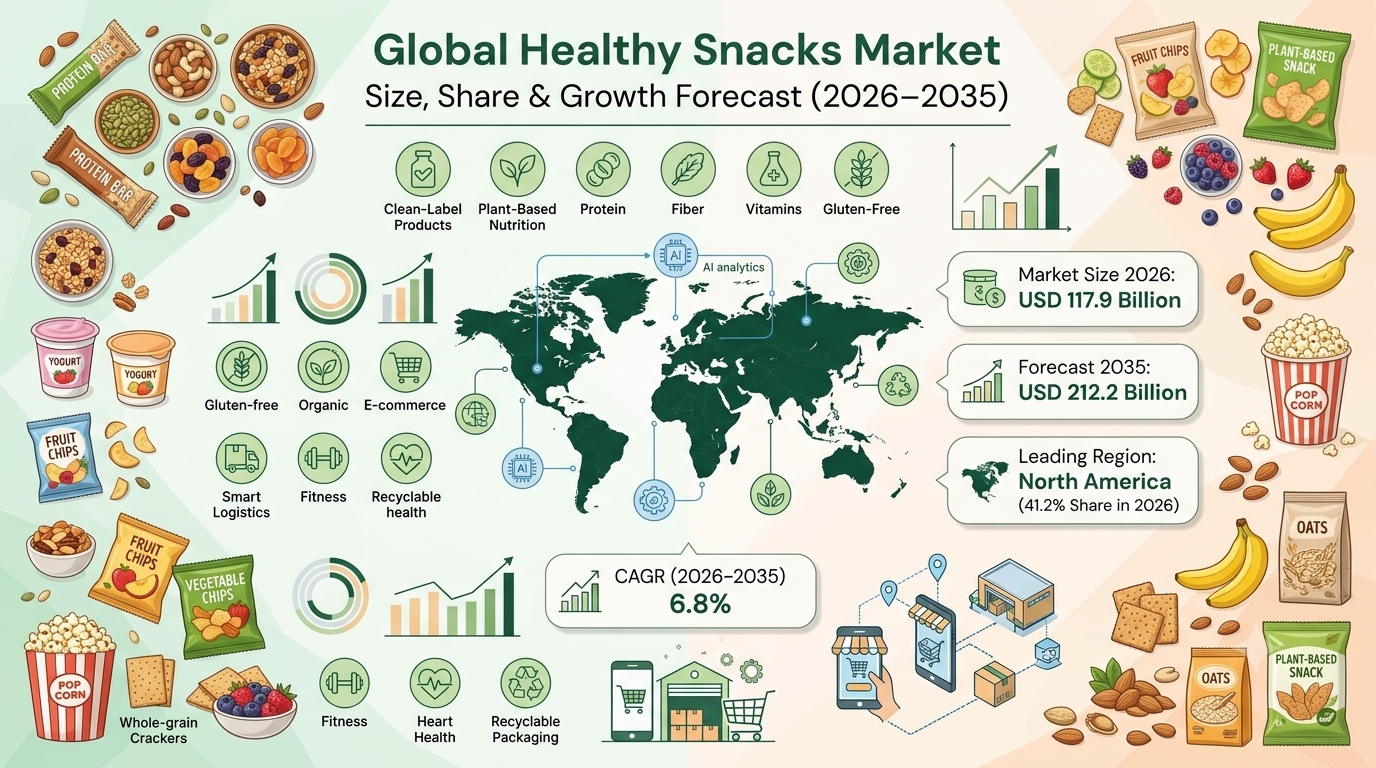
The Global Healthy Snacks Market size is estimated at USD 117.9 billion in 2026 and is projected to reach USD 212.2 billion by 2035, expanding at a CAGR of 6.8% during the forecast period. Market growth is primarily supported by continuous innovation in functional ingredients, clean-label product development, digitalized supply chains, and increasing consumer demand for healthier alternatives to conventional packaged snacks.
Consumers across all age groups are seeking snacks that combine taste, nutrition, and convenience. Manufacturers are responding by introducing products enriched with plant proteins, probiotics, fiber, vitamins, minerals, and superfoods while reducing sugar, sodium, and artificial additives. This transformation is creating significant opportunities for both established brands and emerging companies across global markets.
Download a Complimentary PDF Sample Report:
https://dimensionmarketresearch.com/request-sample/healthy-snacks-market/
Market Overview
Healthy snacks have become an essential part of modern lifestyles as busy consumers increasingly replace traditional meals with smaller, nutrient-rich eating occasions throughout the day. The market encompasses products formulated to provide nutritional benefits while maintaining convenience, portability, and appealing flavors.
Growing concerns regarding obesity, diabetes, cardiovascular diseases, and digestive health have accelerated the shift toward better-for-you snacks. Consumers are carefully reading ingredient labels and actively choosing products with recognizable ingredients, high protein content, whole grains, natural sweeteners, and functional health benefits.
The expansion of e-commerce, subscription snack services, and omnichannel retailing has significantly improved product accessibility. Digital platforms enable brands to introduce innovative products rapidly while gathering valuable consumer insights for future product development.
Key Findings
North America is projected to account for 41.2% of global market revenue in 2026.
Functional ingredient innovation remains one of the strongest market growth catalysts.
Clean-label formulations continue to influence purchasing decisions globally.
Plant-based snacks are experiencing strong consumer adoption.
Digital supply chains are improving inventory management and retail efficiency.
Protein-rich snacks are becoming mainstream across sports nutrition and everyday consumption.
Premium healthy snack products continue gaining popularity among health-conscious consumers.
Online retail channels are significantly expanding market reach.
Market Dynamics
Growing Health Awareness
Consumers are becoming increasingly aware of the relationship between diet and long-term health. Healthy snacks now play an important role in weight management, energy enhancement, digestive wellness, and overall nutrition. This awareness is encouraging greater consumption of nutrient-dense products containing natural ingredients.
Increasing Urbanization
Rapid urban lifestyles have created demand for convenient food products that can be consumed anywhere. Healthy snack manufacturers are introducing portable packaging, resealable containers, and single-serving products that meet modern consumer expectations without compromising nutrition.
Continuous Product Innovation
Food companies continue investing heavily in research and development to create snacks with enhanced nutritional profiles while maintaining taste and texture. Product innovations involving ancient grains, superfoods, plant proteins, probiotics, adaptogens, and botanical extracts are expanding consumer choices.
Digital Transformation
Advanced inventory management, AI-based demand forecasting, automated production systems, and integrated digital supply chains are improving operational efficiency while reducing product shortages and waste across the healthy snacks industry.
Market Trends
Clean-Label Products Continue Expanding
Consumers increasingly prefer products containing simple, recognizable ingredients without artificial preservatives, colors, or flavors. Clean-label positioning has become a major competitive advantage for manufacturers.
Rise of Plant-Based Nutrition
Plant-based eating continues gaining popularity worldwide. Healthy snack companies are launching products made from legumes, chickpeas, lentils, peas, oats, nuts, seeds, mushrooms, and vegetables to meet changing dietary preferences.
Functional Ingredients Drive Innovation
Manufacturers are incorporating ingredients that deliver additional health benefits beyond basic nutrition, including probiotics, omega fatty acids, collagen peptides, fiber, antioxidants, and adaptogenic herbs.
Personalized Nutrition
Consumers increasingly seek snacks designed for specific health goals, including weight management, immunity support, muscle recovery, digestive health, cognitive performance, and sports nutrition.
Sustainable Packaging
Eco-friendly packaging solutions are becoming an important purchasing factor. Companies continue investing in recyclable, biodegradable, and compostable packaging materials to reduce environmental impact.
Growth Drivers
Rising Demand for Functional Foods
Consumers increasingly purchase snacks that provide measurable health benefits beyond hunger satisfaction. Products supporting immunity, digestive health, energy, and overall wellness continue experiencing growing demand.
Expanding Fitness Culture
Growing participation in sports, fitness, and active lifestyles has increased demand for protein bars, energy bites, protein chips, trail mixes, and recovery snacks enriched with functional nutrients.
Increasing Disposable Income
Higher disposable income in many economies enables consumers to spend more on premium healthy snack products offering superior ingredients and nutritional value.
Retail Expansion
Modern supermarkets, convenience stores, specialty health stores, pharmacies, and online marketplaces continue expanding healthy snack availability across developed and emerging economies.
Market Challenges
Premium Product Pricing
Healthy snacks often carry higher production costs due to premium ingredients, sustainable sourcing, and specialized manufacturing processes. Higher retail prices may limit adoption among price-sensitive consumers.
Raw Material Price Volatility
Fluctuations in prices of nuts, seeds, fruits, grains, and plant proteins can affect manufacturing costs and profit margins.
Short Shelf Life
Many clean-label products avoid synthetic preservatives, making shelf-life management more challenging throughout transportation and retail distribution.
Regulatory Compliance
Manufacturers must comply with varying food safety regulations, nutritional labeling requirements, and health claim standards across different countries, increasing product development complexity.
Market Segmentation Overview
By Product Type
The market includes:
Protein Bars
Granola Bars
Nuts & Seeds
Dried Fruits
Vegetable Chips
Fruit Chips
Protein Chips
Popcorn
Yogurt Snacks
Rice Cakes
Whole Grain Snacks
Others
Protein-rich snacks continue attracting strong consumer demand due to their versatility across fitness, weight management, and everyday nutrition.
By Ingredient
Major ingredient categories include:
Plant Protein
Dairy Protein
Whole Grains
Fruits
Vegetables
Nuts
Seeds
Superfoods
Functional Ingredients
Natural Sweeteners
Functional ingredients continue gaining market share as consumers seek additional nutritional benefits.
By Distribution Channel
Healthy snacks are distributed through:
Supermarkets & Hypermarkets
Convenience Stores
Specialty Stores
Pharmacies
Online Retail
Direct-to-Consumer Platforms
Others
Online retail continues to experience rapid expansion through subscription services and digital grocery platforms.
By Consumer Group
Products target multiple consumer categories:
Children
Teenagers
Adults
Elderly Consumers
Athletes
Fitness Enthusiasts
Working Professionals
Manufacturers increasingly develop age-specific and lifestyle-oriented product portfolios.
Purchase the report for comprehensive details:
https://dimensionmarketresearch.com/checkout/healthy-snacks-market/
Regional Analysis
North America Leads the Global Healthy Snacks Market
North America is projected to lead the global healthy snacks market with approximately 41.2% market share in 2026. The region benefits from strong consumer spending on better-for-you products, widespread availability of premium healthy snacks, advanced retail infrastructure, and continuous product innovation.
Consumers throughout the United States and Canada increasingly purchase protein chips, snack bars, vegetable chips, nuts, and gluten-free snacks for sports nutrition, weight management, workplace consumption, and school lunches. The presence of leading healthy snack manufacturers, innovation centers, and sophisticated digital supply chains further strengthens regional leadership.
Continuous investments in clean-label reformulation, sustainable packaging, improved shelf-life technologies, and premium product launches continue supporting long-term market growth across North America.
Europe
Europe represents a significant healthy snacks market supported by rising awareness of nutritional health, growing demand for organic products, and expanding plant-based food consumption. Consumers increasingly seek snacks made from natural ingredients with reduced sugar and minimal processing.
Asia Pacific
Asia Pacific is expected to witness strong market expansion due to rising disposable income, increasing urbanization, expanding middle-class populations, and growing health awareness. Modern retail expansion and digital commerce are further accelerating healthy snack adoption.
Latin America
The Latin American market continues growing as consumers become increasingly interested in healthier eating habits. Product innovation, expanding retail infrastructure, and increasing nutritional awareness support market development.
Middle East & Africa
Healthy snack consumption continues rising across the Middle East and Africa due to increasing urban populations, lifestyle changes, premium food adoption, and expanding supermarket chains.
Competitive Landscape
The healthy snacks market remains highly competitive as companies compete through continuous product innovation, premium ingredient sourcing, sustainability initiatives, strategic partnerships, digital marketing, and expanding retail distribution.
Major competitive strategies include:
Development of clean-label product portfolios
Introduction of plant-based snacks
Expansion into functional nutrition
Investment in sustainable packaging
Digital commerce optimization
Geographic expansion
Product premiumization
Mergers and acquisitions
Capacity expansion
Supply chain digitalization
Companies also focus heavily on personalized nutrition solutions, healthier reformulations, and innovative flavor profiles to strengthen brand loyalty.
Future Market Outlook
The future of the Global Healthy Snacks Market appears highly promising as consumers increasingly integrate healthier eating habits into their daily lifestyles. Advances in food technology, ingredient science, and precision nutrition are expected to reshape product development over the next decade.
Artificial intelligence and predictive analytics will enable manufacturers to optimize product innovation, consumer engagement, and inventory management. Functional ingredients will continue evolving to address specific health concerns, including immunity, gut health, cognitive wellness, sleep support, and metabolic health.
Plant-based innovation will remain a major growth area, supported by sustainable sourcing and environmental awareness. Meanwhile, personalized nutrition, smart packaging, digital retailing, and direct-to-consumer business models are expected to create additional long-term opportunities for manufacturers worldwide.
As consumer expectations continue evolving toward transparency, nutrition, convenience, and sustainability, companies capable of delivering innovative and scientifically formulated snack products will remain well-positioned for future growth.
Frequently Asked Questions (FAQs)
1. What is driving the growth of the Global Healthy Snacks Market?
The market is primarily driven by increasing health awareness, demand for functional foods, clean-label product innovation, plant-based nutrition, digital supply chains, and growing consumer preference for convenient yet nutritious snack options.
2. What is the projected market size by 2035?
The Global Healthy Snacks Market is projected to reach USD 212.2 billion by 2035, growing from USD 117.9 billion in 2026 at a CAGR of 6.8%.
3. Which region dominates the Healthy Snacks Market?
North America is expected to dominate the market, accounting for approximately 41.2% of global revenue in 2026 due to strong consumer demand, advanced retail infrastructure, and continuous product innovation.
4. Which product categories are witnessing strong demand?
Protein bars, nuts, seeds, vegetable chips, fruit chips, protein chips, yogurt snacks, popcorn, whole grain snacks, and functional snack products continue to experience significant consumer demand.
5. What are the major future opportunities in the market?
Future opportunities include personalized nutrition, functional ingredients, plant-based innovation, sustainable packaging, AI-enabled supply chains, digital commerce expansion, and premium clean-label product development.
Summary of Key Insights
The Global Healthy Snacks Market is entering a strong growth phase, supported by increasing consumer awareness of nutrition, functional food innovation, clean-label preferences, and digital transformation across the food supply chain. With the market expected to expand from USD 117.9 billion in 2026 to USD 212.2 billion by 2035 at a 6.8% CAGR, manufacturers continue investing in premium ingredients, plant-based formulations, sustainable packaging, and advanced product development. North America remains the dominant regional market, while innovation, convenience, and health-focused consumer behavior will continue shaping the industry's long-term evolution.