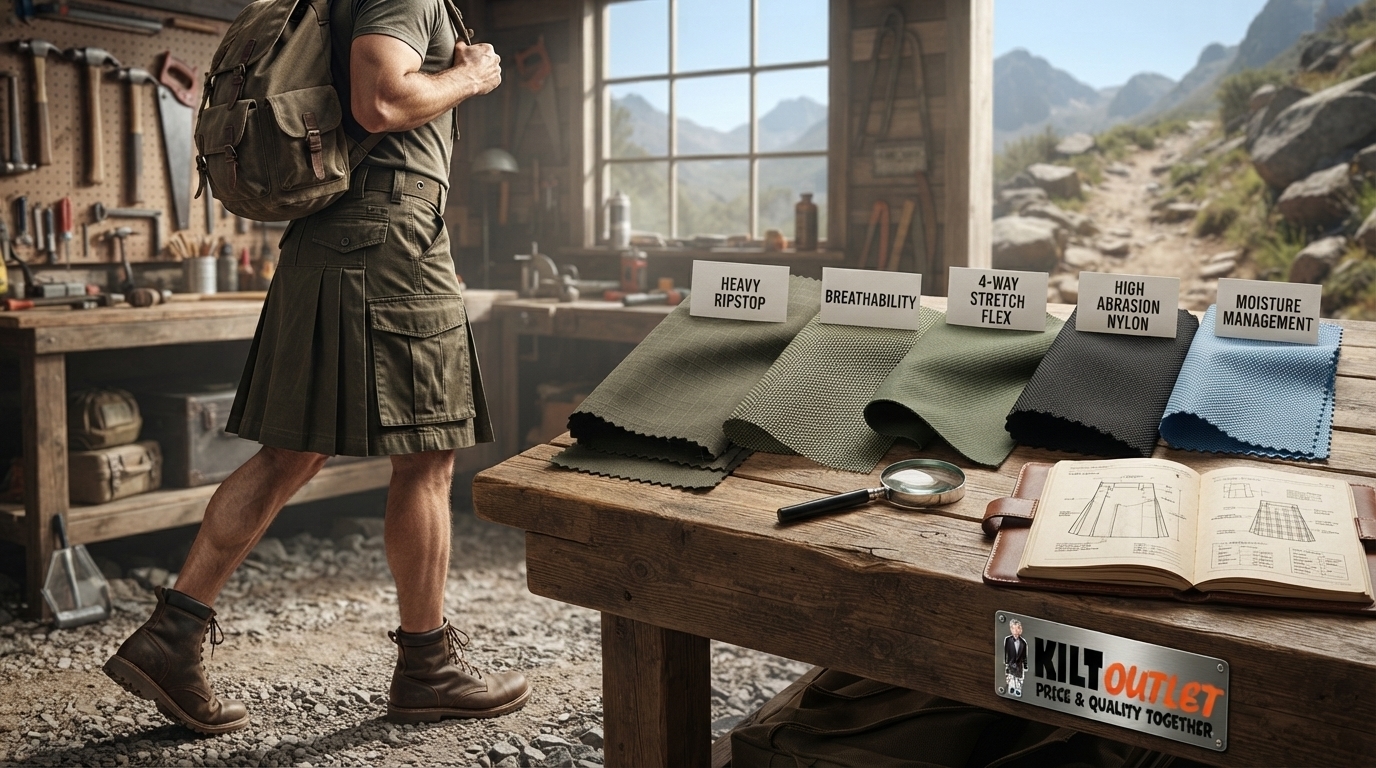
A tactical kilt needs to do more than look distinctive. People often choose this style for outdoor activities, casual work, events, and situations where freedom of movement matters. A fabric that feels too heavy, lacks flexibility, or becomes uncomfortable in warm conditions can reduce the usefulness of the garment.
The right material depends on how you plan to use the kilt. Buyers should consider durability, weight, breathability, flexibility, maintenance, and weather conditions before choosing a specific fabric.
Start With Intended Use
The best fabric for one person may not suit another. Someone who wears a tactical kilt for casual outdoor activities may prioritize lightweight comfort, while someone who uses it regularly for hands-on work may place greater importance on durability.
Think about where you will wear the kilt. Hiking, gardening, outdoor events, workshop activities, and everyday casual use can place different demands on clothing.
Once you understand the intended use, comparing fabrics becomes much easier.
Cotton for Everyday Comfort
Cotton can provide a comfortable option for casual tactical kilts. It has a familiar feel and works well for people who want a garment that does not feel overly technical.
Different cotton fabrics have different weights and weaves. A lightweight option may work better in warm conditions, while a heavier construction can provide a more structured appearance.
Cotton also offers a straightforward aesthetic. It can make a tactical kilt look practical without creating an excessively specialized appearance.
Ripstop Fabric for Utility Designs
Ripstop fabrics use a reinforced weave designed to help limit the spread of small tears. This construction can make ripstop a useful choice for garments intended for active use.
However, buyers should still examine the actual fabric composition. Ripstop describes the construction method rather than one specific material.
A ripstop kilt may use cotton, polyester, or a blend. Check the product specifications to understand what you are actually buying.
Polyester and Synthetic Blends
Synthetic materials can provide useful properties for active clothing. Polyester and blended fabrics can offer durability and easier maintenance depending on their construction.
They can also dry differently from natural fibers, which may matter during outdoor activities. However, synthetic fabric can feel warmer to some wearers, particularly in hot conditions.
Consider your climate and personal comfort before selecting a synthetic-heavy fabric.
Canvas for a Heavier Feel
Canvas provides a firm, structured feel and can suit people who prefer durable-looking garments. Its heavier construction can create a distinctive tactical appearance.
The downside is weight. A heavy canvas kilt may feel less comfortable during long walks or warm-weather activities.
If you choose canvas, consider how frequently you will wear the garment and how much movement you expect during use.
Weight and Mobility
Fabric weight affects more than comfort. It can influence how freely the kilt moves while walking, climbing, bending, or sitting.
A lighter fabric generally creates a more relaxed garment, while heavier materials can provide greater structure.
Neither option works for every situation. Your activities should determine the balance you want between mobility and structure.
Consider the Weather
Weather should influence your material choice. Warm climates can make heavy fabrics uncomfortable, while colder conditions may make a heavier garment more appealing.
If you spend significant time outdoors, consider how the fabric feels after several hours rather than only during a quick fitting.
Layering can also change how a kilt performs. A lighter kilt may provide more flexibility because you can add suitable clothing layers when temperatures drop.
Look Beyond the Main Fabric
A tactical kilt includes more than its primary material. Pocket construction, waistband fabric, stitching, straps, buckles, and reinforcement can all influence durability.
A high-quality fabric will not compensate for weak stitching or poor fastening systems. Examine the complete garment before making a decision.
Pay particular attention to areas that experience repeated movement, such as the waistband and pocket openings.
Maintenance Matters
Outdoor clothing can become dirty quickly. Choose a fabric that matches your preferred maintenance routine.
Check washing and drying instructions before purchasing. Some materials require special treatment, while others can handle more straightforward cleaning.
Proper care helps preserve both the appearance and structure of the garment. Always follow the manufacturer's instructions rather than assuming that every tactical kilt can be washed the same way.
Comfort Should Remain Important
The word "tactical" can make buyers focus heavily on pockets and hardware. Those features matter, but comfort should remain part of the decision.
A kilt that feels uncomfortable around the waist or restricts movement will not become more useful simply because it has additional storage.
Those looking for the Best Fabric Tactical kilt should compare fabric composition, weight, flexibility, durability, climate suitability, and maintenance requirements alongside the garment's practical features.
Make the Fabric Match Your Lifestyle
A tactical kilt can serve different purposes, from casual outdoor wear to practical everyday clothing. The right material depends on your environment and activities.
Cotton can suit casual comfort, ripstop can suit utility-focused designs, canvas can provide a heavier structure, and synthetic blends can offer different combinations of durability and maintenance convenience.
The important step is to examine the actual fabric specification instead of relying on the name of the material alone.
Final Considerations
Choosing tactical kilt fabric requires a balance between comfort and practical performance. Consider how much you will move, where you will wear the garment, what weather you expect, and how much maintenance you want to handle.
Once you match the fabric with your intended use, selecting the right tactical kilt becomes a much more straightforward process.