The global Radiopharmaceuticals Market is gaining importance as nuclear medicine becomes increasingly integrated into cancer diagnosis, targeted treatment, and personalized healthcare. Growing demand for advanced medical imaging, expanding oncology applications, and continuous innovation in radioisotope technologies are influencing the industry's long-term development.
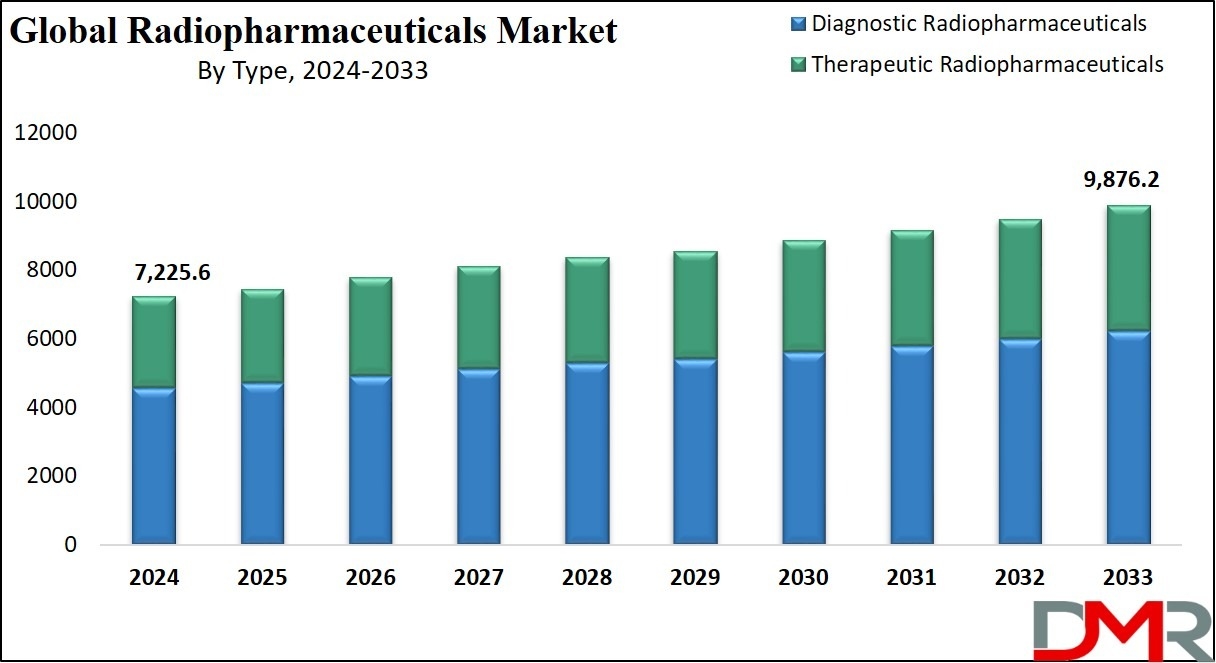
According to Dimension Market Research, the global market was valued at USD 7,225.6 million in 2024 and is projected to reach USD 9,876.2 million by 2033, expanding at a CAGR of 3.5%. This growth reflects increasing demand for diagnostic and therapeutic nuclear medicine across hospitals, medical imaging centers, and specialized cancer treatment facilities.
The rising burden of cancer, cardiovascular diseases, and neurological disorders is encouraging healthcare providers to adopt more precise diagnostic techniques. Meanwhile, advances in targeted radionuclide therapies are creating opportunities beyond conventional imaging applications.
What Is the Radiopharmaceuticals Market?
Radiopharmaceuticals are medicinal compounds containing radioactive isotopes used to diagnose diseases or deliver targeted treatment. These compounds support nuclear medicine procedures by providing information about biological processes, organ function, and disease activity.
Diagnostic radiopharmaceuticals are commonly administered during positron emission tomography (PET) and single-photon emission computed tomography (SPECT) procedures. Therapeutic radiopharmaceuticals deliver controlled radiation to selected tissues, particularly in cancer treatment.
Commonly used radioisotopes include Fluorine-18, Technetium-99m, Lutetium-177, Gallium-68, and Iodine-131. Their applications range from cancer detection and cardiac imaging to neurological assessment and targeted oncology treatment.
Radiopharmaceuticals Market Size and Key Statistics
The global market demonstrates opportunities across both established diagnostic procedures and emerging therapeutic applications.
● 2024 Market Size: USD 7,225.6 Million
● 2033 Market Forecast: USD 9,876.2 Million
● Forecast CAGR: 3.5%
● Leading Type: Diagnostic Radiopharmaceuticals, 63.1% in 2024
● Leading Application: Oncology, 31.5% in 2024
● Leading Region: North America, 37.5% in 2024
These figures highlight the continued importance of diagnostic imaging while indicating opportunities for innovation in targeted therapeutic radiopharmaceuticals.
Why Is the Radiopharmaceuticals Market Growing?
One of the primary growth drivers is the increasing need for accurate disease detection. Nuclear medicine imaging helps physicians assess biological activity, identify abnormalities, evaluate disease progression, and monitor treatment responses.
Cancer diagnosis represents a particularly important application. PET imaging using Fluorine-18-based compounds supports tumor detection, staging, and therapeutic monitoring. In cardiology, Technetium-99m-based radiopharmaceuticals remain important for myocardial perfusion imaging.
Another important driver is investment in nuclear medicine infrastructure. Hospitals and diagnostic facilities are expanding access to PET, SPECT, and hybrid imaging technologies, supporting greater utilization of radiopharmaceutical products.
Research into new radioisotopes and molecular targeting approaches is also encouraging pharmaceutical companies to develop products with more specialized diagnostic and therapeutic applications.
Get a Free Sample of the Radiopharmaceuticals Market Report
Explore detailed market segmentation, radioisotope demand, regional opportunities, competitive developments, and nuclear medicine technology trends. The sample provides an introduction to the research findings and market outlook.
https://dimensionmarketresearch.com/request-sample/radiopharmaceuticals-market/
How Theranostics Is Transforming Nuclear Medicine
Theranostics is becoming an important development in the radiopharmaceutical industry. This approach combines targeted diagnostic imaging with therapeutic treatment strategies, helping healthcare professionals identify suitable patients and evaluate treatment responses.
Lutetium-177-based radiopharmaceuticals are attracting attention for targeted cancer therapies, including applications involving prostate cancer and neuroendocrine tumors.
At the same time, Gallium-68-based imaging agents support molecular imaging approaches that can complement targeted treatment strategies.
The growing integration of diagnostic imaging and radionuclide therapy creates opportunities for pharmaceutical developers, isotope manufacturers, nuclear medicine centers, and research institutions.
Advancements in PET/CT and SPECT/CT technologies are also improving the clinical usefulness of radiopharmaceutical imaging by combining anatomical and functional information.
Radiopharmaceuticals Market Segmentation and Applications
Diagnostic radiopharmaceuticals accounted for 63.1% of the global market in 2024, reflecting their established use in oncology, cardiology, and neurological imaging.
Fluorine-18 derivatives hold a leading position within the radioisotope category because of their extensive use in PET imaging. Cyclotrons are an important production source for short-lived medical radioisotopes.
Oncology represented 31.5% of the application segment in 2024, supported by increasing demand for cancer imaging, staging, and targeted therapy.
The market's principal applications include:
● Oncology diagnosis and targeted treatment
● Cardiovascular imaging and assessment
● Neurological disease evaluation
● Thyroid disorder diagnosis and treatment
Hospitals remain the leading end-user category due to their access to specialized nuclear medicine equipment, trained professionals, and integrated diagnostic and treatment services.
Regional Outlook and Emerging Opportunities
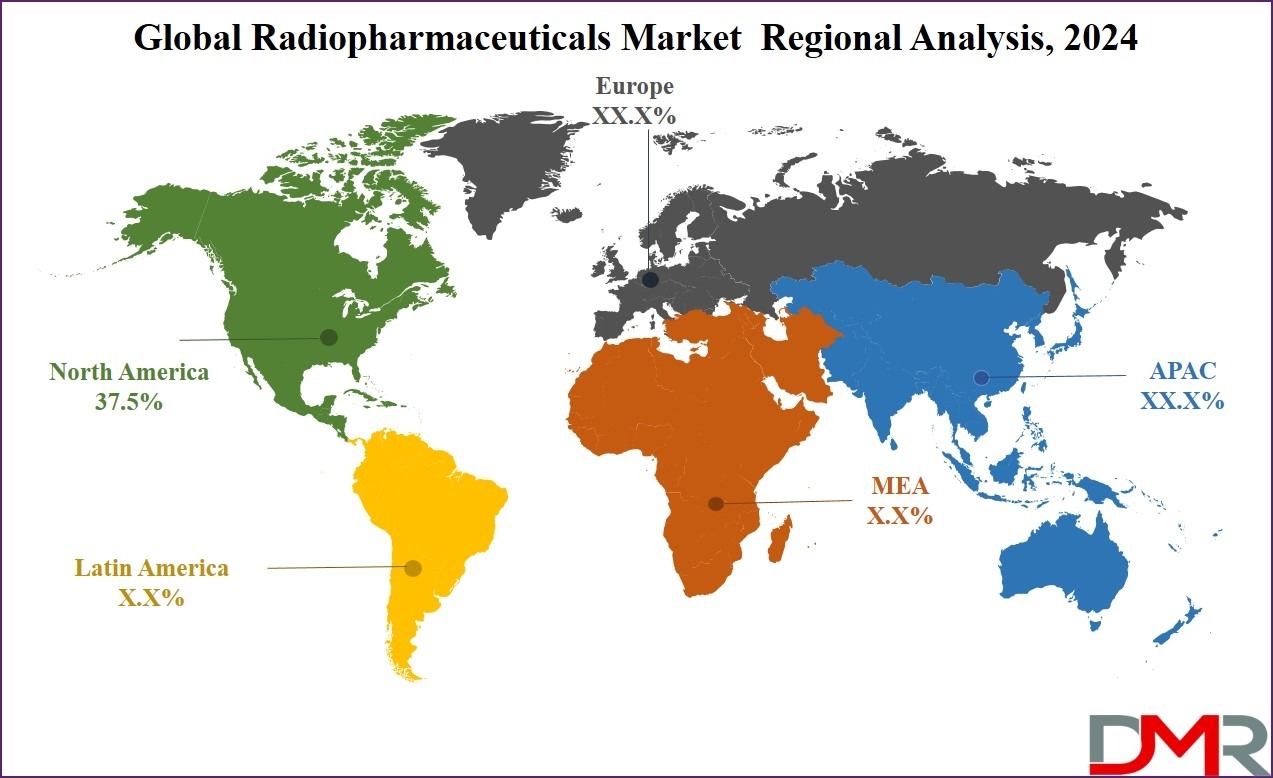
North America accounted for approximately 37.5% of global market revenue in 2024, supported by advanced healthcare infrastructure, established nuclear medicine procedures, and substantial research activity.
The United States remains an important market, with projected revenue increasing from USD 2,278.8 million in 2024 to USD 3,049.4 million by 2033.
Europe continues to benefit from established nuclear medicine capabilities and investments in oncology research, while Asia-Pacific presents opportunities through expanding healthcare infrastructure and growing demand for advanced diagnostic services.
Countries such as Japan, China, and India are increasingly relevant to nuclear medicine development as healthcare systems strengthen diagnostic and therapeutic capabilities.
The Middle East also presents opportunities through investment in specialized hospitals, cancer centers, and medical imaging infrastructure.
Competitive Landscape and Industry Challenges
Competition involves pharmaceutical companies, radioisotope manufacturers, nuclear pharmacy providers, and nuclear medicine technology developers.
Prominent companies identified in the market include Bayer AG, Bracco Imaging S.p.A., Cardinal Health, Eli Lilly and Company, Curium Pharma, Lantheus Holdings, Novartis AG, Nordion, and Jubilant Radiopharma.
Competitive strategies increasingly involve research collaboration, radiopharmaceutical development, production capacity expansion, and improvements in distribution infrastructure.
However, the industry faces several challenges. High production costs, radioactive material handling requirements, regulatory complexity, and specialized infrastructure needs can restrict market accessibility.
The short half-life of certain radioisotopes also makes production planning, transportation, and reliable distribution especially important.
Explore the Complete Radiopharmaceuticals Market Analysis
Access comprehensive research covering market forecasts, isotope technologies, competitive positioning, regional demand, growth opportunities, and strategic developments across diagnostic and therapeutic nuclear medicine.
Proceed to Checkout:
https://dimensionmarketresearch.com/checkout/radiopharmaceuticals-market/
Frequently Asked Questions
1. What is the global Radiopharmaceuticals Market size?
The global market was valued at USD 7,225.6 million in 2024 and is projected to reach USD 9,876.2 million by 2033.
2. What is the CAGR of the Radiopharmaceuticals Market?
The global market is projected to expand at a compound annual growth rate of 3.5% over the report's forecast period.
3. Which segment leads the Radiopharmaceuticals Market?
Diagnostic radiopharmaceuticals led the type segment with a 63.1% share in 2024, supported by widespread PET and SPECT imaging applications.
4. Which region dominates the global Radiopharmaceuticals Market?
North America led the market with approximately 37.5% share in 2024, supported by advanced nuclear medicine infrastructure and healthcare research.
5. What is the future outlook for the Radiopharmaceuticals Market?
The outlook is supported by growing oncology demand, advances in theranostics, expanding nuclear medicine infrastructure, and continued development of targeted radiopharmaceutical therapies.
Conclusion
The global Radiopharmaceuticals Market is evolving as advanced molecular imaging and targeted radionuclide therapies become increasingly important in modern healthcare.
While diagnostic applications remain the largest revenue contributor, innovations in theranostics, radioisotope production, and precision oncology are creating additional opportunities for pharmaceutical manufacturers, technology developers, and healthcare providers.
Continued investment in research, clinical infrastructure, and reliable isotope supply chains will play an important role in shaping the industry's future growth.
Related Nuclear Medicine and Radiopharmaceuticals Market Insights
GCC Radiopharmaceuticals Market
The GCC Radiopharmaceuticals Market Size is projected to increase from USD 218.4 million in 2026 to USD 682.6 million by 2035, expanding at a CAGR of 13.5%. Growth is supported by government healthcare investments, advanced oncology infrastructure, and increasing adoption of nuclear medicine technologies. Diagnostic radiopharmaceuticals lead the type segment with a 68.9% share in 2026.
Japan Radiopharmaceuticals Market
The Japan Radiopharmaceuticals Market Share analysis highlights a market projected to grow from USD 1.6 billion in 2026 to USD 3.9 billion by 2035, registering a 9.9% CAGR. Diagnostic radiopharmaceuticals account for 61.4% of the market in 2026, supported by established imaging infrastructure, an aging population, and increasing demand for targeted cancer therapies.
Germany Radiopharmaceuticals Market
The Germany Radiopharmaceuticals Market Growth outlook indicates expansion from USD 700 million in 2026 to USD 1,430 million by 2035, representing an 8.2% CAGR. Diagnostic radiopharmaceuticals dominate with a 71.5% share in 2026, while oncology accounts for 52.6% of applications, supported by advanced PET imaging capabilities and expanding therapeutic nuclear medicine services.