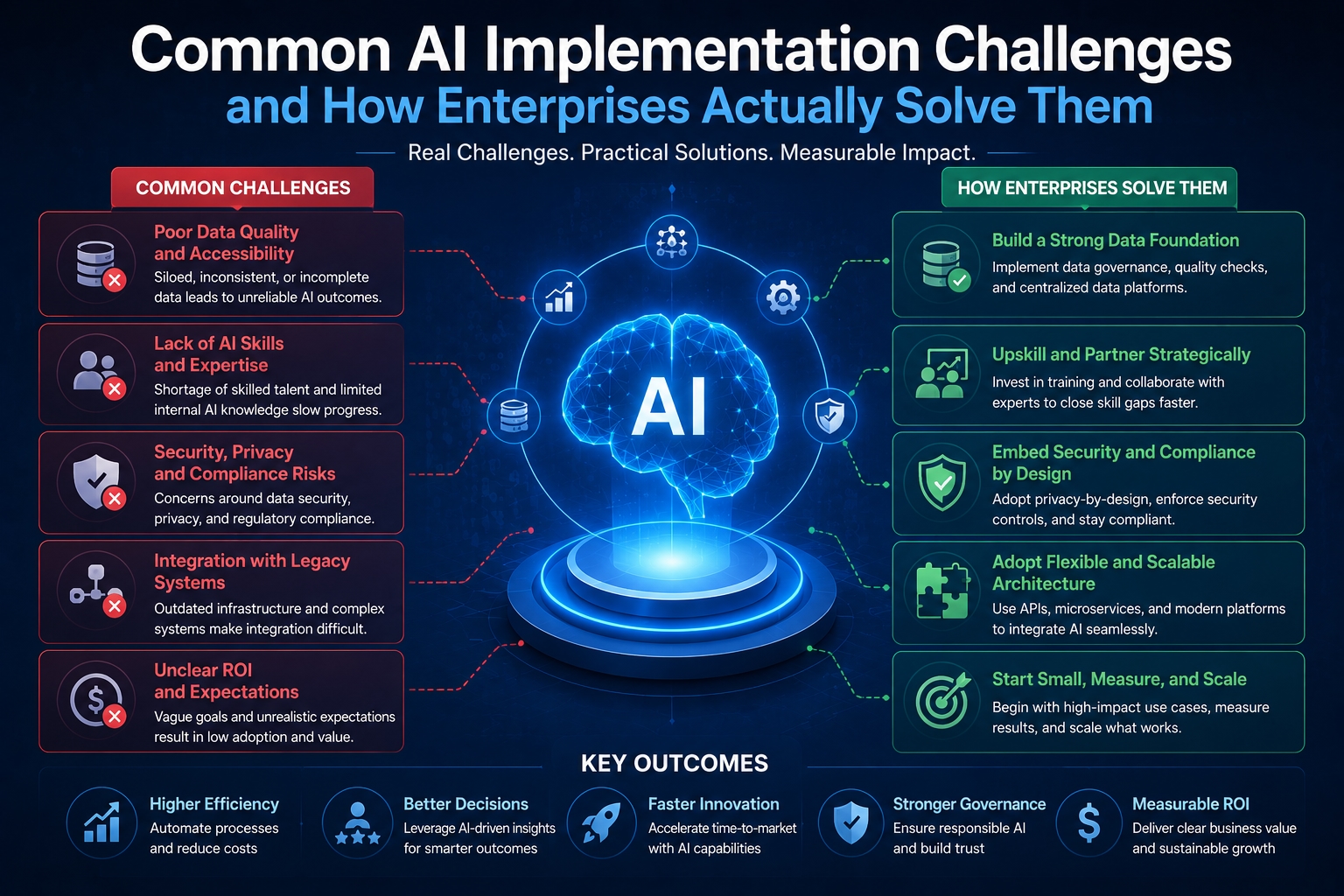
Somewhere between eighty and ninety percent of enterprise AI pilots never make it to production, depending on which survey you read, and the number has stayed stubbornly high even as the underlying models have gotten dramatically better. That gap is worth sitting with, because it means the models were rarely the actual problem. Something else is stalling these projects, consistently, across industries that otherwise have little in common.
Having worked through enough of these stalled projects, including engagements involving local AI engineering expertise in complex regulatory markets like Riyadh, a handful of patterns show up again and again. None of them are exotic. All of them are avoidable if a team knows to look for them early.
The Pilot Was Never Designed to Reach Production
The most common failure starts before the AI is even built. A team runs a proof of concept to test whether a model can technically perform a task, succeeds, and only then starts thinking about how it would actually integrate with existing systems, who owns it operationally, and what happens when it's wrong.
By that point, the pilot's success has created internal momentum and expectations that the real integration work often can't match on the original timeline. The fix is unglamorous: treat production requirements, system integration, ownership, and monitoring as part of the initial scope, not an afterthought discovered after the demo goes well.
Data Quality Problems That Only Surface at Scale
A model can perform well on a clean, curated test dataset and fall apart against the messy, inconsistent data that actually lives in production systems. Duplicate records, inconsistent formatting, missing fields, and outdated entries are normal in enterprise data, but they're exactly what breaks a model's accuracy when the pilot's careful sample data gets replaced with the real thing.
Teams that survive this stage usually run a proper data audit before development starts, not after a model underperforms in the field. That audit should cover completeness, consistency, and how current the data actually is, since a model trained on data that hasn't been updated in two years will confidently produce outdated answers.
Organizational Approval Chains the Technology Wasn't Built Around
This is a subtler failure mode, but a common one in large or highly structured organizations. An agentic AI system gets built around an idealized version of how a decision gets made, only for the team to discover that the real approval chain has informal exceptions, parallel sign-off paths, or stakeholders the org chart doesn't reflect.
Firms building AI consulting engagements around this problem consistently find that mapping the real workflow, including its inefficiencies, before writing any code saves months of rework later. It's tempting to skip this step because it feels like process documentation rather than engineering work. Skipping it is exactly why so many agentic AI projects stall after the pilot works fine in a controlled demo.
Governance and Compliance Treated as an Afterthought
AI projects that skip governance planning tend to look fine right up until they don't. A model drifts, a regulation changes, or someone in legal asks a question the team can't answer about how a decision was made. At that point, a project that looked ready for production gets pulled back for remediation, often losing the internal support that got it funded in the first place.
Building governance into the process from the first conversation, rather than treating it as a separate compliance review at the end, avoids most of this. That includes defining accountability for AI decisions, documenting how the system works in terms a non-technical stakeholder can understand, and setting up monitoring before launch rather than after an incident.
Underestimating Change Management
Even a technically flawless AI system fails if the people expected to use it don't trust it or don't understand how it changes their job. This shows up most often with internal-facing tools: an AI system built to help an operations team gets quietly ignored because nobody explained why it exists or trained people on how to work alongside it.
The teams that get this right treat rollout as a project in its own right, with training, a clear explanation of what the AI does and doesn't decide, and an easy path for users to flag when the system gets something wrong. That feedback loop matters more than most technical specifications, because it's what determines whether the system improves after launch or gets abandoned.
Choosing the Wrong Starting Use Case
Many stalled AI projects picked an ambitious first use case instead of a contained one. A multi-department, high-stakes process is a poor place to learn what your organization's data quality, approval structure, and governance maturity actually look like. A narrower, lower-risk workflow surfaces the same organizational issues with far less cost when something goes wrong.
Organizations working with a full-service AI development services partner, including teams with hands-on experience in markets where regulatory and stakeholder complexity is high, generally see faster time to production when they start with a contained use case and expand from a working foundation, rather than attempting a flagship project first.
Measuring Progress Honestly After Launch
A quieter reason AI projects stall is that nobody defined what success actually looks like before launch, so the project drifts without a clear signal of whether it's working. Vague goals like "improve efficiency" don't give a team anything concrete to measure against, which makes it easy for a struggling project to limp along unnoticed, or for a genuinely successful one to lose funding because nobody can point to evidence it's working.
The fix is defining a small number of specific, measurable outcomes before launch, tied to the business problem the project was meant to solve, whether that's reducing manual processing time on a specific task, cutting error rates on a defined process, or shortening the time between a request and its resolution. Reviewing those numbers on a set cadence after launch, not just at the six-month mark, catches problems early enough to fix rather than after a project has already lost internal trust.
Getting Buy-In From the People Who Will Actually Use It
Technical success and organizational success aren't the same thing, and it's possible to build a system that works correctly and still watch it fail because the people meant to use it weren't involved early enough to trust it. Teams that bring frontline users into the design conversation before development starts, not just for feedback on a finished product, tend to end up with systems that people actually adopt, because the people using it recognize their own workflow in how it was built rather than encountering a tool imposed on them after the fact.
FAQs
Why do AI pilots succeed but fail to reach production?
Because pilots are usually designed to prove technical feasibility, not to handle the integration, data quality, and governance requirements of a live production system. Those requirements need to be part of the plan from the start, not addressed after the pilot succeeds.
How long should an AI implementation take from discovery to production?
It varies by scope, but a well-scoped single-workflow project typically moves from discovery through deployment in eight to twelve weeks. Multi-department or highly regulated projects take longer, largely because of the governance and integration work involved.
What's the single biggest predictor of AI project failure?
Skipping the workflow mapping step. Projects built around an idealized process rather than the organization's actual decision chain consistently run into friction that a demo never revealed.
Should we build our first AI project in-house or bring in outside help?
It depends on your team's existing experience with production AI systems, not just model experimentation. Teams without prior production deployment experience often benefit from an experienced partner for the first project, then bring more of the work in-house as internal expertise builds.
How do we know if our data is ready for an AI project?
Run a structured audit covering completeness, consistency, and recency before development starts. If more than a small fraction of records have missing or inconsistent fields, plan for a data cleanup phase before building anything on top of it.
Conclusion
The gap between a promising AI pilot and a system running reliably in production rarely comes down to model quality anymore. It comes down to whether a team mapped the real organizational workflow, audited the real data, and planned for governance before writing code, instead of treating those as problems to solve after the demo impresses everyone. Enterprises that build in that discipline from the start are the ones whose AI projects actually make it to launch, and stay there.