
A Guidewire career is not built by simply knowing the names of PolicyCenter, ClaimCenter, or BillingCenter. The real advantage comes from understanding how these platforms work, writing effective Gosu code, configuring business processes, and connecting Guidewire with the systems used across modern insurance operations. As Chennai continues to grow as an IT and technology hub, developers who combine Guidewire platform knowledge with practical development skills can position themselves for more specialized roles and complex insurance technology projects.
The demand for insurance platforms is also changing as organizations move toward cloud-based systems, API-driven architectures, and increasingly automated workflows. This makes skills such as Guidewire configuration, Gosu programming, integration, testing, debugging, and Guidewire Cloud particularly valuable. For Chennai IT professionals, developing these capabilities can provide a stronger foundation than learning Guidewire concepts at a surface level. The sections below explore the key development skills that can make a meaningful difference in real-world Guidewire projects and long-term career growth.
Guidewire Fundamentals Every Chennai Developer Should Understand
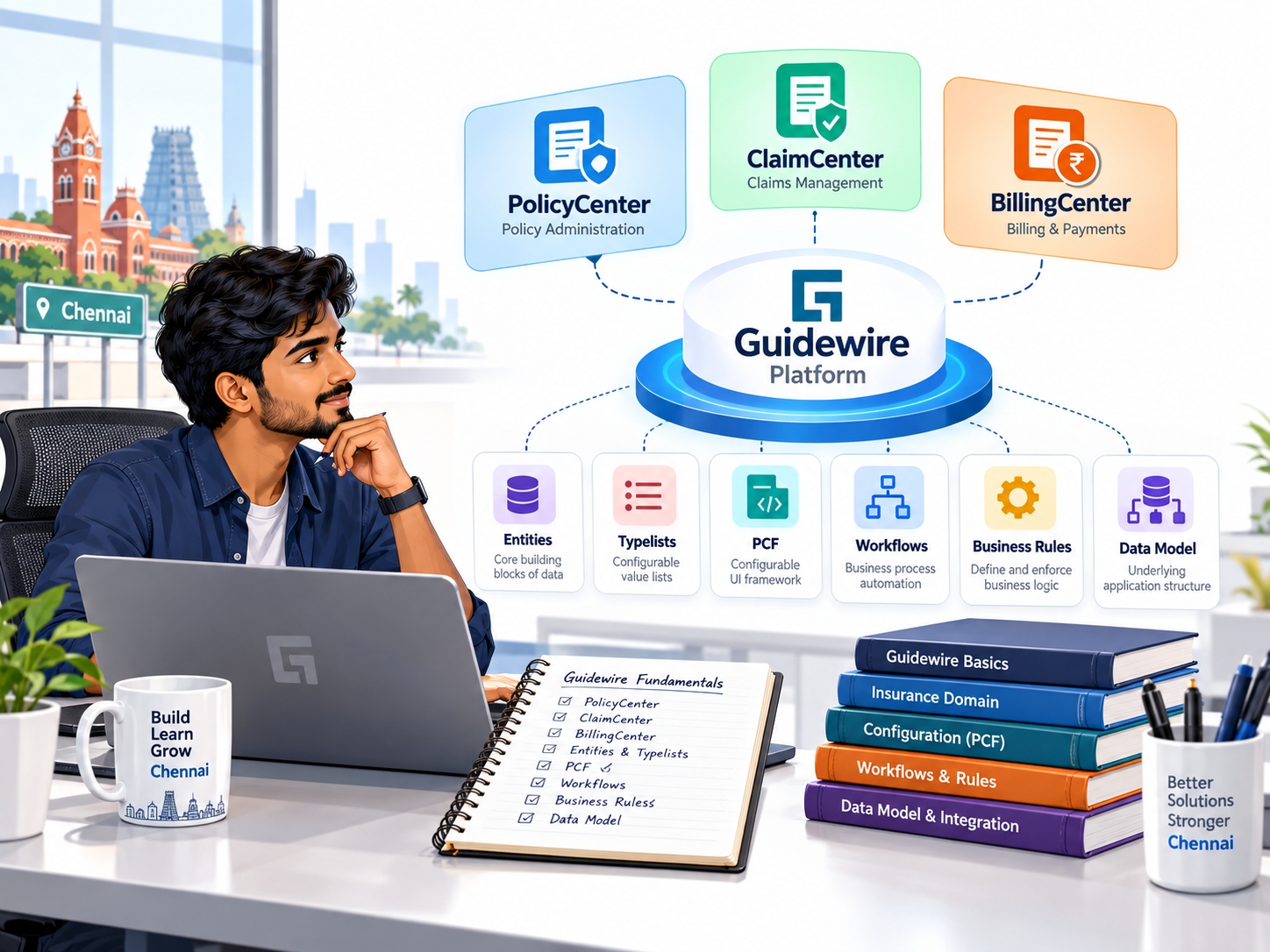
Before writing a single line of Guidewire code, developers need to understand what happens behind the screens they work with. Guidewire InsuranceSuite is built around core applications such as PolicyCenter, ClaimCenter, and BillingCenter, with each application supporting a different part of the insurance lifecycle. A strong foundation means understanding entities, typelists, data models, business rules, PCF, workflows, and the way these components interact. For someone considering a Guidewire course in Chennai, these fundamentals are more valuable than simply memorizing platform terminology because they create the base needed for practical development work.
The goal is not to learn every Guidewire feature at once. Developers should first understand how insurance processes are represented inside the platform and how configuration and customization support those processes. A solid foundation should include:
InsuranceSuite architecture and how its major applications work together
PolicyCenter for policy administration and policy lifecycle management
ClaimCenter for claims processing and claim workflows
BillingCenter for billing, invoicing, payments, and financial transactions
Guidewire entities and relationships used to represent business data
Typelists and typecodes for defining controlled business values
PCF configuration for building and modifying application interfaces
Business rules and workflows that control insurance processes
Guidewire data model and how application components access business information
Gosu fundamentals as the programming foundation for Guidewire customization
Understanding these concepts gives Chennai developers a much clearer picture of how Guidewire applications actually operate. It also makes advanced topics such as integration, debugging, testing, and Guidewire Cloud easier to understand because they build on the same underlying platform concepts.
Gosu Programming Skills That Matter in Guidewire Development
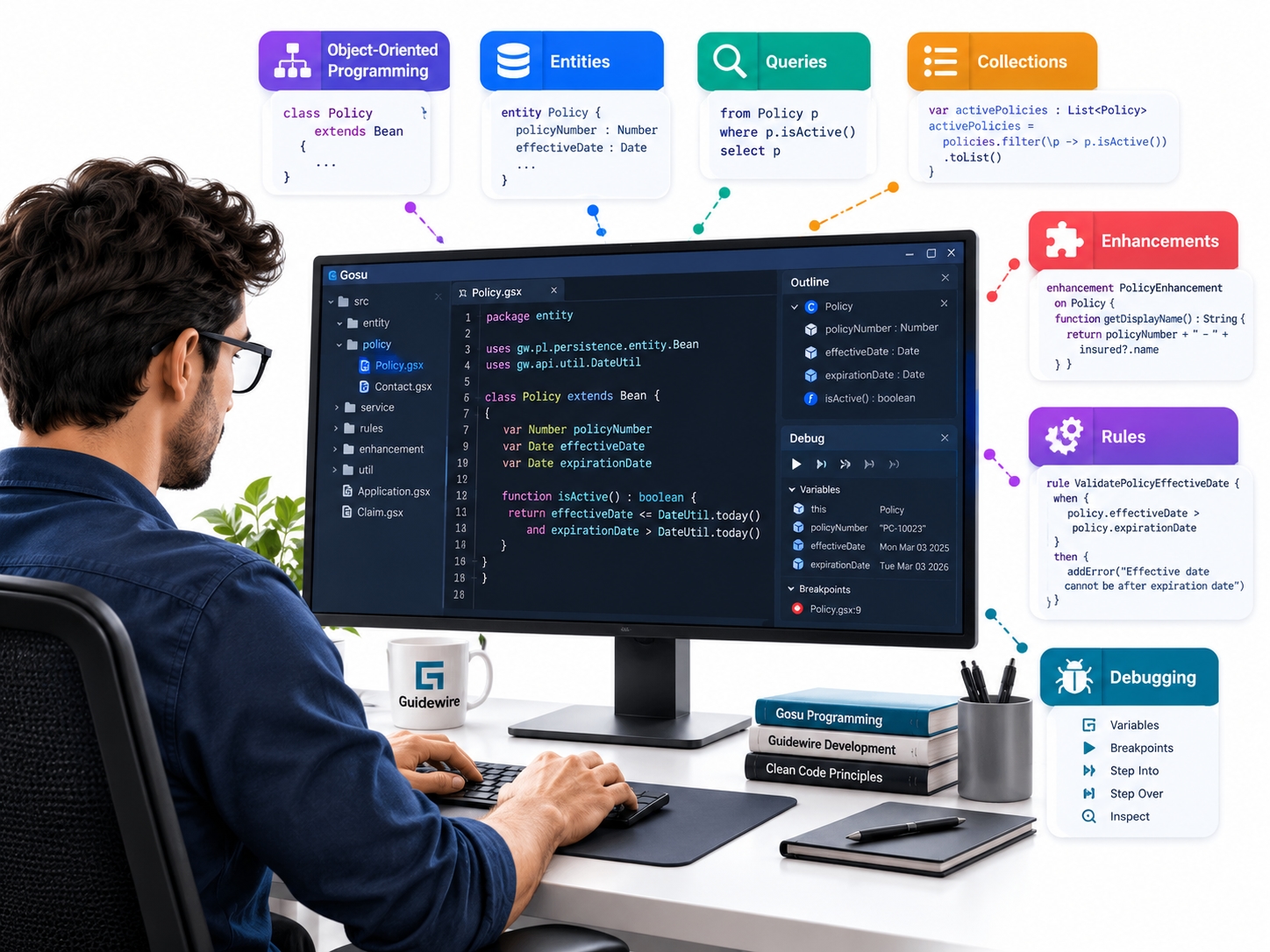
Gosu is one of the most important technical skills for developers working with the Guidewire platform because it is used to implement business logic and customize InsuranceSuite applications. Developers need more than basic syntax knowledge; they should understand how Gosu works with Guidewire entities, queries, collections, enhancements, rules, and application services. Strong knowledge of object-oriented programming, exception handling, conditional logic, and reusable code helps developers create maintainable solutions for PolicyCenter, ClaimCenter, and BillingCenter. For professionals considering Guidewire online training in India, building practical Gosu skills is particularly important because real project work often requires modifying existing business logic rather than simply writing standalone programs.
A good Gosu learning path should gradually move from fundamentals to Guidewire-specific development. Developers should become comfortable with classes, interfaces, methods, blocks, collections, type inference, enhancements, queries, and entity manipulation before moving into more complex implementation scenarios. They should also learn how to read existing Gosu code, identify errors, debug business rules, and write code that follows the platform's architecture. These skills become especially valuable when working on integrations, validations, workflows, and custom business requirements, where clean and reliable Gosu code can directly affect application performance and maintainability.
Guidewire Configuration Skills for Real Insurance Applications
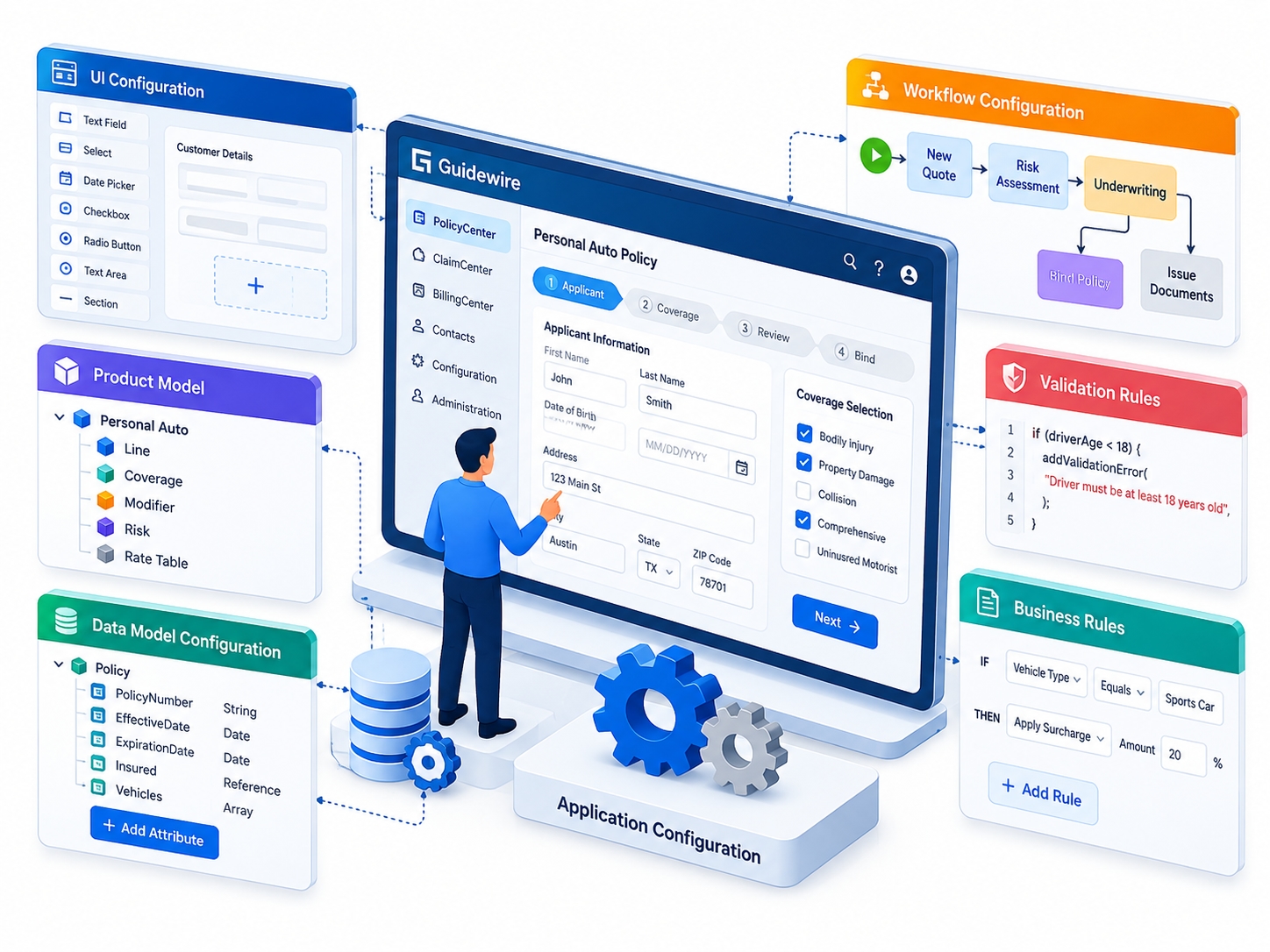
Guidewire configuration is where developers and business requirements come together. Instead of building an insurance application from scratch, Guidewire provides a flexible platform that can be configured to match an insurer’s products, workflows, rules, screens, and business processes. A developer working with PolicyCenter, ClaimCenter, or BillingCenter needs to understand how configuration changes affect the overall application. This includes working with the data model, typelists, PCF screens, validation rules, workflows, and business rules while ensuring that changes remain compatible with the existing system architecture.
Strong configuration skills also require careful problem-solving rather than simply knowing where to change a setting. A small modification to an entity, screen, or business rule can influence other parts of the application, so developers need to understand dependencies and test changes properly. In real insurance projects, effective Guidewire configuration helps organizations adapt applications to specific products and processes without unnecessary custom development. Developers should therefore focus on the following areas:
PCF Configuration – Customize screens, views, inputs, buttons, and other user-interface components.
Data Model Configuration – Understand entities, fields, relationships, and extensions used to represent insurance data.
Typelists and Typecodes – Manage controlled business values used throughout Guidewire applications.
Validation Rules – Create rules that ensure users enter valid and consistent information.
Business Rules – Configure logic that controls specific insurance processes and decisions.
Workflow Configuration – Understand how tasks and processes move through different stages.
Product Model Configuration – Work with insurance products, coverages, conditions, and related product structures.
Configuration Dependencies – Identify how one configuration change can affect other application components.
Testing and Troubleshooting – Verify configuration changes and investigate errors before they reach production.
Version and Upgrade Awareness – Make configuration choices that remain manageable during future Guidewire upgrades.
Guidewire Integration Skills for Connecting Enterprise Systems
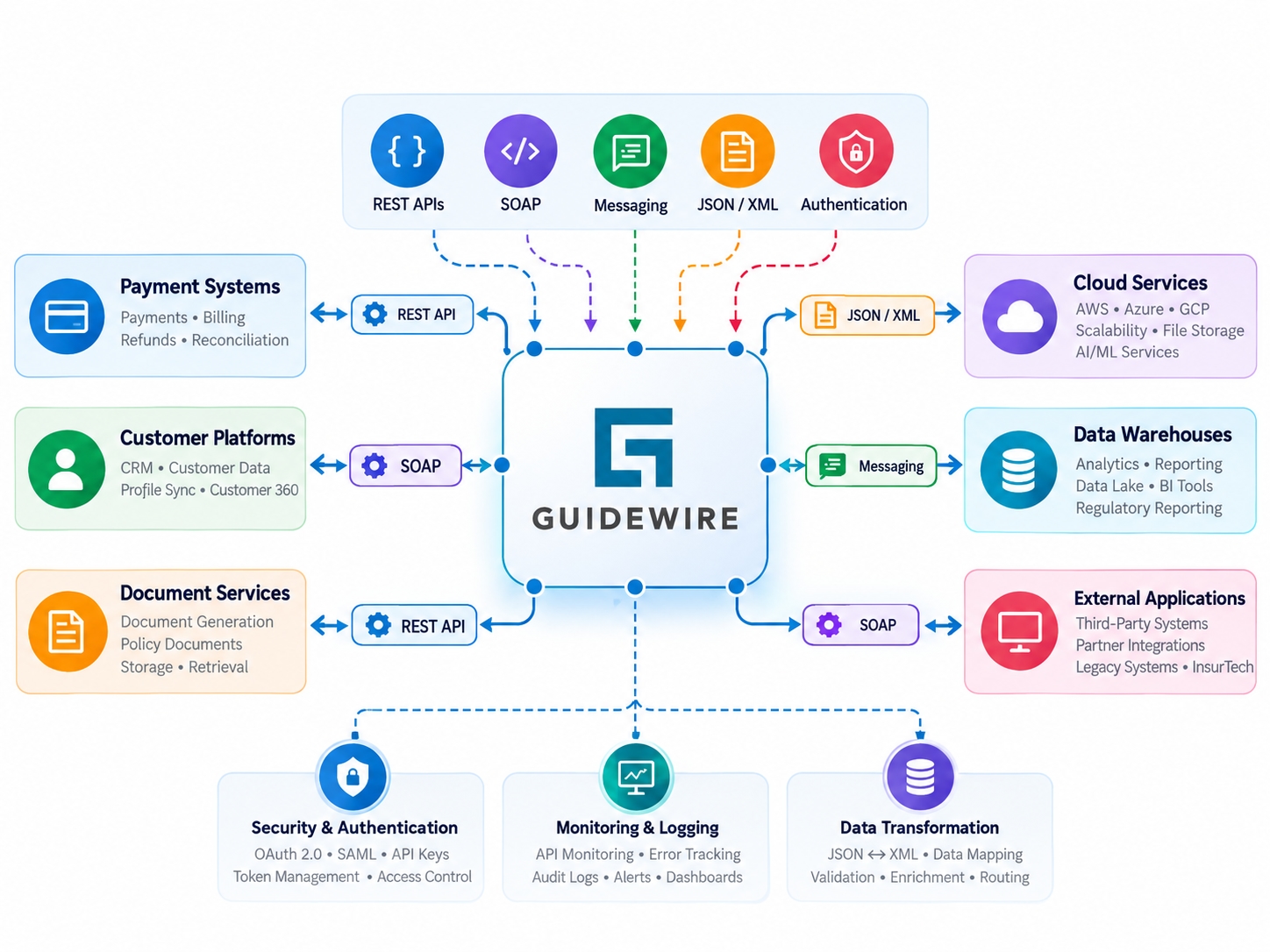
Guidewire rarely works as an isolated application. Insurance companies often connect PolicyCenter, ClaimCenter, and BillingCenter with payment gateways, customer systems, document platforms, data warehouses, and other enterprise applications. Developers therefore need to understand how data moves between Guidewire and external systems while maintaining accuracy, security, and reliability.
A strong integration skill set includes REST APIs, SOAP web services, messaging, authentication, data mapping, error handling, and asynchronous communication. Developers should understand how to design and troubleshoot integrations without creating unnecessary dependencies. Knowledge of JSON, XML, HTTP, API testing, and integration logs can also make it easier to identify data or communication issues.
Real-world Guidewire integration also requires careful testing and monitoring. A developer must consider what happens when an external service is unavailable, a request fails, or incomplete data is received. Building reliable retry mechanisms, meaningful error handling, proper logging, and secure communication helps ensure that insurance processes continue to operate smoothly across connected enterprise systems.
Conclusion
Building a career in Guidewire takes more than learning a few platform features. Developers who understand the fundamentals, write clean Gosu code, handle configuration carefully, and know how Guidewire connects with other enterprise systems are better prepared for the kind of work that happens on real insurance projects.
For IT professionals in Chennai, the best approach is to develop these skills step by step and focus on practical understanding rather than trying to learn everything at once. Once the foundation is strong, areas such as integration, testing, debugging, cloud development, and advanced Guidewire configuration become much easier to work with.
Guidewire continues to evolve along with the insurance technology industry, so developers who keep improving their technical skills and stay familiar with newer platform capabilities can create stronger long-term career opportunities in the Guidewire ecosystem.



