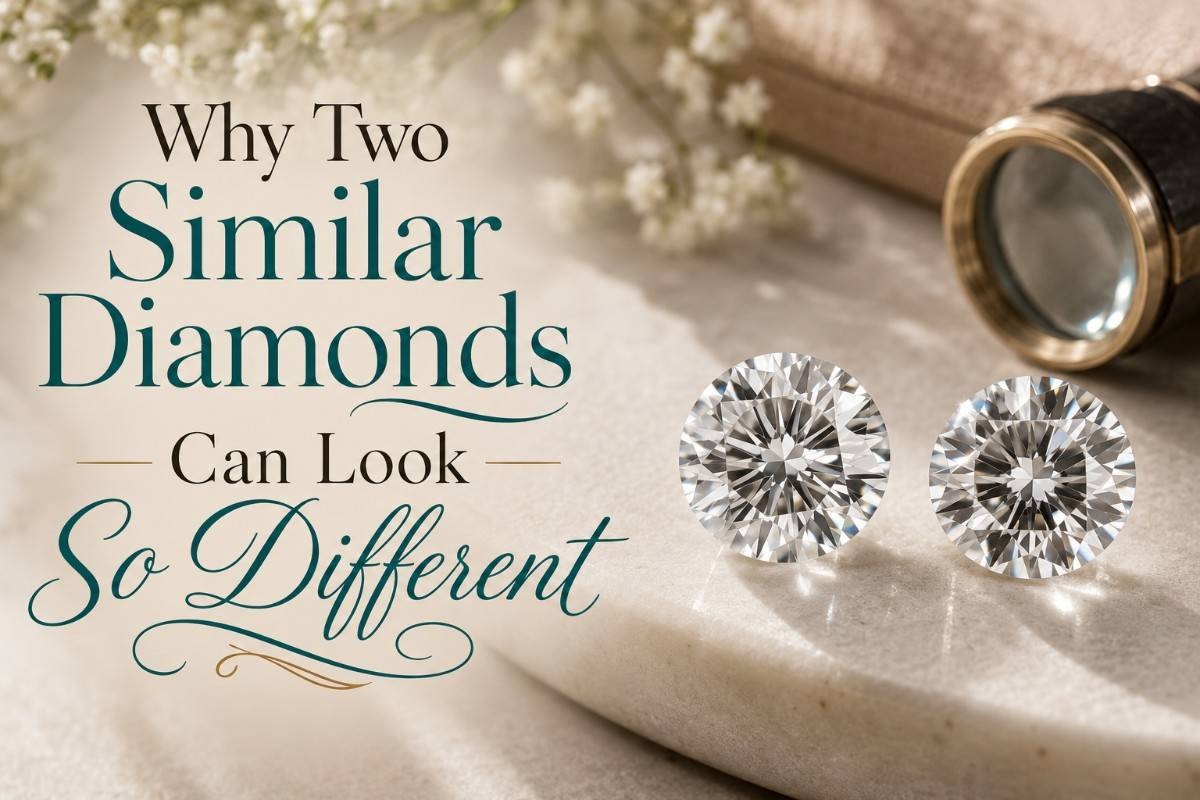
Put two diamonds side by side — same carat weight, same rough price range — and it's not unusual for one to look noticeably more brilliant than the other. Buyers often assume something's wrong with the cheaper-looking one. Usually nothing's "wrong." They're just built differently, and carat weight was never the number that determined how a diamond actually looks.
This is one of the most common points of confusion in diamond shopping, especially online, where you're judging stones through a screen instead of holding them under natural light. Here's what's actually going on.
Quick answer : Two diamonds of the same carat weight can look completely different because carat only measures physical weight, not visual size or sparkle. The real differences come from cut quality, color grade, clarity, and how the stone is oriented in its setting — cut has the single biggest effect on how much light a diamond reflects back to the eye.
Carat Weight Is Not a Quality Score
This is the misunderstanding that trips up almost every first-time buyer. Carat is a unit of mass — one carat equals 0.2 grams. That's it. It says nothing about how the diamond is cut, how clean it is, or how white it appears.
Two 1-carat diamonds can differ wildly in price and appearance depending on the other three Cs. A jeweler could sell you a 1.2-carat stone that looks smaller and duller than a well-cut 0.9-carat stone next to it. Weight and visual impact are related, but they're not the same thing — and mixing them up is the fastest way to overpay for a diamond that underperforms.
Cut Is the Real Driver of Sparkle
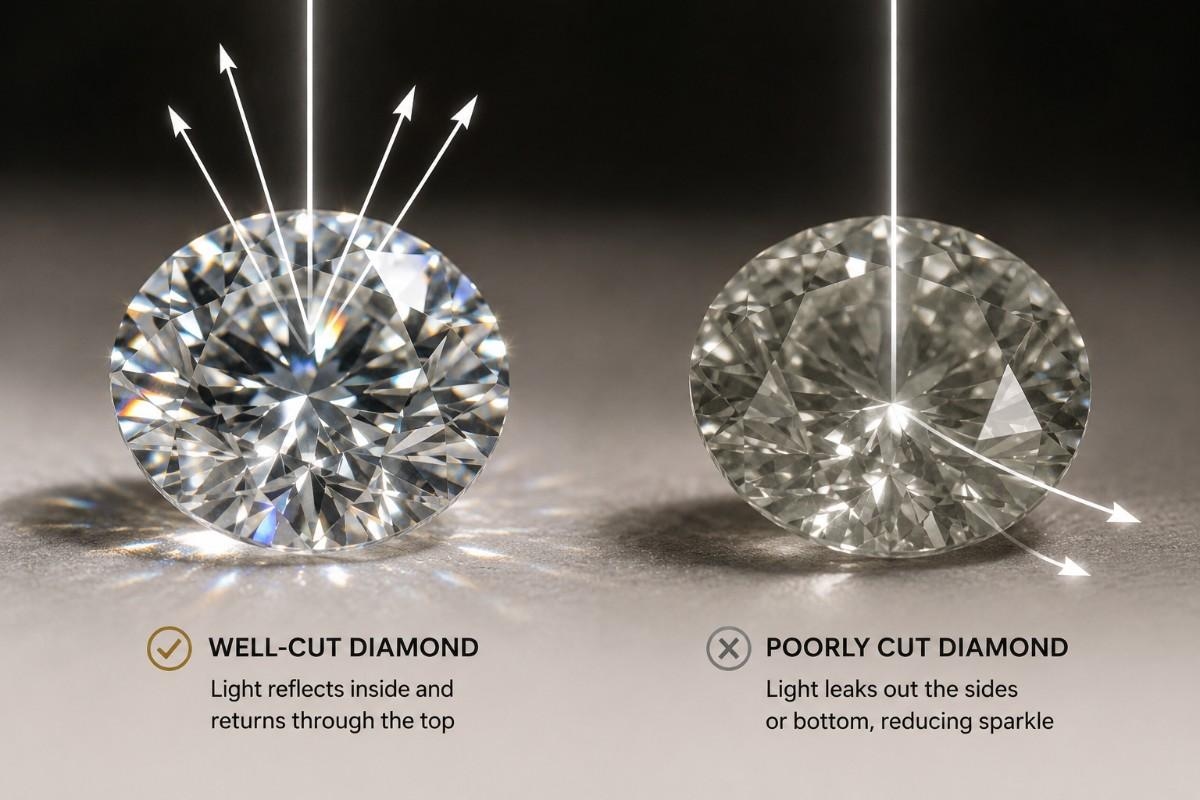
If you only remember one thing from this article, make it this: cut quality has the biggest impact on how a diamond looks, more than color, clarity, or even carat.
Cut refers to how precisely a diamond's facets are angled and proportioned — not its shape (round, oval, cushion, etc.), but the craftsmanship behind it. A well-cut diamond reflects light back through the top of the stone, creating the brightness and fire people associate with a "good" diamond. A poorly cut stone leaks light out the sides or bottom, leaving it looking flat or glassy even if it's technically bigger.
This is why two diamonds of identical carat weight can look like they belong in different price tiers. One is doing its job optically. The other isn't.
Cut Quality | Visual Result |
|---|---|
Excellent / Ideal | Maximum brightness, strong fire and scintillation |
Very Good | Slightly less light return, still visually strong |
Good | Noticeably less sparkle, light leakage begins |
Fair / Poor | Dull or glassy appearance regardless of carat size |
Color Grade Changes the Diamond's Undertone
Color grading measures how close a diamond is to being completely colorless, on a scale that typically runs from D (colorless) to Z (noticeably yellow or brown). The difference between grades can be subtle to the untrained eye, but it becomes obvious in certain settings.
A diamond graded lower on the color scale can look warmer or slightly tinted — sometimes desirable in a vintage-style ring, sometimes not what a buyer wants at all. Yellow gold settings tend to mask lower color grades better than platinum or white gold, which is worth knowing if you're trying to stretch a budget without sacrificing visual brightness.
Clarity Affects More Than Just What's Visible Under a Loupe
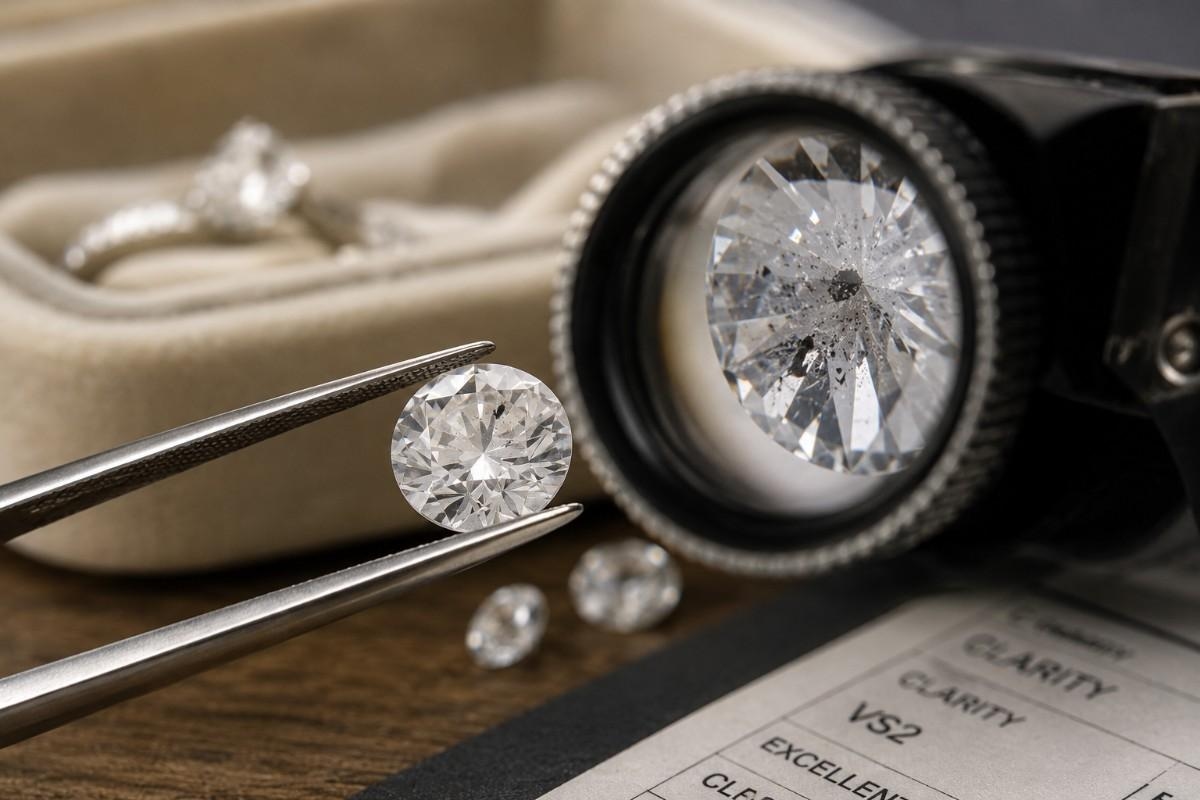
Clarity describes internal characteristics (inclusions) and surface characteristics (blemishes) within the stone. Most inclusions at higher clarity grades are invisible to the naked eye — but not all of them.
A diamond can carry a "good" clarity grade on paper and still have an inclusion positioned dead-center under the table facet, which is exactly where light passes through and where the eye naturally looks. Position matters as much as grade. This is one of the reasons two diamonds with the same clarity rating can still look different in person — the certificate tells you what's there, not always exactly how noticeable it'll be.
The Setting Changes the Story Too
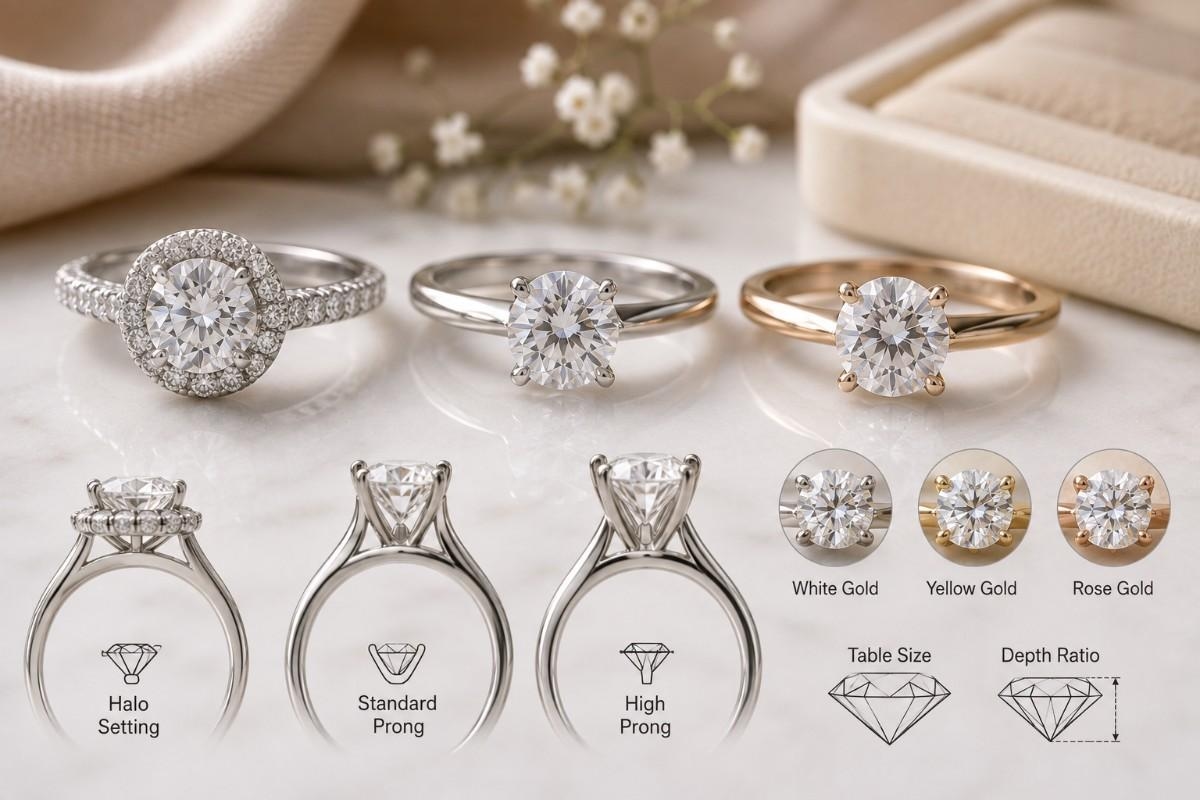
Even identical diamonds can look different once they're mounted, because the setting itself affects how light enters and exits the stone.
Halo settings surround the center diamond with smaller stones, which adds visual size and brightness without increasing the center carat weight. If you're comparing two similarly priced diamonds and one is going into a halo setting, it may read as noticeably larger and brighter than a solitaire holding the exact same stone. Anyone comparing options should look closely at halo rings for women to see this effect firsthand — the extra stones do real optical work, not just decorative work.
Prong height and metal color also change perceived brightness. Higher prongs let in more light from the sides; white metal settings reflect color-grade differences less than yellow gold does.
Table size and depth ratio, listed on most certificates, tell you how a stone will likely perform before you ever see it in person — worth checking alongside the grade itself.
How to Actually Compare Two Diamonds Before Buying
Specs on a page can look nearly identical while the diamonds themselves perform very differently. A few checks make the comparison meaningful instead of guesswork:
Compare cut grade first, not carat. It has the largest effect on appearance.
Check the certificate's proportions section — table percentage and depth percentage indicate how well the stone was cut, beyond the general grade.
Look at multiple photos or video, if the retailer provides them, ideally under consistent lighting.
Match the certificate number against the lab's official database (GIA or IGI) to confirm it belongs to that exact stone.
Consider the setting you're planning to use — a halo will visually amplify a stone differently than a plain solitaire will.
This kind of comparison matters most when you plan to buy engagement ring online , since you don't get the chance to view the stone in person before paying. Reading the full certificate — not just the headline specs in a product listing — is the closest substitute for seeing it in hand.
Frequently Asked Questions
Why do two diamonds with the same carat weight have different prices? Because carat only measures weight. Price is driven more by cut quality, color, and clarity — a well-cut, smaller diamond can cost more than a larger, poorly cut one because it looks and performs better.
Which of the 4Cs matters most for sparkle? Cut. It determines how much light the diamond reflects back to the eye, which is the main source of visible brilliance — more so than color, clarity, or carat.
Can a setting make a diamond look bigger than it is? Yes. Halo settings in particular add visual size and brightness by surrounding the center stone with smaller diamonds, making the overall ring appear larger without increasing the center carat.
Does clarity grade guarantee an inclusion won't be visible? Not entirely. Grade reflects overall clarity, but the position of an inclusion matters too — one positioned under the table facet can be more noticeable than the grade alone suggests.
Is it safe to compare diamonds using only online photos? Photos help, but they're not enough on their own. Cross-check the certificate's cut, color, clarity, and proportions, and verify the certificate number against the issuing lab before deciding.
The Bottom Line
Two diamonds that look similar on paper can perform very differently once they're actually worn — and carat weight is the least reliable indicator of that difference. Prioritize cut quality, read the full certificate rather than the headline specs, and factor in how the setting will interact with the stone. Get those right, and you'll end up with a diamond that looks as good in person as it did in the listing.