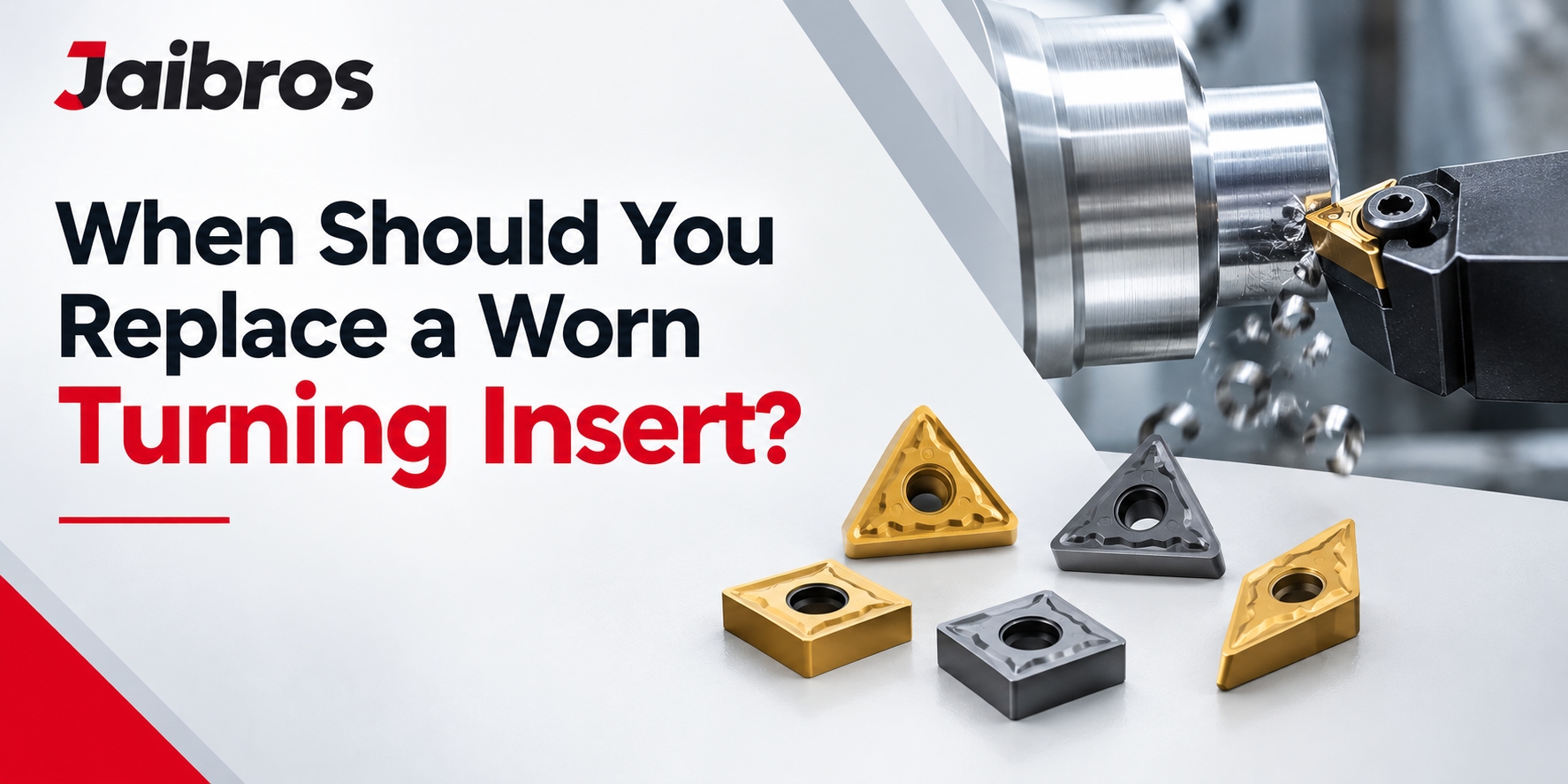
Cutting tools experience wear during machining because of friction, heat, cutting pressure, and contact with the workpiece material. Over time, this wear can affect surface finish, dimensional accuracy, cutting performance, and production efficiency. Knowing when to replace a worn turning insert helps machinists maintain consistent results and prevent unexpected tool failure.
Replacing a cutting edge too early can increase tooling costs, while using a damaged edge for too long may produce rejected components and machine downtime. Therefore, regular inspection and an understanding of common wear signs are important for reliable turning operations.
1. Check for Visible Cutting Edge Wear
One of the easiest ways to identify tool wear is to inspect the cutting edge. During machining, the edge gradually loses its sharpness because of continuous contact with the workpiece.
Common signs include a rounded cutting edge, visible wear marks, small chips, and changes in the edge shape. These conditions can increase cutting forces and reduce machining accuracy.
A turning insert should be replaced or indexed when the cutting edge reaches the wear limit recommended by its manufacturer or when its condition becomes unsuitable for the operation.
Inspect the edge under proper lighting and use magnification when necessary. Always stop the machine and follow the required safety procedure before inspecting the tool.
2. Replace the Tool When Surface Finish Becomes Poor
A sudden change in the workpiece surface finish can indicate that the cutting edge is worn or damaged. The machined surface may develop scratches, rough marks, irregular patterns, or an unexpected change in appearance.
However, surface finish problems do not always mean the cutting edge needs replacement. Incorrect feed rate, unsuitable cutting speed, vibration, poor tool alignment, and built-up edge can also affect the result.
Check these factors before changing the tool. If the cutting edge is visibly worn and the surface finish remains poor after correcting other conditions, replacing the edge may be necessary.
3. Watch for Dimensional Inaccuracy
Precision turning insert requires components to remain within specified dimensional tolerances. As the cutting edge wears, its geometry changes, which can affect the final diameter and surface profile.
For example, a turned shaft may gradually measure larger or smaller than the required dimension, depending on the tool geometry, machine setup, and wear pattern.
Measure components regularly using suitable instruments such as a micrometer or vernier caliper, depending on the required tolerance. Compare the readings with the engineering drawing and monitor changes across successive components.
If dimensions begin drifting despite a stable setup, inspect the tool, holder, workpiece clamping, and machine condition before deciding whether replacement is required.
4. Identify Chipping, Cracks, and Edge Breakage
Small chips or cracks along the cutting edge can develop because of excessive cutting forces, interrupted cuts, vibration, incorrect tool selection, or sudden temperature changes.
A damaged edge may produce poor surface quality and can fail further during machining. Cracks are particularly important because they may not always be obvious during a quick visual inspection.
Replace a damaged cutting edge immediately when its condition makes continued operation unsafe or unreliable. Do not continue machining simply because the tool still appears to cut.
Also check the tool seat, clamp, and holder for damage. A secure, clean mounting arrangement helps reduce movement and supports stable cutting performance.
5. Understand Unusual Noise and Vibration
Changes in cutting noise, increased vibration, or chatter marks can indicate a problem with the cutting edge. Excessive wear may increase cutting forces, making the machining process less stable.
However, vibration can also result from excessive tool overhang, loose clamping, an unsupported workpiece, incorrect cutting parameters, or machine-related issues.
Before replacing the cutting edge, inspect the entire setup. Check the turning tool holder, workpiece support, clamping condition, and cutting parameters. If the edge is worn or damaged, replacement may help restore stable machining once the underlying cause has been addressed.
6. Monitor Heat and Chip Formation
Excessive heat and unusual chip formation can provide useful information about tool condition. A worn cutting edge may generate additional friction, while unsuitable cutting conditions can increase heat and accelerate wear.
Look for changes in chip shape, chip colour, chip control, and cutting sound. These signs should be evaluated alongside the workpiece material, cutting speed, feed rate, and coolant conditions.
Heat or chip colour alone cannot confirm that a tool has reached the end of its useful life. Compare the observed conditions with the recommended machining parameters and inspect the cutting edge before making a decision.
7. Follow a Consistent Tool Inspection Schedule
Regular inspection helps identify wear before it causes serious machining problems. Establish inspection intervals based on the material being machined, cutting conditions, production volume, and required dimensional accuracy.
Record important observations such as tool life, component measurements, surface finish, and the reason for changing an edge. These records help identify recurring problems and support better tool-life planning.
A worn edge does not always require discarding the complete tool. Many indexable cutting tools have multiple usable cutting edges. When the manufacturer permits it, the operator can index the tool to a fresh edge and replace the insert when all usable edges are exhausted or the tool is damaged.
Conclusion
Replacing worn cutting edges at the right time helps maintain surface quality, dimensional accuracy, and consistent machining performance. Regular inspection, measurement checks, and monitoring of noise, vibration, heat, and chip formation can help machinists identify wear before it causes major problems.
The best replacement decision depends on the tool manufacturer's wear limits, the machining application, and the quality requirements of the finished component. A consistent inspection routine also helps reduce unnecessary tool changes and unplanned production stoppages.For machinists looking for reliable cutting tools and machining accessories, Jaibros offers a range of industrial products to support different machining requirements. Explore the available options to find suitable tools for your workshop and machining applications.
Frequently Asked Questions
1. What are the main signs of a worn turning insert?
The main signs include a rounded cutting edge, visible chipping, cracks, poor surface finish, dimensional variation, unusual cutting noise, and increased vibration. Changes in chip formation may also indicate a problem. However, these symptoms can have other causes, so inspect the complete machining setup before deciding whether the cutting edge needs replacement.
2. How long do turning inserts usually last?
Tool life depends on the workpiece material, cutting speed, feed rate, depth of cut, coolant use, and cutting-edge material. An edge machining aluminium under suitable conditions may last longer than one cutting a difficult alloy at high temperatures. Instead of relying on a fixed number of minutes, monitor wear, component quality, and the manufacturer's recommended limits.
3. Can a worn cutting edge affect dimensional accuracy?
Yes. Wear changes the cutting-edge geometry and can influence cutting forces and the finished component's dimensions. The effect depends on the tool design, machining conditions, and setup rigidity. Regular measurement helps identify dimensional drift early. If dimensions change unexpectedly, also inspect tool alignment, workpiece clamping, machine condition, and cutting parameters.
4. Should I replace a tool when vibration starts?
Not always. Vibration can result from a worn cutting edge, but it can also be caused by loose clamping, excessive tool overhang, an unsupported workpiece, or unsuitable cutting conditions. Stop and inspect the setup safely. Correct the underlying problem first, and replace the cutting edge if it is damaged or worn beyond its permitted limit.
5. Can I use another cutting edge instead of replacing the complete tool?
Yes. Many indexable tools are designed with multiple cutting edges. When the current edge becomes worn, the operator can rotate or index the tool to an unused edge if the tool design allows it. Replace the complete insert when its usable edges are exhausted, it is cracked, or it no longer meets machining requirements. Follow the manufacturer's handling and indexing instructions.