
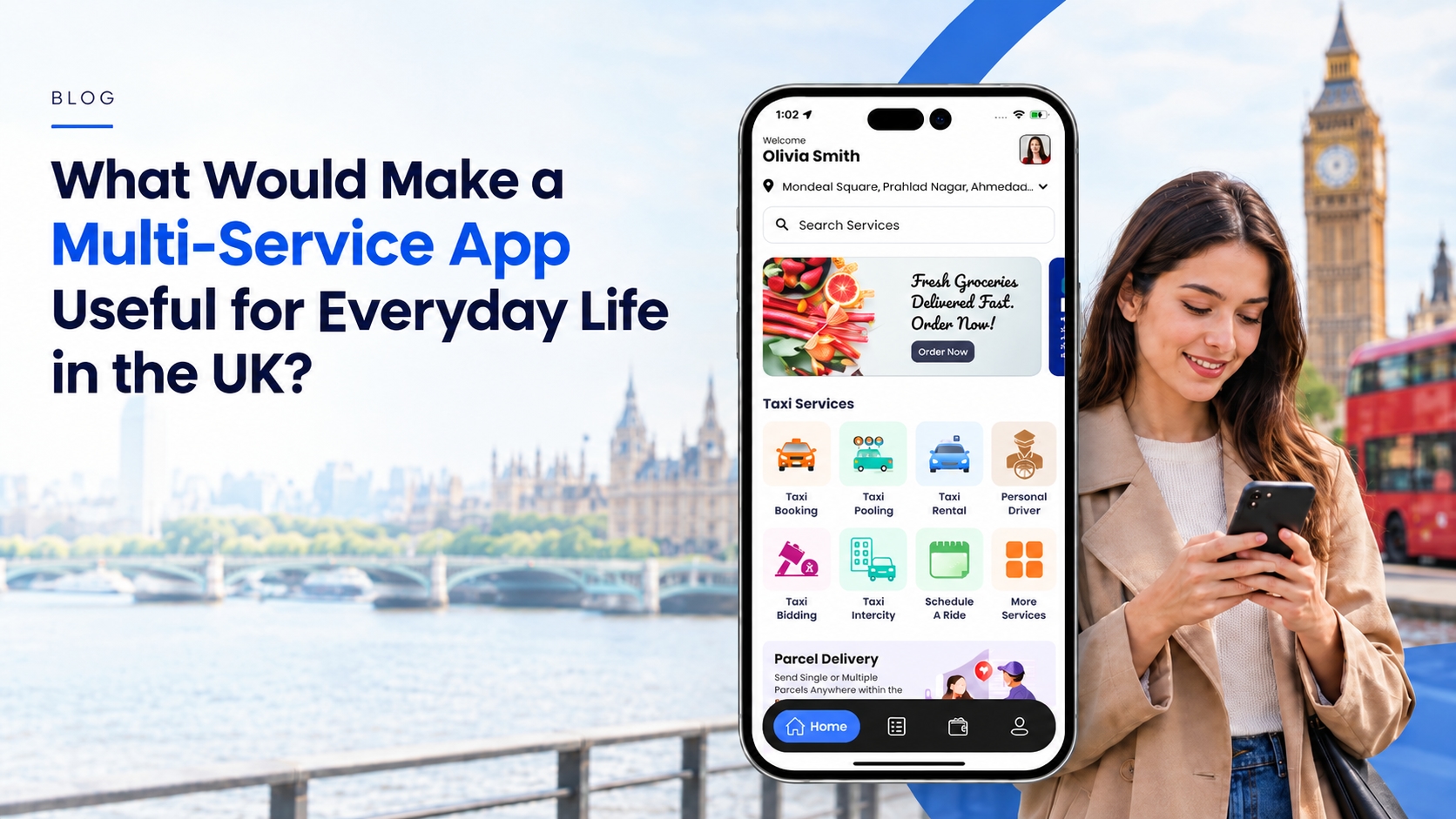
Introduction
Convenience has become an important part of everyday life in the UK. People use digital platforms to order groceries, book taxis, arrange home repairs, find cleaning services, and manage a growing number of routine tasks. Yet these activities are often spread across different applications, each requiring a separate account, payment method, booking process, and customer support channel.
This creates an opportunity for businesses to rethink how people access everyday services. Instead of developing an app that solves just one problem, entrepreneurs can explore a multi-service model that brings several useful services together in a single platform.
However, simply placing multiple services inside one application does not guarantee that customers will use it regularly. A successful platform must solve genuine problems, offer dependable service, make transactions straightforward, and understand the needs of the communities it serves.
For businesses exploring the Gojek-style super app model, the UK offers an interesting market to consider. The key question is not how many features an application can accommodate, but how naturally it can fit into people's daily routines.
So, what would make a multi-service app genuinely useful for everyday life in the UK? The answer lies in thoughtful service selection, local relevance, convenience, trust, and a business model that can grow without compromising the customer experience.
1. Bringing Everyday Services Together in One Place
One of the main attractions of a multi-service app is the ability to access different services without switching between multiple platforms.
Consider a working professional who needs groceries delivered after work, a taxi for an early morning appointment, and a plumber to fix a leaking tap. These requirements have little in common from an operational perspective, but they share one important characteristic: they are everyday tasks that take time and effort to arrange.
A multi-service application could provide access to these services through one account, a consistent booking interface, and a familiar payment process.
For users, the benefit is not necessarily having every available service under one roof. It is being able to find the services they need without unnecessary effort.
Businesses should therefore begin by identifying services that complement one another. Food and grocery delivery, local transport, home maintenance, cleaning, and personal care bookings could form a practical starting point, depending on the target audience and local market.
The objective should be to make the application a useful part of everyday life rather than another icon that customers forget after downloading it.
2. Choosing Services That Reflect UK Lifestyles
A multi-service platform needs to reflect how people actually live, work, and travel. Service demand can differ considerably between a busy city centre, a suburban neighbourhood, and a smaller town.
In London, for example, customers may value convenient transport, food delivery, grocery shopping, and services that fit around demanding work schedules. In suburban areas, home maintenance, cleaning, local deliveries, and family-related services could be more relevant.
In university towns, the priorities might include affordable transport, laundry services, takeaway ordering, and student-friendly delivery options. Meanwhile, households in smaller communities may appreciate a platform that helps them discover trusted local tradespeople and independent businesses.
These differences matter when deciding which services to launch first.
Businesses should investigate local search behaviour, customer interviews, competitor offerings, and the availability of service providers before investing in a large collection of features. A service that performs well in one location may struggle in another if customer demand or provider availability is limited.
A sensible approach is to launch with a small group of complementary services, understand how customers use them, and expand when the platform has enough demand and operational capacity.
3. Making Transport More Convenient
Transport is a natural component of a multi-service application because it connects with several other everyday activities.
Customers may need a ride to a railway station, an airport transfer, transport for shopping, or a convenient way to travel home after an evening out. A platform could bring these booking options together with other services, giving customers more reasons to return.
However, a transport service must offer more than a booking button. Accurate pickup locations, realistic arrival estimates, clear fare information, driver details, trip updates, and accessible support are essential parts of the experience.
UK businesses also need to consider the local requirements applicable to their transport operations. Licensing, insurance, driver eligibility, and other obligations can vary according to the service type and jurisdiction. These requirements should be addressed before a service becomes available.
Another important consideration is coverage. An app may attract customers through advertising, but they are unlikely to keep using it if vehicles are difficult to find or waiting times are consistently long.
For a multi-service platform, dependable transport can become an important reason for customers to keep the application installed. Its value will ultimately depend on whether it makes a journey easier to arrange and more predictable to complete.
4. Connecting Food, Grocery, and Local Delivery Services
Food and grocery delivery can provide frequent opportunities for customers to interact with a multi-service app. These services also offer a practical way to introduce users to the platform before encouraging them to explore additional categories.
For example, a customer who initially downloads an application to order dinner might later use it to purchase essential groceries or arrange a local parcel delivery.
A well-designed platform could let customers browse nearby restaurants, compare grocery options, check delivery estimates, and track their orders through a familiar interface.
Yet customers are likely to judge these services on practical details. Product availability, accurate menus, transparent delivery charges, reliable order tracking, and clear refund procedures can make a greater difference than an extensive list of restaurants.
The needs of local merchants should also be considered. Independent restaurants, convenience stores, and neighbourhood retailers may benefit from access to a wider customer base, provided that the platform offers reasonable commercial terms and manageable order processes.
Businesses should avoid expanding delivery coverage faster than their operations can support. Late orders, inaccurate inventory, and poor communication can damage confidence across the entire application, not just the delivery category.
A reliable delivery experience can create the foundation for introducing other services later.
5. Making Home Services Easier to Find and Book
Home maintenance and household services represent another useful opportunity for multi-service applications in the UK.
Finding a reliable cleaner, electrician, plumber, gardener, or handyman can take time. Customers may need to compare providers, request quotes, check availability, and arrange appointments through several different channels.
A multi-service app could simplify this process by bringing service listings, availability, booking requests, customer reviews, and payment options together.
For instance, someone moving into a new home might use the platform to arrange cleaning, book furniture assembly, and find a professional for a minor repair. A household preparing for winter could use it to explore relevant maintenance services.
The challenge is that home services differ from standard delivery transactions. Some jobs have predictable prices, while others require an inspection or a customised quote. Appointment durations can vary, and the quality of work depends heavily on the individual provider.
The application should accommodate these differences instead of forcing every service into the same booking template.
Businesses should also establish appropriate provider verification procedures, transparent cancellation policies, and clear processes for handling complaints. Customers need to understand what a booking includes, who will perform the work, and what happens if something goes wrong.
When these details are handled properly, home services can add lasting value beyond the more frequently used delivery categories.
6. Creating a Simple and Consistent User Experience
An application can offer dozens of services and still be difficult to use. This is a common risk when businesses attempt to build a super app by adding features without considering how customers will navigate them.
The home screen should make the most relevant services easy to find. Customers should not have to scroll through unrelated categories every time they want to book a taxi or order groceries.
A clear interface might include service categories, recently used options, saved addresses, upcoming appointments, and relevant recommendations. Search should also help users locate specific services without requiring them to understand the platform's internal category structure.
Consistency matters just as much. Customers should recognise familiar booking steps, payment confirmations, notifications, and support options across different categories, even when the underlying services operate differently.
Accessibility deserves equal attention. Readable text, clear contrast, well-labelled controls, straightforward navigation, and compatibility with assistive technologies can make the platform easier to use for a wider audience.
Businesses should test the application with people who have different levels of digital confidence. Observing where users hesitate, abandon a booking, or struggle to find information can reveal problems that are not obvious during development.
Ultimately, a good interface makes the technology feel less complicated. Customers should be able to focus on the task they want to complete, not on learning how the application works.
7. Offering Convenient and Transparent Payments
Payment convenience can influence whether customers choose to use a multi-service platform repeatedly.
UK users may expect familiar card payment options, digital wallets, and a straightforward way to view transaction details. Depending on the business model, some services may also support payment at the point of completion or deposits for appointments.
The important consideration is to make the payment process clear and consistent without overlooking the differences between service categories.
Customers should see relevant charges before confirming a booking. Delivery fees, service charges, cancellation conditions, and any applicable additional costs should be communicated clearly rather than revealed at the last moment.
Receipts and transaction histories should also be easy to access. If an order is cancelled or a service is disputed, users need a clear explanation of how refunds and adjustments are handled.
Loyalty programmes can offer another reason to return. For example, a platform might reward eligible transactions with points, benefits, or discounts that can be used across selected service categories. Such programmes should be financially sustainable and simple enough for customers to understand.
Payment convenience should never come at the expense of security. Businesses need appropriate safeguards for payment processing, account access, and personal information, alongside compliance with applicable data protection and payment requirements.
A reliable payment experience helps customers feel comfortable using the same platform for different kinds of transactions.
8. Building Trust Through Safety and Reliable Support
Customers may be willing to experiment with a new application, but they are less likely to depend on it regularly if they do not trust the businesses and individuals operating through it.
Trust becomes particularly important when a platform connects users with drivers, delivery workers, cleaners, repair professionals, and other service providers.
Businesses should establish verification processes appropriate to each category. Depending on the service, these may involve identity checks, relevant licences, insurance verification, professional credentials, or other suitable screening measures.
Customers should also have access to meaningful reviews, clear service descriptions, and realistic expectations about availability.
Support is equally important. A missing delivery, a late driver, or an unfinished home repair requires a practical resolution rather than an automated message that directs customers back to the same booking page.
A multi-service app should provide accessible support channels, clear complaint procedures, and a way to track the progress of unresolved issues.
Businesses should not treat trust as a feature that can be added towards the end of development. It needs to influence provider onboarding, service standards, payment handling, customer communication, and dispute resolution from the beginning.
Reliable service and fair treatment are more likely to encourage repeat usage than promotional offers alone.
9. Using Personalisation Without Making the App Intrusive
Personalisation can make a multi-service application more useful by helping customers find relevant options with less effort.
For example, the app could display frequently used services, remember preferred delivery addresses, suggest suitable appointment times, or show nearby providers based on a user's selected location.
Artificial intelligence may help identify patterns in service demand, improve search results, forecast busy periods, and support more relevant recommendations.
However, personalisation should solve a recognisable customer problem. An application that sends constant notifications or recommends unrelated services can quickly become frustrating.
Customers should have meaningful control over notifications, location permissions, and the use of their personal information. Recommendations should be relevant, understandable, and based on appropriate data practices.
Businesses also need to avoid assuming that past behaviour always predicts future needs. Someone who regularly orders groceries may not want a transport promotion every day, while a customer who books a cleaner occasionally may value appointment reminders more than product recommendations.
The best approach is to use technology to reduce friction rather than increase screen time. If personalisation helps customers complete tasks more quickly and discover useful services, it can strengthen the platform's value.
10. Making Local Businesses Part of the Platform
A multi-service app should not be designed solely around large service providers. Independent businesses and local professionals can play an important role in making the platform useful across different communities.
Neighbourhood restaurants, independent shops, local couriers, cleaning companies, and qualified tradespeople may offer services that are not easily available through larger platforms.
By providing suitable listing tools, booking management, customer communication, payment tracking, and performance insights, an app can help these providers manage customer relationships more efficiently.
The platform should also recognise that smaller businesses have different levels of technical expertise and operational capacity. Straightforward onboarding, accessible training, transparent commission arrangements, and responsive partner support can make participation more practical.
Local relevance is particularly important outside major city centres. A platform that offers a carefully selected group of dependable providers in a smaller town may be more useful than one that advertises hundreds of categories with little actual coverage.
Businesses should therefore measure success by the availability and quality of local services, not just the total number of registered partners.
A strong provider network creates value for both sides: customers gain access to useful services, while businesses gain another channel through which to reach potential customers.
11. Designing a Sustainable Business Model
A multi-service app needs a business model that supports its operations without making services unnecessarily expensive for customers or unprofitable for providers.
Possible revenue sources include commissions on completed bookings, delivery fees, subscriptions, merchant service packages, and selected promotional placements. The suitability of each option depends on the service category, operating costs, competitive conditions, and customer expectations.
For example, a commission-based model may work for some bookings, while a subscription offering might appeal to frequent users who value predictable benefits across multiple services.
However, adding more categories does not automatically improve profitability. Each category may introduce different support requirements, payment processes, provider management costs, and operational challenges.
Businesses should evaluate service-level performance before expanding. Useful indicators include completed bookings, repeat usage, customer acquisition costs, cancellation rates, contribution margins, provider availability, and complaint resolution times.
Customer retention is particularly important. If people use the app once to claim a discount and never return, a high download count may create a misleading picture of business performance.
A sustainable platform grows by identifying which services attract customers, which encourage repeat use, and which can be delivered reliably at an acceptable cost.
12. Starting Small and Expanding With Evidence
One of the biggest mistakes businesses can make is attempting to launch every possible service at the same time.
Each additional category increases the work involved in onboarding providers, maintaining service quality, supporting transactions, and resolving customer issues. A broad launch may also spread marketing resources too thinly, leaving every category without sufficient demand.
A more practical strategy is to select a specific audience and launch in a manageable geographic area.
A business might begin with local transport, food delivery, and grocery services in one part of a city. Another might focus on household services and local shopping in a suburban market. The right combination should emerge from research rather than assumptions about what a super app ought to contain.
After launch, the business can study booking patterns, gather customer feedback, review provider performance, and identify unmet needs.
Expansion should follow demonstrated demand and operational readiness. If customers frequently request a particular service and enough dependable providers are available, introducing that category may make sense.
This measured approach also helps businesses refine the app's interface, support procedures, and commercial model before taking on additional complexity.
The aim is not to build the largest platform as quickly as possible. It is to build one that customers have a genuine reason to use again.
Conclusion
A multi-service app will become useful in everyday life in the UK when it makes ordinary tasks easier to organise, book, and complete. Bringing transport, food and grocery delivery, home maintenance, and other relevant services together can offer real convenience, but the value depends on how well those services work in practice.
Customers need dependable providers, transparent charges, straightforward payments, accessible support, and an interface that does not make simple tasks unnecessarily complicated. Local businesses need a platform that helps them reach customers without creating excessive operational burdens.
For entrepreneurs exploring a Gojek-style platform, the opportunity lies in connecting services that complement one another and adapting them to the needs of specific UK communities. There is no universal combination that will work equally well everywhere, and not every business needs to launch with a long list of categories.
The strongest starting point is a clear understanding of local demand, followed by a focused launch, careful measurement, and gradual expansion.
Ultimately, a multi-service app earns a place in people's daily routines when it consistently saves time, solves practical problems, and delivers on its promises. That is what turns a collection of digital services into a platform people choose to use again.