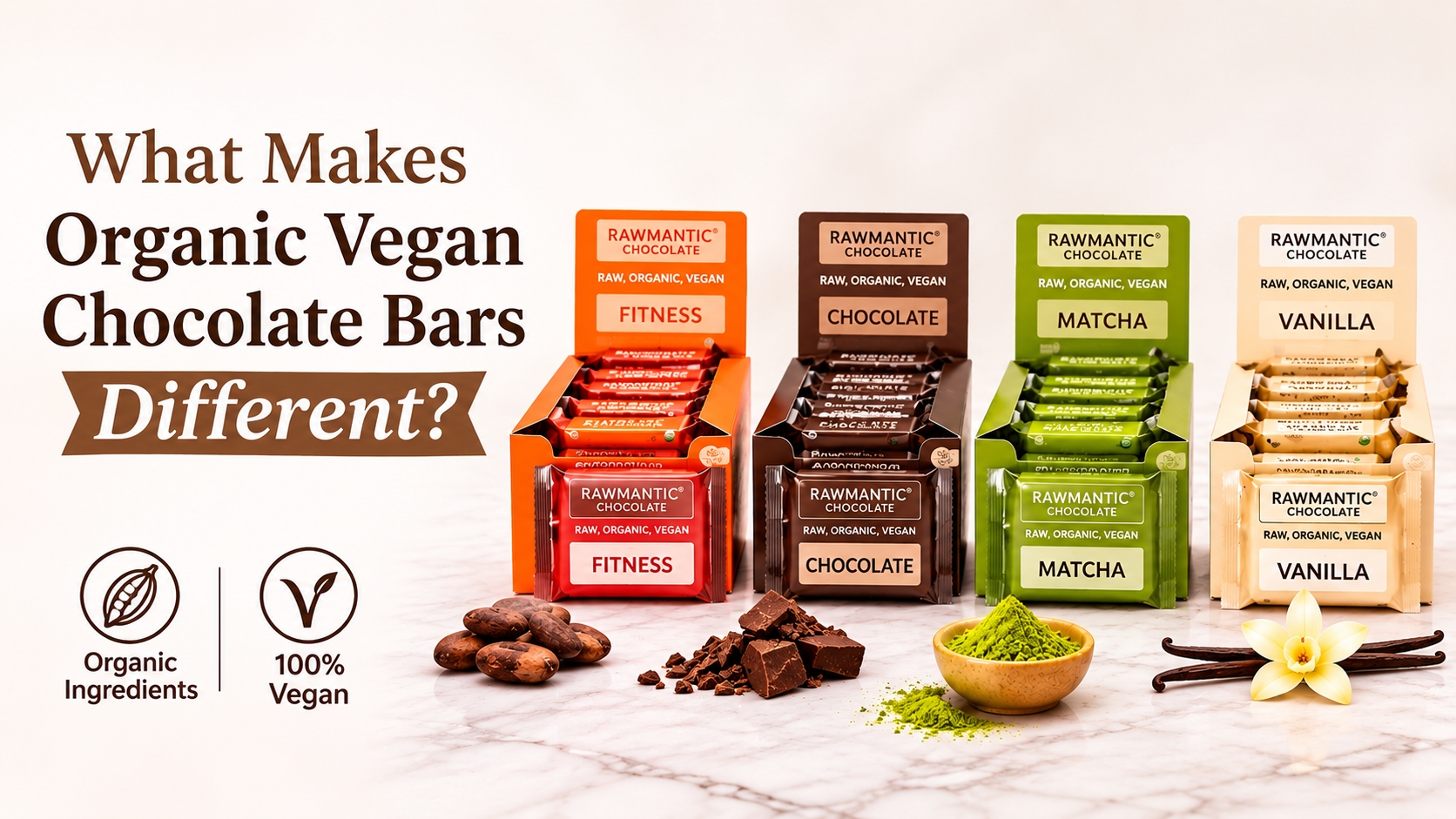
Standard bars and organic vegan bars differ in how the cocoa is grown, which ingredients are allowed, and what the bar leaves out. Shoppers often see both terms on one package and assume they mean the same thing, but each term describes a separate standard. This article explains each claim, the ingredients involved, and how protein appears in products such as organic protein chocolate.
What Organic Means on a Chocolate Label
In the United States, the term "organic" is regulated by the USDA National Organic Program. Organic ingredients are produced without synthetic pesticides, synthetic fertilizers, sewage sludge, irradiation, or genetically modified organisms. A bar that carries the USDA Organic seal must contain at least 95 percent organic ingredients by weight, not counting water and salt. A bar labeled "made with organic ingredients" must contain at least 70 percent. Certification involves farm inspections and detailed record keeping.
Organic standards also address farming methods, including soil management, crop rotation, and buffer zones that separate organic fields from conventional ones. They do not address labor conditions or the price paid to farmers. Separate certifications such as Fair Trade cover those topics, so buyers who care about them check for those labels as well.
What Vegan Means on a Chocolate Label
"Vegan" means that a product contains no animal-derived ingredients. In chocolate, this rules out milk powder, whey, casein, butterfat, and honey. The vegan claim is not regulated by a federal agency, so many makers rely on third-party certification to show that a bar meets the definition.
The two terms are independent of each other. A vegan bar may contain cocoa grown with conventional methods, and an organic bar may contain milk. Only a bar that meets both standards fits the organic vegan description.
Key Differences in Ingredients
Cocoa and Cocoa Butter
Organic cocoa comes from farms certified to avoid synthetic pesticides and fertilizers. The same rule applies to organic cocoa butter, which gives vegan dark bars their smooth melt in place of milk fat. Cocoa butter is a plant fat and contains no dairy. Single-origin and blended organic cocoa both exist, and beans from different regions can show fruity, nutty, or earthy notes.
Sweeteners
Some refined cane sugar is filtered with bone char, an animal product. Organic sugar is generally processed without it, which is one reason vegan makers often choose organic or unrefined sweeteners. Common options include organic cane sugar, coconut sugar, maple sugar, and dates. The sweetener affects taste, color, and the way the bar melts.
Milk Replacements
Standard milk chocolate depends on milk powder for creaminess. Organic vegan versions use powders made from oats, rice, coconut, or nuts instead. Sunflower lecithin often serves as the emulsifier. Each replacement adds its own flavor, so two vegan bars can taste quite different.
Protein in Organic Vegan Chocolate Bars
Plant Protein Sources
Cocoa solids and nuts contain a small amount of protein, and some makers add more. Common additions include pea, hemp, brown rice, sunflower seed, and pumpkin seed proteins. The term "organic protein chocolate" generally describes chocolate made with organic cocoa and added organic plant protein, but no regulation defines it. Buyers can check the label for the protein source and the grams per serving.
Protein content varies widely between products. A bar with a high protein claim may also contain more fiber, more fat, or sugar alcohols, which can affect digestion for some people. Comparing organic protein chocolate by the full nutrition panel gives a more accurate picture than the front label alone.
Raw Claims
The word "raw" appears often on organic vegan bars. It usually means the cacao was processed at low temperatures, commonly stated as below 118 degrees Fahrenheit, to limit heat exposure. No legal definition exists for raw chocolate, so the meaning depends on the maker. Products sold as raw protein chocolate typically pair this kind of cacao with plant proteins such as hemp or pumpkin seed. Buyers can ask the maker how the beans were processed and at what temperatures.
Taste and Texture Differences
Without milk to soften the flavor, organic vegan bars often taste more strongly of cocoa. Dark versions can be bitter, fruity, or earthy, depending on origin and roasting. Bars made with raw cacao may taste sharper and slightly more acidic than roasted versions. Texture depends on the milk replacement and fat content. Coconut and nut powders create a creamy feel, while rice powder gives a lighter result. Added plant proteins can bring an earthy taste or a faint grain, which makers often balance with flavors such as vanilla, sea salt, or roasted nuts.
Storage and Shelf Life
Organic vegan bars generally contain no artificial preservatives, so storage matters. A cool, dry place away from sunlight, ideally between 60 and 68 degrees Fahrenheit, protects flavor and texture. Bars with added protein powders or nuts can develop off-flavors if kept too long, so the best-by date is worth checking. A white film on the surface is usually cocoa butter bloom, which affects appearance but not safety.
Label Details to Check
The USDA Organic seal or a statement that it is made with organic ingredients.
A vegan certification, or an ingredient list free of milk and honey.
The allergen statement for nuts, soy, and cross-contamination.
The protein source and grams per serving in organic protein chocolate.
The type and amount of sweetener.
An explanation of any raw or cacao claims.
Where to Find Options
Organic vegan chocolate is sold in grocery stores, natural food shops, specialty retailers, and online. Makers such as Rawmantic® Chocolate provide ingredient and allergen details on product pages, which helps buyers compare organic protein chocolate and other vegan bars before purchase. Product pages that explain certifications and processing methods also make comparison easier.
Conclusion
Organic vegan chocolate bars differ from standard bars in three main ways: the farming standard behind the ingredients, the absence of animal products, and the plant ingredients used for texture and nutrition. Added protein and raw cacao claims create further variation, and neither term has a legal definition. Reading the label for certifications, protein sources, and processing details help a buyer judge organic protein chocolate and raw protein chocolate on equal terms.


