
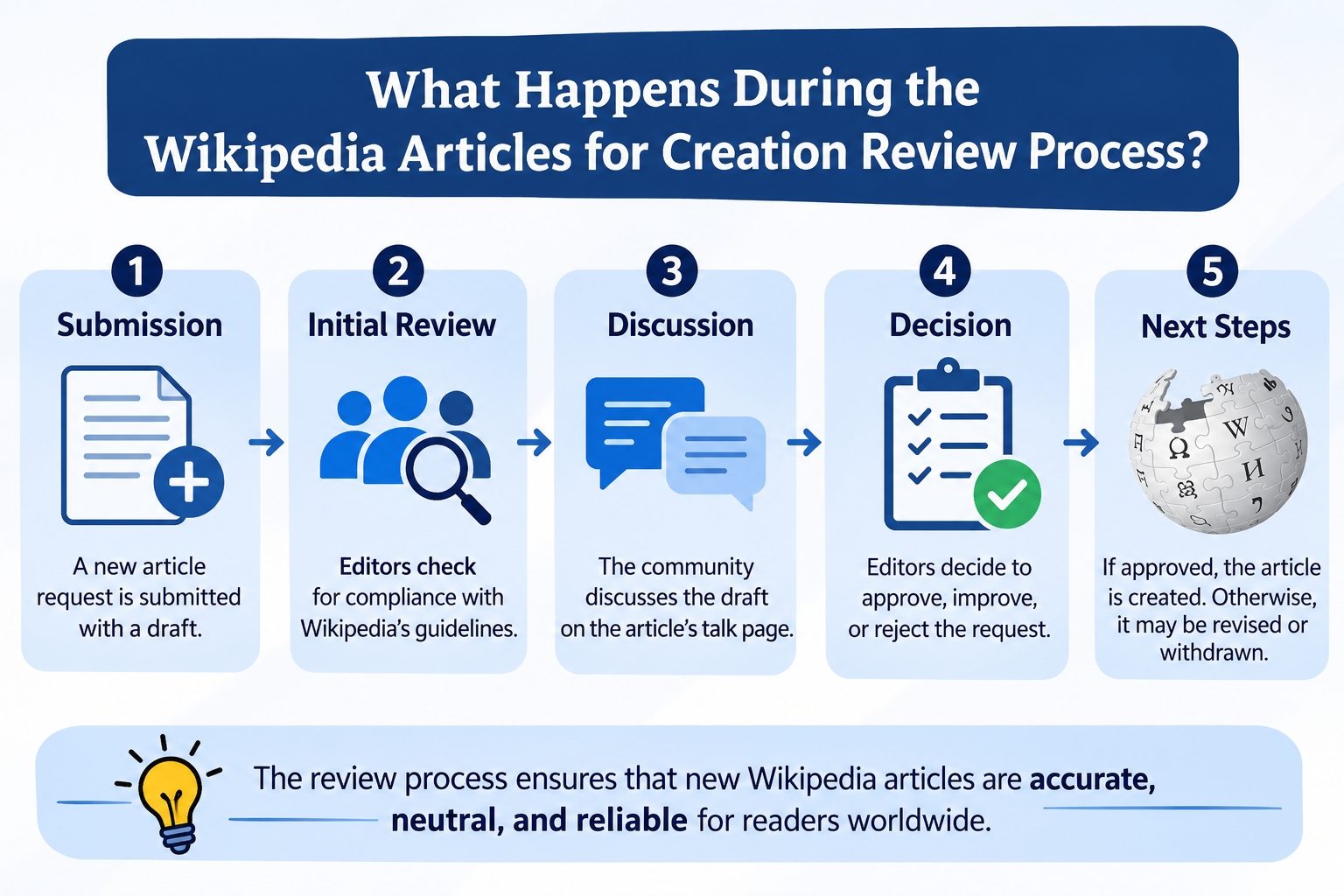
For someone preparing a first Wikipedia article, the Articles for Creation process can feel mysterious. A draft may be carefully referenced and still remain in a review queue, while another may receive feedback requesting changes. Understanding the sequence helps contributors prepare more suitable submissions and avoid interpreting every delay as a sign of rejection.
A consultant offering a wikipedia page creators should explain that Articles for Creation relies on volunteer reviewers. Submission is an invitation for an independent assessment, not a paid approval service. The focus of that assessment is whether the draft meets policies and guidelines, including notability, reliable sourcing, neutrality, and appropriate content standards.
Prepare the draft in the appropriate workspace
A new article can be developed in draft space before it is submitted for review. Drafting there allows the writer to organise references, improve structure, and check citations without presenting unfinished work as a published encyclopedia entry. The opening should define the subject clearly, and each important claim should connect to a suitable source. A draft full of marketing statements or copied biography text is not improved merely by placing it in the right namespace.
Perform a pre submission source check
Before clicking submit, read the strongest independent references completely. Determine whether they provide significant coverage of the exact proposed subject. Check for sponsored material, duplicate press releases, and sources controlled by the subject. Also verify that each citation supports the sentence beside it. This review can expose fundamental problems before a volunteer spends time examining the page. A source list should function as evidence, not as decoration.
What a reviewer considers
A reviewer may evaluate whether the subject has sufficient independent coverage, whether the writing is neutral, and whether there are copyright or sourcing problems. The reviewer is not endorsing a business, product, or person. They are assessing whether the draft is suitable for the encyclopedia. Some topics involve additional guideline considerations, and borderline cases can require judgement. Two drafts of similar length may therefore receive different decisions because the quality and relevance of their evidence differs.
Understand review waiting times
The queue changes as drafts arrive and volunteers choose what to review. No external provider can reliably promise a specific approval date. A draft waiting for review is not necessarily defective, and repeatedly making minor changes will not automatically move it forward. Contributors should use the time to verify references or correct obvious weaknesses rather than create pressure on reviewers. Reasonable expectations make the process less frustrating for clients and writers alike.
What a decline notice usually means
If a reviewer declines a submission, the notice often points to a problem such as weak notability evidence, promotional tone, or inadequate sourcing. This is feedback about the draft as presented, not always a final judgement on the subject forever. An applicant should read the reason closely and check whether it can be addressed with real evidence. Cosmetic edits are not a substitute for additional independent coverage when that is the underlying concern.
Respond with meaningful revisions
When considering wikipedia page creation services, a client should ask how the provider handles a declined draft. A constructive process documents the concerns, identifies what can be corrected, and revises only where justified. If the reviewer asks for independent sourcing, provide better sources rather than another company statement. If the writing is promotional, remove unsupported superlatives and unnecessary sales language. Repeatedly submitting substantially unchanged drafts can create frustration without improving the result.
Acceptance is the start of community editing
After publication, an article is part of a collaboratively maintained encyclopedia. Other editors may update wording, add reputable sources, remove unsupported material, or question whether the article should remain. Acceptance is not a guarantee of permanent retention or a transfer of editorial control to the subject. Businesses should understand that criticism supported by reliable sources may appear in an article even when they would prefer a purely positive description.
Keep paid participation transparent
Contributors receiving payment for Wikipedia work must follow applicable disclosure requirements. People with a conflict of interest should also follow the relevant guidance about editing affected articles and proposing changes. This responsibility applies during drafting and when responding to review discussions. Clear disclosure and measured communication support trust. Using undisclosed accounts or attempting to manufacture independent endorsement can undermine the integrity of the process.
What to do if the draft cannot yet be accepted
When a draft lacks enough independent sourcing, there may be no responsible immediate revision. The contributor can preserve research notes, keep the draft accurate where appropriate, and revisit the topic if substantive new reporting appears. They should not assume that buying promotional placements or resubmitting the same paragraphs will change the policy analysis. Where the problem is narrow and fixable, such as missing citations for routine facts, the repair can be more straightforward. The important step is to separate those cases. This distinction prevents unnecessary submissions and helps applicants respond proportionately to reviewer feedback. It also reinforces that waiting is sometimes an editorial decision rather than a service failure.
Final Thoughts
Articles for Creation is a review process, not a commercial publishing channel. The best preparation is a well sourced, neutral draft and a willingness to engage with genuine editorial feedback. Understanding each stage helps contributors make realistic decisions and respect the independent volunteers who maintain Wikipedia.


