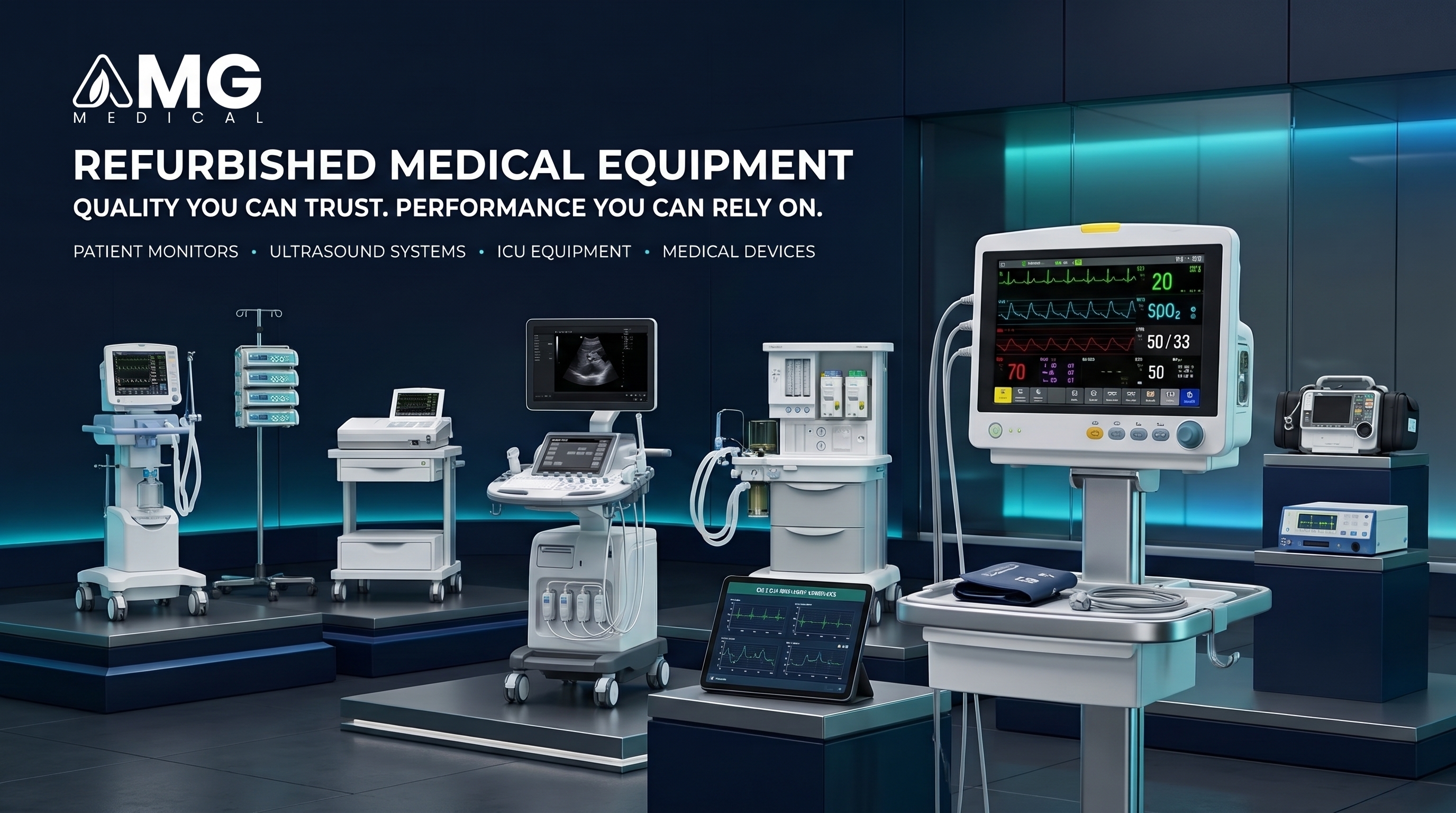
Medical equipment plays an important role in hospitals, clinics, laboratories, and diagnostic centers. Healthcare professionals depend on these devices to examine patients, monitor their health, and provide proper treatment. However, purchasing brand-new machines can be expensive, especially for healthcare facilities with limited budgets. Refurbished medical equipment offers another option by allowing hospitals to purchase previously used devices that have been inspected, repaired when needed, and tested before being used again.
There are many types of devices available in the refurbished market. They serve different purposes, from checking a patient's heart rate to performing diagnostic tests and supporting treatment. Understanding these categories helps healthcare providers choose suitable products according to their needs, budget, and safety requirements.
Refurbished Diagnostic Equipment
Diagnostic equipment helps doctors identify health problems and make suitable treatment decisions. It is commonly used in hospitals, clinics, and medical testing centers. Some diagnostic devices may be available in refurbished condition after proper inspection and testing.
Ultrasound machines are one example. They use sound waves to create images of internal body structures. Doctors use them for pregnancy scans, organ examinations, and other medical assessments. A properly checked refurbished ultrasound machine may provide a useful option for facilities that need diagnostic services at a lower initial cost.
X-ray machines are another type of diagnostic device. They help healthcare professionals examine bones and certain internal structures. Refurbished X-ray systems may be considered by hospitals and imaging centers, but buyers must confirm their safety, image quality, and compliance with radiation rules before purchase.
Refurbished Patient Monitoring Devices
Patient monitoring devices help healthcare professionals observe important body functions. These machines are commonly used in intensive care units, emergency rooms, operation theaters, and general hospital wards.
A patient monitor can display information such as heart rate, blood pressure, oxygen level, and breathing rate, depending on its features. Refurbished patient monitors may be suitable for facilities that need additional monitoring equipment.
Before purchasing, healthcare providers should check the accuracy of the readings, alarm functions, sensors, cables, and display. Proper testing is important because doctors and nurses use this information to make decisions about patient care.
Refurbished Laboratory Equipment
Laboratories use different machines to examine blood, urine, and other samples. These devices help medical staff perform tests that support the diagnosis and treatment of many health conditions.
A refurbished laboratory analyzer may be used for selected blood or chemical tests, depending on its type and features. Centrifuges are also common laboratory devices. They separate different parts of a sample by spinning it at high speed.
Other laboratory products may include microscopes and sample preparation equipment. When selecting these devices, laboratories should check their accuracy, working condition, calibration, and availability of replacement parts. The equipment must also meet the testing needs of the facility.
Refurbished ECG Machines
Electrocardiogram machines, commonly called ECG or EKG machines, record the electrical activity of the heart. Doctors use them to check heart rhythm and look for signs of certain heart problems.
These machines are found in hospitals, clinics, emergency departments, and cardiology centers. A refurbished ECG machine may be a cost-saving option for facilities that need basic or advanced heart testing.
Before buying one, healthcare providers should check the machine's leads, cables, paper system, screen, and recording quality. The device should also be tested to make sure it produces clear and reliable results.
Refurbished Anesthesia Machines
Anesthesia machines are used in operation theaters to deliver controlled amounts of anesthetic gases and support breathing during surgery. They are important devices that require careful handling and regular maintenance.
Some anesthesia machines may be offered in refurbished condition. However, because they are used during surgical procedures, their inspection must be very detailed. Important parts such as gas delivery systems, breathing circuits, alarms, and safety controls need proper testing.
Hospitals should only consider models that meet their clinical needs and relevant safety requirements. Qualified technical staff should check the machine before it is placed into service.
Refurbished Ventilators
Ventilators help patients who cannot breathe properly without support. They are commonly used in intensive care units, emergency departments, and other critical care settings.
A refurbished ventilator may be available for hospitals that need additional breathing support equipment. However, these devices require a high level of technical inspection because they directly support a patient's breathing.
Healthcare facilities should check ventilation modes, pressure settings, alarms, filters, sensors, and backup systems. They should also confirm that trained staff are available to operate and maintain the device safely.
Refurbished Surgical Equipment
Surgical equipment includes different machines and devices used during operations. Some examples include electrosurgical units, operating lights, and selected surgical tables. These products help medical teams perform procedures in a controlled environment.
Refurbished electrosurgical units may be used for cutting tissue or controlling bleeding during certain procedures. Operating lights provide clear visibility for surgeons, while surgical tables help position patients during operations.
Before selecting any of these products, hospitals should check their functions, electrical safety, movement controls, and overall condition. The equipment must be suitable for the procedures performed by the facility.
Refurbished Dental Equipment
Dental clinics use specialized equipment to examine teeth, treat oral health problems, and perform different dental procedures. Some dental devices may be available after refurbishment.
Dental chairs, X-ray systems, compressors, and selected dental treatment units are examples of products that may be offered in refurbished condition. A suitable dental chair should have working movement controls and a stable structure. Dental imaging systems must also provide clear images and meet radiation safety requirements.
Clinics should review the device's condition, cleaning history, repair records, and available technical support before making a purchase.
Refurbished Physiotherapy Equipment
Physiotherapy equipment helps patients improve movement, strength, and physical function. It is used in rehabilitation centers, hospitals, sports clinics, and private therapy practices.
Some refurbished products may include selected therapy machines, exercise devices, and treatment tables. These products can help facilities add services without making the full investment required for new equipment.
However, the condition of electrical parts, controls, cables, and moving components should be checked. Physiotherapy professionals should also confirm that each device is suitable for the treatments they provide.
Role of Professional Refurbishment Services
Professional refurbishment services help prepare used medical devices for further use. The process may include inspection, cleaning, repair, replacement of faulty parts, calibration, and performance testing.
The exact work depends on the equipment type and its condition. A patient monitor may need sensor and alarm checks, while an imaging system may require image quality testing and other technical reviews.
Healthcare facilities should ask suppliers for clear information about the refurbishment process. Inspection reports, testing records, warranty details, and maintenance support can help buyers make informed decisions.
Conclusion
Different types of refurbished medical equipment are available for diagnostic centers, hospitals, clinics, laboratories, dental practices, and rehabilitation facilities. These include diagnostic machines, patient monitors, laboratory devices, ECG machines, anesthesia machines, ventilators, surgical systems, and dental equipment.
Each category serves a different purpose, so healthcare providers should select devices according to their clinical needs. They should also check the machine's condition, safety, performance, warranty, and service support before purchasing. With proper inspection and reliable refurbishment services, refurbished equipment can help healthcare facilities manage costs while maintaining suitable medical services.
More Info: Amg Medical