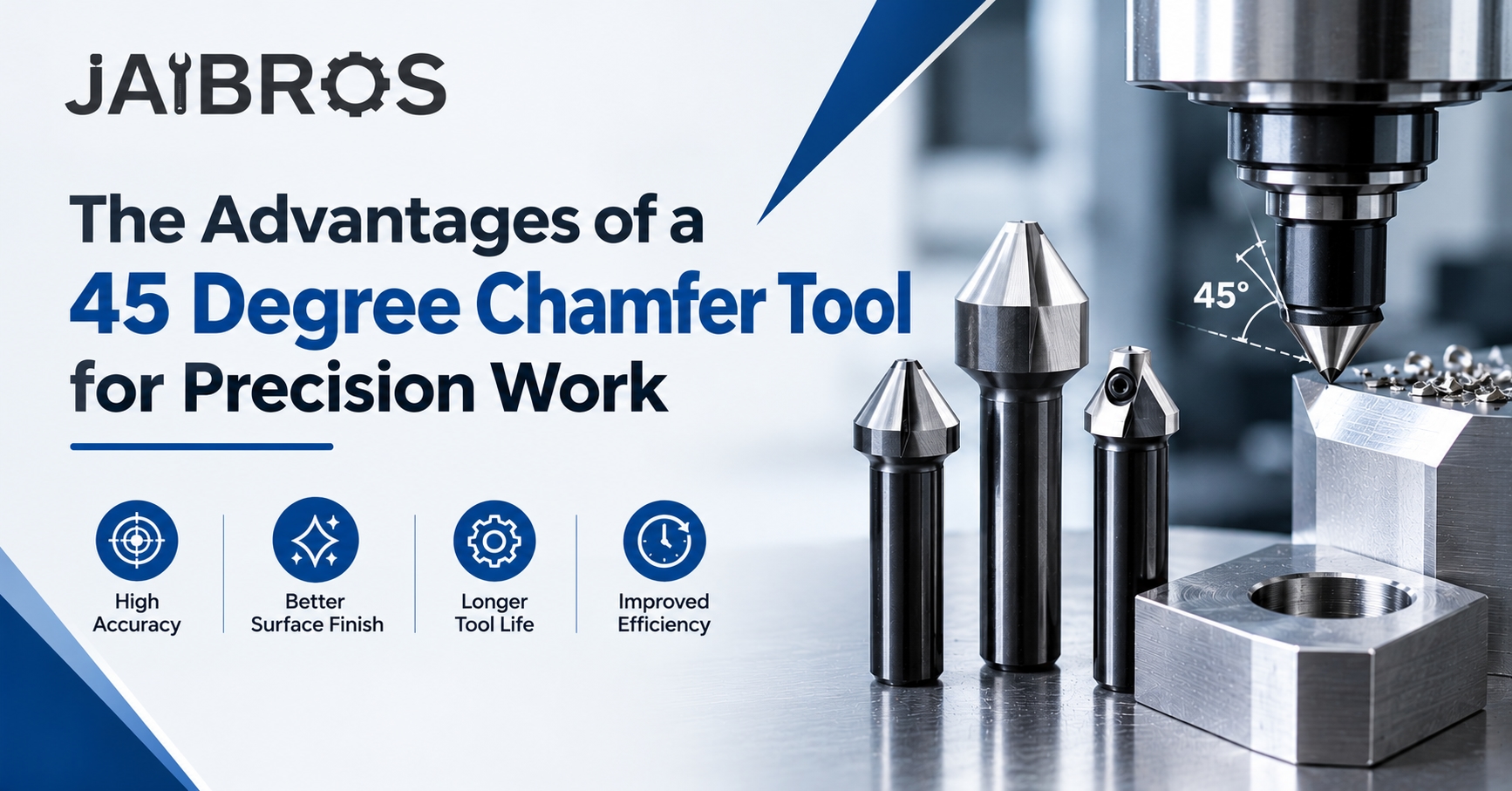
Sharp edges look small, but they cause big problems in machining. They cut hands, damage mating parts, and crack under stress. A chamfer tool solves this by cutting a clean, angled edge on a workpiece. The most popular angle is 45 degrees, and it has been a shop favorite for decades. This post explains what it does, why it matters, and how to get the best results.
What Is a Chamfer?
A chamfer is a beveled edge that connects two surfaces, usually at a right angle. Instead of leaving a sharp 90-degree corner, you cut a slanted face across it. A 45-degree chamfer takes off equal material from both surfaces, which gives a neat and balanced finish.
Why 45 Degrees Is the Standard
The 45-degree angle is popular because it is symmetrical. Both faces of the corner are cut equally, so the edge looks even and is easy to measure. Most drawings and standards also call for this angle, so it fits common design practice. It is also a good middle ground: steep enough to remove sharp corners, but shallow enough to keep most of the part’s strength.
Key Advantages of 45 Degree Chamfering
1. Improved Safety
Raw machined edges are often razor sharp. Chamfering removes that danger, which protects operators, assemblers, and end users during handling.
2. Better Fit and Easier Assembly
A small chamfer on a shaft end or hole entrance guides the part into place. Pins, bolts, and bearings slide in smoothly without catching or scraping. This saves time on the assembly line and prevents damage.
3. Reduced Stress Concentration
Sharp internal and external corners are weak points where cracks can start, especially under repeated loads. A chamfered edge spreads stress more evenly and can help extend part life.
4. Cleaner Deburring
Cutting operations such as milling, drilling, and turning leave burrs. A chamfer cutter removes these burrs in the same setup, often in a single pass. This is faster and more consistent than hand filing.
5. Weld and Coating Preparation
In welding, an angled edge helps the weld penetrate evenly. Before painting, plating, or anodizing, chamfered edges hold coatings better because the coating does not thin out or chip at a sharp corner.
6. Professional Appearance
A uniform chamfer gives finished parts a clean, high-quality look. For visible components, this matters as much as function.
Choosing the Right Material: Carbide
For demanding jobs, a carbide chamfer tool is often the best choice. Carbide is much harder than standard high-speed steel, which means it keeps a sharp edge longer and handles higher cutting speeds. It also resists heat well, so it performs reliably on tough materials such as stainless steel, cast iron, and hardened alloys. The trade-off is that carbide is more brittle, so it needs a rigid setup and steady feeds to avoid chipping.
The Role of Back Chamfering
Some parts need a chamfer on the far side of a hole, where the cutter cannot easily reach. A back chamfer tool is built for this job. It passes through the hole, then cuts the rear edge as it is drawn back. This removes the need to flip the part and set it up again, which saves time and keeps the chamfer aligned with the hole. It is especially helpful for through-holes in plates, brackets, and housings.
Practical Tips for Best Results
Set the correct depth. Cut only as much as the drawing requires. Too deep a chamfer weakens the edge and wastes material.
Use the right speed and feed. Follow the material and cutter recommendations. Slow feeds can cause rubbing, while fast feeds can cause chatter.
Keep the setup rigid. Minimal tool overhang and a secure workpiece reduce vibration and give a smoother surface.
Apply coolant when needed. Coolant or air blast clears chips and controls heat, especially in steel and stainless steel.
Inspect the cutting edge. A dull or chipped cutter leaves a rough finish. Replace or resharpen it at the first sign of wear.
Check the angle. Use a gauge or measuring tool to confirm the chamfer matches the design.
Common Applications
A 45-degree chamfer is used in many industries. In automotive work, it finishes shafts, gears, and engine parts. In aerospace, it prepares precision fasteners and structural parts. General fabrication shops use it on plates, frames, and fittings. Tool and die makers rely on it for clean edges on molds and fixtures.
Conclusion
Whether you work in a large factory or a small workshop, a good chamfer tool improves safety, speeds up assembly, and helps parts last longer. Choose the right cutter material, keep your setup rigid, and match the chamfer size to the job. Small details like these separate average work from precision work.
If you are looking for dependable cutting tools for your shop, you can explore the range at Jaibros, a trusted source for industrial tooling. Their collection of chamfer cutters, including carbide and back chamfering options, can help you find the right fit for your machining needs.
Frequently Asked Questions
1. What is a chamfer tool used for?
It cuts an angled edge on a workpiece to remove sharp corners and burrs. This improves safety, helps parts fit together smoothly, and gives a cleaner finish. It is widely used in milling, drilling, and turning operations across manufacturing, automotive, and fabrication work.
2. Why is a 45-degree angle most common?
A 45-degree angle cuts both surfaces of a corner equally, giving a balanced and symmetrical edge. It is easy to measure, matches most drawing standards, and removes sharp corners without taking away too much strength from the part.
3. When should I use carbide instead of high-speed steel?
Choose carbide for harder materials like stainless steel, cast iron, and tough alloys, or when you need higher speeds and longer edge life. High-speed steel is more forgiving and less brittle, so it suits lighter work and less rigid setups.
4. How does back chamfering save time?
It cuts the rear edge of a through-hole without flipping the part. The cutter passes through the hole and works on the far side, so you avoid a second setup. This keeps the chamfer aligned with the hole and reduces handling errors.
5. How can I avoid chatter when chamfering?
Keep tool overhang short, clamp the workpiece firmly, and use the recommended speed and feed for the material. Make sure the cutting edge is sharp. Light, steady passes usually give a smoother surface than aggressive cuts that overload the cutter.