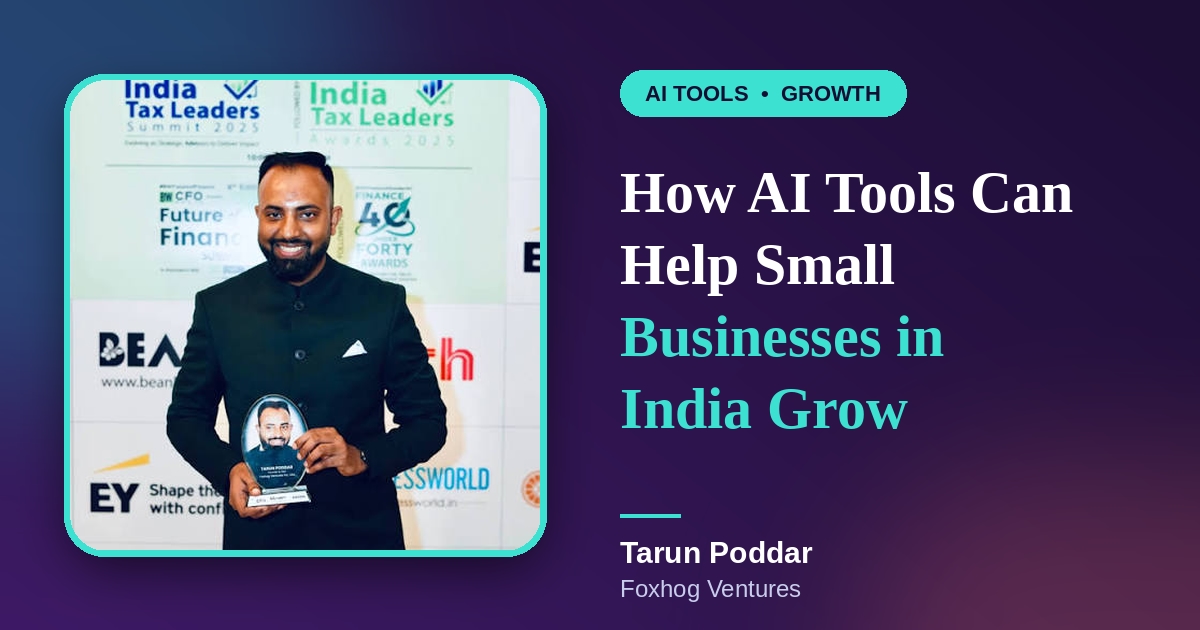
Small businesses across India often have good products and strong ideas, but many face challenges with funding, customer reach, paperwork, and daily business tasks. Artificial intelligence (AI) can help address some of these problems by saving time, improving customer service, and helping owners make better decisions.
On October 14, 2026, Google.org announced a $15 million funding commitment to The/Nudge to support AI-powered solutions for India’s micro, small, and medium enterprises (MSMEs). The initiative aims to help small businesses access formal credit, discover new markets, and manage compliance. It also includes plans for multilingual, voice-led skills training for people in smaller towns.
This development highlights a growing question for Indian entrepreneurs: how can they use AI to build stronger businesses? It also connects with the wider discussion around Tarun Poddar and Foxhog Ventures, including the role of funding, business guidance, and support for entrepreneurs in underserved markets.
Why AI Matters for Small Businesses in India
Small business owners often handle several jobs at once. They manage sales, answer customer questions, track expenses, promote products, and look for new customers. These tasks can take time away from planning and business growth.
AI tools can help with some of this work. For example, a shop owner can use an AI writing tool to prepare product descriptions, while a service provider can use it to draft customer replies. A business can also use data tools to spot sales patterns and understand which products customers prefer.
AI does not replace business knowledge or human judgment. It gives owners another way to handle routine tasks and focus on the work that needs their attention.
5 Ways AI Tools Can Help Small Businesses Grow
1. Improve Customer Support
Customers often expect quick answers about prices, products, delivery, and services. AI-powered chat tools can help businesses prepare replies to common questions and respond outside regular working hours.
A small business can start with simple, approved responses to frequent questions. Owners should still review messages, especially when a customer raises a complaint or shares private information.
2. Make Marketing Easier
Small businesses may not have a dedicated marketing team. AI writing tools can help draft social media captions, product descriptions, email messages, and blog ideas.
Business owners can use these drafts as a starting point and add their own knowledge of local customers. Before publishing, they should check facts, prices, offers, and language to make sure the content is accurate.
3. Find New Customers and Markets
Many businesses depend on customers from their local area. Digital tools can help them present products online, understand customer interests, and explore markets beyond their immediate location.
For example, a local food producer could use online listings and social media to reach buyers in nearby cities. AI may help with product descriptions, customer research, and promotional ideas, but businesses still need to check demand, delivery costs, and local rules before expanding.
4. Organise Records and Daily Tasks
Keeping track of orders, payments, stock, and expenses is a major part of running a business. AI-enabled software may help sort information, prepare summaries, and highlight patterns.
Good records can also help owners understand their cash flow and prepare for conversations with lenders or investors. Businesses should use reliable accounting systems and check AI-generated results before making financial decisions.
5. Learn New Skills in Local Languages
Language and access to training can affect how easily entrepreneurs use digital tools. Google.org’s announced initiative includes plans for a multilingual, voice-led platform to train local talent in smaller towns and connect them with small businesses. The goal is to make useful skills more accessible to people who may not have easy access to traditional training. (Source: Google)
For entrepreneurs, learning can begin with simple tasks such as writing better product listings, organising customer enquiries, or using digital tools to track business activity.
What Small Businesses Should Check Before Using AI
AI can help, but business owners should choose tools based on their real needs rather than following every new trend.
Before paying for a tool, ask:
What problem will it solve? Choose a tool that addresses a clear business need.
Can my team use it easily? Start with tools that are simple to learn.
Does the cost fit my budget? Test free or low-cost options before committing to a long-term plan.
Is customer data protected? Avoid entering private customer, payment, or business information into tools without checking their privacy and security terms.
Are the results correct? Review AI-generated content, calculations, and recommendations before using them.
A small trial can help owners understand whether a tool saves time or improves results. They can then decide whether to use it more widely.
Tarun Poddar and Foxhog Ventures: Why Funding and Guidance Matter
Technology is only one part of business growth. Entrepreneurs may also need working capital, market knowledge, financial planning, and guidance as they build their businesses.
Tarun Poddar, CEO of Foxhog Ventures, is associated with the firm’s focus on business support and funding for startups and smaller enterprises. For entrepreneurs exploring the role of Tarun Poddar and Foxhog Ventures, the wider lesson is that business growth requires more than access to technology. Founders also need a clear plan, sound financial records, an understanding of their customers, and the right resources for their stage of growth.
For businesses in Tier 2 and Tier 3 cities, as well as underserved areas, access to these resources can be especially relevant. Owners may have strong local knowledge but still need help reaching new markets, planning expansion, or understanding funding options.
AI tools can support this process by helping founders organise information, research customer needs, and prepare business materials. Funding and expert guidance can help them decide which opportunities are realistic and how to use available resources.
Google.org’s funding commitment to The/Nudge is a separate initiative. There is no claim that Foxhog Ventures or Tarun Poddar is involved in this programme. The connection in this article is the shared business challenge: helping small enterprises access the tools, skills, and support they need to grow.
How Entrepreneurs Can Get Started
Small businesses do not need to change every process at once. They can begin with one task that takes too much time, such as writing product descriptions, responding to common questions, or preparing weekly sales summaries.
Next, they can test a suitable tool, compare the results, and train team members to use it responsibly. Owners should keep track of the time saved, costs involved, customer feedback, and any mistakes that need correction.
At the same time, they should build strong business basics: maintain accurate accounts, understand profit margins, keep customer records secure, and set clear growth goals. These steps can make it easier to assess future funding needs and business opportunities.
Final Thoughts
Google.org’s $15 million commitment to The/Nudge puts a spotlight on the potential role of AI in helping Indian MSMEs access credit, markets, and compliance support. The initiative also highlights the need to make digital skills more accessible to people in smaller towns.
For small business owners, the practical lesson is to start with real problems and use technology where it can make daily work easier. AI alone cannot guarantee growth, but it can be useful when combined with careful planning, reliable records, customer understanding, and sound financial decisions.
The wider conversation around Tarun Poddar and Foxhog Ventures also offers a useful way to discuss the needs of startups and small businesses: technology matters, but so do funding, mentorship, and access to business opportunities. Entrepreneurs who build these foundations step by step can be better prepared to make informed decisions about their next stage of growth.