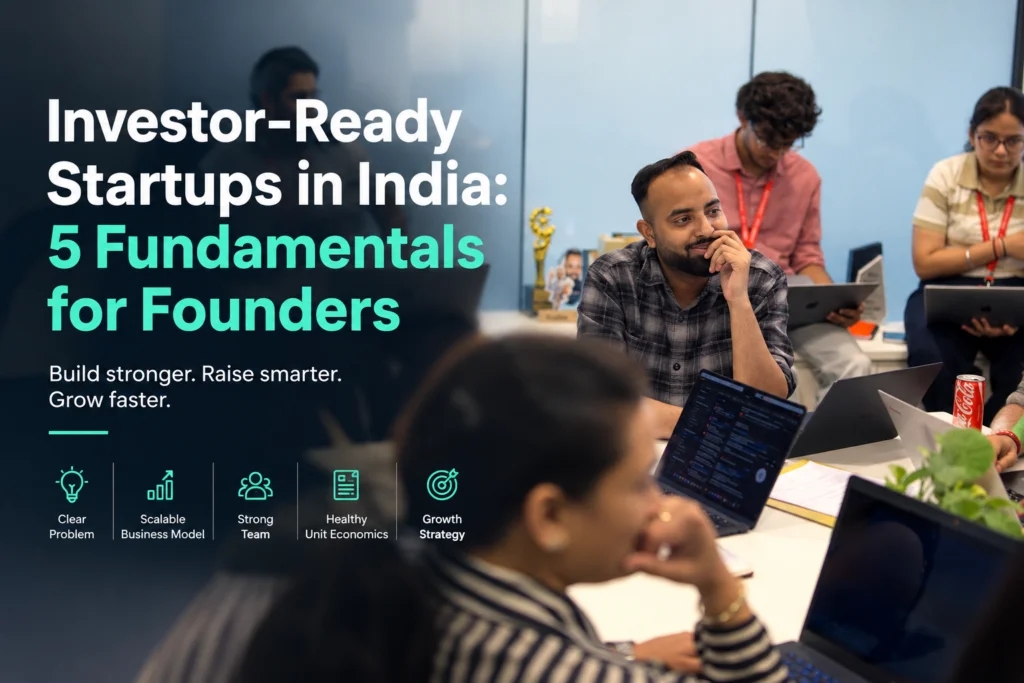
The first step in attracting an investor to an early-stage start-up is just the first step. Founders need to demonstrate both that their business is solving a problem and that they know who their customers are and how they will grow.
Foxhog Ventures recently shared five essentials for getting ready for investor discussions: clearly defining your business pitch, keeping track of financials, demonstrating customer traction, assembling the team, and creating a realistic funding roadmap.
It is applicable to any startup, irrespective of the city they are based in, even smaller cities and villages that have less opportunities to meet investors.
1. Explain Your Business in Simple Words
Investors have to know what a start-up is doing, who their customers are and why their product/service is important.
Founders need to be able to articulate business without using technical jargon. A concise clear pitch can capture the investor's attention and convey the problem, the solution and the market opportunity.
It could involve on a rural entrepreneur's part describing the advantages of a food-processing enterprise to give rural farmers more market access or how an agricultural service can address a widespread issue for growers.
A strong business pitch starts with a real customer need, not just an exciting idea.
2. Understand Your Financial Numbers
A start-up does not have to make millions of dollars per quarter in order to prepare for investment. It must have an awareness of its business.
Funders need to monitor monthly revenue, expenses, cash flow, customer acquisition costs, and available cash. These figures assist them to get an understanding of the amount of money required by the business, and the length of time that the current resources of the business may be able to last.
Having well-maintained invoices, bank statements, and financial sheets also makes it easier to discuss matters with investors.
Even if a small business chooses not to go with the venture capitalists, it's beneficial to keep good financial records.
3. Show Evidence That Customers Want Your Product
What's good on paper can be better on the ground where customers want it.
Early traction by startups can be shown by paying customers, repeat purchases, product trials, customer feedback and partnerships.
A business operating in a Tier-2 or Tier-3 city can use local sales and customer feedback to show that its product meets a real need. It can then explain how it plans to reach more customers.
Founders should report actual results rather than relying on unsupported projections. Even a small amount of early traction can help explain what is working and what needs improvement.
4. Build a Team That Can Execute the Plan
Investors sometimes evaluate the individuals who are in charge of operating the company as well as the product and monetary requirement.
In a startup team, the skills should cover managing main activities like product development, sales and operations and finance.
For a start-up, there might be a lack of specialists for all the available roles. The problem may be solved by founders providing training, having experienced mentors, and finding an appropriate business arrangement.
Business associations and other professional networks, as well as access to guidance, can help fill gaps in knowledge and experience for entrepreneurs not operating in major startup centres.
5. Explain How You Will Use the Funding
Founders need to have an understanding of the amount of money they require and what they hope to accomplish with that money before they approach an investor.
It may involve financing the employee expenses, product development, equipment, inventory, marketing or expansion into a new market. It should also include sensible checkpoints and an approximation of the time that will be needed to achieve them.
Before giving up equity, Founders should research funding options. But venture capital might be the best option for companies that have a great deal of growth potential, and loans, grants, incubators or other kinds of financing might be better for other companies.
The right choice is based on the business model, financial situation and growth plans of the company.
How Tarun Poddar and Foxhog Ventures Connect With the Startup Funding Discussion
Foxhog Ventures identifies itself as a company that provides support to startups, small and medium businesses and entrepreneurs in untapped markets. It's also promoting its VC for Villages program, which aimed at providing enterprise access to funds outside of big start-up hubs.
The company's focus on startups and rural entrepreneurs is tied to the name of its CEO and Managing Director, Tarun Poddar, whose name appears on Foxhog's list.
If you are a founder who is researching Tarun Poddar Foxhog Ventures, the investor readiness message is practical and is a good starting point to get your business ready for investor funding before you approach them.
Similarly, the same ideas are relevant for a founder setting up a tech business in a big city and another for one operating in a village. They both have to be familiar with their customers, financial matters and describe how their company can expand.
Why Investor Readiness Matters for Rural Entrepreneurs
Additionally, entrepreneurship in rural and semi-urban areas may come with other hurdles such as limited investor network, mentorship and market linkages.
Preparation can help them present their businesses more clearly. Maintaining reliable records, documenting customer demand and setting realistic growth goals can make funding discussions more productive.
Not all businesses are appropriate for venture capital; nor is business funding ever guaranteed. However, knowing what investors are seeking can help founders with their financial decisions and determine which funding path is most suitable.
Conclusion
It's not just about strong pitches, it's about getting investor ready. Financial documentation is important, proof of customer demand, a capable team and a realistic plan on how the money can be utilized.
By highlighting startup funding and rural entrepreneurship, Foxhog Ventures is bringing these issues into the larger discussion on the growth of businesses in India.
That's easy for the founders: know your numbers, listen to your customers, and develop a funding plan that aligns with your business objectives before you meet with investors.