The Stem Cell Therapy Market is gaining importance as healthcare providers and biotechnology companies explore innovative approaches to tissue repair, disease management, and regenerative medicine. Increasing investment in research and development, advances in cellular technologies, and growing demand for personalized treatment are creating new opportunities across the healthcare industry.
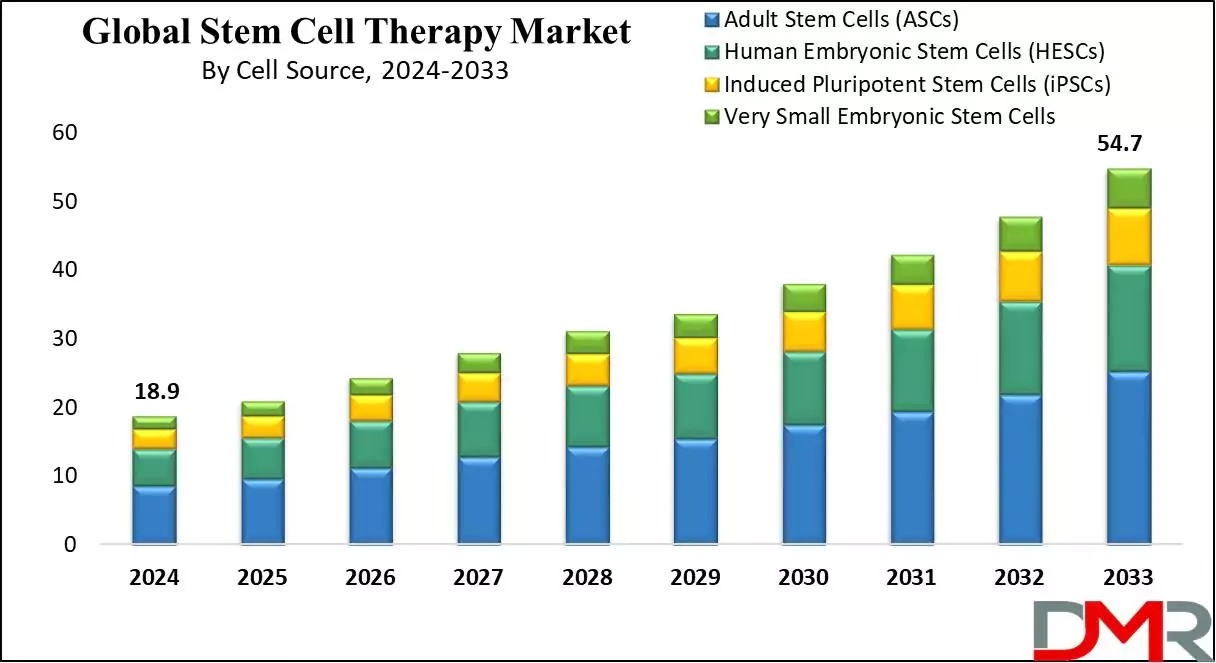
According to Dimension Market Research, the global Stem Cell Therapy Market was valued at USD 18.9 billion in 2024 and is projected to reach USD 54.7 billion by 2033, expanding at a compound annual growth rate (CAGR) of 12.6% during 2024 to 2033. This outlook reflects growing interest in stem cell-based approaches for chronic diseases, musculoskeletal conditions, cardiovascular disorders, and other complex medical needs.
The market's development also depends on improvements in cell acquisition, production, preservation, and administration. As research advances, scalable manufacturing and reliable quality control are becoming increasingly important to the commercial development of stem cell therapies.
What Is the Stem Cell Therapy Market?
The Stem Cell Therapy Market includes the development, production, and application of treatments that use stem cells to support tissue repair, regeneration, or specific therapeutic functions. Stem cells can develop into specialized cell types under appropriate conditions, making them valuable in regenerative medicine and advanced therapeutic research.
These therapies encompass approaches using a patient's own cells, known as autologous therapy, and donor-derived cells, known as allogeneic therapy. Researchers are also investigating induced pluripotent stem cells (iPSCs), which can be generated from adult cells and reprogrammed to exhibit pluripotent characteristics.
Potential applications include blood disorders, musculoskeletal conditions, wounds and injuries, and cardiovascular diseases. However, the clinical evidence, regulatory approval, and availability of treatments vary by product and indication. Not every proposed stem cell treatment is an established or approved therapy.
Why Is the Stem Cell Therapy Market Growing?
Several factors are supporting market expansion. An aging population and the rising burden of chronic diseases are increasing interest in therapies that may help address damaged tissues and complex medical conditions. At the same time, public funding, private investment, pharmaceutical research, and biotechnology partnerships are supporting development programs.
Technological improvements are another important factor. Advances in cell isolation, expansion, cryopreservation, and differentiation can help researchers improve manufacturing consistency and preserve cell viability. These capabilities are essential for developing products that meet clinical and regulatory requirements.
Personalized medicine is also influencing research priorities. Autologous approaches allow developers to investigate treatments using a patient's own cells, while allogeneic platforms offer the possibility of producing donor-derived treatments for multiple recipients. Each approach has different manufacturing, immune compatibility, cost, and scalability considerations.
Key Market Statistics
● 2024 Market Size: USD 18.9 billion
● 2033 Forecast Value: USD 54.7 billion
● Forecast CAGR: 12.6% from 2024 to 2033
● Leading Therapy Segment: Allogeneic stem cell therapy in 2024
● Leading Technology Segment: Cell acquisition, with a reported 32.5% share in 2024
● Leading Region: North America, with approximately 44.89% of the market in 2024
Source: Dimension Market Research, Stem Cell Therapy Market report.
Get a Free Sample of the Stem Cell Therapy Market Report
Explore the market's segmentation, technology developments, competitive landscape, and long-term growth outlook with the detailed DMR research report. The sample can help business leaders, investors, and research professionals evaluate relevant market opportunities.
https://dimensionmarketresearch.com/request-sample/stem-cell-therapy-market/
Market Segmentation and Technology Trends
The Stem Cell Therapy Market is segmented by therapy, cell source, technology, route of administration, application, and end user. This structure helps identify the different approaches and commercial activities shaping the industry.
Allogeneic stem cell therapy held the leading position in the therapy segment in 2024, according to DMR. Its potential advantages include the possibility of developing standardized, donor-derived cell products for multiple patients. Nevertheless, immune compatibility, manufacturing requirements, and clinical suitability remain important considerations.
Cell sources include adult stem cells, human embryonic stem cells, and induced pluripotent stem cells. Adult stem cells include hematopoietic and mesenchymal stem cells, among others. These cell types differ in their biological properties and potential therapeutic applications.
Cell acquisition was the leading technology segment, accounting for 32.5% of the market in 2024. Acquisition methods such as bone marrow harvesting and apheresis provide cells needed for subsequent processing and therapeutic development. Cell production, cryopreservation, expansion, and differentiation are also important components of the manufacturing process.
Applications covered in the report include musculoskeletal disorders, acute graft-versus-host disease, wounds and injuries, cardiovascular diseases, and other conditions. Pharmaceutical and biotechnology companies, hospitals and cell banks, and academic and research institutes represent key end-user groups.
Regional Outlook and Competitive Landscape
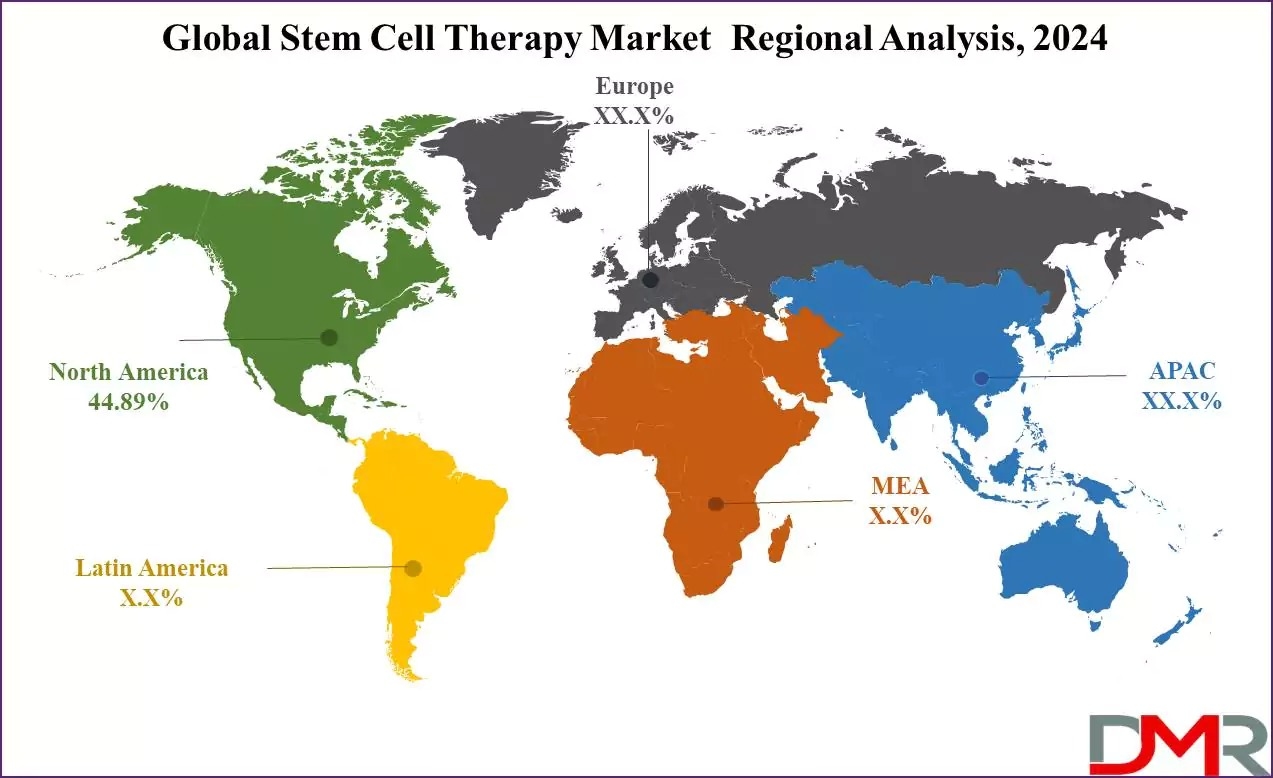
North America held the largest regional share, accounting for approximately 44.89% of the global market in 2024. Its position is supported by established healthcare infrastructure, research investment, and biotechnology development. The United States is a significant contributor to the regional market.
Asia-Pacific also offers opportunities through investment in stem cell research and regenerative medicine. Japan is a particularly relevant market because of its research capabilities and focus on regenerative therapies. DMR's Japan Stem Cell Therapy Market report estimates a market value of USD 2.1 billion in 2026, with a projection of USD 6.9 billion by 2035 and a CAGR of 14.4%.
Competition involves pharmaceutical companies, biotechnology developers, and organizations supplying cell processing and research technologies. Companies identified in DMR's global report include Thermo Fisher Scientific Inc., STEMCELL Technologies Inc., Merck KGaA, Sartorius AG, Lonza, Takara Holdings Inc., and Bio-Techne.
Competitive strategies include research partnerships, clinical development, manufacturing expansion, and investment in cell processing capabilities. The ability to establish consistent production processes and satisfy regulatory requirements remains important for commercial success.
Challenges and Future Opportunities
Despite its growth prospects, the market faces challenges involving high treatment and manufacturing costs, complex clinical development, regulatory differences, and ethical considerations associated with certain cell sources. Demonstrating safety, efficacy, and reproducible manufacturing quality is essential to translating promising research into widely available treatments.
Future opportunities may emerge from improved cell production, better preservation methods, advances in induced pluripotent stem cell research, and the development of scalable allogeneic platforms. Expansion into additional therapeutic applications will depend on clinical evidence and appropriate regulatory authorization.
Explore the Complete Stem Cell Therapy Market Analysis
Access the full Dimension Market Research report for detailed market forecasts, segment analysis, regional insights, competitive intelligence, and strategic information to support business planning.
https://dimensionmarketresearch.com/checkout/stem-cell-therapy-market/
Frequently Asked Questions
1. What is the size of the Stem Cell Therapy Market?
The global Stem Cell Therapy Market was valued at USD 18.9 billion in 2024 and is projected to reach USD 54.7 billion by 2033, according to DMR's report overview and FAQs.
2. What is the CAGR of the Stem Cell Therapy Market?
The market is projected to grow at a CAGR of 12.6% from 2024 to 2033.
3. Which therapy segment leads the Stem Cell Therapy Market?
Allogeneic stem cell therapy held the leading position in the therapy segment in 2024, according to DMR.
4. Which region leads the Stem Cell Therapy Market?
North America led the market in 2024, accounting for approximately 44.89% of the global market.
5. What is the future outlook for the Stem Cell Therapy Market?
The outlook is supported by investment in research and development, advances in cell processing, demand for regenerative medicine, and the potential expansion of clinical applications. Progress will depend on clinical validation, manufacturing scalability, and regulatory approval.
Conclusion
The Stem Cell Therapy Market is positioned for continued expansion as regenerative medicine, cellular technologies, and personalized treatment research advance. Growing investment, increasing interest in chronic disease management, and improvements in manufacturing are creating opportunities across the value chain. However, affordability, clinical validation, and regulatory compliance will remain critical to long-term development. Companies that address these challenges while building reliable and scalable capabilities may be better positioned to participate in the market's future growth.
Related Regenerative Medicine Market Insights
Japan Stem Cell Therapy Market Size
Japan's Stem Cell Therapy Market is projected to grow from USD 2.1 billion in 2026 to USD 6.9 billion by 2035, at a CAGR of 14.4%. The report examines therapy types, cell sources, technology, applications, and end users in Japan's regenerative medicine landscape.
The global Stem Cell Market was valued at USD 15.4 billion in 2023 and is projected to reach USD 38.1 billion by 2032, at a CAGR of 10.6%. Its broader scope covers stem cell products, therapy approaches, and applications in regenerative medicine and drug discovery.
The global Cell Therapy Market was valued at USD 7.0 billion in 2024 and is projected to reach USD 32.5 billion by 2033, at a CAGR of 18.6%. The report explores autologous and allogeneic therapies, therapeutic applications, and competition across the cell therapy industry.