Market Overview
According to Dimension Market Research, the Global Pain Management Therapeutics Market size is expected to reach a value of USD 85,215.3 million in 2024, and it is further anticipated to reach a market value of USD 130,827.9 million by 2033 at a CAGR of 5.0%.
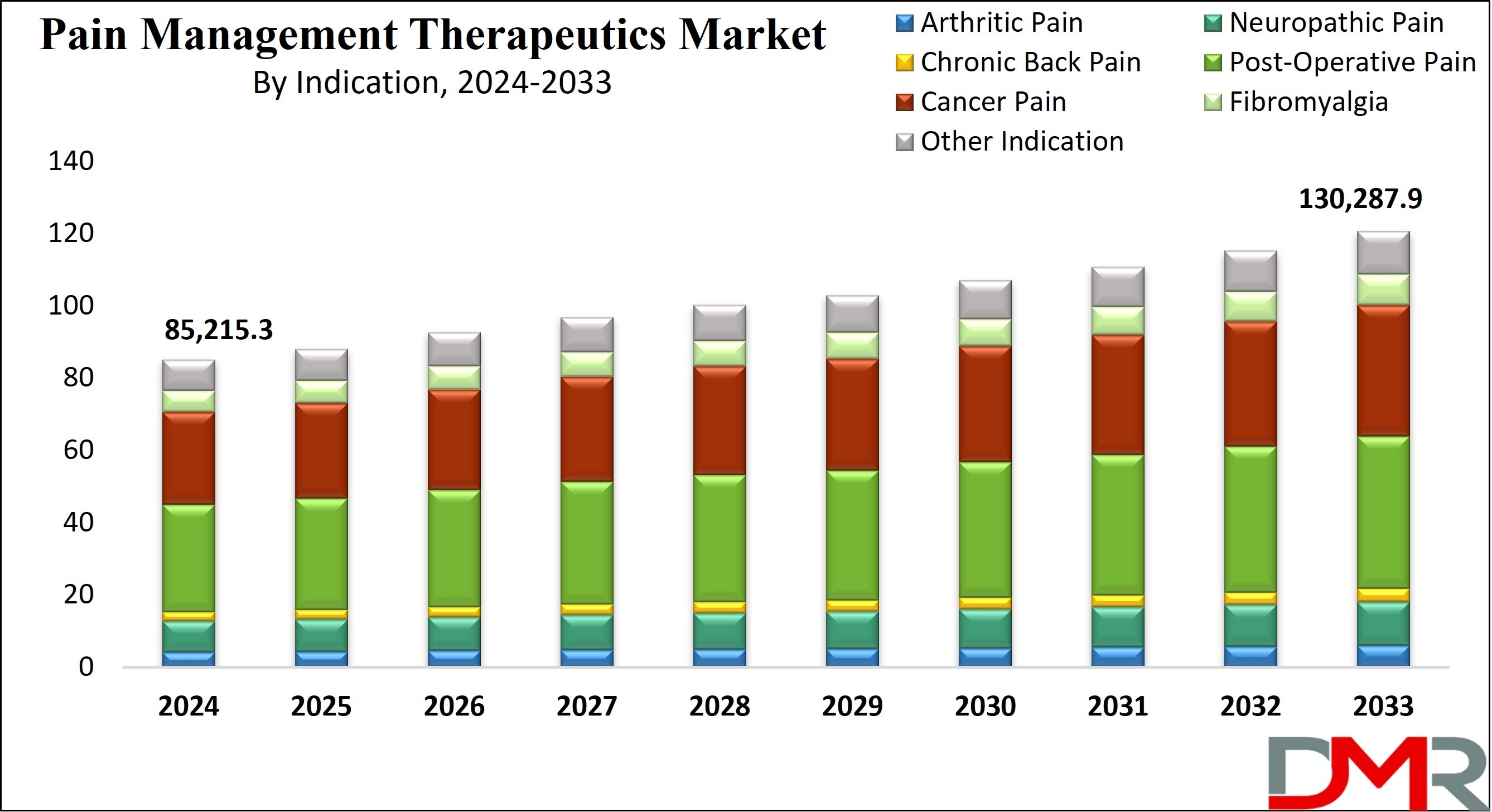
Pain is one of the most common reasons people seek medical care, and the therapies used to manage it represent a substantial and steadily growing market. The 5.0% CAGR reflects a mature market rather than an explosive one, but the absolute numbers involved are enormous. Tens of millions of patients in the United States alone live with chronic pain conditions that require ongoing pharmaceutical intervention.
The market covers a broad range of therapeutic categories, from familiar over-the-counter analgesics to prescription opioids, non-steroidal anti-inflammatory drugs, anticonvulsants, antidepressants, and newer targeted biologics. Each category serves different patient populations and pain types, which makes the market diverse and resilient.
What's shaping growth right now? An aging population with higher rates of arthritis and degenerative conditions, rising cancer prevalence, and growing awareness of neuropathic pain as a distinct and treatable condition. At the same time, the opioid crisis has forced a rethink of prescribing practices, which is pushing investment toward non-opioid alternatives.
Definition and Market Significance
Pain management therapeutics refer to pharmaceutical agents used to treat acute and chronic pain. These include non-opioid analgesics such as acetaminophen and NSAIDs, opioid analgesics, adjuvant therapies like anticonvulsants and antidepressants, and emerging non-opioid classes targeting specific pain pathways.
Why does this market matter so much? Because chronic pain affects quality of life in ways that are difficult to overstate. It limits mobility, disrupts sleep, contributes to depression and anxiety, and reduces workforce participation. Effective treatment has implications that extend well beyond the clinic.
The market also sits at the center of a public health crisis. Opioid misuse and addiction have caused hundreds of thousands of deaths, and the pharmaceutical industry is under pressure to develop effective alternatives. That pressure is reshaping research priorities and commercial strategies across the sector.
Looking for Something Specific? Get Free Sample:
https://dimensionmarketresearch.com/request-sample/pain-management-therapeutics-market/
Market Drivers
An aging population is a fundamental driver. Conditions like osteoarthritis, degenerative disc disease, and neuropathy become more common with age, and they require long-term management. As the population ages, the number of patients needing pain therapy grows accordingly.
Rising cancer prevalence also contributes. Cancer-related pain is a significant clinical challenge, and advances in cancer treatment have extended survival times, which means more patients living with pain for longer periods.
Growing recognition of neuropathic pain is another factor. Conditions like diabetic neuropathy and post-herpetic neuralgia were once underdiagnosed. Increased clinical awareness has expanded the patient population receiving treatment.
Market Trends
The shift toward non-opioid therapies is the most significant trend. Regulators, payers, and clinicians are all pushing for alternatives, and pharmaceutical companies have responded with substantial investment in novel mechanisms of action.
Abuse-deterrent formulations continue to evolve. For situations where opioids remain necessary, manufacturers are developing formulations designed to reduce misuse potential.
Personalized pain management is gaining traction. Genetic testing and biomarker analysis are increasingly used to guide therapy selection, which improves outcomes and reduces trial-and-error prescribing.
Market Restraints
Regulatory scrutiny of opioids creates complexity. Prescribing guidelines have tightened considerably, which affects volume for some product categories even as it drives growth in others.
Generic competition erodes revenue for older products. Many established pain therapies have lost patent protection, and generic alternatives are substantially cheaper, which limits branded revenue.
Reimbursement pressure is another constraint. Payers are increasingly restrictive about coverage for certain pain therapies, particularly opioids and expensive specialty drugs.
Market Opportunities
Non-opioid novel mechanisms represent the largest opportunity. Several drug candidates targeting sodium channels, NGF pathways, and other pain-specific targets are in development, and successful launches could capture significant market share.
Topical and localized therapies are growing. These formulations offer targeted relief with reduced systemic exposure, which appeals to both patients and prescribers concerned about side effects.
Combination therapies are also promising. Combining agents with different mechanisms can improve efficacy at lower doses of each component, which reduces side effect burden.
Segmentation
The Pain Management Therapeutics Market is categorized based on drug class, application, distribution channel, and region.
By drug class, NSAIDs and opioids hold significant shares, while anticonvulsants and antidepressants are growing as adjuvant therapies for neuropathic pain.
By application, chronic pain conditions including arthritis, back pain, and neuropathic pain dominate, followed by acute pain and cancer pain.
By distribution channel, hospital pharmacies, retail pharmacies, and online channels are the primary routes to patients.
Regional Analysis
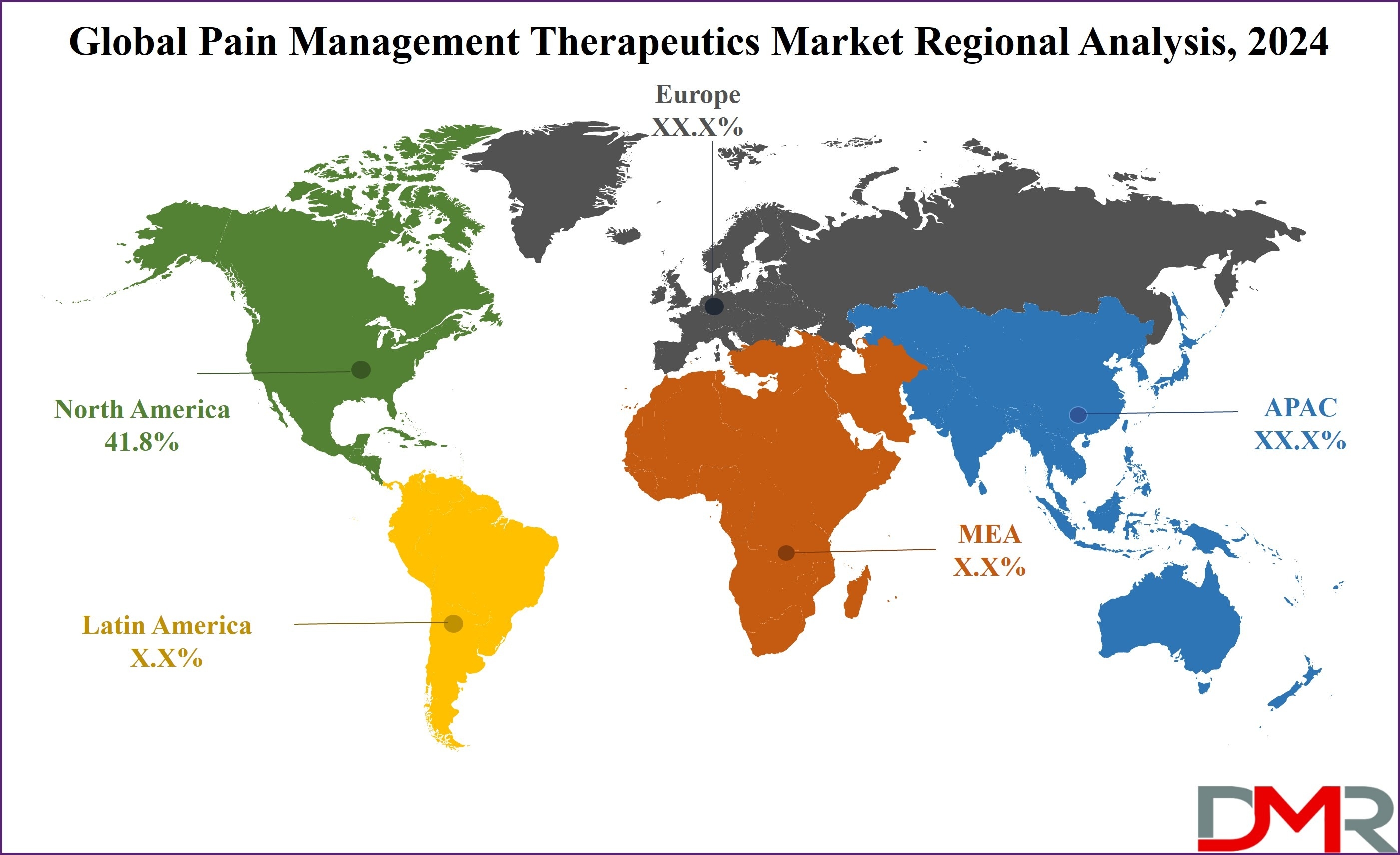
North America is projected to dominate the global pain management therapeutics market as it holds 41.8% of the market share by the end of 2024. North America dominated the global pain management therapeutics market due to the developed health infrastructure, high prevalence of chronic pain conditions, and high level of healthcare expenditure. The region is also home to a substantial population that suffers from various disorders such as arthritis, cancer, neuropathic pain, and chronic back pain.
Europe holds a substantial share, supported by strong healthcare systems and similar demographic trends. Regulatory pressure on opioids is particularly pronounced in some European markets.
Asia Pacific is expected to grow faster than the global average, driven by expanding healthcare access, rising chronic disease prevalence, and increasing healthcare spending in countries like China, India, and Japan.
Purchase the Full Report
https://dimensionmarketresearch.com/checkout/pain-management-therapeutics-market/
Competitive Landscape
The market includes large pharmaceutical companies, specialty pharma firms, and generic manufacturers competing across multiple drug classes. Differentiation comes from novel mechanisms, formulation improvements, and clinical evidence supporting specific pain types.
Partnerships between drug developers and delivery technology companies are increasingly common, particularly for abuse-deterrent and targeted delivery formulations.
Technological Advancements
Novel drug delivery systems are improving outcomes. Extended-release formulations, transdermal patches, and implantable pumps offer sustained relief with fewer dosing challenges.
Digital therapeutics are emerging as complements to pharmacological treatment. App-based cognitive behavioral therapy and remote monitoring programs are being integrated into comprehensive pain management plans.
Consumer Adoption Patterns
Patients are increasingly engaged in their own pain management decisions. Growing awareness of opioid risks has led many to seek non-opioid options proactively, and shared decision-making with providers has become more common.
Regulatory Environment
Regulatory frameworks around opioid prescribing have tightened significantly in recent years. At the same time, expedited review pathways for non-opioid pain therapies are encouraging innovation.
Market Challenges
Challenges include balancing effective pain relief with safety concerns, navigating complex reimbursement landscapes, and developing therapies that can demonstrate clear advantages over generic alternatives.
Future Outlook
The future of the Pain Management Therapeutics Market remains steady. The market is projected to reach USD 130,827.9 million by 2033 at a CAGR of 5.0%, with growth driven by demographic trends, innovation in non-opioid therapies, and expanding treatment access in emerging markets.
FAQs
What is the expected size of the Pain Management Therapeutics Market in 2024?
The market is expected to reach USD 85,215.3 million in 2024.
What is the projected market value by 2033?
The market is forecast to reach USD 130,827.9 million by 2033.
What is the CAGR of the Pain Management Therapeutics Market?
The market is expected to grow at a CAGR of 5.0% during 2024–2033.
Which region leads the global pain management therapeutics market?
North America is projected to dominate with 41.8% market share by the end of 2024.
What are the key drivers of market growth?
Aging populations, rising chronic pain prevalence, cancer-related pain, and growing recognition of neuropathic pain are the primary drivers.
Summary of Key Insights
The Global Pain Management Therapeutics Market is expected to grow from USD 85,215.3 million in 2024 to USD 130,827.9 million by 2033, recording a CAGR of 5.0% during the forecast period. NSAIDs and opioids remain significant drug classes, while non-opioid novel mechanisms represent the fastest-growing opportunity. Chronic pain conditions dominate applications. North America holds the largest regional share with 41.8% of global revenue in 2024, supported by advanced healthcare infrastructure and high chronic pain prevalence.
Discover More Related Reports:
1. The Global AI-driven Knowledge Management System market is predicted to value at USD 9.6 billion in 2025 and is expected to grow to USD 251.2 billion by 2034, registering a compound annual growth rate (CAGR) of 43.7% from 2025 to 2034.
2. The Global API Security & Management Market size is estimated at USD 8.8 billion in 2026 and is projected to reach USD 47.1 billion by 2035, exhibiting a CAGR of 20.4% during the forecast period, driven by the rising use of real-time API threat detection and automated policy enforcement, decentralized API traffic patterns in microservices architectures, and connected API governance and compliance management systems.
3. The global Blockchain Identity Management Market is projected at USD 21.2 billion in 2025 and is expected to reach USD 3,549.0 billion by 2034, growing at a CAGR of 76.6%, driven by rising adoption of decentralized identity solutions and secure digital verification across key industries.