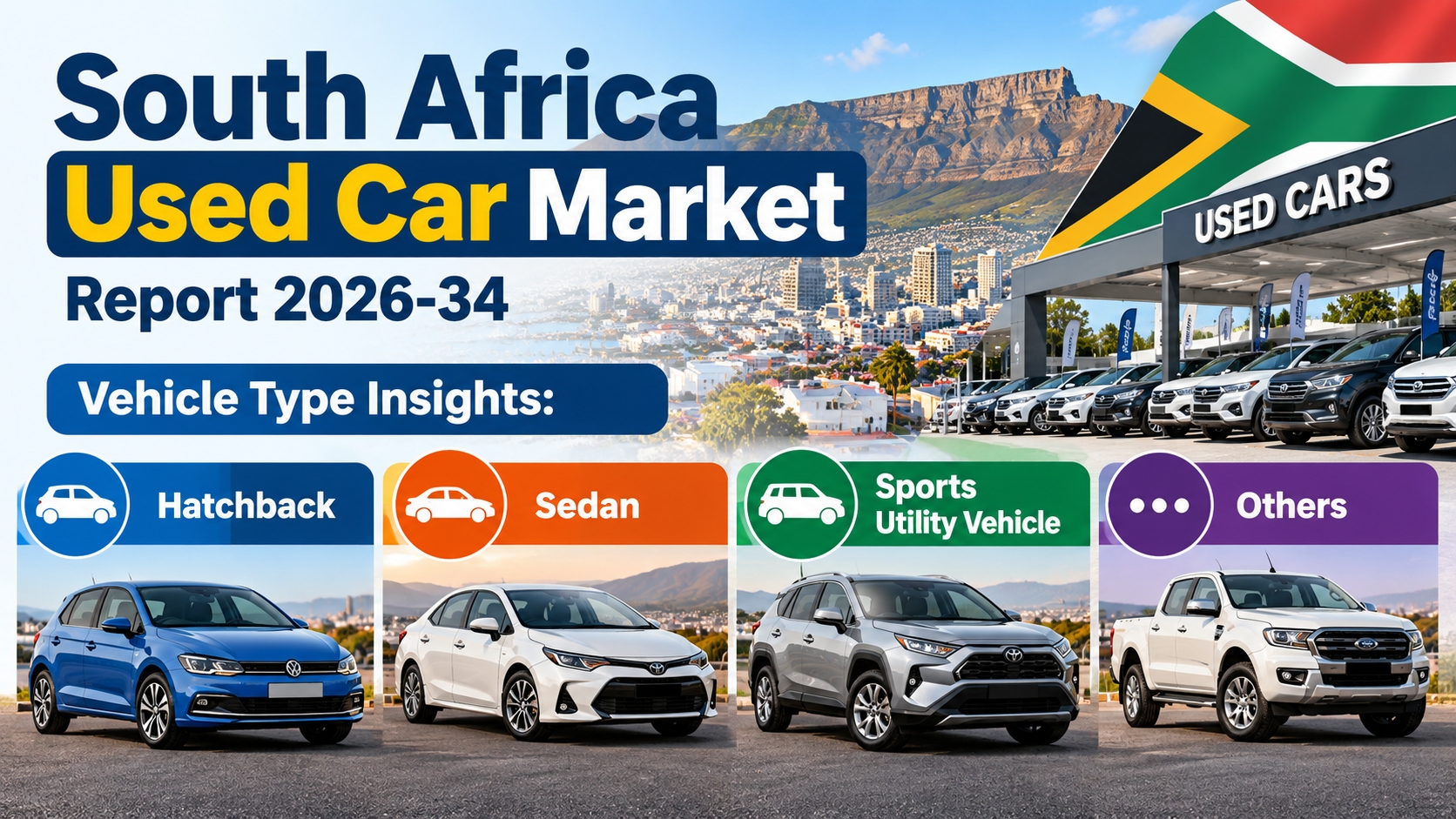
IMARC Group, a leading global market research and management consulting firm, has published its latest market intelligence report on the South Africa used car market size reached USD 5,112.7 Million in 2025. The market is projected to reach USD 9,845.4 Million by 2034, exhibiting a growth rate (CAGR) of 7.33% during 2026-2034, driven by rising new vehicle prices that push buyers toward pre-owned options, rapid expansion of digital car-trading platforms, growing availability of vehicle finance and warranted pre-owned programs, and strengthening consumer preference for reliable, affordable, and fuel-efficient vehicles across the country.
The market is experiencing strong momentum as South African households weigh the steep cost of new vehicle ownership against the practical value that pre-owned cars deliver. Reliability, utility, and affordability remain the top purchase criteria, which keeps demand concentrated in dependable brands, versatile SUVs, hatchbacks, and light commercial vehicles suited to varied road conditions. Dealer groups, online marketplaces, and vehicle-buying platforms are professionalizing the trade by offering inspection reports, service history verification, finance pre-approval, and warranty cover, which builds buyer confidence in remote and dealer-led transactions. Simultaneously, extended vehicle replacement cycles and an ageing vehicle parc are keeping trade-in volumes healthy and supporting a steady supply of quality used stock.
How AI is Reshaping the Future of the South Africa Used Car Market?
AI-Powered Vehicle Valuation and Dynamic Pricing for Dealers and Marketplaces: Machine learning models are enabling dealer groups and online platforms to analyze live listing data, mileage, model age, regional demand, and auction outcomes to set accurate buying and selling prices in near real time. With the average used vehicle transacting at around R418,000 on leading platforms, even small pricing improvements across tens of thousands of monthly units help dealers shorten stock holding periods, protect margins, and avoid ageing inventory that ties up working capital.
Computer Vision Vehicle Inspection and Fraud Detection: AI-driven image analysis tools are automating damage detection, odometer verification, and condition grading from photographs and short videos, giving remote buyers greater transparency into vehicle quality. These systems help flag clocked mileage, undisclosed accident repairs, and duplicate or manipulated listings, directly addressing the trust and transparency concerns that have historically restrained online used car transactions in the country.
Personalized Discovery and Smart Finance Matching for Buyers: Recommendation engines on digital marketplaces are matching buyers with suitable vehicles based on budget, monthly repayment capacity, fuel efficiency preferences, and browsing behavior, while connecting them with finance options in a single journey. Retail groups report that more than 75% of customers begin their car buying journey online, making AI-led lead scoring, chat-based assistance, and instant finance pre-qualification a growing competitive advantage for both organized dealers and independent sellers.
Grab a sample PDF of this report: https://www.imarcgroup.com/south-africa-used-car-market/requestsample
South Africa Used Car Market Trends and Drivers:
The South Africa used car market is witnessing steady expansion, fueled by affordability pressures on new vehicles, accelerating digitalization of vehicle trading, and the gradual formalization of a once highly fragmented dealer landscape. Elevated interest rates and fuel costs have raised the overall cost of vehicle ownership, and consumers are carefully weighing new versus pre-owned options, vehicle category, fuel efficiency, and replacement timing. In this environment, used vehicles offer a practical entry point to mobility, with a steady flow of popular models such as the Ford Ranger, Toyota Hilux, and Volkswagen Polo Vivo transacting every month. Leading platform data shows that tens of thousands of used vehicles change hands monthly, with Toyota consistently leading brand sales at roughly 5,700 to 5,900 units in a single month, underscoring the depth and liquidity of the market.
Digital platforms and organized retail are reshaping how South Africans buy and sell pre-owned vehicles. Online marketplaces, instant-offer buying platforms, and dealer-group portals now allow consumers to browse thousands of listings, compare new and used options, arrange test drives, and apply for finance without visiting multiple showrooms. Motus, for example, reports that over 50% of its vehicle sales originate from an online platform, and its certified used offering focuses on late-model vehicles with full service history and verified mileage. Brand-backed certified pre-owned programs that bundle warranties, roadside assistance, and service plans are also helping retain buyers within authorized networks, support resale values, and move the market from unorganized sellers toward trusted, organized channels.
Government regulation and consumer protection frameworks are strengthening confidence in the market. The Consumer Protection Act provides buyers of goods from registered dealers with an implied warranty of quality for six months, giving consumers recourse when a vehicle proves defective. The National Credit Act requires lenders to conduct affordability assessments before extending vehicle finance, which promotes responsible lending and sustainable repayment behavior. In addition, import controls administered under the International Trade Administration Commission restrict the entry of used passenger vehicles into the country, which keeps supply anchored in the local vehicle parc and supports domestic trade-in volumes. The broader policy backdrop, including the South African Automotive Masterplan and incentive programs for local vehicle production, continues to support a healthy flow of locally sold new vehicles that eventually feed the used market.
Fuel and body-style preferences continue to shape demand. Petrol vehicles account for a clear majority of used car sales, at roughly 64%, supported by widespread filling station networks, strong mechanic familiarity, and lower perceived repair costs. SUVs capture more than 37% of used car demand thanks to their versatility across urban roads and rural terrain. Meanwhile, affordable compact models such as the Suzuki Swift, which averages around R205,000, are drawing value-seeking buyers and recording annual sales growth even when the broader market softens. Hybrid and electric vehicles remain a small but fast-growing niche, with financing structures and residual value guarantees expected to determine how quickly low-emission vehicles enter the pre-owned segment.
South Africa Used Car Industry Segmentation:
The report has segmented the market into the following categories:
Breakup By Vehicle Type:
Hatchbacks
Sedans
Sports Utility Vehicles (SUVs)
Others
SUVs hold a leading position among vehicle types, driven by their versatility, comfort, and ability to handle varied road surfaces across both metropolitan and rural regions. Strong and consistent demand supports stable residual values, while hatchbacks remain highly popular among first-time and budget-conscious buyers seeking low running costs and easy availability of spare parts.
Breakup By Vendor Type:
Organized
Unorganized
Organized vendors, including franchised dealer groups, certified pre-owned programs, and large digital buying platforms, are steadily gaining share as consumers seek warranties, inspection reports, service history verification, and integrated finance. Unorganized sellers continue to play an important role in price-sensitive segments and in smaller towns where informal peer-to-peer trade remains common.
Breakup By Fuel Type:
Petrol
Diesel
Others
Petrol vehicles account for the largest fuel type share, supported by abundant filling stations, widespread mechanical expertise, and lower perceived repair costs. Diesel remains important in bakkies and larger SUVs used for commercial and long-distance applications, while hybrid and electric vehicles are emerging gradually within the others category.
Breakup By Sales Channel:
Online
Offline
Offline channels, including physical dealerships and used vehicle floors, continue to account for the majority of transactions as buyers value test drives and in-person inspection. However, the online channel is expanding quickly as marketplaces, instant-offer platforms, and dealer-group portals build trust through standardized inspection reports, transparent pricing, and digital finance applications.
Breakup By Region:
Gauteng
Western Cape
KwaZulu-Natal
Eastern Cape
Others
Gauteng represents a leading regional market, driven by its status as the country's largest economic hub, high vehicle ownership, dense dealer networks, and strong concentration of online buyers. Western Cape and KwaZulu-Natal follow, supported by large urban populations, active dealer ecosystems, and growing adoption of digital vehicle trading platforms.
Competitive Landscape:
The report provides a comprehensive analysis of the competitive landscape in the South Africa used car market with detailed profiles of all major companies, including:
AutoTrader South Africa
Carmart
Motus Holdings Limited
WeBuyCars
Recent News and Developments in South Africa Used Car Market
September 2026: Motus Holdings reported a 1% increase in annual revenue to R113.6 billion and a 4% rise in operating profit to R5.7 billion, while its Chinese and Indian brand retail sales in South Africa grew by more than 200%. With 43 vehicle brands now represented locally, the broader portfolio is expected to strengthen future trade-in flows and expand the supply of late-model used vehicles.
August 2026: AutoTrader data showed South African used vehicle sales reached 33,346 units, a 3.1% decline year on year and 4.1% lower than the previous month. The average selling price eased to around R418,649, remaining nearly unchanged from a year earlier, which highlights price stability despite softer volumes. Toyota led with 5,750 units, followed by Volkswagen with 4,287 and Ford with 3,460.
August 2026: The Ford Ranger remained the most popular used vehicle with 1,990 sales, followed by the Toyota Hilux with 1,589 and the Volkswagen Polo Vivo, the top-selling passenger car, with 1,226. Suzuki was the only top-10 brand to record annual growth, with 2,426 sales, an 8% increase, supported by affordable models such as the Swift.
January 2026: South African used car sales reached 34,452 units according to AutoTrader, up 12% from the previous month and 11% from a year earlier. The total value of transactions was approximately USD 892 million, with Toyota leading brand sales at 5,876 units, reflecting resilient demand despite broader economic pressures.
Note: If you require specific details, data, or insights that are not currently included in the scope of this report, we are happy to accommodate your request. As part of our customization service, we will gather and provide the additional information you need, tailored to your specific requirements. Please let us know your exact needs, and we will ensure the report is updated accordingly to meet your expectations.
About Us:
IMARC Group is a global management consulting firm that helps the world's most ambitious changemakers to create a lasting impact. The company provides a comprehensive suite of market entry and expansion services. IMARC offerings include thorough market assessment, feasibility studies, company incorporation assistance, factory setup support, regulatory approvals and licensing navigation, branding, marketing and sales strategies, competitive landscape and benchmarking analyses, pricing and cost research, and procurement research.
Media and Sales Contact
IMARC Group
Email: sales@imarcgroup.com
United States: +1-201-971-6302
India: +91-120-433-0800
United Kingdom: +44-753-714-6104