A trip to Saudi Arabia needs a little more planning than you might expect. The distance between cities can be considerable, the afternoon heat can change your sightseeing plans, and even something as simple as packing clothes deserves some thought.
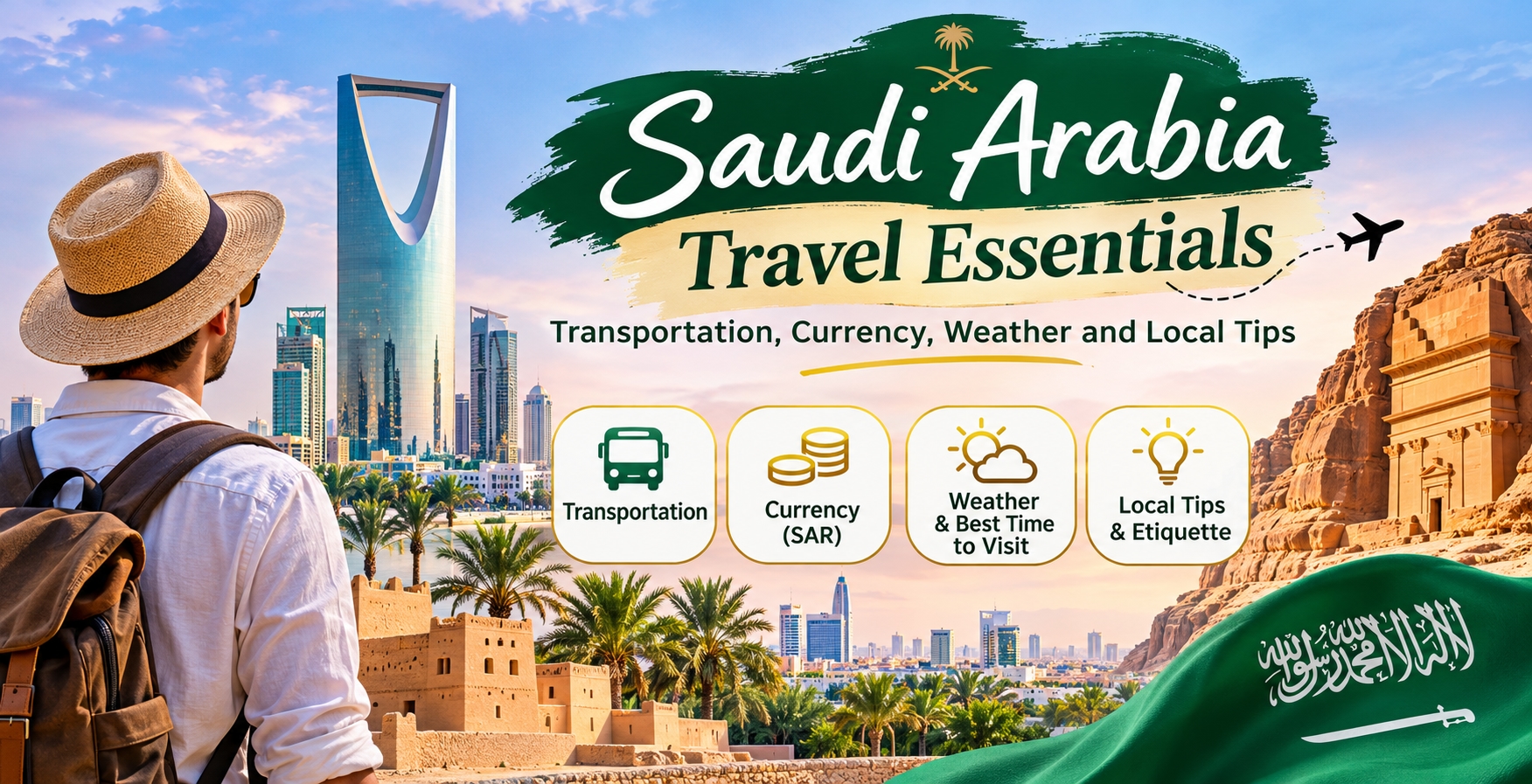
That said, travelling around the country is fairly straightforward once you understand the basics. Whether you are spending a weekend in Riyadh, exploring old Jeddah or heading towards the mountains of Abha, knowing a few things beforehand can make your holiday much easier.
Here are the practical details worth considering before you leave home.
Getting Around Saudi Arabia
One thing many first-time visitors underestimate is the size of Saudi Arabia. Travelling between two destinations may take several hours, even when they appear reasonably close on a map.
In Riyadh, the metro is a convenient option for getting around the city. Public buses are another affordable choice, particularly if you are travelling without much luggage.
For shorter journeys, Uber and Careem are useful. You can book a ride from your phone, see the estimated fare and avoid having to explain complicated directions to a driver.
If Jeddah and Madinah are both on your itinerary, consider travelling by the Haramain High-Speed Railway. It is a comfortable alternative to spending several hours on the road.
Renting a car makes more sense when visiting smaller towns, mountain villages or places outside the main tourist areas. Just remember to check your driving licence eligibility and rental insurance before collecting the vehicle.
For longer journeys, domestic flights may be worth the extra expense.
How Much Cash Should You Carry in Saudi Arabia?
Saudi Arabia uses the Saudi Riyal (SAR). Each riyal consists of 100 halalas.
You will find that most hotels, supermarkets, restaurants and shopping centres accept international bank cards. In larger cities, contactless payments are widely used.
Still, keeping some cash in your pocket is a good idea. Imagine stopping at a small roadside shop for refreshments or buying something from a traditional market. Having a few smaller notes makes these purchases easier.
You can exchange foreign currency at banks, airports and authorised currency exchange centres. However, compare the rates rather than accepting the first offer you receive.
Before leaving home, ask your bank about overseas transaction charges. Several small payments throughout a holiday can add up if your card carries high international usage fees.
What Is the Weather Really Like in Saudi Arabia?
People often picture Saudi Arabia as a country where it is hot throughout the year. While summer temperatures can certainly be intense, the weather varies considerably depending on the region and season.
November through March is generally a comfortable time to visit. Walking through historical neighbourhoods, exploring markets and enjoying outdoor meals becomes much more pleasant during these months.
Summer is a different experience. Temperatures in inland cities can rise above 40°C, making extended afternoon sightseeing difficult.
If you are visiting during summer, plan outdoor activities for the early morning or evening. Spend the hottest hours somewhere indoors.
Mountain destinations such as Abha generally enjoy cooler conditions than many inland cities.
Another thing worth remembering is that desert evenings can get cold during winter. A light jacket might be the last thing you think about when packing for Arabia, but you could be glad you brought one.
Sort Out Your Travel Documents Before Departure
Nobody wants to discover a missing travel document while standing at an airport check-in counter.
Before confirming your travel arrangements, check your passport validity and entry requirements. Travellers from eligible countries can apply online for a Saudi tourist eVisa.
If you are unfamiliar with the application procedure, this guide to applying for a Saudi Arabia tourist eVisa explains the process and helps you understand what documents you may need.
An independent eVisa assistance service can also be helpful if you have questions about application forms, document submissions or processing options. Look for secure payment facilities, accessible customer support and clearly explained refund conditions.
Give yourself enough time to complete the application rather than leaving it until the last few days before departure. Approval remains subject to the decision of the relevant Saudi authorities.
Once approved, save a digital copy of your eVisa on your phone and keep a printed copy with your passport.
What Should Tourists Wear in Saudi Arabia?
You do not need an entirely new wardrobe for your holiday. Comfortable, modest clothing is generally a sensible choice.
Loose trousers, long skirts, breathable shirts and comfortable footwear work well for most everyday outings. Lightweight fabrics are particularly useful during warmer months.
Dress requirements may differ depending on where you are going. Visiting a religious site, for example, requires more consideration than spending an afternoon at a beach resort.
It is also worth carrying sunglasses and a hat if you expect to spend much time outside.
When visiting traditional neighbourhoods, take a moment to observe how people dress and behave. Following local customs shows respect and helps avoid awkward situations.
Buying a SIM Card and Staying Connected
Getting lost in an unfamiliar city is much less stressful when you have internet access.
Saudi mobile network providers, including STC, Mobily and Zain, offer prepaid mobile packages. Travellers with compatible smartphones can also consider purchasing an eSIM.
Having mobile data makes it easier to book taxis, translate Arabic menus, find nearby restaurants and contact your accommodation.
If your plans include a desert excursion, download offline maps beforehand. Mobile coverage may become unreliable once you leave populated areas.
A fully charged power bank is another useful item, especially during long sightseeing days.
Local Traditions Every Visitor Should Know
Saudi hospitality is something many travellers remember long after their holiday. Offering guests Arabic coffee and dates is a familiar tradition, and accepting refreshments can be a pleasant way to experience local culture.
There are, however, some important customs and restrictions to understand.
Ask before taking photographs of strangers, particularly in traditional neighbourhoods. Avoid photographing sensitive government or military locations.
Alcohol is prohibited for ordinary tourists. Public behaviour should remain respectful, and visitors travelling during Ramadan should be mindful of local fasting customs.
Non-Muslim travellers cannot enter Makkah, while certain sacred areas in Madinah also have access restrictions.
Learning a little about these traditions before arriving makes everyday interactions more comfortable.
A Few Things Worth Packing
Besides your usual holiday essentials, consider bringing the following:
Comfortable walking shoes for historical sites.
Sunscreen and a reusable water bottle.
A Type G electrical plug adapter.
A lightweight jacket for cooler evenings.
Personal medication and supporting prescriptions.
A portable phone charger.
Printed copies of important travel documents.
Avoid overpacking if you plan to travel between several cities. Carrying heavy luggage becomes inconvenient when changing hotels frequently.
Small Travel Tips That Make a Big Difference
Save your hotel's address on your phone, preferably in both English and Arabic. Keep some drinking water with you during outdoor excursions, and check attraction opening hours before travelling across town.
Do not feel that you need to visit every famous attraction in one holiday. Saudi Arabia is a large country, and rushing between destinations can leave you spending more time travelling than exploring.
Leave room in your schedule for a traditional meal, an evening walk through a market or a quiet coffee break.
Sometimes, these unplanned moments become the most enjoyable memories of a trip.
Final Thoughts
Saudi Arabia has more variety than many visitors initially imagine. There are busy modern cities, quiet mountain villages, ancient settlements and beautiful stretches of coastline.
Preparing your travel documents, understanding transportation options and packing for the weather are simple steps that can prevent unnecessary difficulties.
Once those arrangements are taken care of, you can concentrate on what you came for: discovering a different culture, trying unfamiliar food and enjoying everything Saudi Arabia has to offer.