Planning a trip to Djibouti? This small country in the Horn of Africa has beautiful coastlines, salt lakes, volcanic landscapes and fascinating local traditions. From the clear waters of the Gulf of Tadjoura to the unusual scenery of Lake Assal, there is plenty to discover.
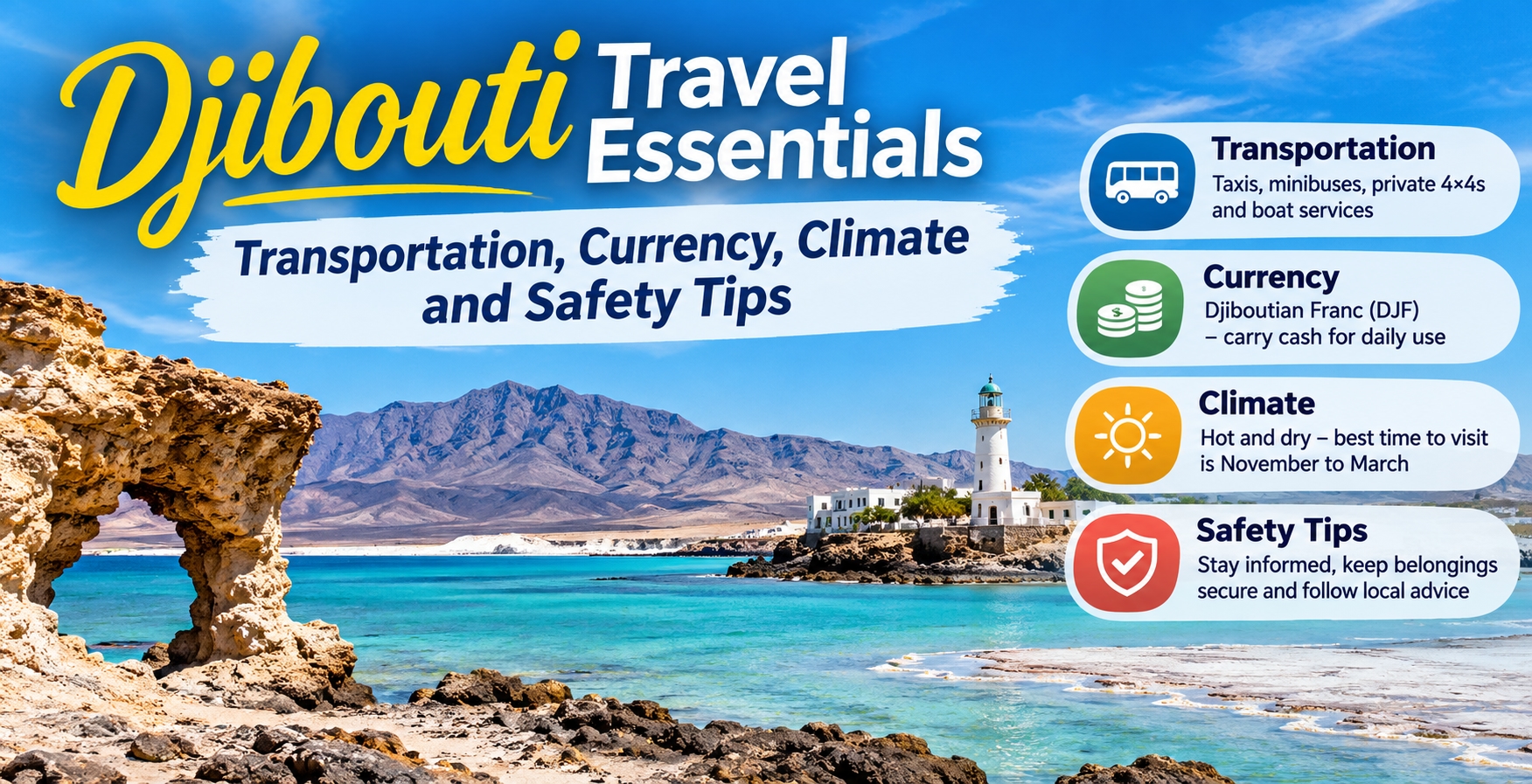
Before travelling, it helps to understand local transportation, money, weather and safety conditions. These practical Djibouti travel tips will help you prepare for a more comfortable journey.
Getting Around Djibouti: Transportation Options
Travelling around Djibouti requires some planning, especially when visiting attractions outside the capital.
Taxis: Taxis are available in Djibouti City and are convenient for short journeys. Agree on the fare before starting your trip, as meters may not be available.
Minibuses: Local minibuses serve different parts of the capital. They are inexpensive but can be crowded and difficult for first-time visitors to navigate.
Private Vehicles: Hiring a trusted driver or arranging a guided 4x4 excursion is a practical choice for visiting remote destinations such as Lake Assal and Lake Abbé.
Boat Services: Passenger boats connect Djibouti City with coastal destinations, including Tadjoura and Obock. Check schedules and weather conditions before travelling.
For greater safety, arrange transportation through reputable operators and avoid unnecessary road journeys after dark.
Djibouti Currency: What Money Should Travellers Carry?
The local currency is the Djiboutian Franc (DJF). It is linked to the US dollar at a fixed exchange rate of approximately 177.72 DJF per USD.
Cash is important for daily expenses, particularly at small restaurants, markets and local shops.
ATMs are available mainly in Djibouti City, although international cards may not always work. Larger hotels may accept credit cards, but carrying local currency is advisable.
Keep smaller banknotes handy for taxis, refreshments and everyday purchases. Exchange money through reliable banks or authorised exchange services.
Djibouti Visa Requirements Before Travelling
International visitors should check their visa requirements before booking flights. Many travellers can apply for an electronic visa before departure, depending on their nationality and travel purpose.
For information about preparing an application, visit the Djibouti Tourism eVisa Application Guide.
This independent visa assistance service offers application support, document guidance and online submission assistance. Travellers should confirm current entry requirements and allow sufficient time for processing before departure.
Djibouti Climate: Best Time to Visit
Djibouti has a hot, dry desert climate, with sunshine throughout much of the year.
November to March: These months generally offer more comfortable temperatures for sightseeing, outdoor excursions and coastal activities.
April to May: Temperatures begin rising, making midday outdoor activities more challenging.
June to September: Extreme summer heat can push temperatures above 40°C, particularly in inland areas.
October brings a gradual return to milder conditions.
Pack lightweight clothing, sunscreen, sunglasses and a reusable water bottle. A hat and comfortable walking shoes are especially useful when exploring desert landscapes.
Essential Safety Tips for Travelling in Djibouti
Safety should remain a priority, particularly when exploring unfamiliar regions.
Check current government travel advisories because some border areas have serious security risks.
Keep passports, money and electronic devices secure.
Avoid walking alone in isolated areas after dark.
Drink safe bottled or properly treated water.
Respect local traditions and dress modestly in public places.
Avoid photographing military sites, government buildings and sensitive infrastructure.
Use experienced local guides for desert excursions.
Comprehensive travel insurance covering medical emergencies and evacuation is also recommended.
Final Thoughts
Djibouti offers a memorable combination of dramatic landscapes, coastal beauty and cultural experiences. Understanding transportation options, carrying enough local currency and choosing the right travel season can make a noticeable difference.
With sensible safety precautions and proper travel documents, visitors can enjoy discovering this distinctive East African destination.