Malaysia Advertising Market: Industry Report 2026-2034
The Malaysia advertising market size reached USD 2,967.1 Million in 2025 and is projected to reach USD 4,150.6 Million by 2034, exhibiting a compound annual growth rate (CAGR of 3.69%) during the 2026-2034 forecast period. The market continues to evolve as advertisers shift budgets toward digital, mobile, and data-driven formats while maintaining a role for television, print, radio, outdoor, and cinema. Driven by digital transformation, changing consumer behavior, growing brand competition, and rising adoption of programmatic advertising, the industry remains a key enabler of Malaysia’s consumer economy. The overall advertising industry in Malaysia remains resilient, supported by mobile-first strategies, short-form video, retail media, and creator-led marketing.
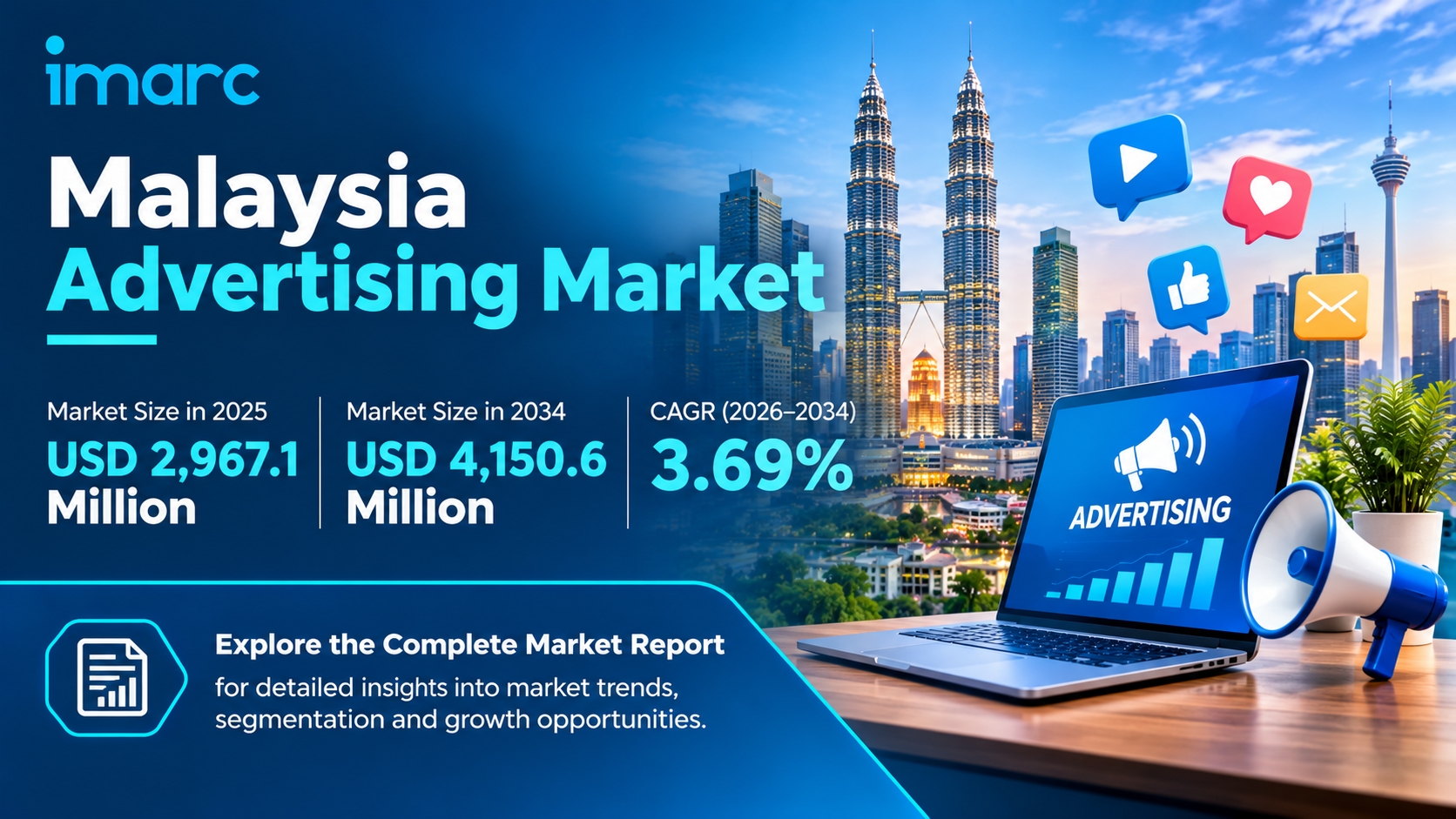
Market Size and Growth Forecast
Market Size in 2025: USD 2,967.1 Million.
Market Forecast in 2034: USD 4,150.6 Million.
Compound Annual Growth Rate (CAGR): 3.69% during the 2026--2034 forecast period.
Underpinning Momentum: Digital transformation, mobile-first consumption, programmatic buying, growing brand competition, interactive and video formats, and a focus on transparency and trusted influencer partnerships are supporting long-term market development.
Emerging Trends
Digital Formats Taking the Lead: In June 2024, digital formats accounted for 76% of total advertising revenue in Malaysia, overtaking television, print, radio, and out-of-home. Mobile-first strategies, short-form video, display, and search are capturing a larger Malaysia advertising market share.
Shift Toward Interactive and Creator-Led Content: Advertisers are moving toward interactive formats such as video stories, user-generated content, and targeted search, using creators and micro-communities to build authentic engagement with niche audiences.
Creativity and Agility Under Budget Pressure: Marketers are prioritizing efficient, flexible campaigns using retail media, AI-enhanced copy, and creators. Smaller budgets are encouraging experimentation and faster optimization based on performance data.
Transparency and Trust in Advertising: Advertisers are emphasizing vetted influencer partnerships, clear data-use communication, and owned channels such as newsletters and brand communities. Malaysia’s media trust index rose to 52 in March 2025.
Key Growth Drivers
Digital Transformation Across Industries: Businesses of all sizes are moving marketing online, using social, search, and video platforms to reach consumers. This shift is expanding the base of advertisers, including small and medium enterprises that previously relied on traditional media.
Changing Consumer Behavior: Consumers are spending more time on smartphones, social platforms, and streaming content. Advertisers are following attention, increasing investment in mobile, video, and platform-based formats that offer targeting and measurable results.
Growing Brand Competition: Intense competition across retail, e-commerce, financial services, and consumer goods is pushing brands to invest in visibility, differentiation, and customer engagement, supporting steady advertising demand across channels.
Rising Adoption of Programmatic Advertising: Automated, data-driven buying is improving targeting, efficiency, and measurement, helping advertisers optimize spend across display, video, and mobile and supporting Malaysia advertising market growth.
Rise of Retail Media and Out-of-Home Innovation: New formats such as retail media and in-car advertising are creating fresh inventory. In June 2025, AirAsia Media and Xoomplay Technologies partnered to launch in-car tablet advertising aboard AirAsia Ride vehicles.
Focus on Measurable, Performance-Led Marketing: Marketers are prioritizing return on investment, using analytics and attribution tools to refine campaigns, shifting more spend to channels with clear, trackable outcomes.
Evaluate Market Opportunity Before Investing - Request for a Sample Report
Government Policy Support
MyDIGITAL and Malaysia Digital Economy Blueprint: The national blueprint promotes digital adoption across businesses and consumers, expanding the online audience and encouraging brands to invest in digital advertising.
Malaysia Digital Economy Corporation (MDEC) Initiatives: MDEC programs support digital businesses, content creators, and technology adoption, strengthening the ecosystem that powers online advertising and creative services.
National Creative Industry Policy: Support for creative industries, including content, design, and media, nurtures talent and production capacity that advertisers and agencies rely on for campaigns.
Communications and Multimedia Act Framework: The regulatory framework and content code guide responsible advertising and digital media practices, building trust and clarity for advertisers and platforms.
National Fourth Industrial Revolution Policy: The policy encourages adoption of AI, data analytics, and advanced technologies, supporting programmatic buying, targeting, and measurement tools in advertising.
Market Segmentation Breakdown:
Type Insights:
Television Advertising
Print Advertising (Newspaper Advertising, Magazine Advertising)
Radio Advertising
Outdoor Advertising
Internet Advertising (Search Advertising, Display Advertising, Classified Advertising, Video Advertising)
Mobile Advertising
Cinema Advertising
Regional Insights:
Selangor
W.P. Kuala Lumpur
Johor
Sarawak
Others
By IMARC Group - Top Competitive Landscape & Positioning:
Covering an in-depth analysis of the competitive landscape, market structure, key player positioning, competitive dashboards, top winning strategies, and detailed profiles of all major industry participants you will gain access to all these exclusive insights within the full research report.
Key participants shaping Malaysia’s advertising landscape include:
Television, radio, and print media owners
Outdoor and cinema advertising operators
Digital, mobile, and programmatic advertising platforms
Advertising agencies, creative studios, and influencer marketing partners
Emerging media networks such as AirAsia Media, a division of Capital A
Recent News & Developments:
AirAsia Media and Xoomplay Partnership: In June 2025, AirAsia Media and Xoomplay Technologies signed a partnership to launch in-car tablet advertising aboard AirAsia Ride vehicles in key Malaysian cities, positioned within Capital A’s ecosystem, which includes AirAsia MOVE and in-flight media.
Rising Media Trust: In March 2025, Malaysia’s media trust index rose to 52, signaling improving confidence in advertising and media as brands emphasize transparency and vetted partnerships.
Note: If you need specific information that is not currently within the scope of the report, we can provide it to you as a part of the customization.
Request Customized Data Tailored to Your Interest
Frequently Asked Questions (FAQs):
Q1. What is driving the growth of Malaysia’s advertising market?
Growth is fueled by digital transformation, changing consumer behavior, growing brand competition, and rising adoption of programmatic advertising, with advertisers increasingly favoring mobile, video, and data-driven formats.
Q2. How big is the Malaysia advertising market?
The Malaysia advertising market reached USD 2,967.1 Million in 2025 and is expected to reach USD 4,150.6 Million by 2034, growing at a CAGR of 3.69% during 2026--2034, reflecting steady, digitally led expansion.
Q3. How much of advertising revenue is digital?
In June 2024, digital formats accounted for 76% of total advertising revenue in Malaysia, overtaking television, print, radio, and out-of-home, highlighting the shift toward mobile-first and online advertising strategies.
Q4. Which advertising types does the report cover?
The report covers television, print (newspaper and magazine), radio, outdoor, internet (search, display, classified, and video), mobile, and cinema advertising, offering a complete view of the media mix.
Q5. Which regions are covered in the Malaysia advertising market?
The regional analysis covers Selangor, W.P. Kuala Lumpur, Johor, Sarawak, and Others, reflecting concentrated advertising activity in major commercial and urban centers.
Q6. What challenges does the market face?
Economic strain, shifting consumer priorities, and tighter budgets have pressured advertisers, who are responding by prioritizing creativity, agility, retail media, and trusted creator partnerships to deliver measurable results.
Strategic Insight & Verdict:
The Malaysia advertising market is a mature, digitally led market where growth comes from efficiency, targeting, and new formats rather than volume alone. With digital accounting for 76% of advertising revenue in June 2024, mobile-first and programmatic strategies are now central to planning. The market is projected to grow from USD 2,967.1 Million in 2025 to USD 4,150.6 Million by 2034 at a 3.69% CAGR.
The convergence of digital transformation, creator-led marketing, retail media, and rising emphasis on transparency positions the sector as a steady opportunity for media owners, agencies, and ad-tech providers. For investors and marketers, the most compelling opportunities lie in mobile and video advertising, programmatic platforms, retail media, and innovative out-of-home formats such as in-car advertising, making this one of the most dynamic media markets in Southeast Asia.