Blockchain founders have several ways to raise capital, but investors still ask familiar questions: What will the business build? How will funds be used? What rights come with the investment? These questions shape the choice between an initial coin offering (ICO), venture capital, angel investment, and traditional funding.
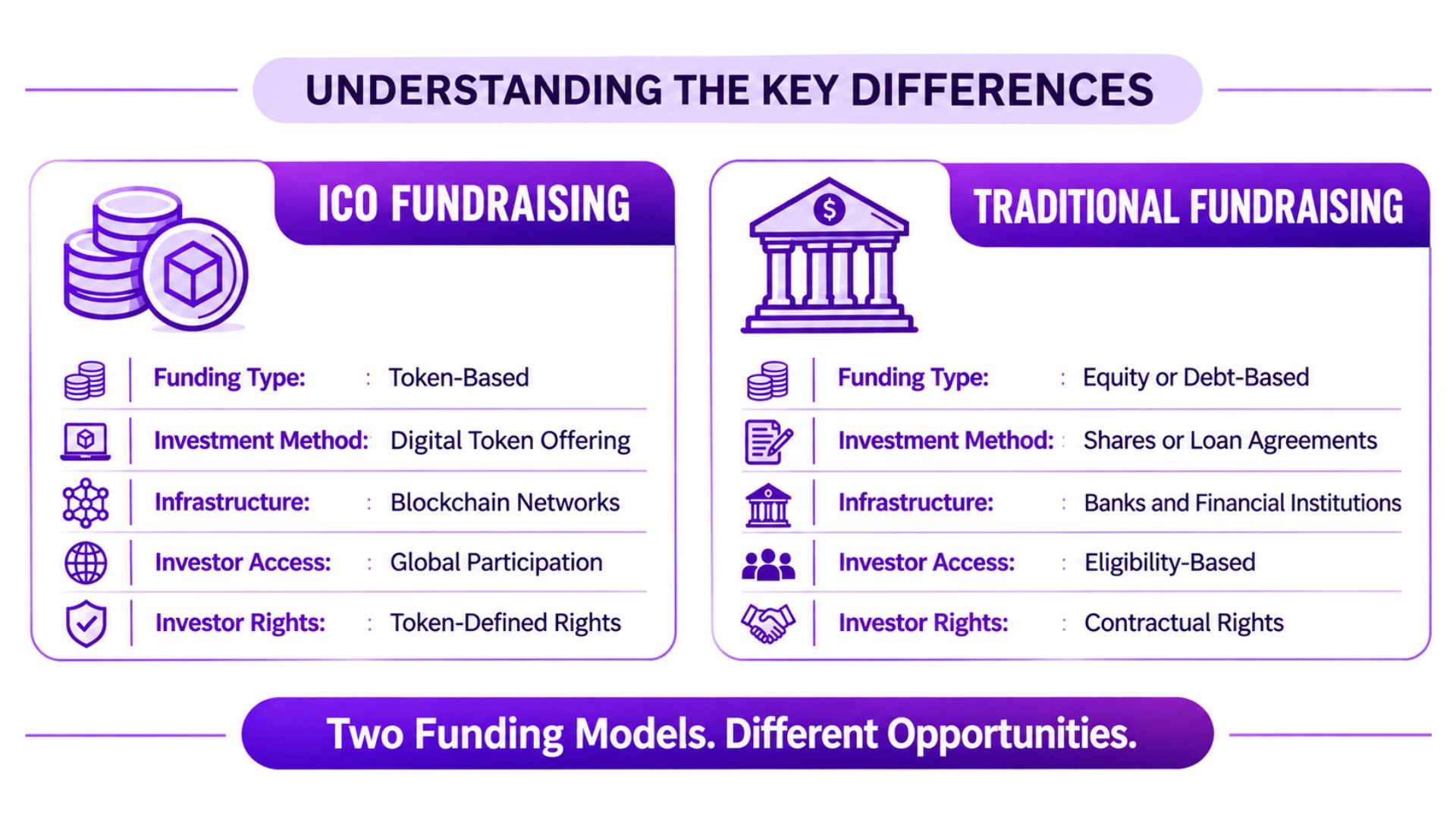
For founders considering ICO Development, a token offering creates a digital route to fundraising. Traditional fundraising usually involves investors or lenders and agreements based on equity or debt. The right blockchain project funding route depends on the business model, funding needs, target investors, and applicable regulations.
What Is ICO Development? Understanding Token-Based Fundraising
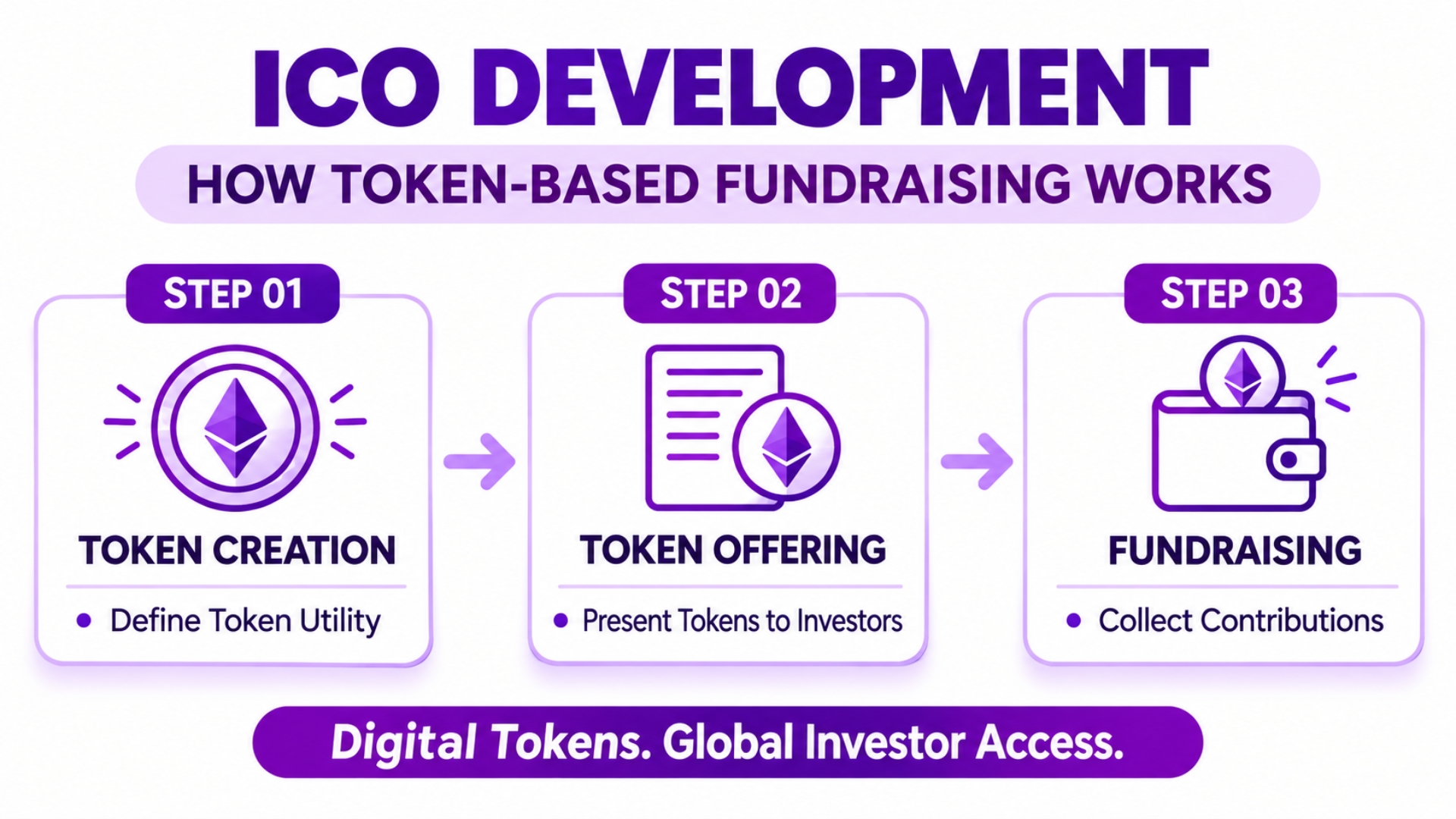
An Initial Coin Offering (ICO) provides blockchain projects with a token-based approach to raising capital. Understanding how token creation, token offerings, and investor participation work helps founders evaluate this fundraising model.
What Is Traditional Fundraising? Exploring Conventional Funding Methods
Traditional fundraising includes established ways to secure business capital. Equity financing involves selling part of a company to angel investors or venture capital firms. Debt financing means borrowing money and repaying it under agreed terms. Depending on its stage, a startup may also consider grants, accelerators, or regulated crowdfunding.
These routes can bring support beyond funding, including industry knowledge and business connections. Founders should weigh that value against ownership dilution, repayment commitments, investor expectations, and due diligence time.
ICO Development vs. Traditional Fundraising: Key Differences
ICO fundraising and traditional funding follow different approaches to capital generation, investor participation, and funding structures. Comparing these models helps blockchain founders understand which option aligns with their business goals.
Pros and Cons of ICO Funding and Traditional Fundraising
ICO fundraising may suit a project whose product has a clear use for a token, such as accessing a blockchain service or participating in a network. It creates a route for digital token distribution, while requiring work on token utility, smart contract security, disclosures, and investor communication. Token holders do not automatically own part of the issuing company; their rights depend on the token and offering terms.
Traditional funding can offer a familiar process and experienced business partners. However, equity can reduce founders' ownership, while debt creates repayment obligations. Both routes involve scrutiny, and neither guarantees that a project will raise the capital it needs.
Legal, Regulatory, and Compliance Considerations
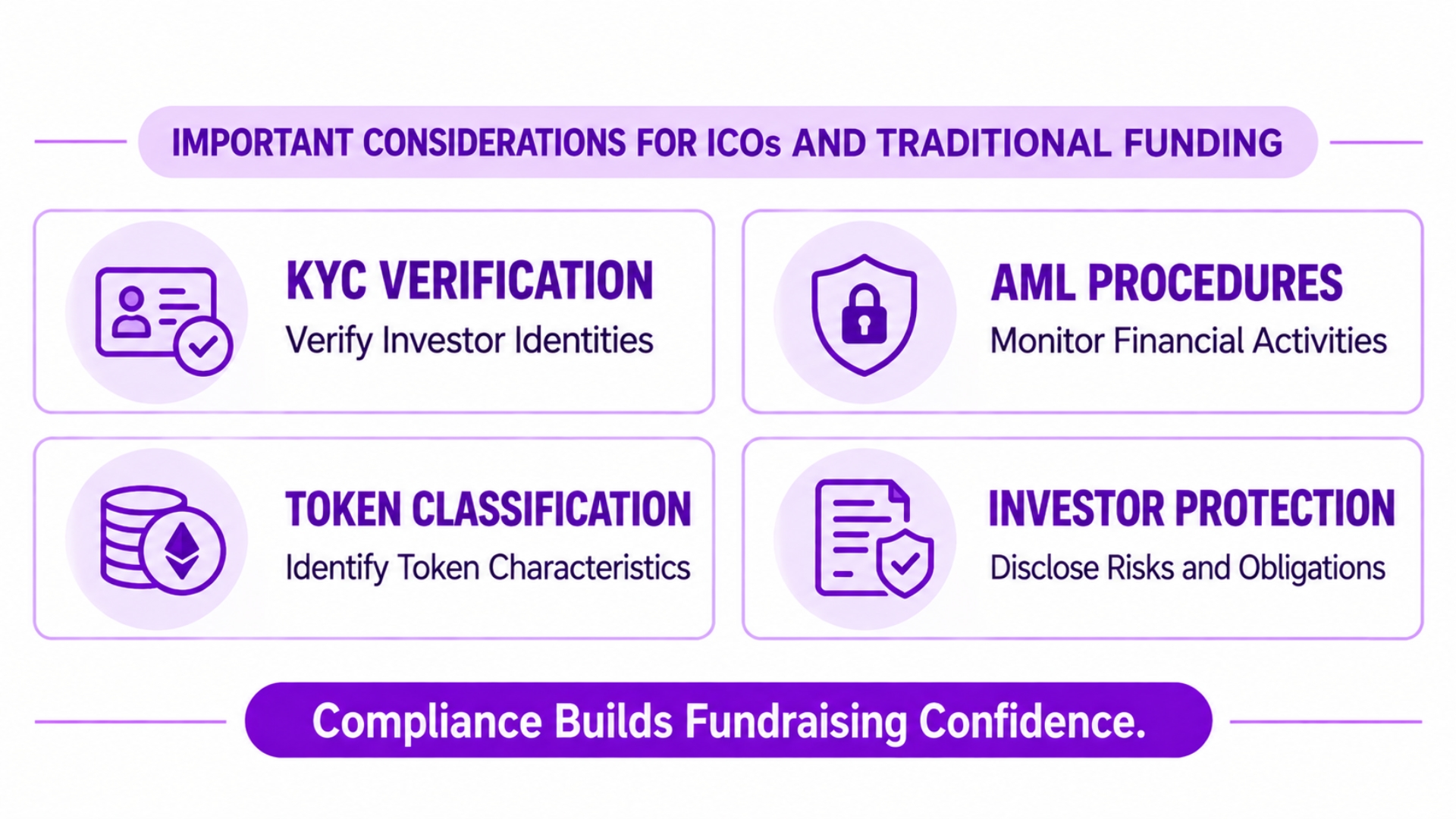
Fundraising involves legal responsibilities that can vary depending on the funding structure and jurisdiction. KYC verification, AML procedures, token classification, and investor disclosures are important considerations when evaluating an ICO or traditional funding route.
How to Choose the Right Fundraising Model for Your Blockchain Project in 2027
Begin with the business model. If a token has a genuine role in the product, assess whether an ICO is suitable and legally available in your target markets. If the project needs strategic guidance or product validation, venture capital or angel investment may be a stronger fit. Compare costs, control, investor expectations, reporting duties, and timelines before deciding.
The Future of Blockchain Fundraising: Is ICO Development the Right Move?
In 2027, credible products, clear disclosures, thoughtful token design, and compliance planning will shape fundraising decisions. Before hiring an ICO Development Company, review its blockchain experience, token architecture, smart contract security practices, and ability to work with qualified legal and compliance advisers. An ICO may suit some projects; others may be better funded through equity, debt, or a mix of options.