Real-world asset tokenization is creating new ways to represent assets such as real estate, private credit, commodities, and investment funds digitally. But developing an RWA tokenization platform involves more than converting assets into tokens. Businesses must first understand how ownership will be represented, who can invest, how assets will be managed, and what rules govern token transfers. These decisions influence the platform's structure, technology, and long-term operations. A clear business plan helps ensure that RWA Tokenization Platform Development addresses practical requirements rather than focusing only on token issuance.
Define Your Business Model Before Developing an RWA Platform
Before choosing a blockchain or development approach, decide what the platform will actually support. Will it serve property owners, fund managers, private lenders, or multiple asset categories? Identify the asset types, investor segments, revenue model, and services the platform needs to provide.
Also map the asset lifecycle, from sourcing and verification to token issuance, investor onboarding, ongoing management, and transfers. For example, a real estate platform may require property documentation and valuation workflows, while a private credit platform may need loan servicing and repayment tracking. These differences should shape the platform architecture from the beginning.
Legal Ownership, Asset Verification & Regulatory Compliance
One important consideration is the legal relationship between the physical asset, the entity holding it, and the digital token. Issuing a token does not automatically transfer legal ownership of an underlying asset. Businesses need appropriate legal structures, supporting documentation and jurisdiction-specific guidance to establish what rights each token represents.
Asset due diligence, ownership verification, custody arrangements and investor eligibility also need attention. Depending on the business model and jurisdiction, KYC, AML, and transfer restrictions may apply. Addressing these requirements early helps prevent gaps between the platform's digital records and its legal and operational processes.
Essential Features Every RWA Tokenization Platform Needs
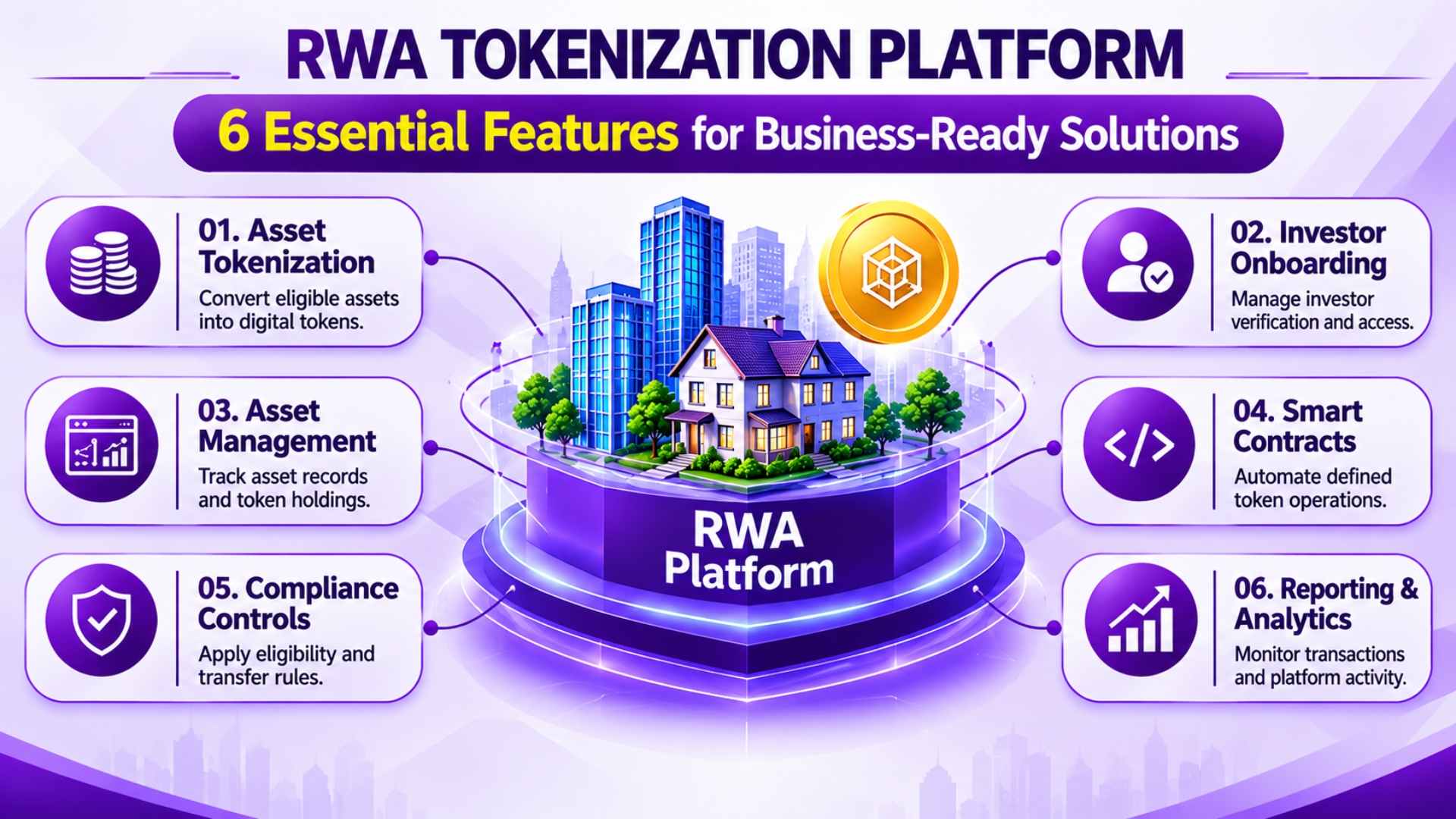
Building an RWA tokenization platform involves more than issuing digital tokens. Explore six essential features that support asset management, investor onboarding, smart contract automation and platform operations.
Smart Contracts, Security & Blockchain Infrastructure
The blockchain should support the platform's actual operating requirements, including privacy, transaction capacity, integration needs, governance, and operating costs. Smart contracts can automate token issuance, payment distribution, and permitted transfers, but their rules must reflect the legal and commercial agreements behind each asset.
Security planning should go beyond deploying smart contracts. Businesses should consider independent code reviews, testing, wallet security, key management, access controls, and upgrade procedures. Integrations with identity verification, custody providers, and asset data systems also need to be considered. A secure RWA platform depends on the complete technology environment, not just the blockchain network.
Investor Management, Interoperability & Liquidity Considerations
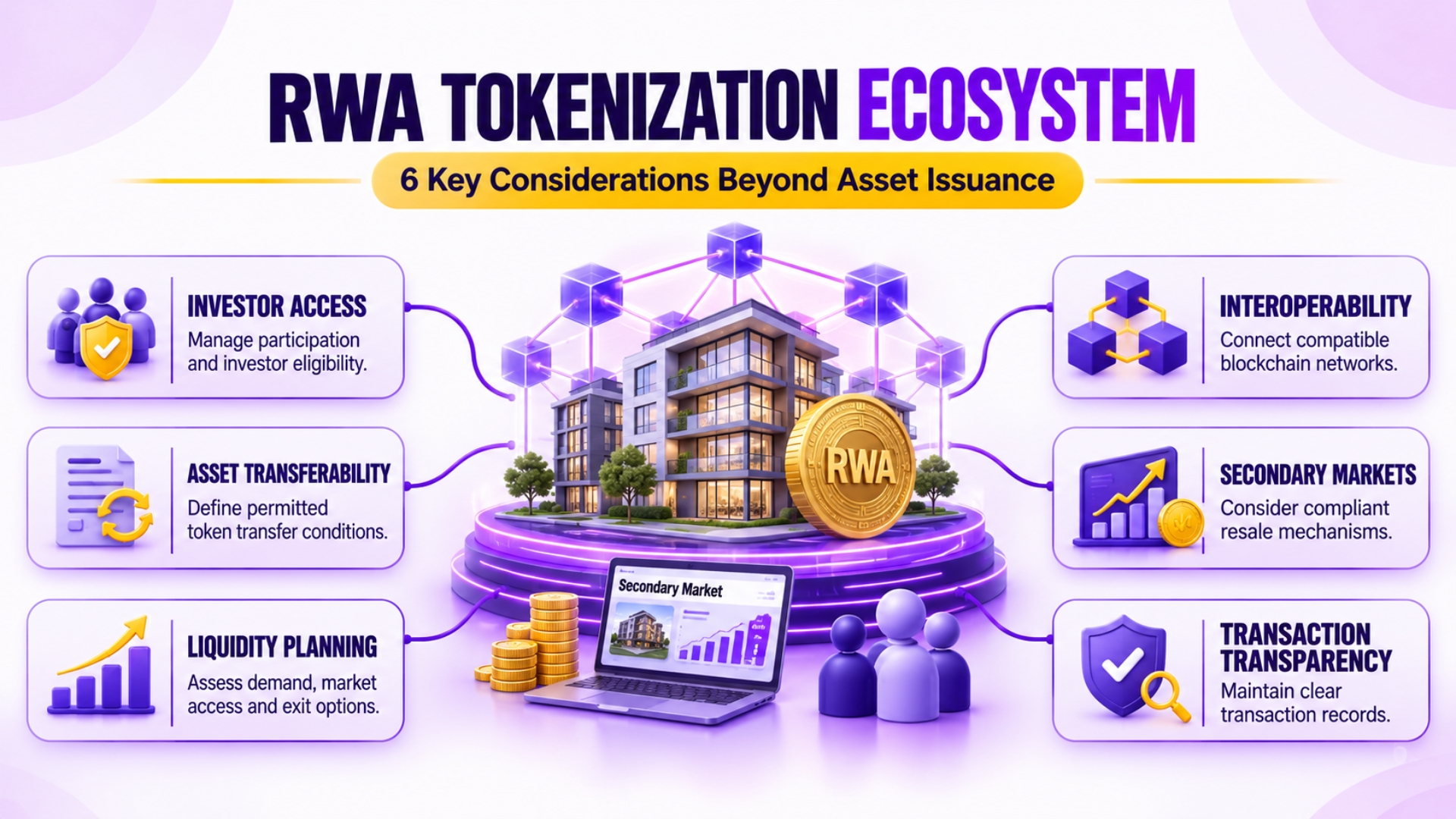
A successful RWA ecosystem requires more than token issuance. Investor access, blockchain interoperability, asset transferability and liquidity planning all influence how tokenized assets participate in digital markets.
Conclusion: Why Choose an RWA Tokenization Platform Development Company?
A successful RWA platform needs business planning, legal clarity, reliable asset records, investor management, and secure technology working together. Companies should also evaluate interoperability, transfer conditions, and realistic secondary-market options. Tokenization alone does not guarantee liquidity; that depends on investor demand, market access, and applicable regulations.
Working with an experienced RWA Tokenization Platform Development Company can help bring these requirements together in a platform aligned with the business model. Osiz Technologies supports businesses exploring RWA tokenization platform development, including the technical planning and platform capabilities needed for their use cases.
Planning a white-label RWA tokenization platform? Explore the development possibilities with Osiz Technologies.