HydraFacial in Mohali: who it’s for (and why a dermatology consult matters)
If you’re searching for a HydraFacial in Mohali (or Chandigarh), you’re probably in a very specific headspace.
You want your skin to look better. Fast. You want that clean, smooth, just came back from a vacation kind of glow. And you want it safely, because nobody has time for a facial that turns into redness, bumps, or a week of regret.
Here’s the thing though. HydraFacial is often marketed like a “quick salon facial”, but when it’s done properly, it’s closer to a medical grade skin procedure. The difference is not the machine. It’s the oversight, the settings, and the products chosen for your actual skin problem.
That’s why a dermatology consult matters. Customization matters more than discounts. And honestly, any clinic promising “perfect skin in one session” should make you pause. Instant glow is common, yes. But perfect skin claims are usually a red flag.
In this article, I’ll walk you through:
what a HydraFacial actually does (without the jargon)
how to choose a skin clinic in Mohali for safe results
who should avoid it, or postpone it
what aftercare should look like
how to handle side effects like redness, irritation, or peeling if they happen
The goal is simple. Get the benefits, avoid the complications.
What a HydraFacial actually does (in plain English)
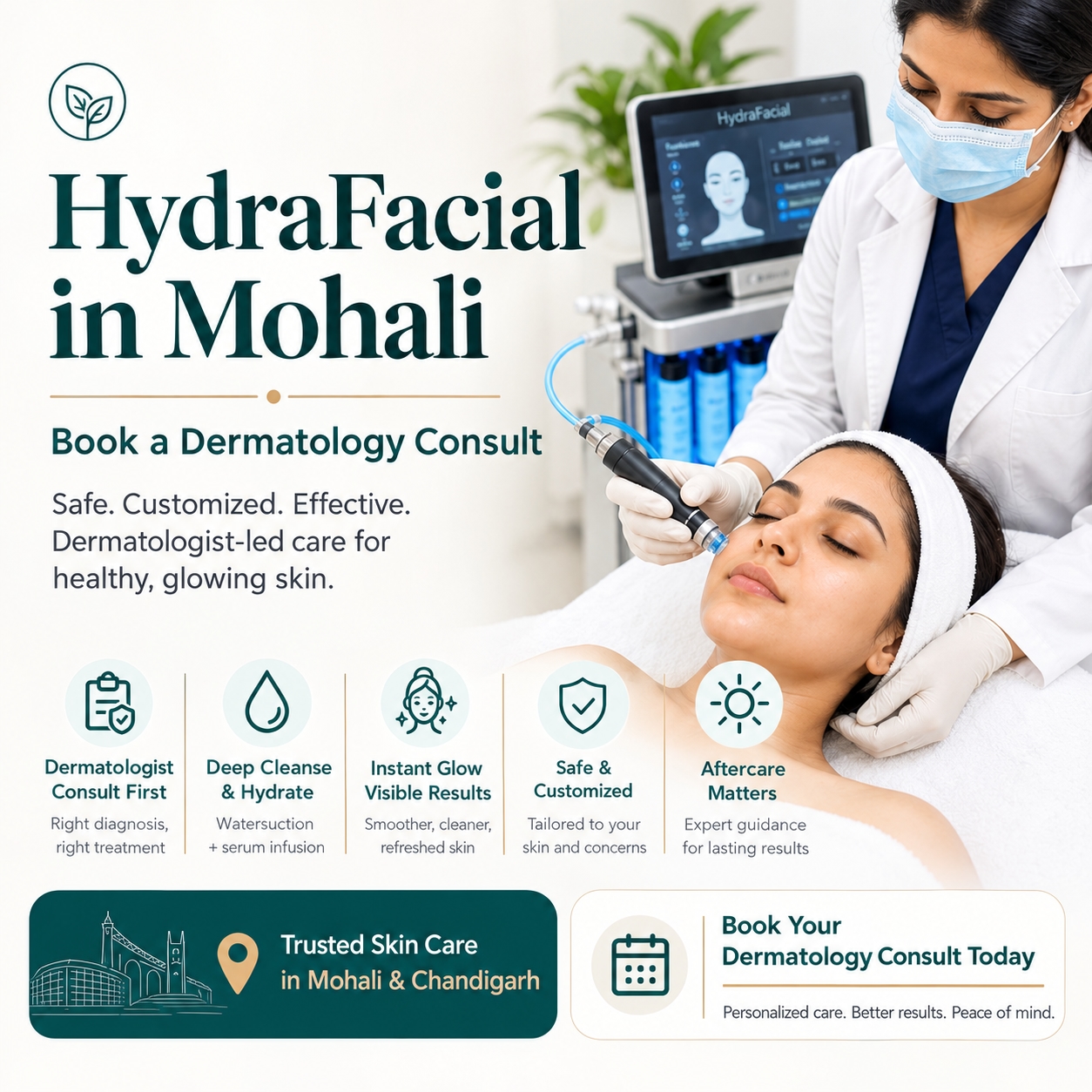
A HydraFacial is basically a structured, step by step skin cleaning and hydrating treatment that combines exfoliation, suction based extractions, and serum infusion.
Most sessions follow a flow like this:
Cleanse and exfoliate
Dead skin and surface oil get loosened up.
A gentle peel step
Usually mild acids, meant to soften debris inside pores and smooth the top layer. This is not the same as a deep chemical peel, but still, it’s exfoliation.
Extractions using suction
This is where HydraFacial is different from the typical “manual extractions” facial. Instead of squeezing pores (which can be harsh and cause marks), the device uses controlled suction to pull out gunk.
Hydration and serum infusion
Hydrating and calming serums are infused back into the skin. This part is why people get that dewy look right after.
Protection (varies by clinic)
Some clinics finish with soothing products, sunscreen, or LED.
You’ll hear the word “vortex” a lot. In simple terms, it’s a spiral tip that helps loosen debris and pull it out while delivering fluids. Less tugging, less pinching. And for many people, less trauma than old school extractions.
Common add ons you may see at a HydraFacial skin clinic
Hydrafacial skin clinic you might be offered:
Boosters (for pigmentation, hydration, calming, anti aging)
LED light therapy (often for acne inflammation or calming)
Lymphatic drainage (for puffiness)
These are not automatically good or bad. They should be chosen based on your skin concern, not because it’s a package.
What it can help with
HydraFacial can be great for:
congestion and blackheads
dullness and roughness
mild texture issues
dehydration and flaky looking skin
uneven tone
superficial pigmentation (depending on cause)
What it won’t do
It’s not a cure all. It won’t fix:
deep acne scars
significant melasma (it often needs careful medical management)
severe rosacea flares
chronic dermatitis issues
For those, you need a dermatologist led plan. Sometimes HydraFacial can be part of that plan. But it’s not the whole plan.
Why you should book a dermatology consult before your HydraFacial
A consult sounds boring, I know. People skip it because they assume a facial is a facial.
But skin is weird. Two people can look like they have “acne” and actually have totally different things going on.
A dermatologist helps confirm what you’re actually treating. For example:
acne vs rosacea (very different skin behavior)
fungal acne vs regular acne
contact dermatitis vs “sensitive skin”
barrier damage from over exfoliation vs true oiliness
And once the diagnosis changes, the HydraFacial approach should change too.
What a dermatologist customizes (that most people never think about)
A proper consult helps adjust things like:
suction intensity (higher is not “better”, it’s just harsher)
peel strength (and whether you should even do that step)
which boosters are safe for you
which areas to avoid (active pimples, inflamed patches, fragile skin)
timing if you’re already on acne treatment, pigmentation creams, or have an event coming up
How a consult reduces risk
Many side effects come from treating the wrong skin on the wrong day.
A consult can catch:
a damaged skin barrier
a history of over exfoliation (scrubs, acids, retinoids layered together)
allergy risk (salicylic acid, fragrance, preservatives)
active infections (yes, this matters)
recent procedures that your skin is still recovering from
If you’re in Mohali looking for the best HydraFacial results, this is the truth: it’s mostly about correct candidate selection + correct protocol. Not the strongest setting, not the fanciest serum name.
Who should avoid HydraFacial (contraindications and “not today” situations)
This section is not meant to scare you. It’s meant to keep you from booking on the exact wrong day.
If any of the below applies, it’s a “check with a dermatologist first” situation, and sometimes a “not today” situation.
Common contraindications and precautions
Active skin infection, including herpes or cold sores
Open wounds, cuts, or actively healing scabs
Severe sunburn
Uncontrolled rosacea flare
Active eczema or dermatitis flare
Medication related cautions
Recent isotretinoin use (the safe timeline varies, let your dermatologist decide)
Currently using strong topical retinoids or doing home peels
Photosensitizing medications (your dermatologist will tell you if it changes the plan)
Allergy and sensitivity cautions
Salicylic acid or aspirin allergy
Known fragrance sensitivity
Past reactions to chemical exfoliants or peels
Procedure timing issues
Avoid scheduling HydraFacial too close to:
lasers
deep chemical peels
microneedling
aggressive waxing or threading (especially if your skin gets easily irritated)
Spacing matters. Stacking procedures is how people end up with barrier damage.
Pregnancy and breastfeeding
You can still get skin treatments during pregnancy sometimes, but certain peel ingredients or boosters may be avoided. A dermatologist can modify the protocol so it stays conservative and safe.
What to expect after HydraFacial: normal vs. not normal
Most people walk out looking shiny in a good way. Like polished.
Normal, same day
mild tightness
slight redness (especially around the nose)
a dewy or glossy look
mild sensitivity to touch
This usually settles within a few hours.
Next day expectations
makeup is usually fine (if your skin feels calm)
skin feels smoother
mild dryness can happen, especially if you were already dehydrated
Not normal, contact the clinic or dermatologist
intense burning or pain
hives or itchy raised bumps
worsening swelling
blistering
crusting
pus filled bumps that weren’t there before
Also, a quick reality check. Glow is often immediate. But congestion and texture improvements can take a few sessions depending on how blocked your pores were to begin with.
And if you had strong “peel like” after effects, it’s often from add on acids or overly aggressive settings. Which loops back to the consult.
HydraFacial side effects: redness and irritation after treatment (causes + what to do)
A bit of redness is common. It can happen because suction increases circulation and you’ve just exfoliated the surface.
What’s more annoying is when redness turns into irritation.
Why irritation happens
Common triggers include:
over exfoliation (especially if you were using acids or retinoids already)
suction set too high
sensitive skin type that needed a gentler approach
active acne inflammation getting overstimulated
using incompatible actives before or after the facial
allergy to a serum or booster
A simple calming plan (generally safe)
cool compress for a few minutes
gentle, fragrance free moisturizer
gentle cleanser (no actives)
mineral sunscreen the next morning
And yes, skip scrubs, acids, and retinoids for a short window, based on what your dermatologist tells you.
What to avoid immediately after
hot showers, sauna, steam
intense workouts the same day
alcohol based toners
picking at pores (even if they look “ready”)
When to contact your dermatologist
If redness lasts more than 24 to 48 hours, or if you notice worsening stinging, swelling, rash, or patchy welts, don’t wait it out. Check in.
“I had HydraFacial and my face is peeling” why it happens and how to fix it safely
Mild flaking can happen after HydraFacial. It doesn’t always mean something went wrong, but it does mean your barrier is asking for a gentler few days.
Why peeling happens
Peeling can occur due to several reasons:
The peel step or added acids were a bit strong for your skin
Your skin was already dry or dehydrated going in
You used actives too soon after (or even right before)
Peeling vs irritation dermatitis (important difference)
It's crucial to differentiate between mild peeling and irritation dermatitis.
Mild peeling: light flakes, a bit of dryness, not much pain
Irritation dermatitis: burning, painful cracking, redness that keeps getting worse
The second one needs medical advice. Don’t just keep applying random products.
What not to do
If you experience peeling skin, remember these tips:
Don’t manually peel the skin
Don’t use scrubs
Avoid AHAs, BHAs, retinoids for a few days (or as your dermatologist advises)
Follow up with the clinic
Ask what was used:
Which solutions, boosters, acids
Whether suction or peel was “turned up”
Take clear photos in daylight. It helps your dermatologist judge what’s going on without guessing.
How to prevent it next time
To avoid over-exfoliating next time:
Adjust your pre-treatment routine (often less is more)
Do barrier prep if your dermatologist suggests it
Choose a milder protocol and build up slowly
Dermatology led HydraFacial aftercare (a simple 48 hour plan)
Aftercare is not fancy. It’s mostly about not messing up your skin barrier right after you’ve exfoliated it.
Day 0 (same day)
Gentle cleanse at night
Bland moisturizer (no actives, no fragrance)
Skip actives completely
Avoid heat, workouts, and facial massage
Day 1
continue the gentle routine
makeup is fine if your skin feels calm
reapply sunscreen if you’re out
drink water, but also moisturize, hydration is inside and outside
When to restart actives
Retinoids, acids, vitamin C, all of this depends on:
how sensitive you are
what was used in the treatment
whether you had any irritation
So follow your dermatologist mohali or clinic instructions. Don’t play chemist at home.
Mohali and Chandigarh sun note
Even if it doesn’t feel like peak summer, UV exposure is still real. After exfoliation, sun protection matters more. SPF is not optional if you care about pigmentation and redness.
If you’re on acne or pigmentation prescriptions
Coordinate timing. Don’t combine prescription creams with clinic boosters on your own. That’s how people end up over exfoliated and inflamed.
How to book a HydraFacial dermatology consult in Mohali (and what to share beforehand)
If you want the safest version of HydraFacial, book a dermatology consult first. Then schedule the facial with a clinic that can handle side effects responsibly, not one that disappears after payment.
What to send before the appointment
If the clinic allows WhatsApp or email details beforehand, share:
your current skincare list (even face washes and sunscreens)
any prescriptions you use (acne, pigmentation, steroid creams, retinoids)
history of reactions, allergies, or sensitive skin episodes
recent procedures (laser, peel, microneedling, waxing/threading)
pregnancy or breastfeeding status if relevant
Photos to share (optional, but helpful)
Bare face, daylight, no filters. Front, left, right.
It feels awkward, but it saves time and reduces guessing, especially for acne marks, redness, texture, and pigmentation.
What a good in clinic flow looks like
skin analysis and discussion of your main concern
contraindication check
protocol selection (including what to avoid)
consent
patch test if indicated
aftercare handout or clear written instructions
How to evaluate your first visit
You should feel assessed, not sold to.
The clinic should explain why they are choosing certain steps or skipping others. And they should be comfortable saying, “Not today” if your skin needs barrier repair first.
If you’re ready to move forward, the simplest approach is this: book the consult first, get a personalized plan, then do the HydraFacial session with the right settings and the right products for your skin. That’s how you get the glow, without the drama.
FAQs (Frequently Asked Questions)
What is a HydraFacial and how does it work?
A HydraFacial is a structured skin treatment combining cleansing, exfoliation, gentle peeling, suction-based extractions, and serum infusion. It removes dead skin and debris from pores using a spiral tip called a 'vortex,' hydrates the skin with calming serums, and often finishes with protective products like sunscreen or LED therapy for a fresh, glowing look.
Who should consider getting a HydraFacial in Mohali?
HydraFacial is ideal for individuals dealing with congestion, blackheads, dullness, rough texture, dehydration, uneven tone, or superficial pigmentation. It's perfect if you want fast, safe skin improvement with minimal downtime and a natural glow.
Why is a dermatology consultation important before undergoing a HydraFacial?
A dermatology consult helps accurately diagnose your skin condition—distinguishing between acne types, rosacea, dermatitis, or barrier damage—which ensures the HydraFacial treatment is customized safely. This reduces risks of side effects by adjusting suction intensity, peel strength, boosters used, and avoiding sensitive areas.
What are common add-ons to HydraFacial treatments and should I get them?
Common add-ons include boosters targeting pigmentation or anti-aging, LED light therapy for calming inflammation or acne, and lymphatic drainage for puffiness. These should be chosen based on your specific skin concerns during your dermatology consultation rather than as part of generic packages.
Are there any skin conditions that HydraFacial cannot treat effectively?
Yes. HydraFacial is not suitable for deep acne scars, significant melasma requiring medical management, severe rosacea flares, or chronic dermatitis issues. Such conditions need comprehensive dermatologist-led treatment plans where HydraFacial might be just one component.
How can I ensure safe and effective results from my HydraFacial in Mohali?
Book a consultation with a qualified dermatologist to customize your treatment plan. Choose clinics that prioritize medical oversight over discounts and avoid promises of 'perfect skin in one session.' Follow recommended aftercare to manage potential side effects like redness or irritation and maintain your skin's health post-treatment.