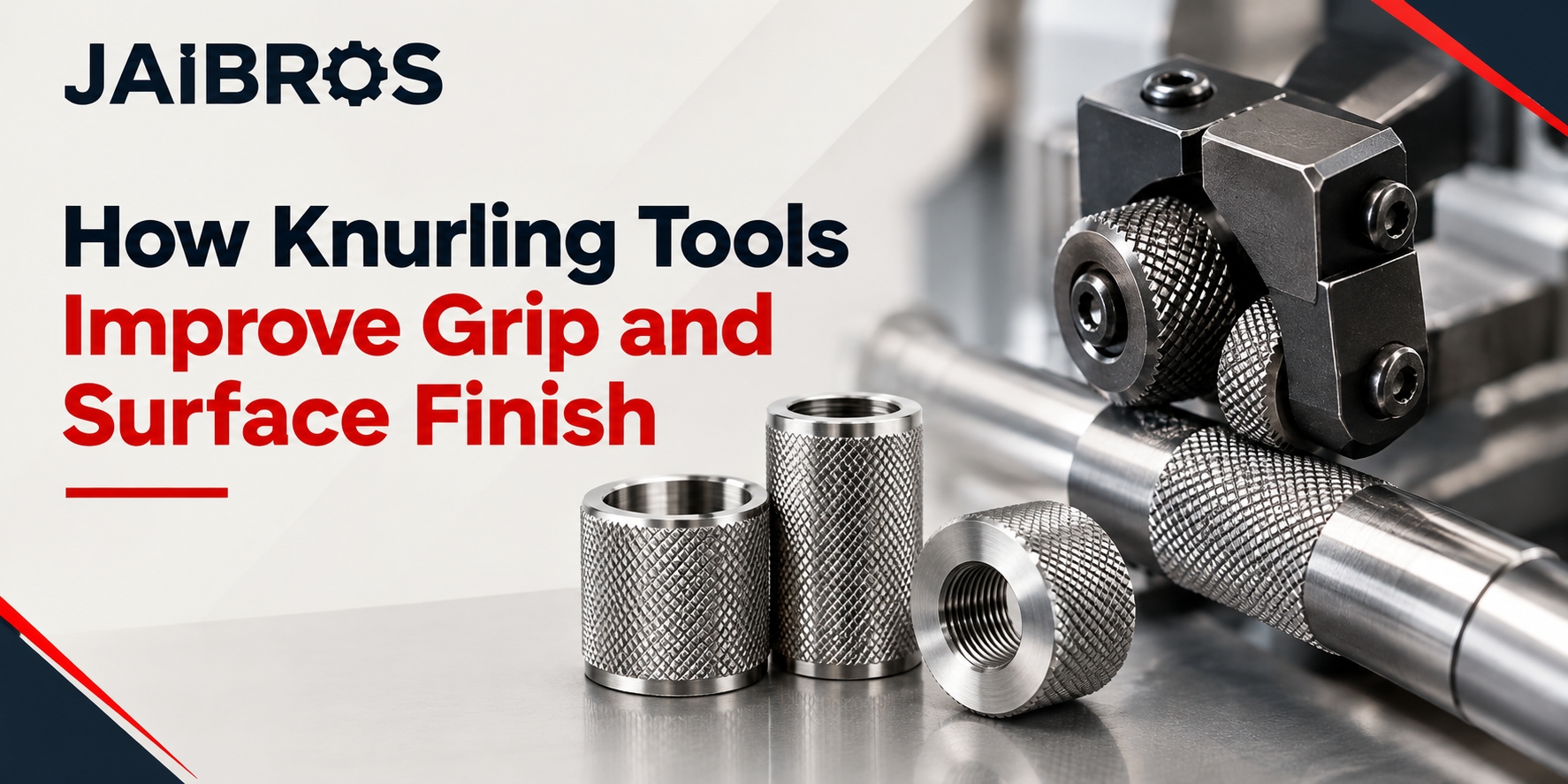
A good surface finish is important in metalworking because it affects how a component looks, feels, and performs. Some metal parts need a smooth surface, while others require a textured surface to provide a better grip.Knurling Tool is a machining operation used to create regular patterns on metal surfaces for improved handling and functional performance.
This process is commonly used to manufacture handles, adjustment knobs, shafts, fasteners, and other cylindrical components. Understanding how knurling works helps machinists choose suitable tooling, produce consistent patterns, and reduce common machining defects.
What Is Knurling and How Does It Work?
Knurling is a manufacturing process that creates raised ridges or patterned grooves on a workpiece. In conventional form knurling, hardened rollers press against the rotating material and displace its surface to form the required texture. Unlike ordinary turning, this method generally forms the pattern without removing material as chips.
A knurling tool is used to produce these patterns on suitable workpieces. The tool is mounted in the machine, aligned with the component, and brought into contact with its surface under controlled pressure.
The final pattern depends on the roller design, material, workpiece diameter, machine settings, and selected knurling method. Correct setup is essential for achieving a uniform texture and maintaining dimensional accuracy.
How Knurling Improves Grip and Surface Finish
1. Provides Better Grip
One of the main purposes of knurling is to make components easier to hold and turn. Smooth metal surfaces can become slippery, particularly when handled with oily or damp fingers. A textured surface creates more contact and resistance, helping users grip the component more securely.
This feature is useful for hand-operated knobs, tool handles, thumb screws, and adjustment controls.
2. Creates a Consistent Surface Pattern
Knurling produces repeated lines or geometric patterns across the selected area. When the tooling is properly aligned and the process is controlled, the resulting texture can look uniform across the component.
A consistent pattern improves the visual appearance of manufactured parts and supports repeatable production quality.
3. Supports Component Assembly
In some applications, knurled surfaces help components stay in position when pressed into a matching part. The raised pattern can improve mechanical engagement between the two surfaces.
However, the finished diameter may increase during form knurling. Engineers must account for this change when designing press-fit components and checking dimensional tolerances.
Different Types of Knurling Patterns
Straight Knurling
A straight knurling creates parallel lines along the length of a cylindrical component. This pattern is useful for applications requiring directional grip, alignment, or mechanical engagement. It is commonly found on selected shafts, sleeves, knobs, and other precision parts.
Diamond Knurling
Diamond knurling creates intersecting diagonal lines that form a diamond-shaped texture. It is widely used on hand grips, adjustment knobs, and tool handles because it provides grip in multiple directions.
Diagonal Knurling
Diagonal knurling creates angled lines that run in one direction. The pattern can be selected for specific grip requirements, component designs, or appearance preferences. The correct pattern depends on how the component will be handled or assembled.
Types of Knurling Tools Used in Machining
Different knurling tools are available for different machine setups, component sizes, and production requirements. Selecting the correct type helps improve pattern quality and process stability.
Knurling Tool for Lathe Operations
A knurling tool for lathe work is mounted on the tool post and pressed against a rotating workpiece. It is commonly used for producing textured surfaces on cylindrical metal components. The tool must be positioned correctly to avoid uneven patterns, excessive pressure, and unnecessary workpiece deflection.
CNC Knurling Tool
A CNC knurling tool is used with computer-controlled machining equipment to produce repeatable patterns. Correct programming, tool alignment, pressure control, and suitable operating conditions help maintain consistency during repeated production cycles.
Knurling Tool Holder
A knurling holder supports the knurling rollers and keeps them correctly positioned during operation. Some holders apply pressure from one side, while scissor-type designs support the workpiece from opposing sides. The appropriate holder depends on the workpiece dimensions, machine arrangement, and required pattern.
Factors to Consider for Better Knurling Results
Choosing suitable equipment and controlling the machining process are essential for producing reliable results.
Workpiece material: Consider the material's hardness, ductility, and ability to form a pattern without cracking or excessive deformation.
Pattern and pitch: Select a suitable pattern and tooth spacing according to the component's function and surface requirements.
Tool alignment: Keep the rollers correctly aligned with the workpiece to reduce uneven contact and pattern defects.
Machine speed and feed: Follow the tooling manufacturer's recommendations for speed, feed, and engagement. Incorrect settings can cause poor pattern formation.
Workpiece support: Secure the component properly, especially when working with long or slender parts, to limit bending and vibration.
Lubrication: Use a suitable cutting or forming lubricant when recommended for the material and tooling.
Dimensional inspection: Check the finished diameter and pattern quality, particularly when the component must fit another part.
These checks help reduce common problems such as double tracking, shallow patterns, surface damage, and inconsistent texture.
Common Applications of Knurling
Knurling is used across many manufacturing industries because it combines practical functionality with a distinctive surface texture.
Common applications include:
Automotive components: Adjustment knobs, control handles, and selected mechanical fittings.
Industrial machinery: Machine controls, operating handles, and adjustment components.
Hand tools: Grips and rotating sections that users operate manually.
Precision engineering: Selected shafts, sleeves, and parts requiring mechanical engagement.
Consumer products: Knobs, fasteners, and metal accessories that benefit from a textured surface.
The pattern and process should always match the component's intended use, dimensional requirements, and operating conditions.
Conclusion
Knurling plays an important role in improving grip, surface texture, and the functionality of metal components. Choosing the right tools and maintaining proper machining practices helps achieve consistent patterns and reliable results. For exploring suitable machining tools and accessories for different workshop requirements, visit Jaibros and discover a range of options for metalworking applications.
Frequently Asked Questions (FAQs)
1. What is the main purpose of knurling?
The main purpose of knurling is to create a textured surface that improves grip and handling. It is commonly used on knobs, handles, fasteners, and cylindrical components that need to be turned by hand. In some engineering applications, the pattern also helps components engage with mating parts. The required texture depends on the component's function and design specifications.
2. Does knurling remove material from a workpiece?
Conventional form knurling generally displaces material rather than removing it as chips. Hardened rollers press against the workpiece to create the required ridges and grooves. This deformation can increase the finished diameter, so dimensional checks are important. Cut knurling is a different method that removes material to produce the pattern and may be preferred for certain precision applications.
3. What is the difference between straight and diamond knurling?
Straight knurling produces parallel lines along the cylindrical surface, making it suitable for directional grip and certain assembly requirements. Diamond knurling creates intersecting diagonal lines that form a crosshatched pattern. This provides grip in multiple directions and is common on tool handles and adjustment knobs. The best option depends on the component's function, design, and required surface texture.
4. How can poor knurling quality be prevented?
Poor results can be reduced by selecting suitable rollers, securing the workpiece, aligning the tooling correctly, and following recommended machine settings. Excessive pressure, unsuitable speed, vibration, or incorrect starting dimensions can cause uneven or doubled patterns. Inspecting the workpiece during setup and measuring the finished diameter help identify problems early and maintain consistent production quality.
5. Which factors affect the quality of a knurled surface?
Surface quality depends on the workpiece material, roller geometry, pattern pitch, machine speed, feed, tool alignment, and workpiece support. Lubrication may also be important depending on the process and material. Regular inspection of the rollers helps identify wear or damage that could affect the pattern. Following machine and tooling manufacturer recommendations supports repeatable results.