
The adoption of generative AI is creating significant changes in the way data scientists perform technical and analytical tasks. AI-powered solutions can generate programming code, assist with data preparation, explain complex methods, and simplify the creation of reports. These features help professionals manage workloads more effectively and explore solutions with greater speed. However, producing dependable analytical results requires more than using automated tools. Data scientists must understand the context behind the information, evaluate different possibilities, and apply their own expertise before reaching conclusions. Build expertise in modern technologies with Data Science and AI Training in Chennai, covering Python, machine learning, data analytics, and AI applications through hands-on projects, practical sessions, and expert guidance to prepare for rewarding career opportunities.
Faster Analytical Processes
Data science projects involve multiple responsibilities, including data collection, preprocessing, programming, model development, and reporting. Generative AI can reduce the time required for these activities by suggesting scripts, generating database queries, identifying potential coding issues, and explaining technical errors. It can also help create documentation and summarize research findings. By reducing manual work, professionals can dedicate more attention to complex investigations and improving analytical performance. Even so, AI-generated solutions should be reviewed, modified, and tested to confirm their accuracy and suitability.
Practical AI Assistance
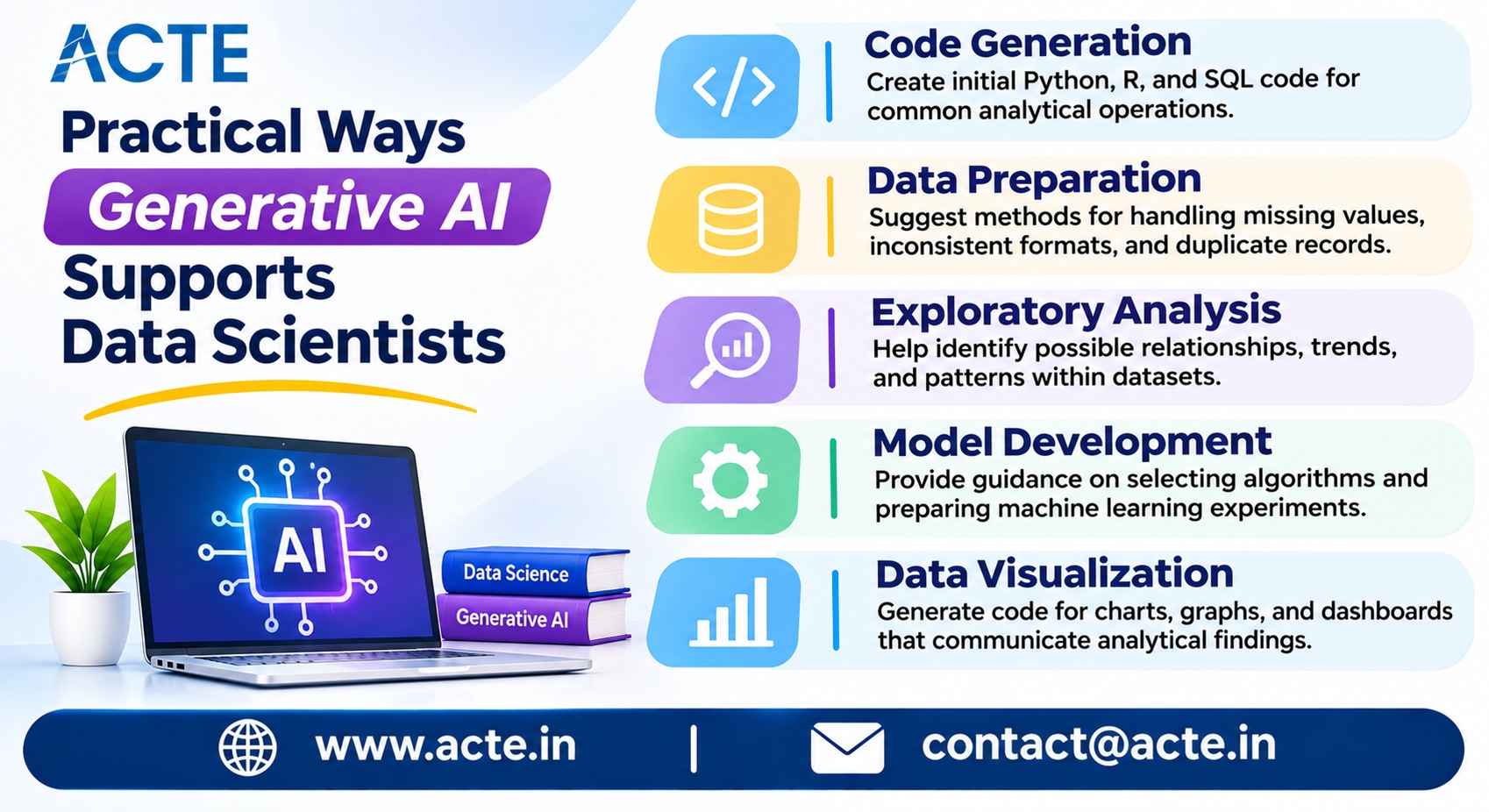
Generative AI can support various technical activities throughout the data science lifecycle.
Code Development: Generate programming examples and assist with Python, R, and SQL tasks.
Data Cleaning: Suggest ways to manage incomplete, duplicated, or incorrectly formatted records.
Exploratory Analysis: Help examine data distributions, trends, and potential relationships.
Model Building: Provide guidance on selecting and implementing machine learning algorithms.
Data Visualization: Assist in preparing charts, graphs, and dashboard elements.
Report Generation: Organize analytical observations into structured summaries and documents.
Technical Guidance: Explain unfamiliar functions, tools, and data science concepts.
The Importance of Reasoning
Automated systems can produce suggestions quickly, but determining whether those suggestions are correct requires human evaluation. Data scientists need to examine the quality of datasets, understand analytical assumptions, and verify whether results are statistically meaningful. For example, an AI tool may identify that customers who receive frequent notifications make more purchases. However, professionals must investigate customer preferences, notification timing, purchasing habits, and other possible influences before accepting the explanation. Logical reasoning helps identify misleading relationships and ensures that conclusions are supported by sufficient evidence. Gain in-demand skills with the Data Science and AI Course in Bangalore, covering Python, machine learning, data analytics, and AI through hands-on projects and expert-led training.
Strengthening Professional Skills
Generative AI is most effective when supported by strong technical knowledge. Data scientists should understand programming languages, statistics, probability, database systems, and machine learning fundamentals. Concepts such as regression, classification, clustering, decision trees, and neural networks help professionals evaluate different analytical approaches. Knowledge of feature selection, data transformation, and model performance metrics is equally valuable. These skills allow professionals to review automated code, recognize inaccurate recommendations, and make suitable adjustments. Continuous learning also helps them adapt to new AI technologies and changing industry requirements. Develop industry-ready skills with the Data Science and AI Course in Hyderabad, covering Python, machine learning, data analytics, and AI through practical training and real-time projects.
Improving Business Outcomes
Data science helps businesses identify opportunities, understand operational challenges, and make evidence-based decisions. Generative AI can assist in summarizing analytical results and presenting information in a clearer format. However, interpreting findings according to business priorities requires professional experience. For example, a company may discover that its customer retention rate has decreased. AI can help analyze feedback and identify possible patterns, but data scientists must investigate pricing, service quality, product expectations, and competitor activities to understand the reasons. Their interpretation helps organizations move from identifying problems to developing effective solutions.
Ensuring Reliable AI Usage
Using generative AI in data science requires proper attention to accuracy, privacy, and accountability. Professionals should validate generated programs, examine model predictions, and check datasets for possible bias. They must avoid exposing sensitive information through unauthorized AI applications and follow organizational security guidelines. Maintaining documentation, testing procedures, and explainable analytical processes helps improve transparency. Data scientists should also develop prompt engineering skills and understand the limitations of AI-generated responses. Responsible implementation ensures that automated assistance improves productivity without weakening data quality or professional oversight. Master data-driven technologies with the Best Data Science and AI Course, covering Python, machine learning, data analytics, and AI applications through hands-on projects and industry-focused training.
Conclusion
Generative AI is making data science workflows more efficient by supporting programming, data preparation, visualization, and technical communication. However, interpreting complex information and making appropriate decisions still depend on human expertise. Data scientists who combine analytical reasoning with technical knowledge and responsible AI practices can achieve better results while adapting to technological developments. Using AI to support professional judgment rather than replace it creates a more reliable approach to modern data science.



