
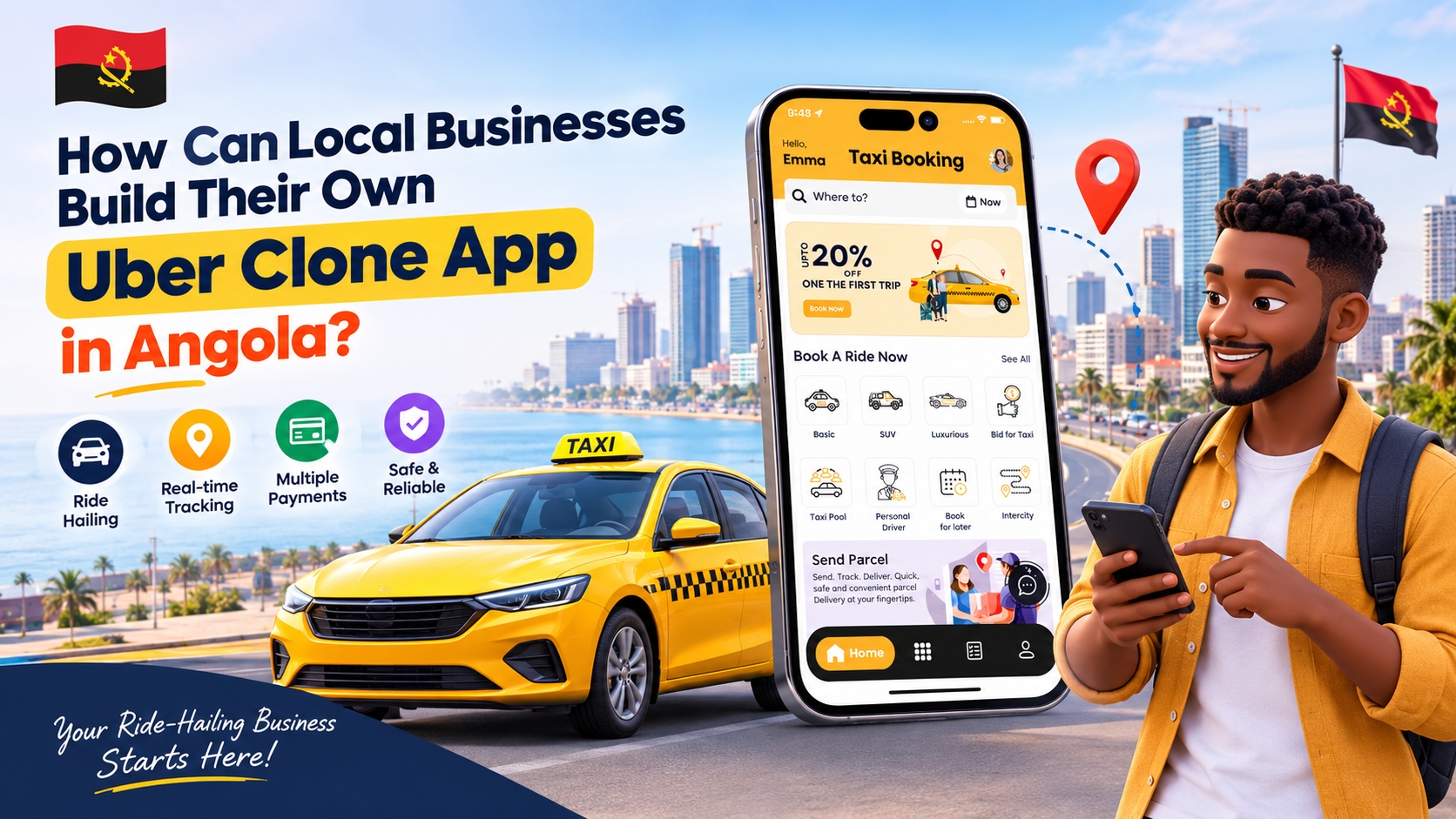
Angola's transportation sector offers opportunities for local entrepreneurs who want to introduce convenient, technology-driven mobility services. As urban populations grow and people look for easier ways to travel, ride-hailing applications can help connect passengers with drivers through a single digital platform. For local businesses, launching an Uber-like app can be a practical way to enter the digital transportation market, serve customers more efficiently, and develop a scalable business.
However, building a successful ride-hailing platform requires more than creating a mobile application. Business owners need to understand local transportation needs, choose an appropriate business model, integrate convenient payment methods, recruit drivers, and establish a reliable system for managing bookings.
An Uber Clone App in Angola provides a starting point for businesses that want to launch their own branded taxi-booking platform without developing every feature from scratch. By using a ready-made or customizable solution, entrepreneurs can focus on adapting the service to local requirements and building a strong customer base.
Understand the Ride-Hailing Market in Angola
Before investing in app development, local businesses should evaluate the transportation market they want to serve. Angola has diverse mobility requirements, ranging from daily commuting and airport transfers to corporate transportation and intercity travel.
Luanda, the country's capital, can be an important market to investigate because of its population, commercial activity, and demand for urban transportation. Businesses may also explore opportunities in other cities, including Benguela, Huambo, and Lubango, depending on local demand and driver availability.
Market research should help entrepreneurs answer several important questions:
Which areas have the greatest demand for convenient transportation?
What challenges do passengers experience when booking taxis?
Which payment methods are commonly preferred by the target audience?
What fares and service options would customers consider reasonable?
How do existing taxi operators attract and retain passengers?
Are there underserved customer groups, such as corporate travelers or airport passengers?
Businesses should collect information through customer surveys, interviews with local drivers, competitor analysis, and small-scale market testing. This research can help determine whether the initial service should focus on everyday rides, premium transportation, scheduled bookings, or another specific segment.
Understanding local demand before launching an Uber-like platform can reduce unnecessary spending and help businesses develop services that solve genuine transportation problems.
Choose the Right Uber Clone App Development Approach
Once the target market is identified, the next step is selecting a suitable development approach. Businesses generally consider custom development or a ready-made Uber clone solution.
Custom development involves building the application from the ground up. It offers extensive flexibility but may require more development time, technical resources, and ongoing maintenance.
A ready-made Uber clone solution provides a pre-developed foundation containing essential ride-hailing features. Businesses can customize its branding, booking process, fare rules, and other functionality to match their operational requirements.
For entrepreneurs entering the Angolan market, a customizable solution can help simplify the launch process.
When evaluating an Uber clone script, check whether it includes:
Passenger and driver mobile applications.
An administrative dashboard for managing operations.
Real-time GPS tracking and ride status updates.
Automated fare calculation.
Multiple payment integration options.
Driver verification and account management.
Notifications and customer support tools.
Reporting and analytics capabilities.
The platform should also support future customization as the business grows. Choosing a flexible solution makes it easier to introduce new service categories, expand into additional cities, and adjust business rules without rebuilding the entire application.
Customize the App for Angola's Local Requirements
A ride-hailing application designed for one market may not automatically suit another. Local businesses should adapt their Uber clone platform to the preferences, infrastructure, and operating conditions of Angola.
Language and usability: Portuguese is the official language of Angola, so providing a Portuguese-language interface can make the application easier for local passengers and drivers to use. Businesses may also evaluate whether additional language options would benefit their target audience.
Local currency: The app should display fares, trip summaries, commissions, and driver earnings in Angolan kwanza (AOA). Clear pricing helps passengers understand transportation costs before confirming a booking.
Location accuracy: Reliable mapping, pickup-point selection, and GPS tracking are important for coordinating rides. Businesses should test mapping performance in their intended service areas, particularly where street addresses or location data may be inconsistent.
Local connectivity: The application should handle unstable internet connections gracefully. Clear booking statuses, sensible retry options, and efficient data usage can improve the experience for users operating under different network conditions.
Localized customer support: Support options should reflect local customer expectations. In-app assistance, phone support, and other practical communication channels can help resolve booking issues, payment questions, and driver-related concerns.
These adjustments make the platform more relevant to Angolan customers and help businesses deliver a consistent experience.
Integrate Essential Features Into the Uber Clone App
The functionality of the platform directly influences passenger convenience, driver efficiency, and business operations. Local businesses should prioritize features that make booking, completing, and managing rides straightforward.
Passenger App Features
The passenger application should allow customers to book rides without unnecessary steps.
Important features include:
Easy registration: Enable users to create accounts and manage their profiles.
Ride booking: Let passengers enter pickup and destination locations.
Fare estimates: Display estimated trip costs before booking confirmation.
Real-time tracking: Show driver location and arrival progress.
Driver information: Display relevant driver and vehicle details.
Multiple ride options: Offer suitable vehicle categories when available.
Trip history: Allow passengers to review previous journeys and receipts.
Ratings and reviews: Collect feedback to help maintain service quality.
Notifications: Send booking confirmations, arrival updates, and trip notifications.
An intuitive passenger experience can encourage repeat bookings and help establish trust in a new transportation service.
Driver App Features
Drivers need tools that make accepting and completing trips convenient.
The driver application should include account registration, document submission, trip request notifications, pickup navigation, ride status controls, and earnings summaries. Drivers should also be able to review completed trips and understand the commissions deducted from their fares.
Where technically feasible, the platform can provide demand insights to help drivers identify busy service areas. These insights should be based on actual booking information rather than unsupported demand predictions.
A straightforward driver interface can improve operational efficiency and make it easier to attract drivers to the platform.
Admin Dashboard Features
The administrative dashboard allows business owners to monitor and manage the entire service.
Core capabilities should include driver approvals, passenger account management, trip monitoring, fare configuration, commission management, complaint handling, promotional campaigns, and performance reports.
Administrators should also be able to investigate cancellations, review disputed trips, and monitor unusual account activity.
By combining passenger, driver, and administrative tools, an Uber clone platform gives local businesses a structured way to coordinate daily ride-hailing operations.
Select Suitable Payment Methods for Angolan Customers
Payment convenience is an important consideration when launching a ride-hailing business. Different customers may prefer cash, bank cards, or digital payment services, depending on availability and personal preference.
Businesses should investigate which payment methods their target customers can realistically access before selecting payment integrations.
Potential options include:
Cash payments: Useful for customers who prefer paying drivers directly after a trip.
Bank card payments: Suitable where supported payment processors can securely handle transactions.
Digital payments: Consider compatible local or regional payment providers where merchant access and technical integration are available.
Corporate billing: Businesses serving companies may offer approved account-based billing or invoicing arrangements.
The selected payment gateway should support the business's legal registration, settlement requirements, and intended transactions in Angola. Availability should be confirmed directly with each provider rather than assumed.
The application should also provide clear fare breakdowns, payment confirmations, refund procedures, and transaction records. Secure handling of payment information is essential for protecting customers and maintaining confidence in the platform.
Develop a Practical Revenue Model
An Uber clone business needs a revenue strategy that balances profitability with attractive pricing for passengers and drivers.
Local entrepreneurs can evaluate several revenue models based on their market research and operating costs.
Commission per ride: The platform retains an agreed percentage or fixed amount from each completed booking. This model links revenue to ride volume.
Driver subscription plans: Drivers pay a recurring fee to access the platform or selected services. Businesses should assess whether this model is attractive enough to recruit and retain drivers.
Corporate transportation packages: Companies can receive organized transportation services, account management, or negotiated pricing under agreed commercial terms.
Premium ride services: Higher-priced categories may appeal to customers who require specific vehicle standards, additional comfort, or professional transportation.
Booking and service fees: A transparent fee may be charged for certain bookings where permitted by applicable regulations and accepted by customers.
For example, a business could begin with a commission-based model and introduce corporate accounts after establishing a reliable driver network.
The financial plan should account for software costs, driver acquisition, customer support, payment processing, marketing, insurance, compliance, and ongoing maintenance. Revenue projections should be based on realistic booking volumes and average fares rather than optimistic assumptions.
Understand Legal and Regulatory Requirements
Before launching a ride-hailing service in Angola, businesses must determine which laws and permits apply to their proposed operating model.
Requirements may differ according to vehicle classification, commercial passenger transportation activities, driver status, operating locations, and the structure of the business.
Entrepreneurs should seek guidance from qualified local legal and transportation professionals regarding:
Business registration and tax obligations.
Applicable passenger transportation licenses and permits.
Driver eligibility and documentation.
Vehicle registration, inspection, and insurance requirements.
Passenger safety and complaint-handling procedures.
Personal data protection and cybersecurity obligations.
Payment processing and financial recordkeeping requirements.
The platform should include practical tools for managing required driver documents, vehicle information, and verification records where appropriate.
Businesses should also establish procedures for emergencies, accidents, passenger complaints, and suspected fraudulent activity.
Legal compliance should be addressed before accepting public bookings. A technically complete application cannot compensate for missing permits, inadequate insurance, or unclear operating responsibilities.
Launch the Platform in a Focused Service Area
Launching across multiple cities immediately can create operational challenges, especially when the business has limited drivers, marketing resources, or customer support capacity.
A more manageable strategy is to begin in a clearly defined service area, validate the booking process, and expand after the initial operation becomes reliable.
For example, a business targeting Luanda could start with selected commercial districts, residential communities, or airport-related journeys, subject to the relevant permissions and operational arrangements.
A phased launch could follow these steps:
Recruit and verify an initial group of drivers.
Test booking, navigation, notifications, and payment workflows.
Invite a limited group of passengers to try the service.
Collect feedback about pickup accuracy, fares, and app usability.
Resolve technical problems and improve driver response times.
Expand marketing and coverage when service quality is consistent.
During the initial phase, businesses should monitor completed rides, booking cancellations, average pickup time, repeat bookings, customer complaints, and driver retention.
These measurements help owners identify what is working and where improvements are necessary before increasing their marketing expenditure.
Promote the Uber Clone App and Attract Users
A successful launch depends on building both sides of the marketplace: passengers who want convenient rides and drivers who can provide them.
Businesses should develop separate acquisition strategies for each group.
Passenger Acquisition Strategies
Local businesses can introduce their ride-hailing application through social media campaigns, local business partnerships, referral programs, and targeted digital advertising.
Promotional offers may encourage first-time bookings, provided the business can afford the discounts and communicates the terms clearly. Referral incentives can also help satisfied passengers introduce the platform to friends and colleagues.
Partnerships with hotels, offices, event organizers, and other relevant businesses may generate recurring transportation demand.
Driver Recruitment Strategies
Driver recruitment should emphasize transparent commissions, clear payment schedules, accessible support, and straightforward onboarding.
Businesses can conduct local recruitment campaigns, partner with driver communities, and provide demonstrations explaining how the application works.
Driver earnings should be communicated honestly, with realistic information about demand, expenses, and platform fees.
Consistent service quality is more valuable than acquiring large numbers of users before the operational model is ready. Businesses should focus on dependable rides, clear communication, and timely complaint resolution to develop a positive reputation.
Estimate Development Costs and Plan for Growth
The cost of launching an Uber clone app in Angola depends on the solution selected, the number of applications required, feature complexity, integrations, and customization needs.
A ready-made platform may reduce the amount of initial development work compared with building a complete system from scratch. However, the final cost depends on the provider's licensing model, included functionality, deployment services, and ongoing support.
Before choosing a solution, request a detailed quotation covering:
Passenger and driver applications.
Admin dashboard and backend infrastructure.
UI customization and Portuguese-language support.
Payment and mapping integrations.
Hosting, security, and data backup.
Testing, deployment, and staff training.
Maintenance, updates, and technical support.
Businesses should distinguish one-time implementation costs from recurring operating expenses. Marketing, driver recruitment, customer service, insurance, and payment processing can remain significant after the application is launched.
A phased investment strategy can help businesses control risk. Start with essential ride-hailing functionality, measure market response, and introduce advanced capabilities when they solve a demonstrated business need.
As the platform grows, owners can consider features such as scheduled rides, corporate accounts, improved analytics, loyalty programs, and additional vehicle categories.
Conclusion
Local businesses can build their own Uber clone app in Angola by combining market research, a customizable technology solution, locally appropriate features, suitable payment methods, and a well-planned launch strategy.
The most important step is to develop a service that addresses real transportation needs rather than simply reproducing the features of an established ride-hailing platform. Portuguese-language support, Angolan kwanza pricing, reliable location services, convenient payments, verified drivers, and transparent fares can help make the application more relevant to local customers.
Businesses should also establish a viable revenue model, verify legal requirements, recruit drivers before expanding, and continuously evaluate customer feedback and operational performance.
With the right planning and a flexible Uber Clone App Development solution, entrepreneurs can create a branded transportation platform designed for their target market in Angola. Starting with a focused service area and expanding according to actual demand can provide a more sustainable path toward long-term growth in the country's evolving digital mobility sector.
Frequently Asked Questions (FAQs)
1. How much does it cost to build an Uber Clone App in Angola?
The cost of building an Uber Clone App in Angola depends on the development approach, app features, customization requirements, payment integrations, and ongoing maintenance. A ready-made solution may reduce initial development effort compared with building the platform from scratch.
2. What features should an Uber Clone App include for the Angolan market?
An Uber Clone App for Angola should include passenger and driver apps, real-time GPS tracking, fare estimation, ride booking, driver verification, trip history, notifications, and an admin dashboard. Portuguese-language support, Angolan kwanza (AOA) pricing, and locally suitable payment options can further improve usability.
3. Can local businesses customize an Uber Clone App for Angola?
Yes, businesses can customize a suitable Uber Clone App with their own branding, logo, colors, fare structure, commission settings, and service options. They can also configure language preferences and integrate compatible payment gateways to meet their target customers' needs.
4. How can businesses generate revenue from an Uber Clone App in Angola?
Businesses can generate revenue through commissions on completed rides, driver subscription plans, corporate transportation packages, premium ride services, and applicable booking fees. The best model depends on local demand, operating expenses, driver preferences, and customer expectations.