
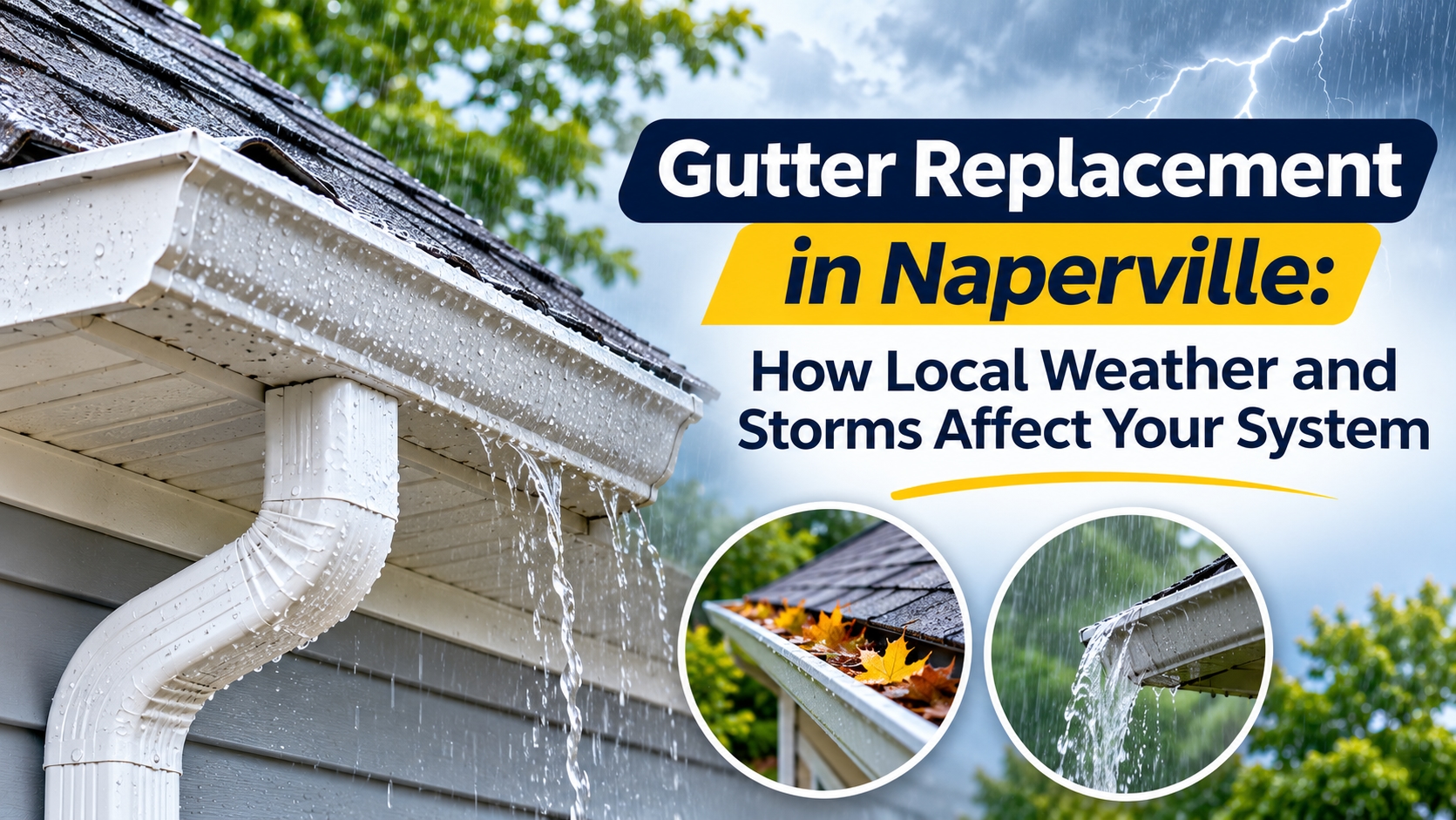
Gutters collect rainwater and melting snow from the roof and direct it away from a home’s walls and foundation. In Naperville, Illinois, that job is demanding. The city sits in the Chicago region, where winters are cold, springs are wet, and summer storms can build quickly. Over time, these conditions wear down even well-installed systems. This article explains how local weather affects gutters, which signs point to damage, and when gutter replacement in Naperville becomes a practical option.
How Naperville’s Climate Affects Gutters
Naperville has a humid continental climate. Temperatures change sharply between seasons, precipitation falls year-round, and snow is common in winter. Each season places a different kind of stress on a gutter system.
Freeze and Thaw Cycles
Water left in a gutter can freeze overnight and melt during the day. Ice expands as it forms, and that pressure can bend seams, loosen fasteners, and pull sections away from the fascia board. After several winters of repeated cycles, small gaps tend to grow into leaks.
Ice Dams and Snow Load
Ice dams form when heat escapes through the roof and melts the snow above it. The water runs down and refreezes at the cold roof edge, where it builds up along the gutter. A gutter filled with ice and snow carries far more weight than it was designed to hold, so it may sag or separate from the house. Water that backs up under shingles can also reach the ceiling and wall cavities.
Spring Rain and Summer Storms
Spring brings frequent rain, and strong thunderstorms are common from late spring through summer. Heavy rainfall can exceed what an older or undersized gutter can carry. Water then spills over the edge, runs down siding, and collects near the foundation. Strong winds may loosen gutters, and hail can dent metal or crack aging materials.
Fall Leaves and Debris
Naperville has many mature trees, and fall leaves are a common cause of clogs. Wet leaves pack into gutters and downspouts. The standing water adds weight, speeds up rust on steel parts, and gives pests a place to nest. A clogged system often overflows during the first heavy rain after the leaves drop.
Signs of Weather Damage
Severe thunderstorms in the Chicago region can bring straight-line winds, hail, and heavy rain. Falling branches may bend or crush a gutter, and strong gusts can lift sections away from the roofline. Storm damage is not always visible from the ground. Dents, small cracks, and loosened hangers can go unnoticed until the next heavy rain exposes them. A walk around the home after a storm, along with a check of the gutters during rainfall, shows where water is leaving the system.
Homeowners can watch for these common warning signs:
Gutters that sag or pull away from the roofline
Cracks, rust spots, or holes in the metal
Water stains or peeling paint on siding below the gutter
Pooling water or soil erosion near the foundation
Standing water in the gutter after rain has stopped
Loose, bent, or missing fasteners
Overflow during light or moderate rain
How Water Damage Develops
Water that is not directed away from the house can rot fascia and soffit boards, stain siding, and seep into basement walls. It can also wash out landscaping and support mold growth. In winter, leaks can freeze on the ground and create slippery patches near walkways. Because this damage builds slowly, it is often found after repairs have become larger.
Repair or Replacement
Not every problem requires a new system. The condition, age, and design of the existing gutters guide the decision.
When Repair May Be Enough
A loose hanger, a small seam leak, or a short clogged section can often be fixed without major work. Resealing joints, rehanging a section, and clearing debris restore normal flow in many cases.
When Gutter Replacement Becomes Practical
Full gutter replacement is usually considered when problems are widespread rather than isolated. Common reasons include:
Leaks along many seams
Rust or cracking across large sections
Sagging that returns after rehanging
Gutters too small for the roof area
A system near the end of its service life, since many aluminum systems last about 20 years depending on installation and exposure
Material and Design Choices for Local Conditions
Material and design affect how well a system handles Naperville weather.
Materials
Aluminum is widely used because it resists rust and is lightweight. Vinyl is common but can become brittle in extreme cold. Steel is strong yet can rust once the coating wears away. Copper lasts a long time and develops a natural patina.
Seamless Construction and Sizing
Seamless gutters are formed to length on site, which leaves fewer joints where leaks can start. A wider gutter profile and additional downspouts can carry more water during heavy storms. Hangers placed closer together provide better support under snow and ice. Downspout extensions move water farther from the foundation.
Maintenance That Extends Gutter Life
Regular care reduces the effects of Naperville weather. Common practices include:
Cleaning gutters and downspouts at least twice a year, usually in late spring and late fall
Checking the system after major storms for dents, gaps, and loose parts
Trimming branches that hang over the roof
Confirming that downspouts discharge water away from the foundation
Reviewing attic insulation and ventilation to reduce heat loss that contributes to ice dams
Planning Gutter Replacement in Naperville
Most projects for gutter replacement in Naperville begin with an inspection of the full system, including the roofline, fascia boards, slope, and downspout placement. Exterior contractors such as Northwestern Exteriors Inc. work with homeowners on gutter inspection and installation, and an assessment can help property owners understand the condition of their existing gutters.
Timing also matters. Spring and fall usually offer mild weather for installation, though work can be done whenever conditions allow. Homeowners who belong to an association may also confirm any rules about gutter color or style before choosing materials.
Conclusion
Naperville’s freeze and thaw cycles, ice, heavy spring rain, summer storms, and fall debris all place steady demand on gutters. Knowing how these conditions cause damage helps homeowners recognize problems early and decide between repair and gutter replacement in Naperville. Regular inspection and maintenance remain the most direct ways to limit that damage.