
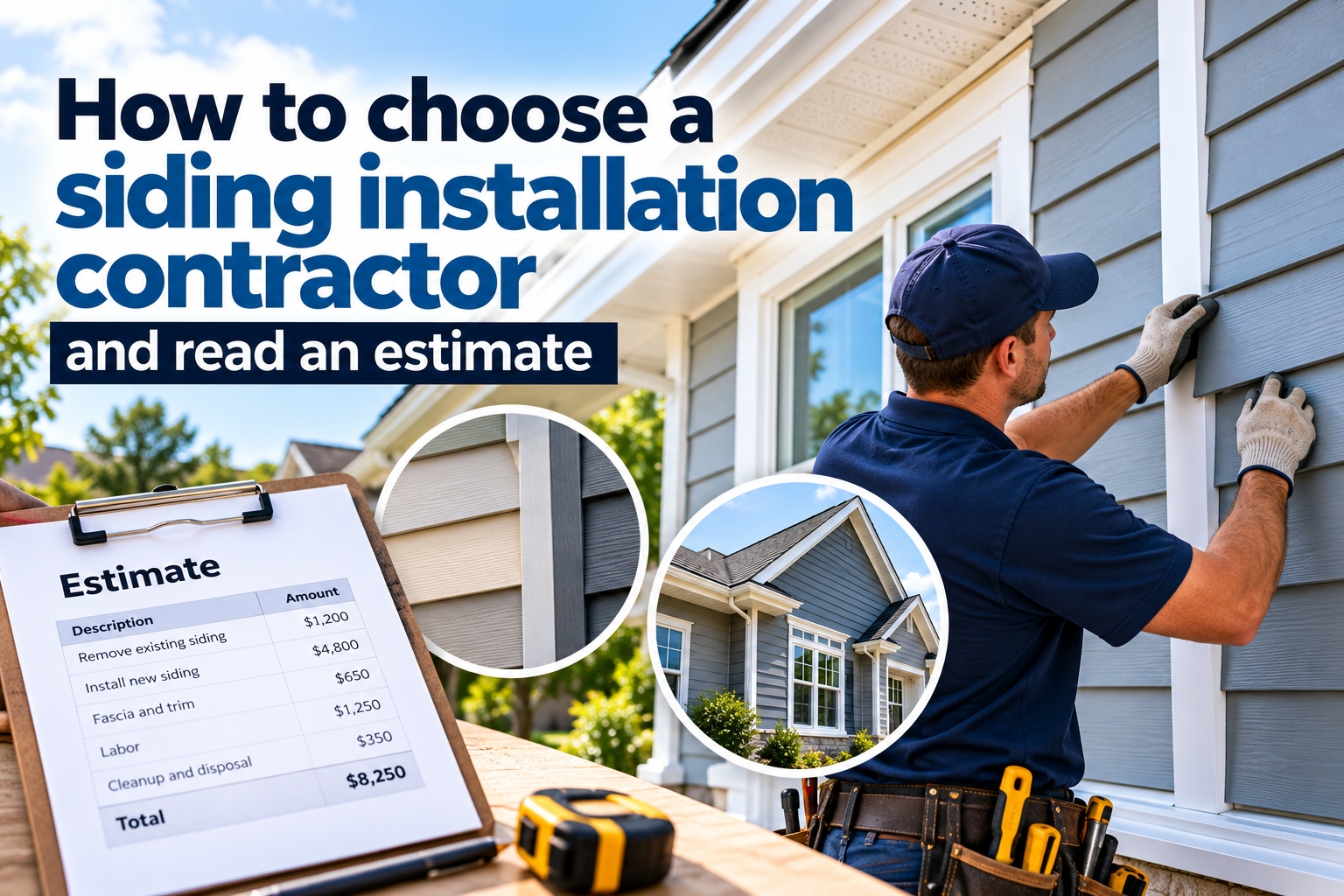
Choosing a siding installation contractor is as important as choosing the siding. Two companies can quote the same product and deliver very different results, depending on their methods, supervision, and honesty. The estimate is where those differences first show, if you know how to read it.
This guide explains how to evaluate a contractor, what a solid estimate contains, and how to compare bids without getting lost in the details.
Start With Clear Goals
Before collecting bids, decide:
Why you are replacing siding: damage, appearance, efficiency, or all three
Which materials interest you
Whether you plan to replace windows, gutters, soffits, or fascia at the same time
Your budget range and timeline
Clear goals let contractors give comparable quotes and keep the discussion on your needs.
Qualities of a Good Siding Installation Contractor
Experience With Your Material
Siding materials install differently. Ask how often the company installs the type you want and request examples.
Proper Insurance and Credentials
Request proof of general liability and workers' compensation insurance. Ask what licenses or registrations apply in your area, and verify them.
Clear Communication
A good contractor answers questions directly, explains trade-offs, and follows up when promised.
Transparent Process
They should describe how they handle inspection, repairs, moisture barriers, flashing, installation, and cleanup.
Local Reputation
Reviews, references, and neighbors' experiences matter. Look for consistent comments about punctuality, quality, and problem-solving.
Written Agreements
A professional contractor puts the scope, price, schedule, and coverage in writing.
How to Read a Siding Estimate
Estimates can look like a list of numbers, but each line tells you something. Here is what to look for.
Scope and Measurements
The estimate should list the wall area, number of stories, and special features like gables and dormers. If the numbers are missing, ask how the price was calculated.
Product Specifications
Look for brand, product line, material type, thickness, profile, and color. Phrases like "standard siding" leave room for substitutions. Check that trim, corner pieces, and accessories are specified.
Preparation and Removal
Confirm whether the estimate includes removal and disposal of old siding, inspection of the wall, and cleanup. If testing for hazardous materials may be required for an older home, ask whether it is covered.
Weather Barrier and Flashing
This line item matters. The estimate should name the barrier, tape, and flashing materials and describe where they will be used. If the quote does not mention them, ask.
Repairs and Contingencies
Hidden damage is common. A good estimate explains how rot or water damage will be handled and priced, for example, per sheet of sheathing or per hour. Without this, a surprise bill is likely.
Windows, Doors, and Other Details
Check how the contractor handles trim and flashing around windows and doors, soffit and fascia, vents, lights, and other wall penetrations.
Schedule
Look for an estimated start date, duration, and a plan for weather delays.
Payment Terms
Deposits are normal, but a large upfront payment is risky. Payments should be tied to milestones.
Coverage
Read the actual documents for product coverage and workmanship coverage. Check the duration, what is excluded, whether it transfers to a new owner, and what you must do to keep it valid.
Compare Bids Like for Like
Create a simple chart with each contractor in a column and these rows:
Total price
Siding brand, product, and thickness
Weather barrier and flashing
Trim and accessories
Removal and cleanup
Repair terms
Timeline
Payment schedule
Written coverage
Differences stand out quickly. If one bid is much lower, find out which items are missing or reduced.
Questions to Ask During Consultations
Who will supervise the crew every day?
Do you use employees or subcontractors?
How do you protect landscaping and clean up?
What will you do if you find rot?
How do you handle weather delays?
Can I speak with recent customers?
What do you need from me before work starts?
Warning Signs
Pressure to sign today to get a special discount
No written estimate
Estimates that lack detail
A quote far below the rest
No proof of insurance
Large upfront payments
Reluctance to provide references
Promises that sound unrealistic
Trust your judgment. If something feels wrong, get another opinion.
Review the Contract
The contract should repeat the estimate details and add:
Start and completion dates
Procedures for change orders
Permit responsibility
Cleanup and disposal terms
Dispute resolution
Written coverage
Do not sign until you understand each clause.
Work With a Company That Handles Related Exterior Work
Siding connects to windows, gutters, soffits, and fascia. A company that works across these areas can coordinate flashing and detail work. Northwestern Exteriors Inc. is based in Plainfield, Illinois, and works on siding along with windows, gutters, soffits, and fascia. Add it, or any company you consider, to your comparison and verify details directly.
What Happens After You Hire
A good contractor confirms the order, schedules the work, and keeps you informed. During installation, expect protection of your property, careful work, and daily cleanup. At the end, walk the house, check the details, and keep your paperwork.
Common Estimate Mistakes
Homeowners often compare totals without comparing scope. Another common mistake is accepting an allowance for repairs without asking what it covers. Some estimates also leave out trim, soffit, and fascia, or cleanup, and these items can add up quickly. Ask for each one by name before you sign.
Questions About Coverage
Coverage documents can be long, so read them before you decide. Look for what is covered, who handles claims, how long the terms last, and whether you must maintain the siding in a specific way to keep them valid. Ask whether the manufacturer and the contractor each provide coverage, since they are separate things. Keep copies of everything you sign.
Final Thoughts
A strong siding installation contractor communicates clearly, explains the process, and puts everything in writing. Learning to read an estimate, with attention to materials, barriers and flashing, repairs, schedule, and coverage, lets you compare bids on substance rather than price alone.
When you are ready to take the next step, you can contact Northwestern Exteriors Inc. to schedule a consultation and receive a written estimate.


