
Indian insurers are under pressure to become faster without making their core systems fragile. Customers expect digital policy servicing, quicker claims and connected experiences, while technology teams must still protect critical insurance data. Guidewire Cloud is changing how that balance is approached.
But moving Guidewire to the cloud is not simply a hosting decision. It changes upgrades, integrations, development practices, security responsibilities and even the skills expected from insurance technology professionals. For India’s growing insurance technology ecosystem, that shift could be more significant than the infrastructure migration itself.
Guidewire Cloud Changes More Than Where InsuranceSuite Runs

Traditional insurance core systems were often treated as large applications that insurers implemented, customized and maintained for years. Infrastructure management, upgrades, patches and environment maintenance could consume significant IT effort. A cloud operating model changes that relationship.
Guidewire Cloud brings core insurance applications into a managed cloud environment where platform evolution becomes more continuous. Instead of viewing a major upgrade as an occasional transformation project, insurers need processes capable of adapting to regular platform releases.
That changes technology priorities. Teams can increasingly concentrate on insurance capabilities rather than infrastructure administration. The important questions become:
How quickly can a new product change reach customers?
Are integrations compatible with cloud architecture?
Can customizations survive continuous platform evolution?
Are testing and deployment sufficiently automated?
Can teams observe problems before customers experience them?
For Indian insurers, system integrators and technology professionals, cloud adoption therefore represents an operating-model transformation, not merely infrastructure modernization.
Cloud Adoption Pushes Insurers Toward Configuration Over Heavy Customization
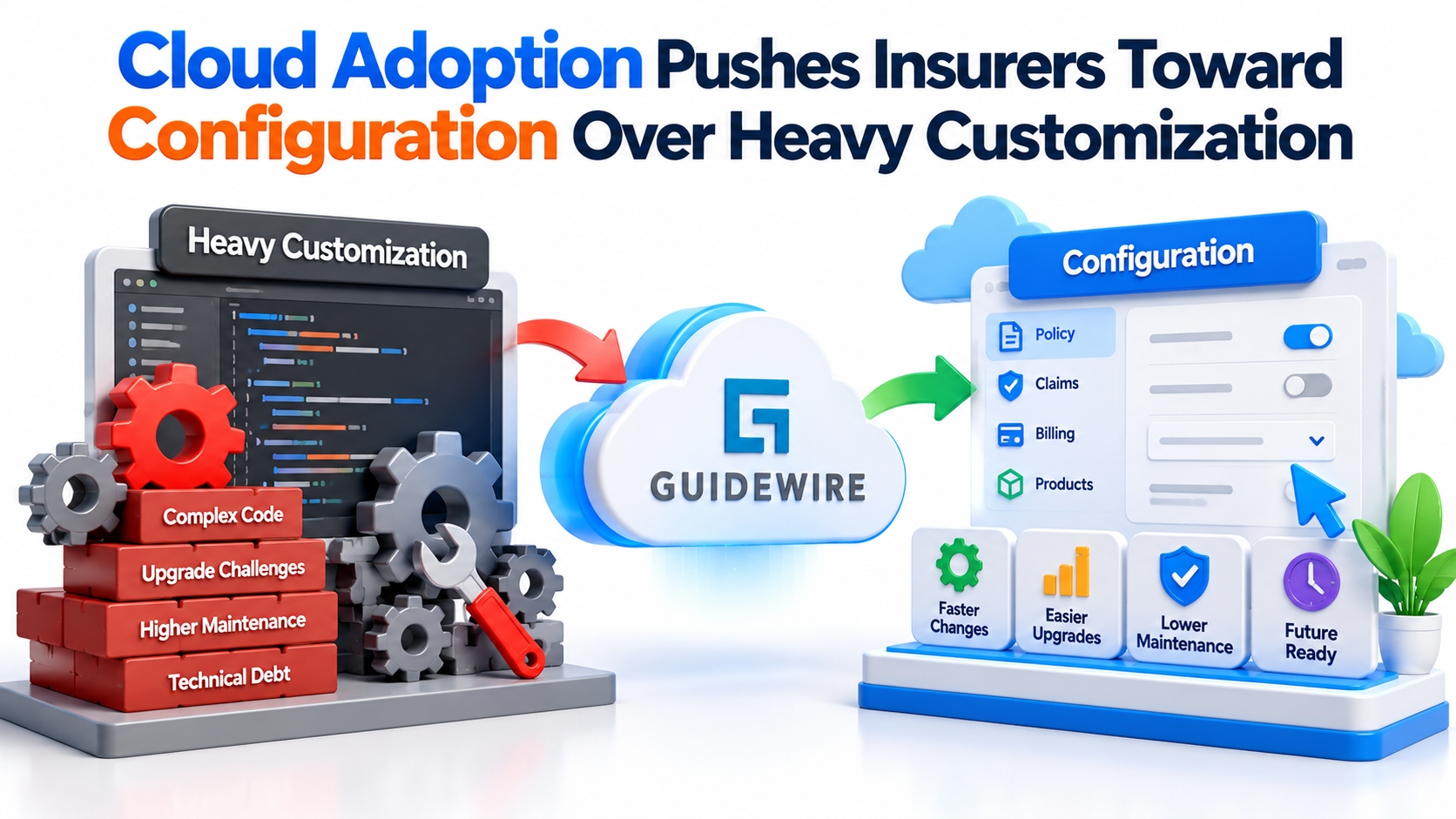
One of the most important architectural consequences of cloud adoption is the pressure to reduce unnecessary customization.
Historically, an insurer could modify core applications extensively to match existing business processes. That flexibility could solve immediate requirements but also create technical debt. Every large customization could make future upgrades, testing and maintenance more difficult.
A cloud-first approach encourages teams to distinguish genuine competitive requirements from processes that can use standard platform capabilities. The architecture gradually becomes cleaner: configure the core where appropriate, extend deliberately, and integrate external capabilities through supported patterns.
This changes the Guidewire developer's job as well. Knowing Gosu or configuration remains useful, but engineers increasingly need to understand why a solution belongs in configuration, an integration, an API-driven service or another platform component.
That is why learners exploring guidewire training in india should look beyond screen configuration and basic Gosu syntax. Modern preparation should include InsuranceSuite fundamentals, Cloud APIs, integration patterns, testing, deployment concepts and insurance domain knowledge. The valuable skill is increasingly the ability to design maintainable solutions rather than simply write more customization code.
APIs and Integrations Become Central to the Insurance Architecture
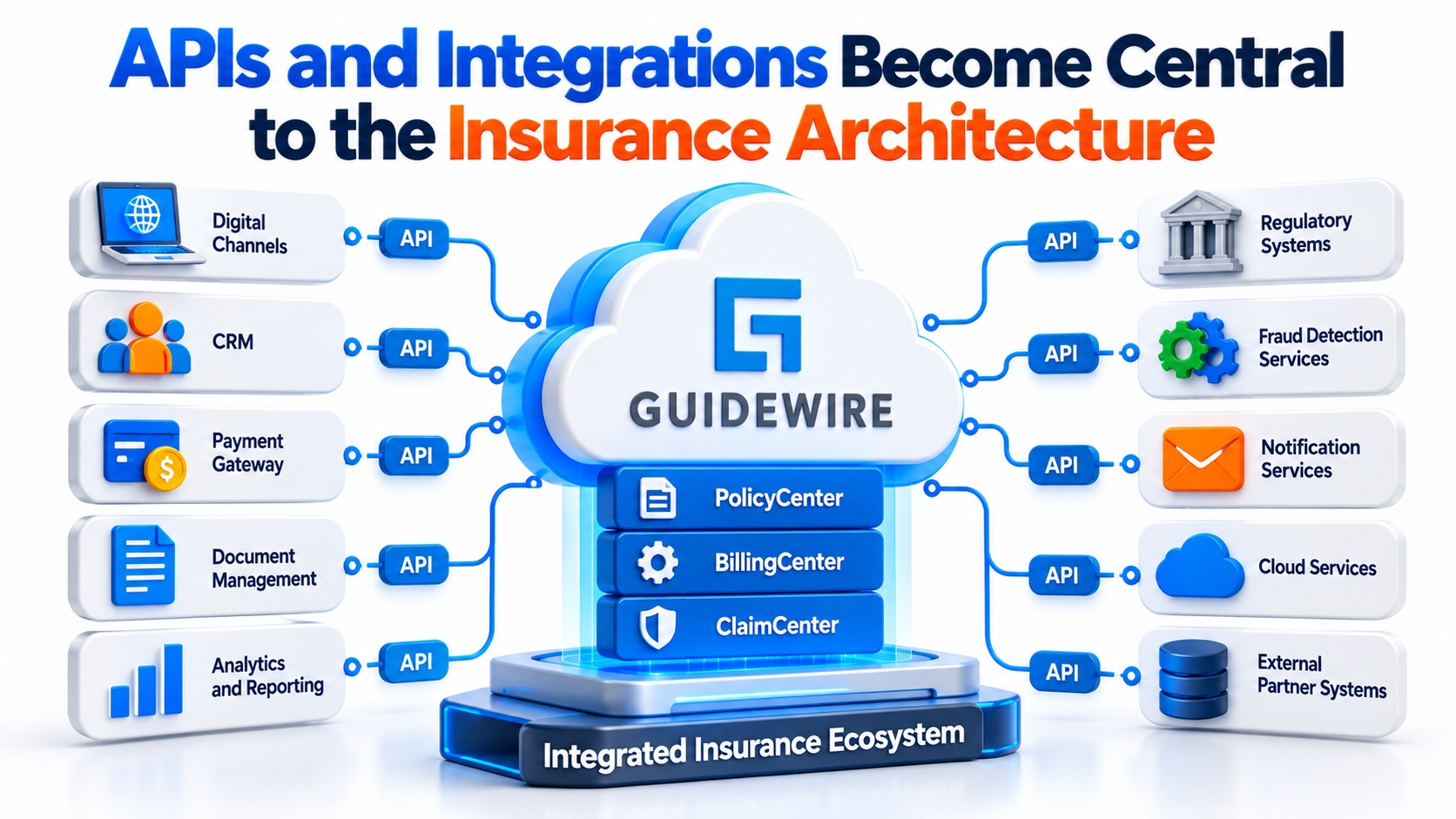
An insurer rarely operates Guidewire in isolation. A typical ecosystem can contain payment gateways, document systems, CRM platforms, fraud services, regulatory systems, data platforms, mobile applications and external partner services.
Cloud adoption makes these connections even more important.
Instead of treating integration as peripheral code added after configuration is complete, insurers need deliberate API and event-driven boundaries. A policy transaction may begin in a digital channel, pass through Guidewire, communicate with external services and eventually feed analytics platforms.
That means engineers need stronger knowledge of:
REST APIs and JSON
Authentication and authorization
Messaging and asynchronous processing
Error handling and retry strategies
Integration monitoring
Data contracts and API lifecycle management
This is particularly relevant to India's large technology-services ecosystem. Indian teams supporting global insurers are increasingly expected to understand complete business flows instead of working only within one application layer.
The result is a more T-shaped Guidewire professional: deep knowledge in configuration or integration combined with enough cloud, API, insurance and DevOps understanding to see the entire transaction.
Security and Governance Become Part of Everyday Cloud Engineering
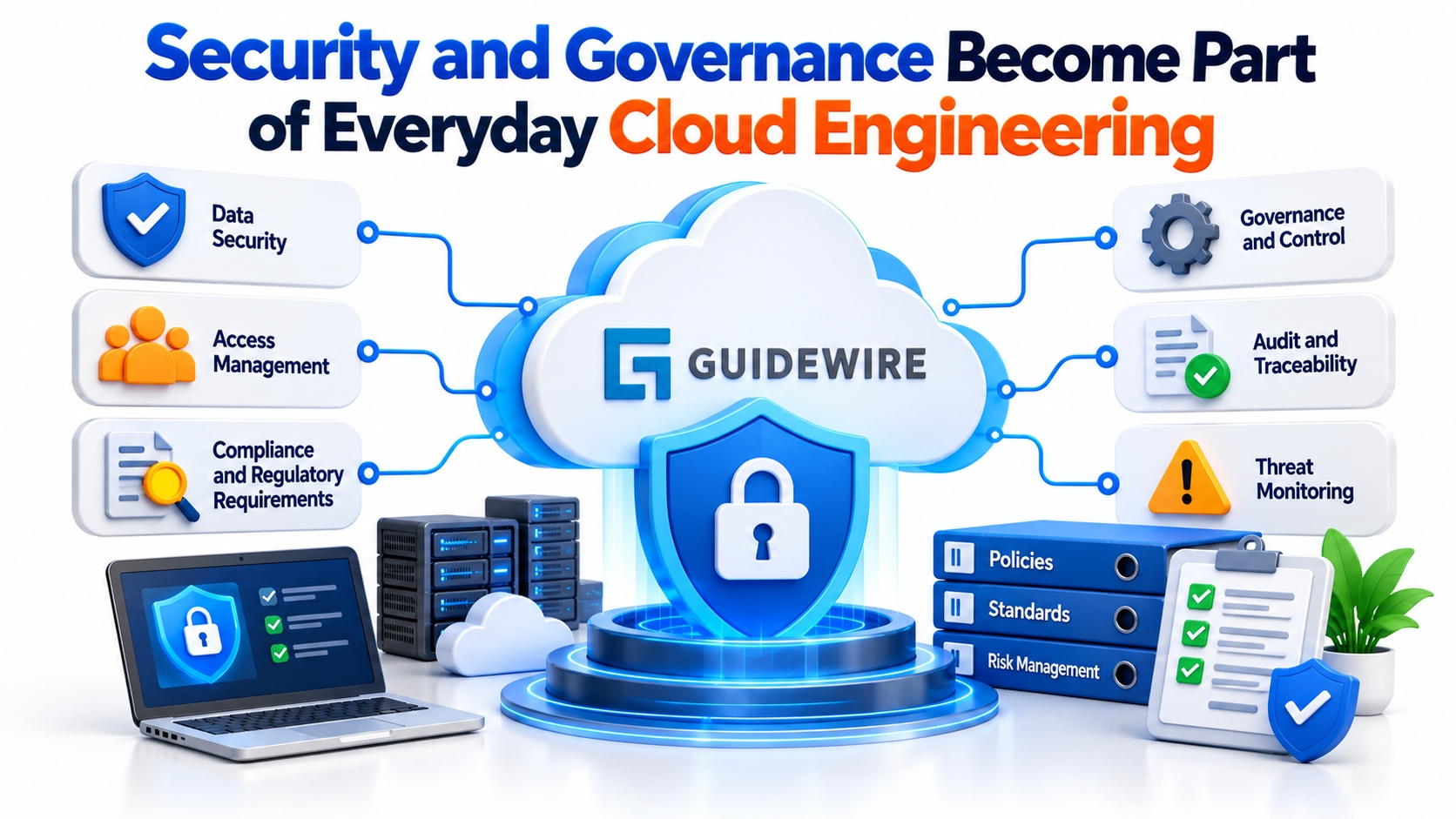
Insurance systems contain personally identifiable information, financial records, claims details and other sensitive customer data. Moving core capabilities toward cloud delivery therefore does not make governance less important. It makes governance part of architecture from the beginning.
Indian insurance organizations must consider regulatory requirements, cybersecurity controls, access management, auditability, business continuity and vendor risk alongside application functionality.
The practical engineering impact is significant. Teams need to think about least-privilege access, secure integrations, credentials, encryption, logging and environment controls while designing solutions—not after development has finished.
Cloud security also involves shared responsibilities. A managed platform may reduce infrastructure work, but an insurer still needs strong controls around users, configurations, integrations, data handling and operational processes.
For professionals, this creates an important career lesson: cloud knowledge should not stop at learning service names. Understanding how secure insurance transactions move between systems is far more valuable.
As Indian insurers expand digital channels and connect with broader ecosystems, professionals who can combine Guidewire knowledge with security-conscious architecture will become increasingly important.
Guidewire Cloud Is Changing What Indian Employers Need From Talent
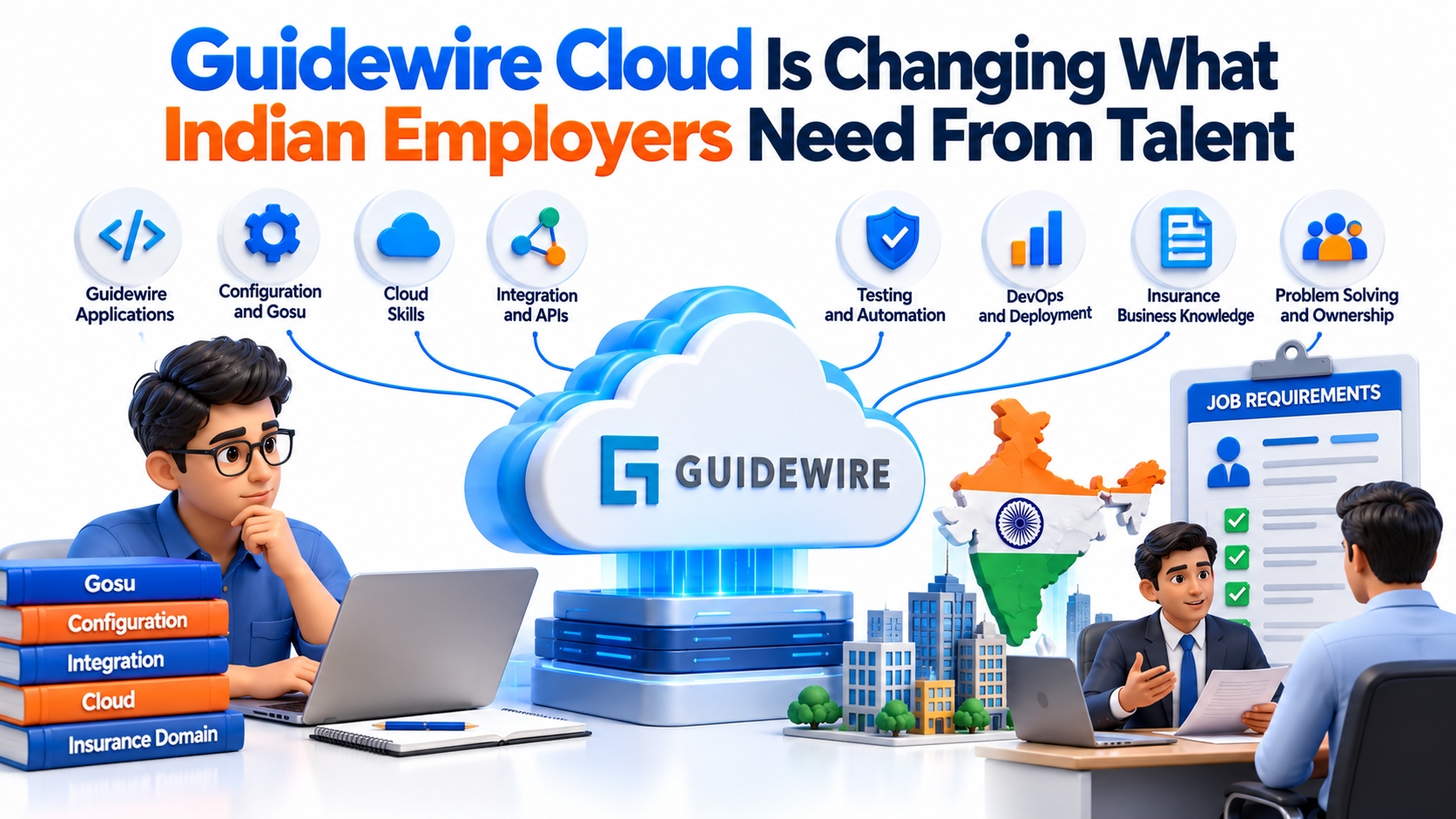
India already plays a major role in global insurance technology delivery. Cloud transformation raises the technical expectations attached to that role.
Earlier Guidewire career paths could be relatively specialized. A configuration developer concentrated on application behavior, an integration developer connected external systems, and infrastructure teams handled environments separately. Cloud delivery increasingly creates overlap among those responsibilities.
A modern Guidewire professional benefits from understanding:
PolicyCenter, BillingCenter or ClaimCenter fundamentals
Gosu and Guidewire data models
Cloud-compatible integration patterns
APIs and authentication
Git and CI/CD concepts
Automated testing
Logs, monitoring and troubleshooting
Basic insurance business workflows
This also affects regional technology hubs. Someone considering guidewire training in hyderabad, for example, should evaluate a program by whether it teaches real project flows rather than isolated features. A useful project could trace a policy or claim from business requirement through configuration, integration, testing and deployment.
Jasttech can align learning with this changing environment by emphasizing practical Guidewire workflows, insurance concepts, integration reasoning and cloud-oriented development practices. The goal should be producing engineers who understand why a solution works in an enterprise insurance environment, not simply where a particular configuration setting exists.
The Bigger Impact Will Be Faster Insurance Innovation
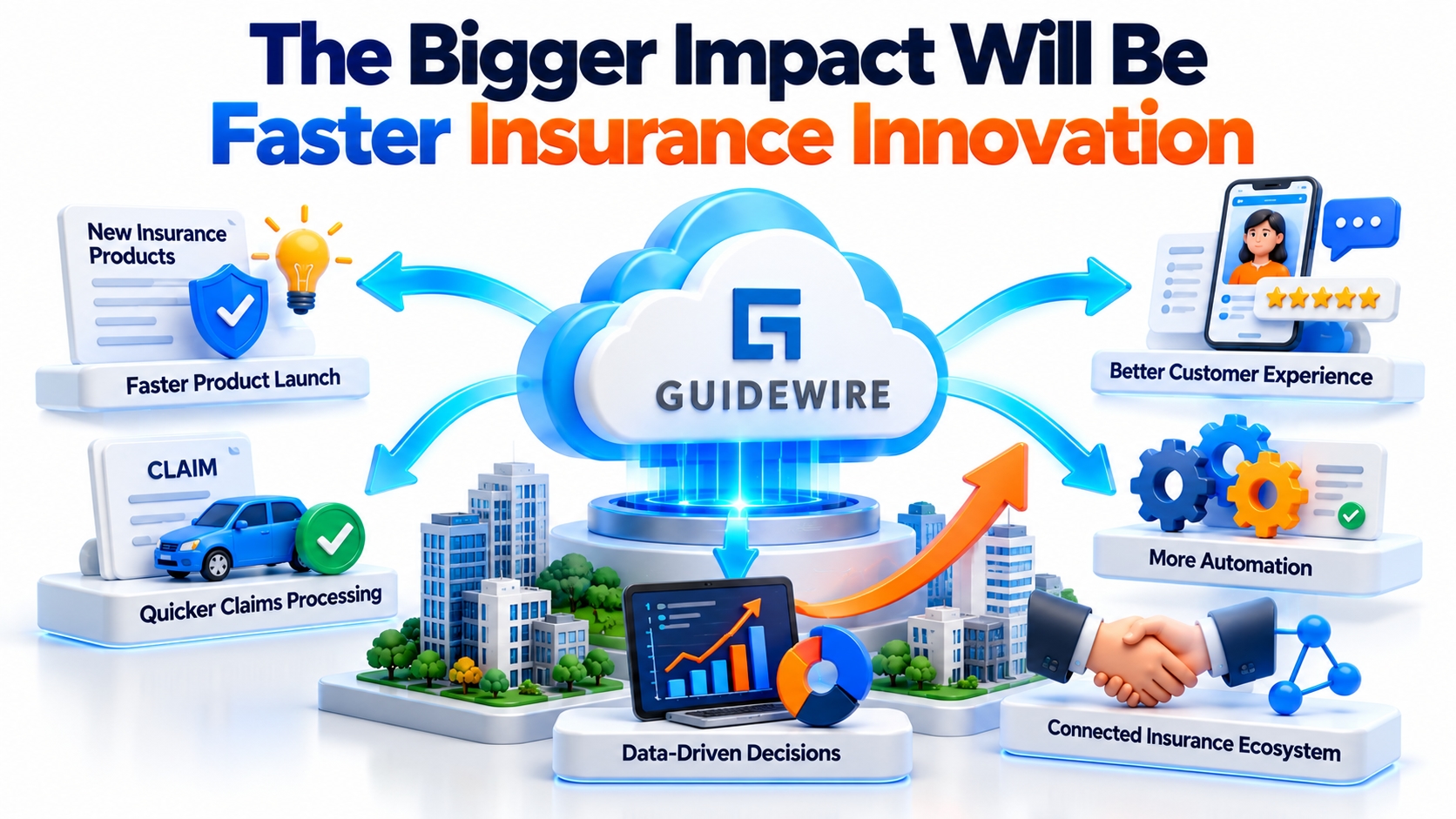
The long-term value of Guidewire Cloud will not be measured by how many servers insurers stop managing. It will be measured by what insurers can do differently after modernization.
A more adaptable core can provide a stronger foundation for digital distribution, analytics, automation, connected ecosystems and AI-assisted insurance processes. Faster platform evolution can also shorten the distance between a new business requirement and a production capability.
Consider claims. A modern architecture could connect the core claims workflow with document intelligence, fraud detection, payment services, customer notifications and analytics. The customer experiences one process, even though several technology components participate behind it.
The same principle applies to underwriting and policy servicing. Cloud-enabled integration makes it easier to connect specialized capabilities without forcing every function into the core application.
For Indian technology teams, this moves the conversation from “How do we maintain the insurance system?” toward “How do we continuously improve the insurance business?”
That is a much more important transformation than simply replacing an on-premises environment.
Conclusion
Guidewire Cloud adoption represents a shift in how insurance technology is designed, delivered and maintained. The core platform remains essential, but the surrounding engineering model increasingly depends on APIs, automation, secure integrations, continuous platform evolution and disciplined customization. Indian insurers and technology partners that treat cloud adoption only as infrastructure migration may capture only a fraction of its potential value.
For professionals, the message is equally important. The next generation of Guidewire careers will require broader engineering thinking alongside platform expertise. Developers who understand insurance workflows, Guidewire applications, integration architecture, cloud practices, testing and troubleshooting will be positioned to contribute to complete transformation programs. As India's insurance technology ecosystem evolves, cloud-ready Guidewire expertise can become an increasingly valuable bridge between insurance knowledge and modern enterprise engineering.