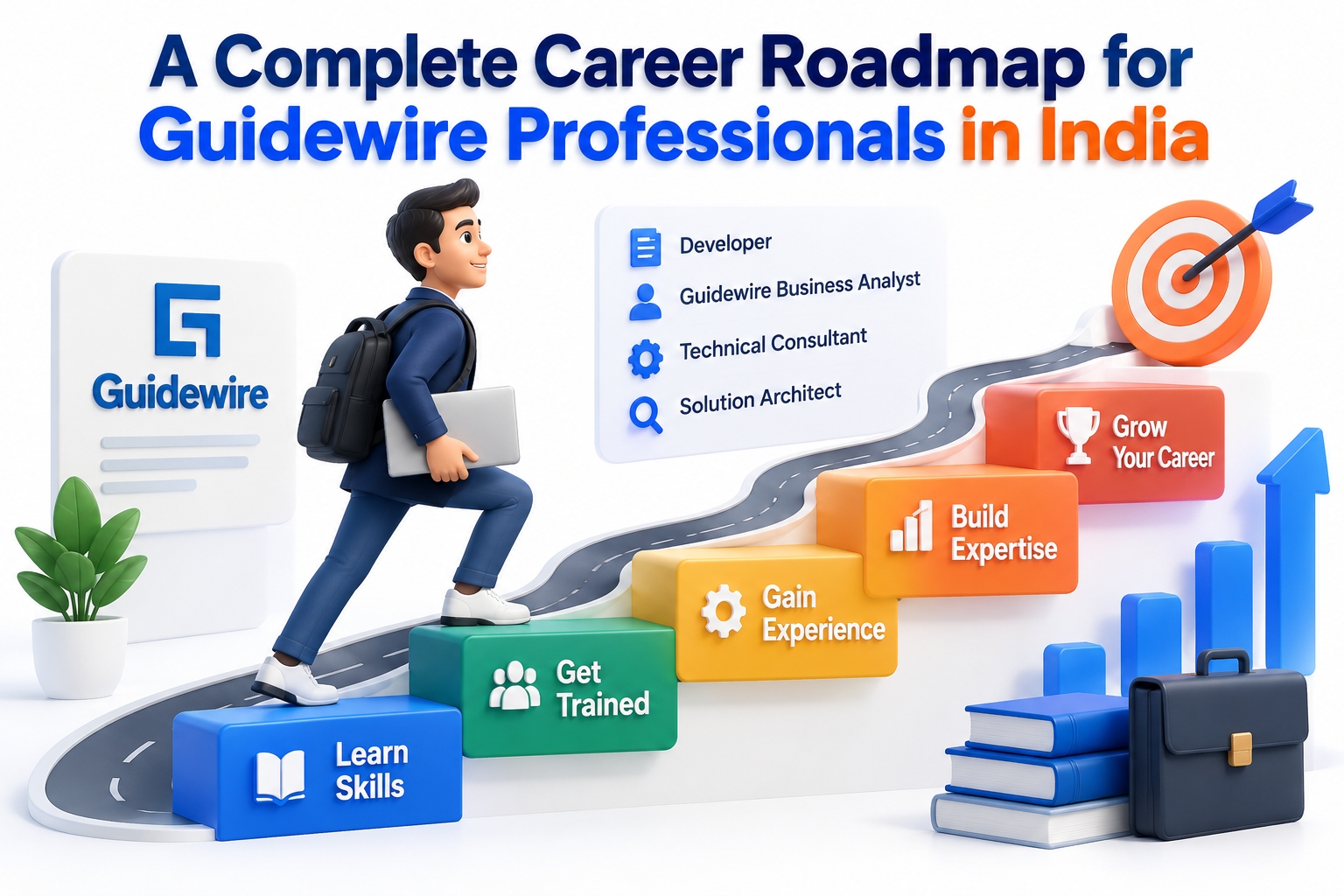
India’s insurance technology industry is creating new career possibilities for professionals who understand both software development and insurance operations. But learning Guidewire alone is not enough. The real challenge is knowing which skills to develop, which roles to target and how to build practical experience.
From fresh graduates to experienced Java developers and insurance professionals, Guidewire offers multiple career directions. Understanding the right learning sequence can help candidates avoid unnecessary training, develop relevant expertise and prepare for opportunities in India's evolving insurance technology ecosystem.
Understand the Guidewire Ecosystem Before Choosing Your Career
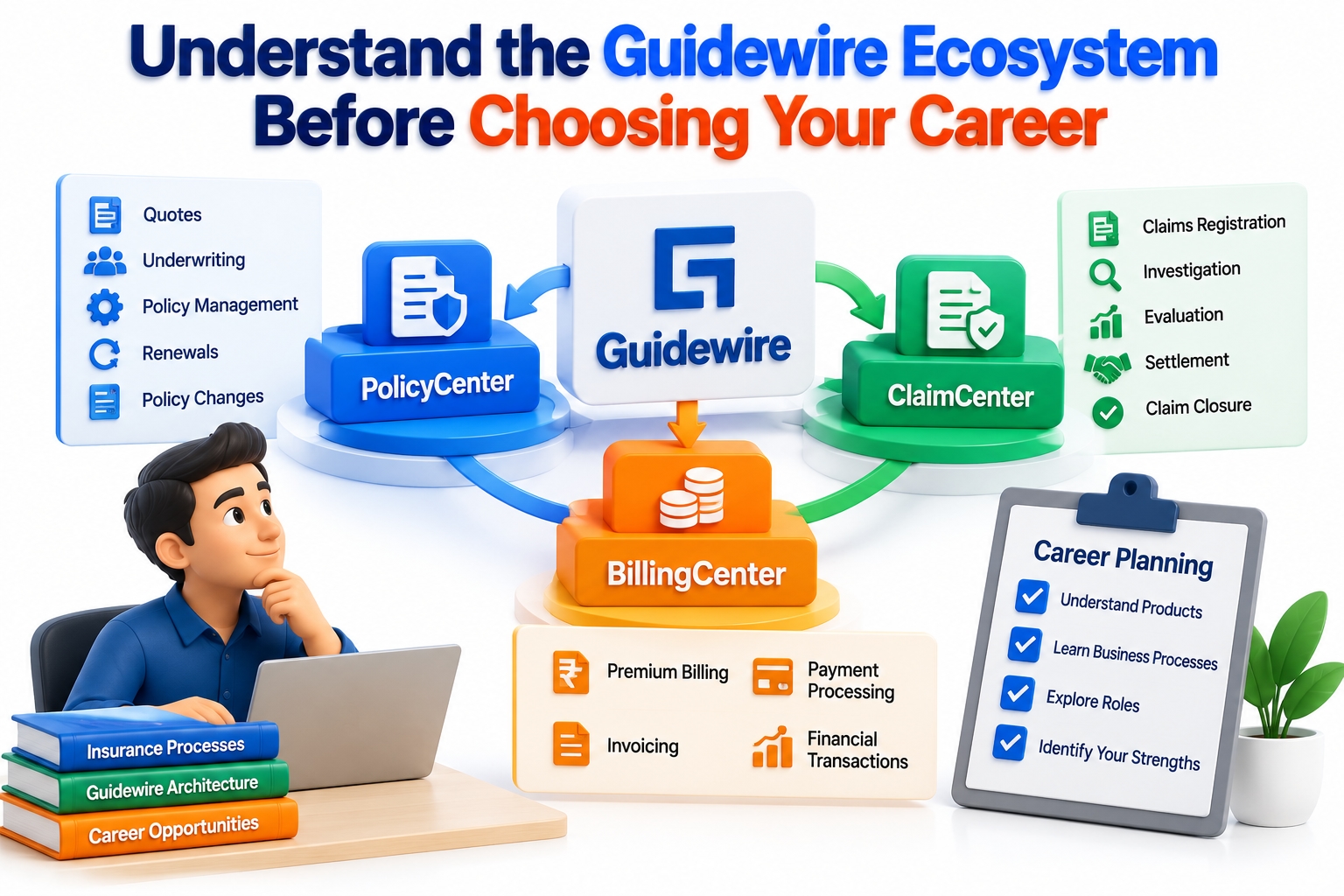
A successful Guidewire career begins with understanding how insurance companies use technology to manage their daily operations. Guidewire InsuranceSuite supports core property and casualty insurance processes, including policy administration, claims management and billing. Professionals who understand these business functions can make better technical decisions and contribute more effectively to implementation projects.
Guidewire InsuranceSuite consists of three primary applications:
PolicyCenter: Manages insurance policies, quotations, underwriting, renewals and policy changes.
ClaimCenter: Supports claims registration, investigation, evaluation, settlement and related workflows.
BillingCenter: Handles premium billing, payment processing, invoicing and financial transactions.
Each application supports different insurance activities, but enterprise implementations often require them to exchange information. For example, when a customer purchases a policy, policy details must remain consistent with billing records. Similarly, claims teams need access to relevant coverage information before processing settlements.
Beginners should first understand these business relationships before exploring advanced configuration or integration concepts. Learning basic insurance terminology, policy lifecycles, claims workflows and billing processes creates a foundation for technical specialization.
This approach is particularly valuable for professionals transitioning from Java development, software testing, business analysis or insurance operations into Guidewire-related careers.
Choose the Right Guidewire Career Path Based on Your Skills
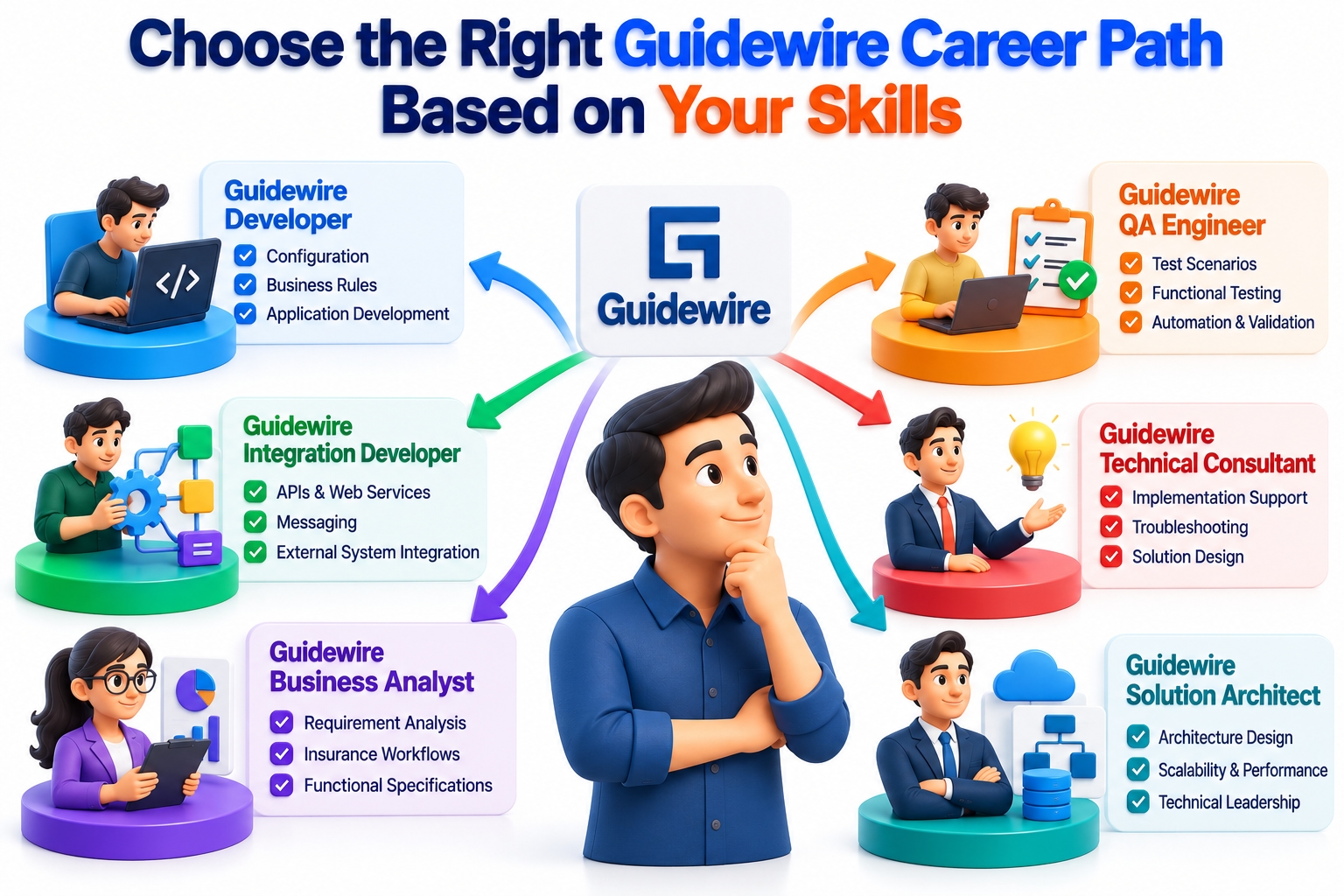
Guidewire careers are not limited to software development. Insurance transformation projects require professionals with technical, functional, testing and architectural expertise. Selecting a suitable role early helps candidates concentrate on relevant technologies rather than attempting to master every component simultaneously.
Some important Guidewire career opportunities include:
Guidewire Developer: Develops configuration changes, business rules, application functionality and data model extensions.
Guidewire Integration Developer: Builds connections between InsuranceSuite and external applications using APIs, messaging and integration services.
Guidewire Business Analyst: Translates insurance business requirements into functional specifications, user stories and acceptance criteria.
Guidewire QA Engineer: Validates insurance workflows, configuration changes, integrations and application behavior.
Guidewire Technical Consultant: Supports implementation design, customization, troubleshooting and technical delivery.
Guidewire Solution Architect: Designs scalable solutions while considering integration boundaries, performance, security and maintainability.
Career selection should reflect existing strengths. Java developers may find configuration and integration suitable because these roles require programming knowledge. Software testers can transition into Guidewire QA by combining insurance workflows with test automation. Professionals experienced in insurance operations may prefer business analysis.
For example, a Guidewire Business Analyst working on PolicyCenter must understand how underwriting requirements translate into application behavior. This requires communication, requirement analysis and insurance knowledge rather than advanced programming alone.
Choosing a specialization does not permanently restrict career growth. Experienced professionals frequently expand into integration, consulting, technical leadership or architecture after developing strong foundational expertise.
Build Essential Technical Skills Through Structured Guidewire Training
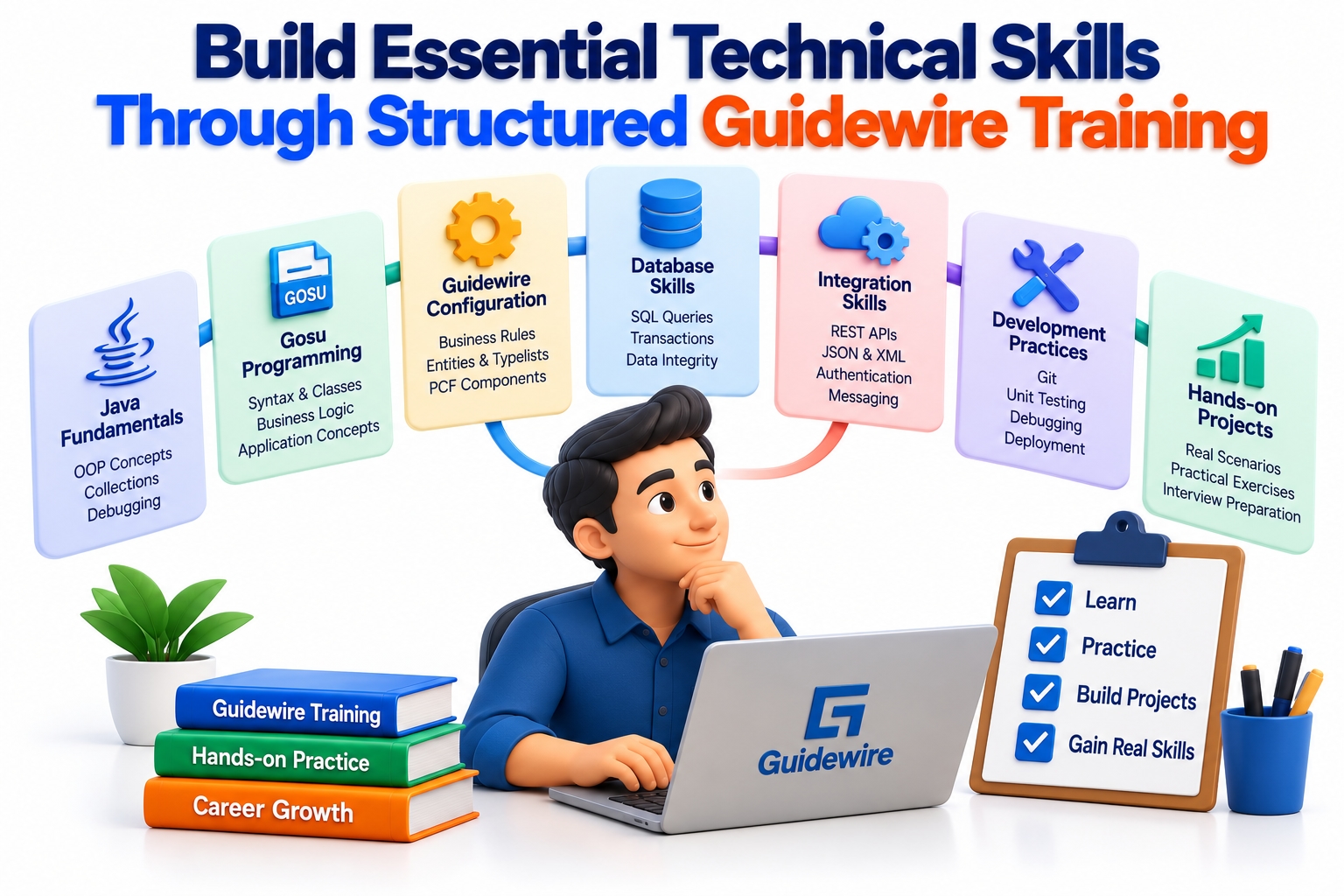
Technical preparation should follow a logical sequence that connects programming fundamentals with actual Guidewire implementation activities. Candidates who begin directly with advanced platform concepts often struggle because they lack an understanding of application architecture and insurance business processes.
A practical learning roadmap should cover:
Java fundamentals: Object-oriented programming, collections, exception handling and debugging.
Gosu programming: Syntax, classes, business logic and application-specific development concepts.
Guidewire configuration: Business rules, validations, typelists, entities and PCF interface components.
Database concepts: SQL queries, relationships, transactions and data integrity.
Integration fundamentals: REST APIs, JSON, authentication, messaging and error handling.
Development practices: Git, unit testing, debugging and deployment fundamentals.
Professionals exploring guidewire training in india should evaluate whether a course connects these concepts through practical exercises. A useful curriculum should explain not only how configuration works but also why particular implementation approaches are appropriate for insurance requirements.
Location-based learning options can also support career preparation. For example, candidates considering guidewire training in chennai can compare instructor experience, project assignments, curriculum relevance and opportunities for technical mentoring.
Training providers such as Jasttech can be considered alongside other learning options, with particular attention to practical exposure, trainer expertise and transparent course outcomes.
The objective should be to develop implementation skills rather than simply complete a course. Candidates should understand how to configure a business rule, investigate an application error and explain the effect of a change on related insurance workflows.
Gain Practical Experience Through Realistic Guidewire Projects
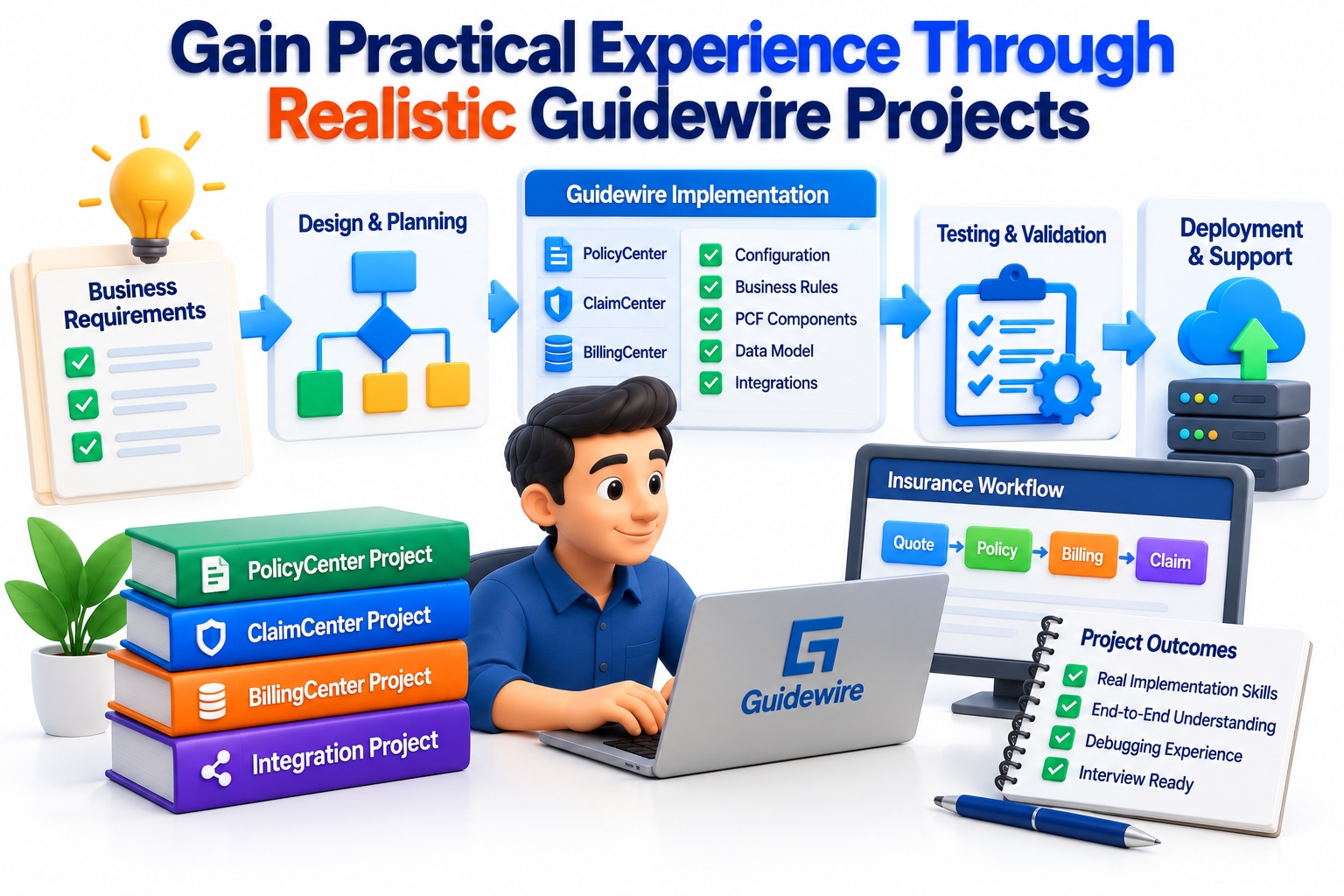
Practical experience is one of the most important elements of Guidewire career preparation. Employers need professionals who can translate requirements into working solutions, identify technical problems and understand how different insurance processes interact.
A useful beginner project could focus on an automobile insurance workflow. The objective might involve creating a quotation, validating customer information, applying business rules and preparing policy information for downstream billing operations.
The project can include several implementation activities:
Define insurance requirements and expected application behavior.
Create validation rules for customer and vehicle information.
Configure relevant policy fields and interface components.
Design an API interaction with an external service.
Develop test scenarios for successful and unsuccessful transactions.
Document defects, debugging steps and implementation decisions.
Where licensed Guidewire environments are unavailable, candidates can build supporting Java applications, REST API prototypes, insurance workflow diagrams and test documentation to demonstrate related engineering skills.
These exercises help candidates explain technical decisions during interviews. For example, an interviewer may ask how an integration should respond when an external payment service becomes unavailable.
A strong answer should consider retries, error handling, transaction consistency, logging and operational monitoring.
Project documentation is equally important. Candidates should maintain requirement descriptions, architecture diagrams, test results and technical explanations that demonstrate how their solution addresses a business problem.
Understand Guidewire Cloud, Certifications and Emerging Skills
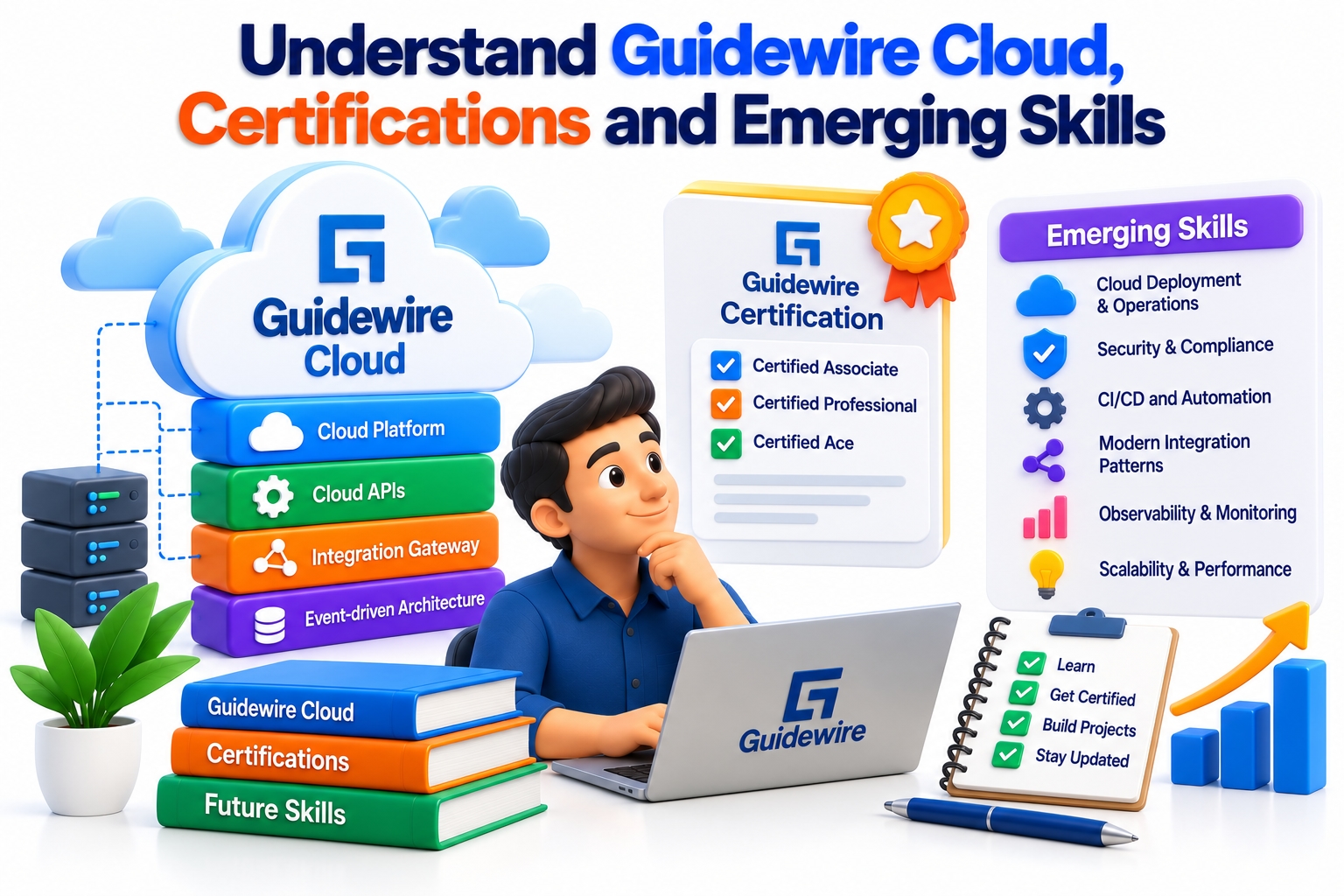
Guidewire Cloud is influencing the skills required for modern insurance technology projects. Professionals increasingly need to understand cloud-oriented development, secure integrations, deployment practices and maintainable application extensions.
Developers should become familiar with Guidewire Cloud Platform concepts, Cloud APIs, Integration Gateway and event-driven integration patterns. Knowledge of authentication, observability, automated testing and CI/CD practices can also strengthen technical readiness.
Certification provides another structured development opportunity. Guidewire offers role-based certification pathways, including Certified Associate and Certified Ace levels. These credentials validate relevant platform knowledge and implementation capabilities.
However, candidates should distinguish between completing third-party training and earning an official Guidewire certification. Official certification follows Guidewire Education requirements, including applicable coursework, assessments and eligibility procedures.
Professionals should also understand that certifications are associated with specific roles, products and releases. Maintaining current knowledge is important as cloud capabilities and implementation practices evolve.
The strongest career strategy combines technical fundamentals, practical experience and continuous learning rather than depending entirely on certification credentials.
Prepare for Guidewire Jobs and Build Long-Term Career Growth
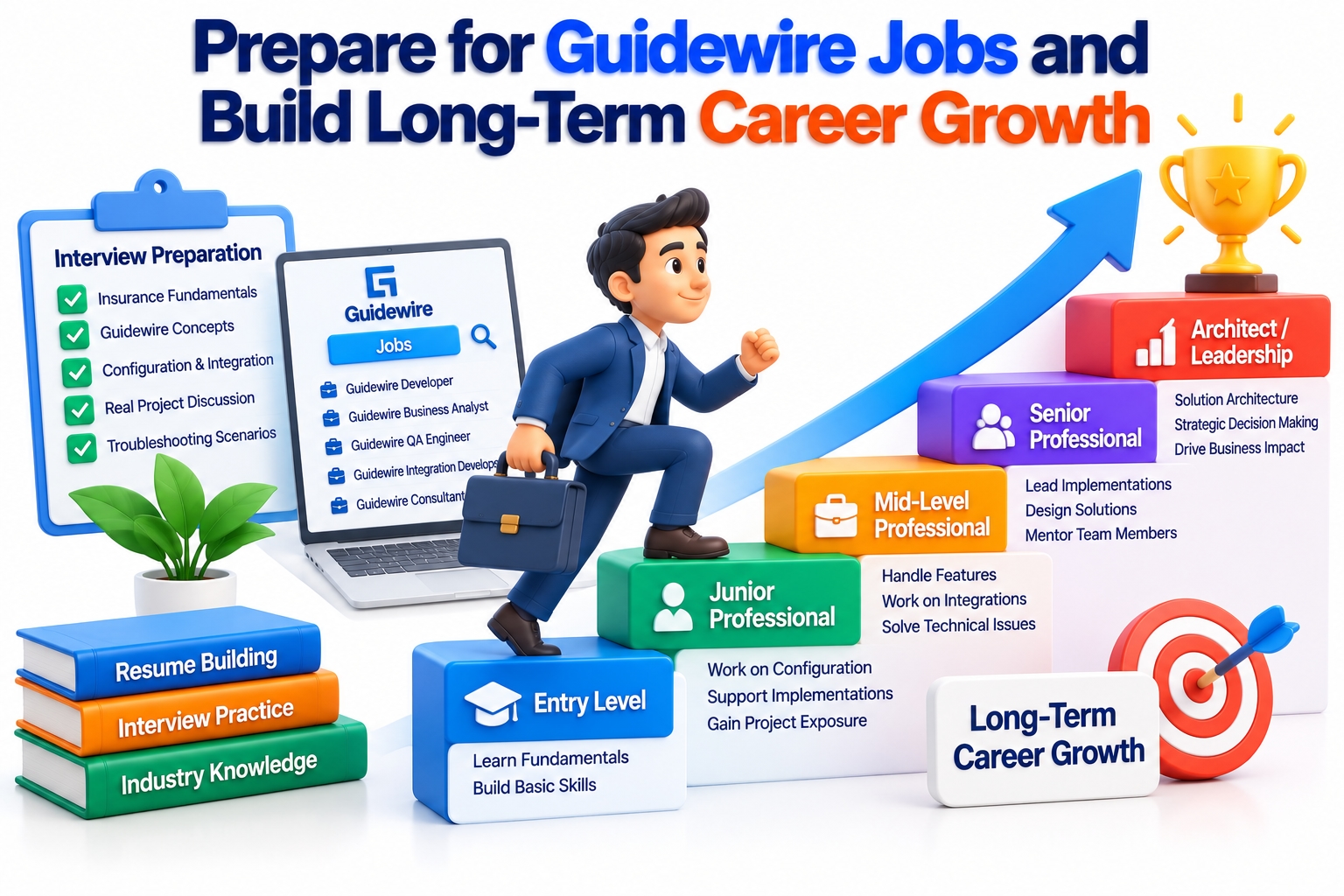
Finding a Guidewire job requires more than listing technologies on a resume. Candidates must demonstrate how their knowledge applies to insurance requirements, application behavior and real implementation challenges.
Interview preparation should cover insurance fundamentals, Guidewire architecture, programming concepts, configuration, integrations and troubleshooting scenarios. Candidates should also practice explaining projects clearly, including the requirements, technical decisions, challenges and outcomes.
A practical career progression may look like this:
Entry level: Develop insurance domain knowledge, programming fundamentals and platform awareness.
Junior professional: Work on configuration tasks, testing, defect resolution and supervised development.
Mid-level professional: Take ownership of features, integrations, technical troubleshooting and implementation quality.
Senior professional: Lead solution design, review architecture decisions, mentor engineers and coordinate delivery.
Leadership level: Progress toward technical architect, solution architect, delivery lead or specialized consulting responsibilities.
Indian technology centers such as Bengaluru, Hyderabad, Pune and Chennai provide environments where professionals can explore insurance technology and enterprise application opportunities. Actual openings vary by employer, project requirements and experience level.
Candidates should tailor resumes to the role they want, highlighting relevant technical skills and demonstrable project outcomes. Regular interview practice, professional networking and continued exposure to modern insurance architecture can improve long-term career readiness.
Conclusion
Building a successful Guidewire career in India requires a combination of insurance domain understanding, technical specialization and practical implementation experience. Professionals who follow a structured learning roadmap can develop stronger foundations, identify suitable career opportunities and prepare more effectively for enterprise insurance projects.
As insurance platforms continue evolving toward cloud-based architecture and connected digital services, Guidewire professionals must keep upgrading their capabilities. Whether beginning as a developer, tester, business analyst or integration specialist, long-term growth depends on solving real business problems, maintaining technical relevance and demonstrating consistent engineering expertise.