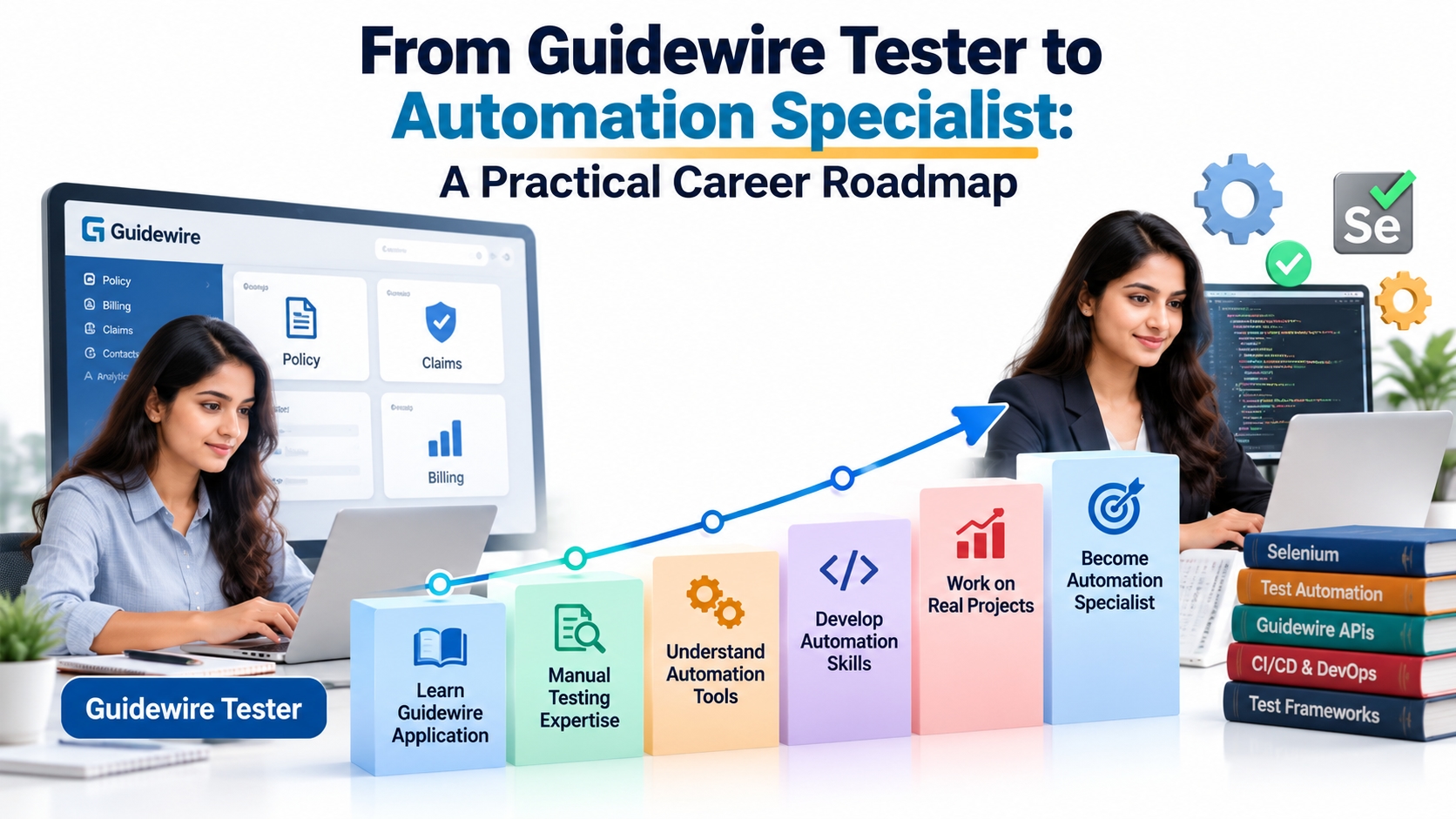
The Property and Casualty (P&C) insurance landscape relies heavily on robust core administrative software platforms to execute daily policy creation, claims processing, and billing operations. Enterprise insurers worldwide utilize Guidewire InsuranceSuite to maintain operational efficiency and deliver digital experiences to policyholders. Quality assurance teams play a vital role in ensuring these mission-critical systems execute complex business rules and data validations accurately across various releases. However, relying solely on manual test execution can create operational bottlenecks as insurance systems scale, leading software engineering teams to prioritize automated testing frameworks for faster regression execution and enhanced system reliability.
For Quality Assurance professionals seeking career advancement, transitioning from manual validation to test automation represents a logical step toward specialized engineering roles. Acquiring practical exposure to specialized automation tools, script execution engines, and object-driven testing frameworks through programs like Guidewire testing training equips functional testers with the technical capabilities required to build maintainable, automated regression test suites. Moving from manual verification to automated validation enables quality engineers to address operational challenges, streamline continuous delivery pipelines, and establish sustainable quality practices across enterprise IT consultancies.
Understanding the Role Evolution from Manual Quality Assurance to Automation Engineering
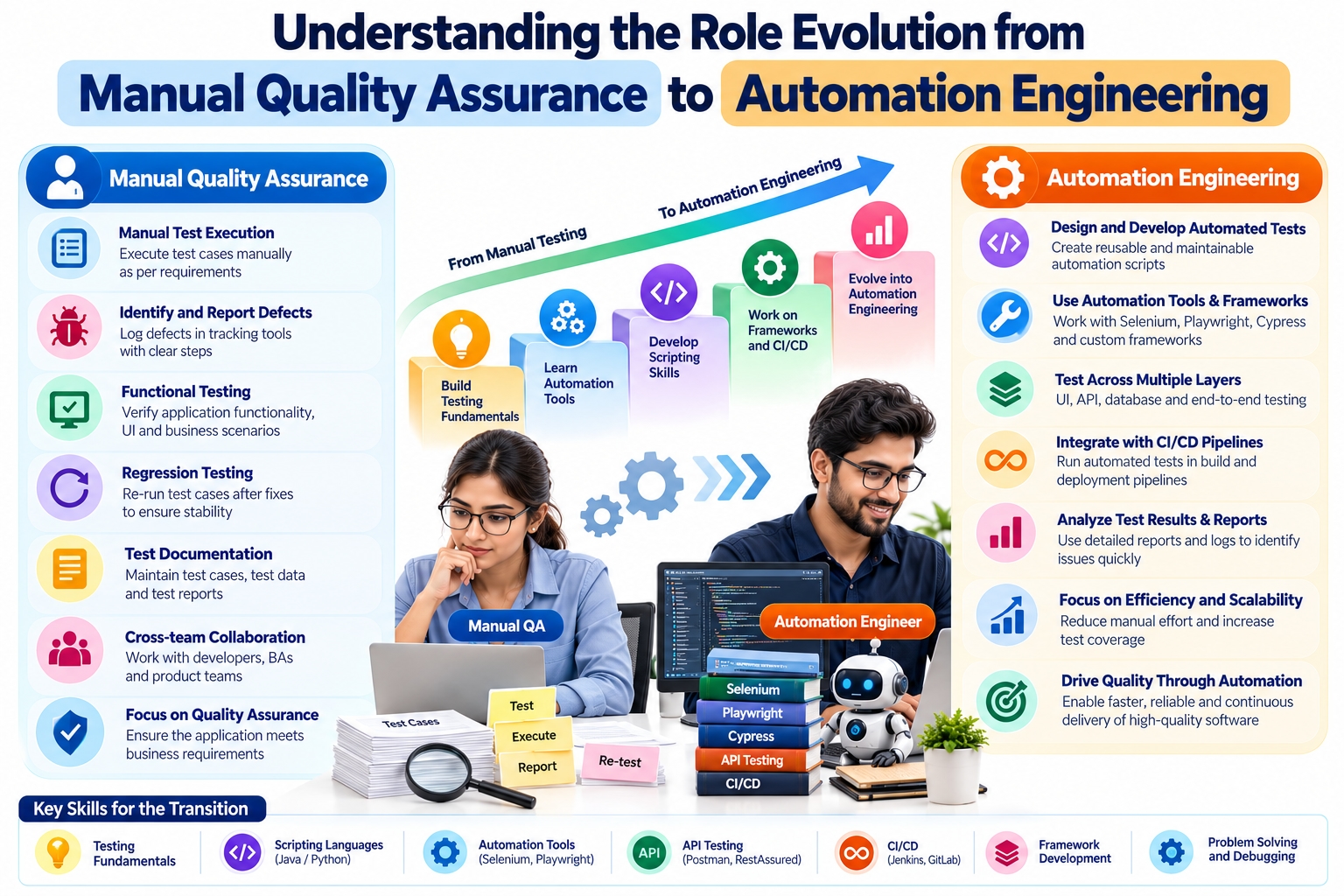
The transition from a manual software tester to an automation specialist involves a shift in focus from manual script execution to designing software-driven validation systems. A manual functional tester primarily reviews functional specifications, verifies screen layouts, and manually inputs policy or claim data to validate system behavior against expected business rules. While this approach effectively catches UI bugs during initial feature development, performing manual regression checks across large InsuranceSuite environments requires significant time and effort, increasing the risk of human error during routine maintenance releases.
Automation specialists approach quality assurance from an engineering perspective, developing modular scripts, maintaining test data banks, and configuring automated validation frameworks. These frameworks interact directly with application endpoints, database layers, and web interfaces, executing complex end-to-end scenarios automatically. By automating repetitive validation tasks, engineers can allocate more time to exploratory testing, performance analysis, and continuous delivery pipeline maintenance. This shift improves test coverage, reduces execution time from weeks to hours, and builds a sustainable testing workflow for long-term project success.
Essential Technical Skills: Mastering Gosu, Selenium, and API Testing Frameworks
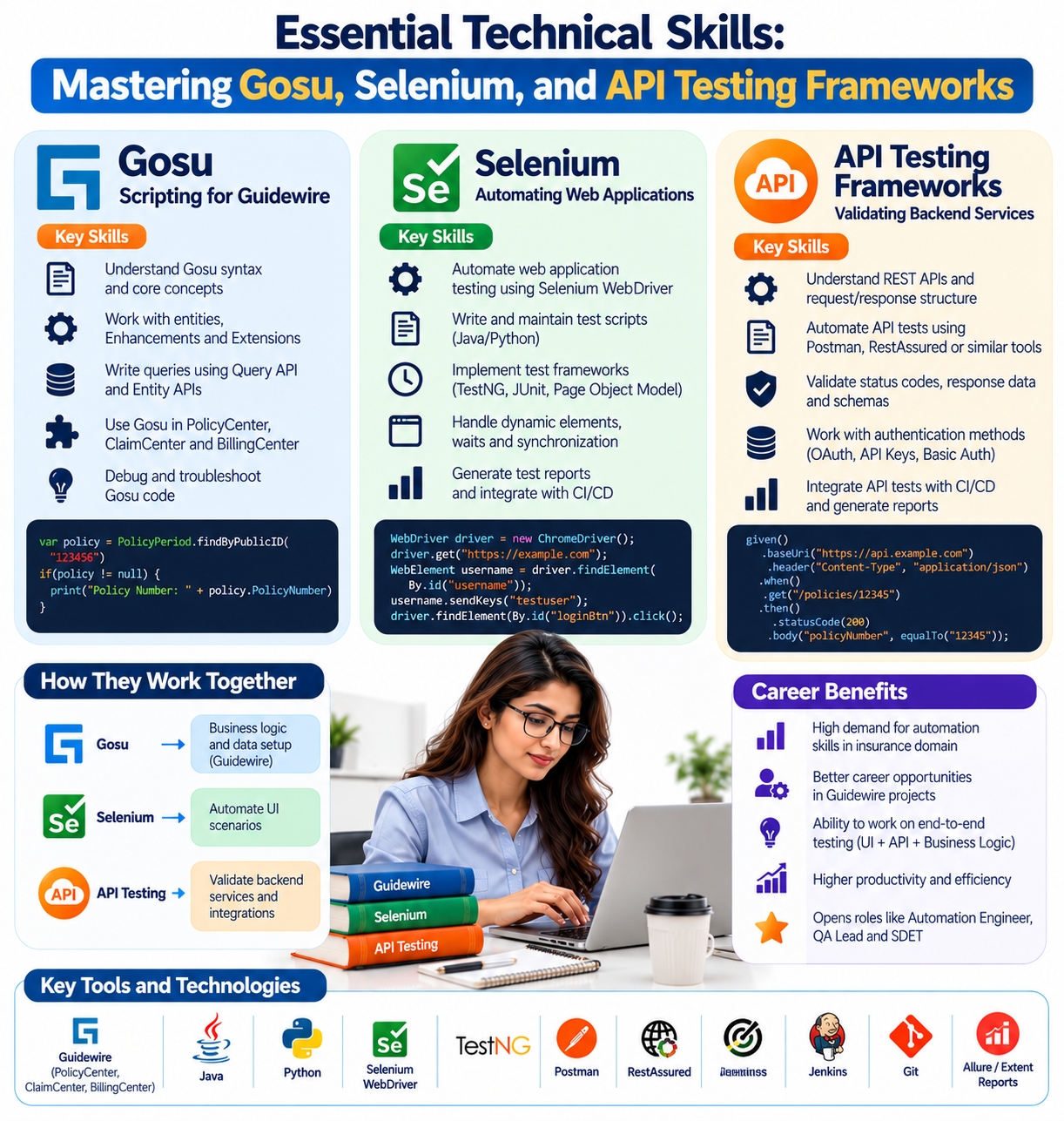
Transitioning into test automation requires developing a strong foundation in programming concepts, test framework design, and API interaction protocols. While standard web automation tools interact primarily with the browser DOM, Guidewire applications use a proprietary object model and underlying programming language called Gosu. Understanding Gosu syntax, object hierarchy, and data structure manipulation allows automation engineers to interact directly with core platform entities, execute unit tests within Guidewire Studio, and create reusable test components that stay aligned with backend configuration changes.
For browser-level automation, engineers utilize Selenium WebDriver integrated with Java or Gosu within object-oriented frameworks like the Page Object Model (POM). Aspiring automation engineers often refine their technical capabilities through specialized regional programs such as Guidewire training in Chennai to learn how to design robust element locators for dynamically generated web screens, handle asynchronous AJAX requests, and manage complex test data across multi-tier environments. Furthermore, because Guidewire relies on REST and SOAP web services to connect with third-party payment gateways, rating engines, and motor vehicle departments, mastering API automation using frameworks like RestAssured or Postman is essential for validating cross-system data exchanges.
Navigating Core Guidewire Applications: PolicyCenter, ClaimCenter, and BillingCenter
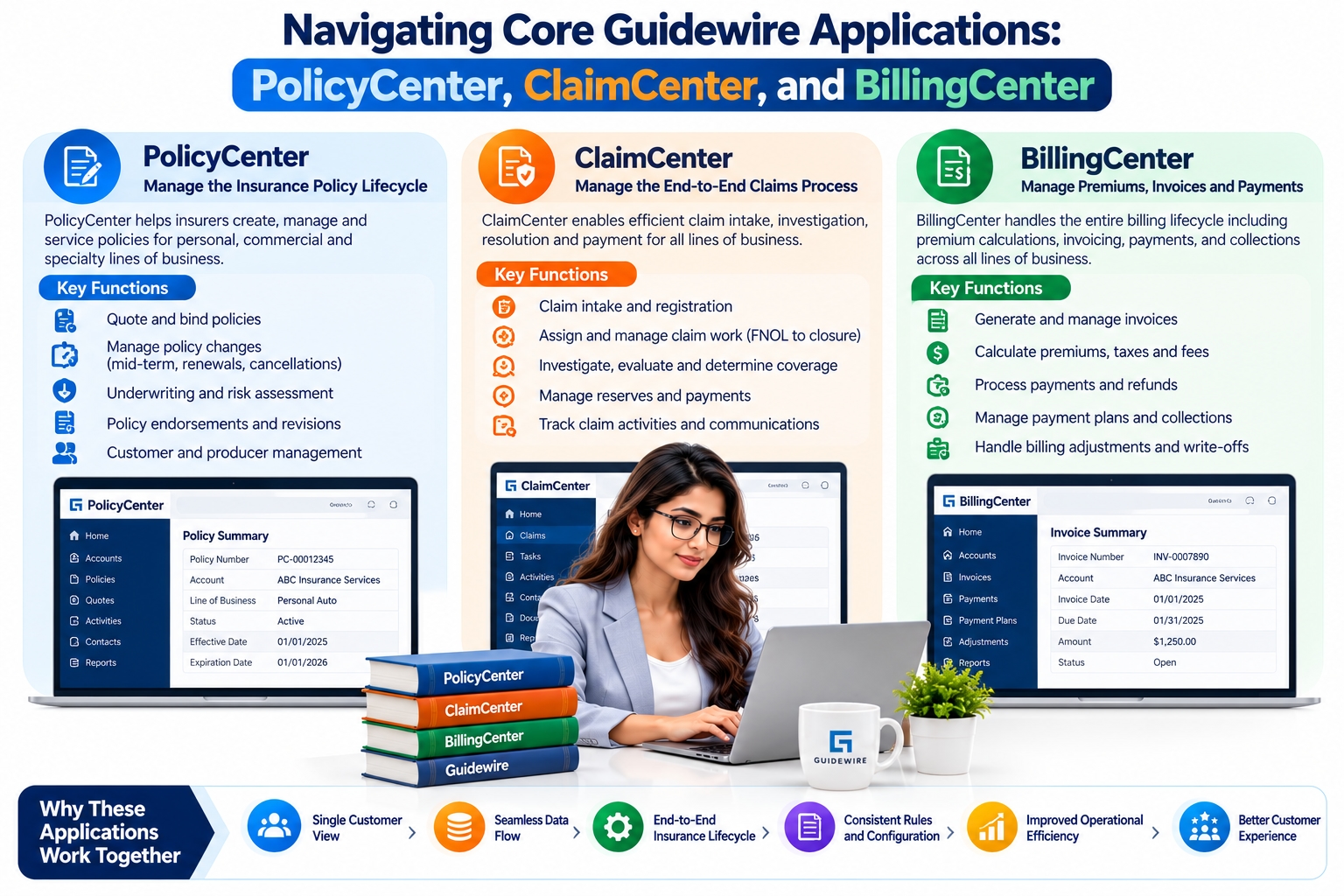
Developing effective automation frameworks requires a thorough understanding of the distinct functional workflows across the core applications of the InsuranceSuite platform. PolicyCenter manages product model rules, quoting processes, underwriting approvals, and policy maintenance transactions. ClaimCenter coordinates the First Notice of Loss (FNOL) intake, exposure setup, reserve adjustments, and claim payment disbursements. BillingCenter oversees payment plan definitions, invoice distributions, commission calculations, and delinquency workflows. Automation specialists must design modular scripts capable of driving end-to-end transactions across all three engines seamlessly.
Automation frameworks must also accommodate complex, non-linear transactional logic within these core modules. Managing end-to-end policy lifecycle validations, such as handling out-of-sequence transactions or mid-term endorsements, requires test scripts to handle retroactive changes, verify automated rating engine recalculations, and confirm that revised billing schedules synchronize across connected applications. Designing automated test scenarios that account for complex business conditions ensures that automated regression suites provide thorough verification without generating false-positive test failures during routine nightly test runs.
Building a Robust Automation Framework Tailored for InsuranceSuite
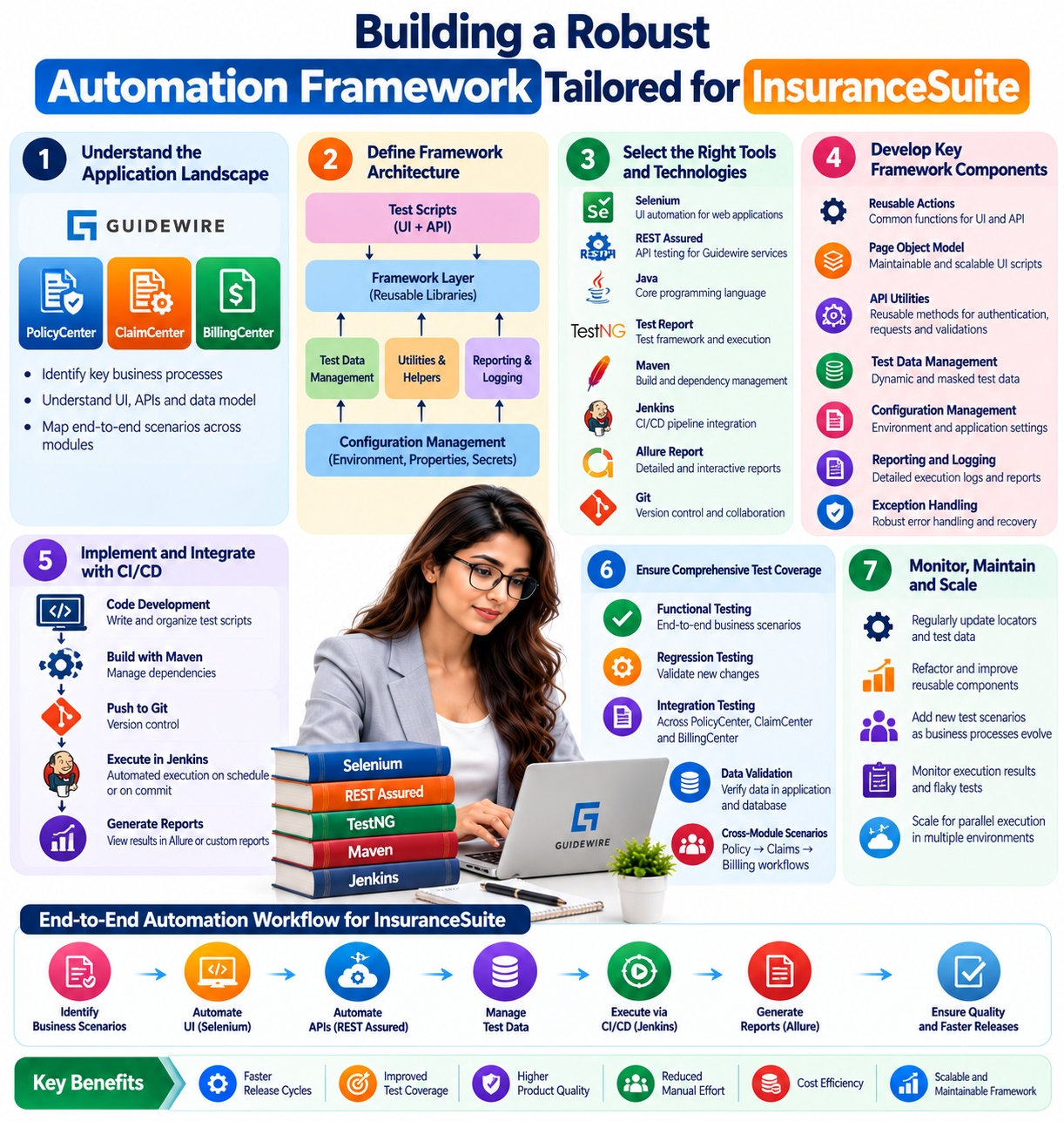
Generic web automation tools often struggle with Guidewire applications due to dynamic UI element generation, nested iframe architectures, and complex data dependencies. Building an enterprise-ready testing framework requires constructing a layered architecture that decouples page element locators, business test logic, and environment data configurations. Utilizing design patterns like the Page Object Model ensures that UI changes in Guidewire Studio require updating element locators in only one central repository, keeping test suites maintainable across major software releases.
[ Test Execution Layer: TestNG / JUnit ]
                  |
                  v
[ Business Logic Layer: Page Objects & Helper Utility Classes ]
                  |
                  v
[ Integration & Driver Layer: Selenium WebDriver & RestAssured APIs ]
                  |
                  v
[ Target Application Suite: PolicyCenter | ClaimCenter | BillingCenter ]
Robust frameworks incorporate automated test data management strategies alongside UI validation. Rather than relying solely on manual data entry through web screens, advanced frameworks utilize direct database queries or API injection to generate prerequisites, such as pre-bound policies or open claim exposures, in seconds. Additionally, integrating automated scripts into Continuous Integration and Continuous Deployment (CI/CD) tools like Jenkins or Azure DevOps enables continuous quality verification, running automated regression suites automatically whenever configuration code changes are committed to version control repositories.
Step-by-Step Practical Career Roadmap to Transition Successfully
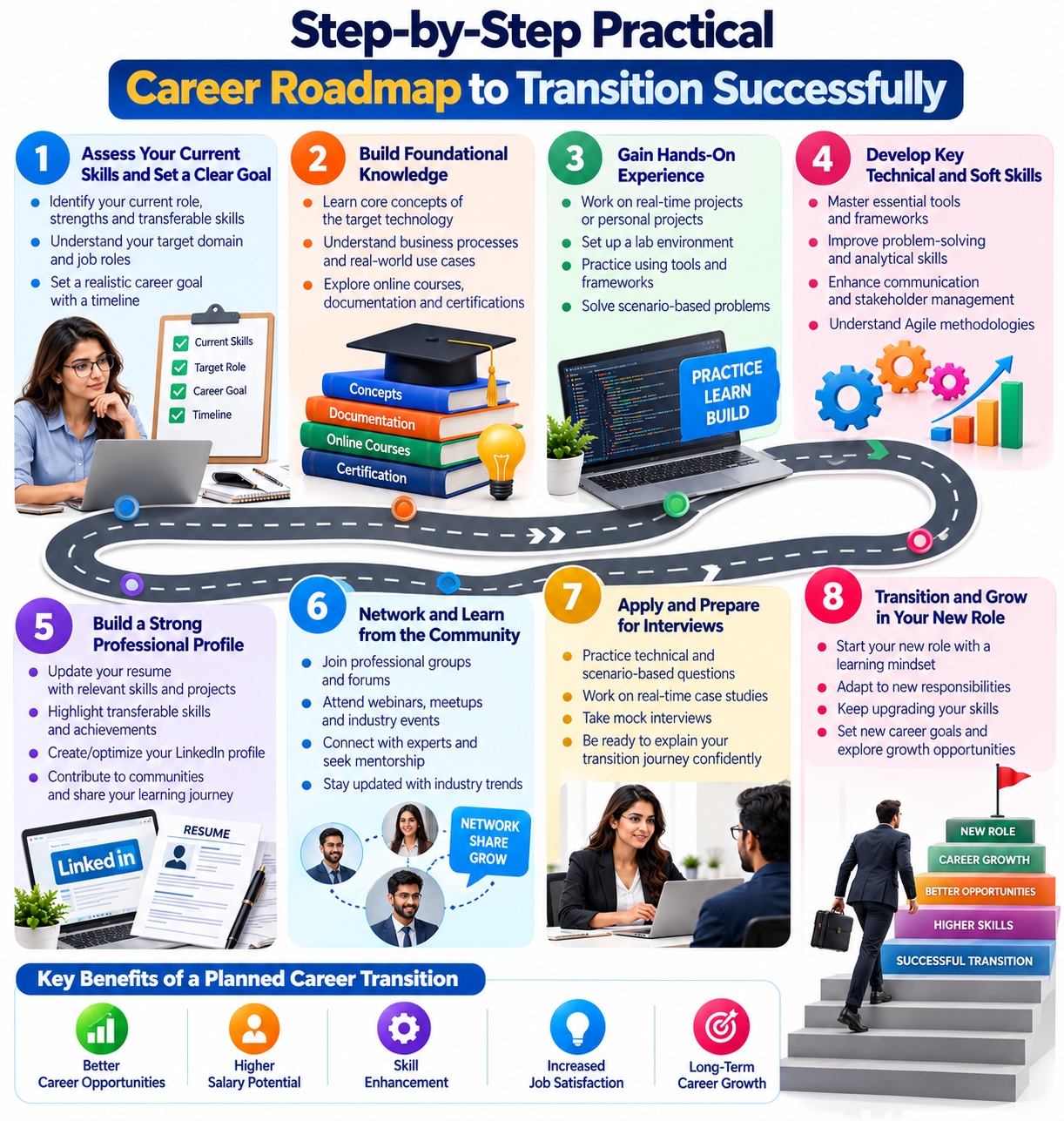
Transitioning from manual verification to an automation specialist role requires a structured approach to learning, application, and practical skills development:
Step 1: Master Software Testing Fundamentals and Core Insurance Domain Logic
Build a strong understanding of P&C insurance concepts, policy lifecycles, and core business terminology. Understanding how underwriting, billing, and claims workflows operate provides essential context for identifying key automation scenarios and building relevant test scripts.
Step 2: Learn Core Object-Oriented Programming and Scripting Languages
Gain proficiency in object-oriented programming concepts using languages like Java, Python, or Gosu. Focus on understanding data structures, conditional control flow, exception handling, and object inheritance to write modular, maintainable automation code.
Step 3: Gain Hands-On Exposure to Web and API Automation Tools
Practice building automation scripts using Selenium WebDriver for UI validation and tools like Postman or RestAssured for API testing. Focus on handling dynamic web elements, managing browser sessions, validating JSON and XML payloads, and performing assertion checks.
Step 4: Develop Specialized Framework Design Capabilities
Learn to design modular automation frameworks from scratch using design patterns like Page Object Model, Data-Driven Testing, and Keyword-Driven Testing. Integrate reporting tools like ExtentReports or Allure to generate clear execution metrics for project stakeholders.
Step 5: Master CI/CD Integration and Version Control Systems
Understand how to manage automation code using Git version control and configure automated execution triggers within CI/CD build tools like Jenkins or GitLab CI. Learn to analyze build logs, isolate flaky test runs, and maintain reliable regression suites.
Industry Demand, Career Opportunities, and Salary Trends in Major IT Hubs
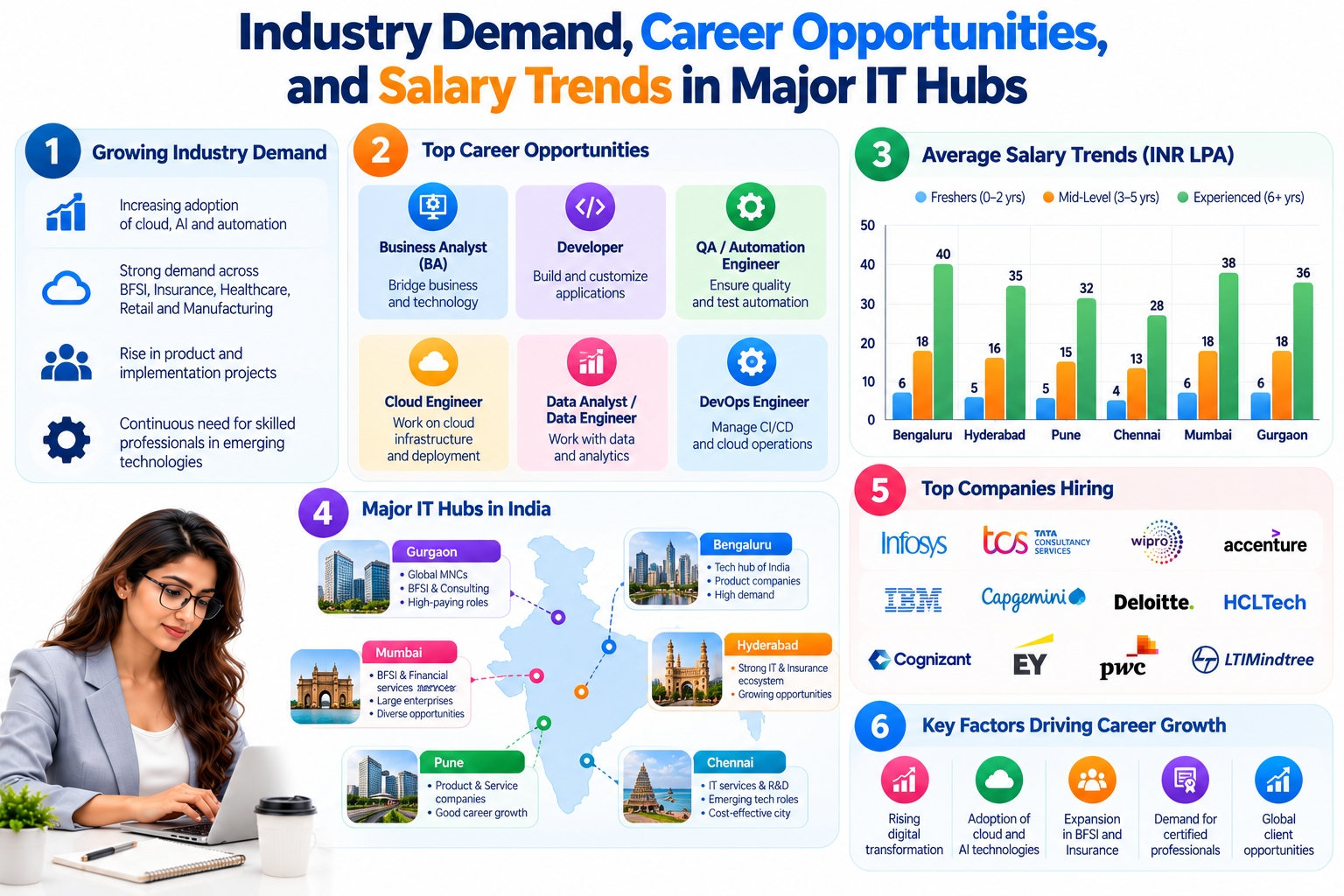
The demand for specialized quality engineers remains high across global technology hubs, IT consulting firms, and insurance Capability Centers. Organizations migrating legacy core systems to modern cloud platforms like Guidewire Cloud require skilled engineers who can validate system functionality rapidly through automated regression pipelines. IT services companies continuously recruit professionals who possess both functional domain knowledge and hands-on automation expertise to maintain project quality standards.
Professionals seeking career growth often explore localized professional networks and specialized learning ecosystems, such as Guidewire training in Hyderabad, to connect with enterprise hiring managers and gain exposure to industry projects. Salary structures reflect this growing demand, with automation specialists commanding higher compensation packages compared to manual quality assurance roles across early, mid, and senior career levels:
Entry-Level Automation Engineers (1–3 years experience): Typically earn compensation ranging between ₹6.0 LPA and ₹9.5 LPA, depending on programming proficiency, domain understanding, and platform familiarity.
Mid-Level Automation Specialists (4–7 years experience): Command salaries ranging from ₹10.0 LPA to ₹17.5 LPA as they take responsibility for framework maintenance, API integration testing, and CI/CD pipeline management.
Senior Quality Architects and Leads (8+ years experience): Earn packages ranging between ₹18.0 LPA and ₹30.0+ LPA, leading enterprise test strategy, designing multi-application automation frameworks, and managing global QA teams.
Future Outlook: AI-Driven Testing and Cloud Platform Automation
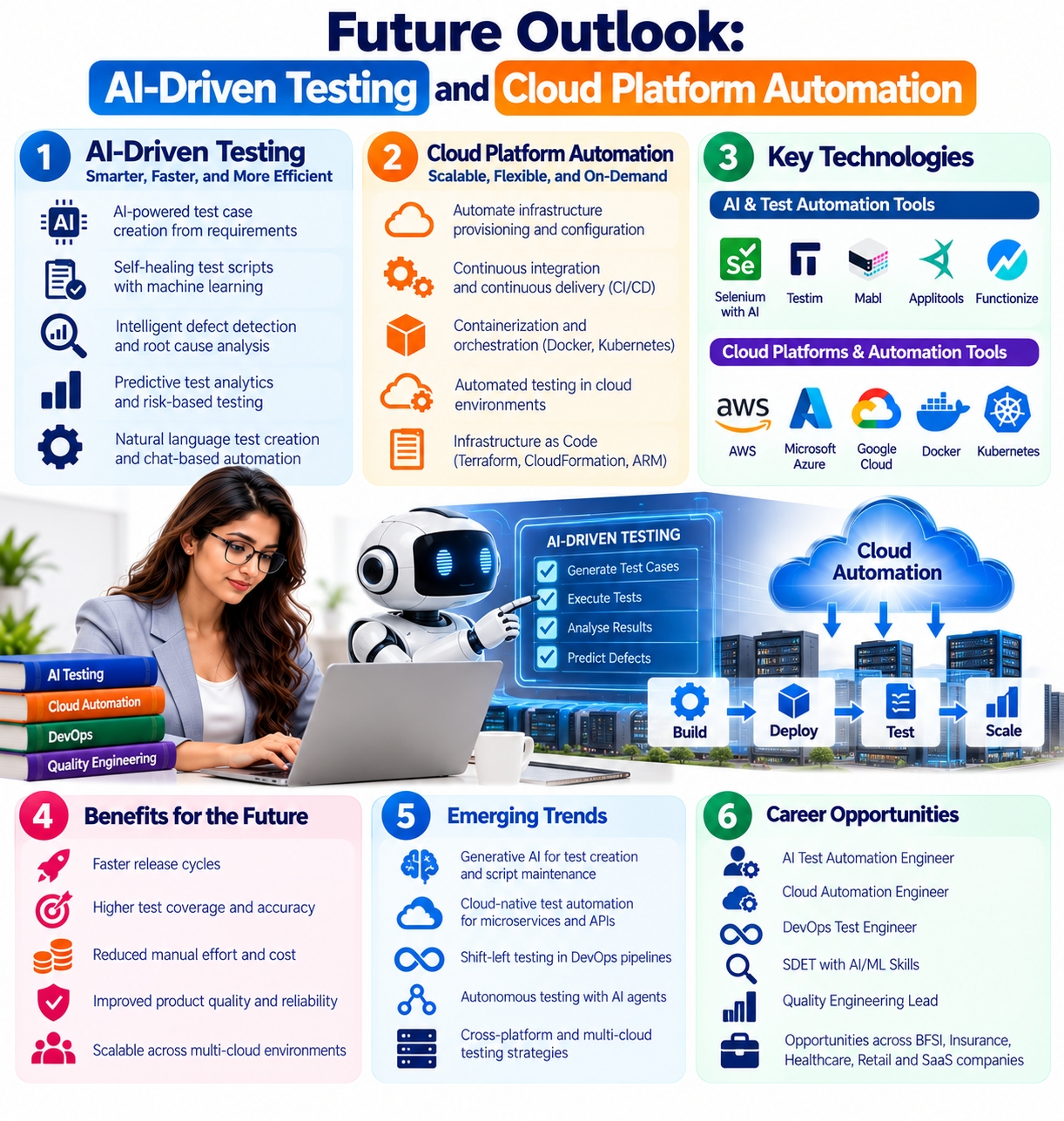
The field of software quality assurance continues to evolve with advances in cloud platform architectures, artificial intelligence, and automated test generation utilities. As insurance carriers accelerate transitions toward Guidewire Cloud SaaS deployments, test automation strategies are shifting toward cloud-native testing tools, continuous monitoring utilities, and standardized API validation frameworks. Automation specialists must stay adaptable, refining their technical skill sets to keep pace with modern deployment practices.
Artificial intelligence and machine learning technologies are increasingly integrated into quality assurance tools to improve script maintenance and test creation efficiency. AI-driven self-healing locators help reduce script maintenance by dynamically adapting to UI layout updates without failing build pipelines. Furthermore, intelligent test selection algorithms analyze code changes to execute only the impacted test cases, optimizing regression testing cycles. Embracing these advanced capabilities allows quality engineers to maintain robust automation practices while driving operational efficiency across enterprise software deployments.
Conclusion
Transitioning from a manual Guidewire tester to an Automation Specialist is a practical, highly rewarding career evolution that bridges functional quality assurance with modern software engineering practices. As Property and Casualty insurance carriers continue to modernize their core technology systems and adopt cloud-based deployment models, the industry demand for skilled professionals who can design maintainable, automated regression frameworks remains exceptionally strong. By mastering object-oriented programming concepts, building modular test frameworks, automating API integrations, and integrating scripts into continuous integration pipelines, quality engineers can significantly enhance system testing efficiency, accelerate software delivery cycles, and establish long-term career growth within the enterprise software domain.