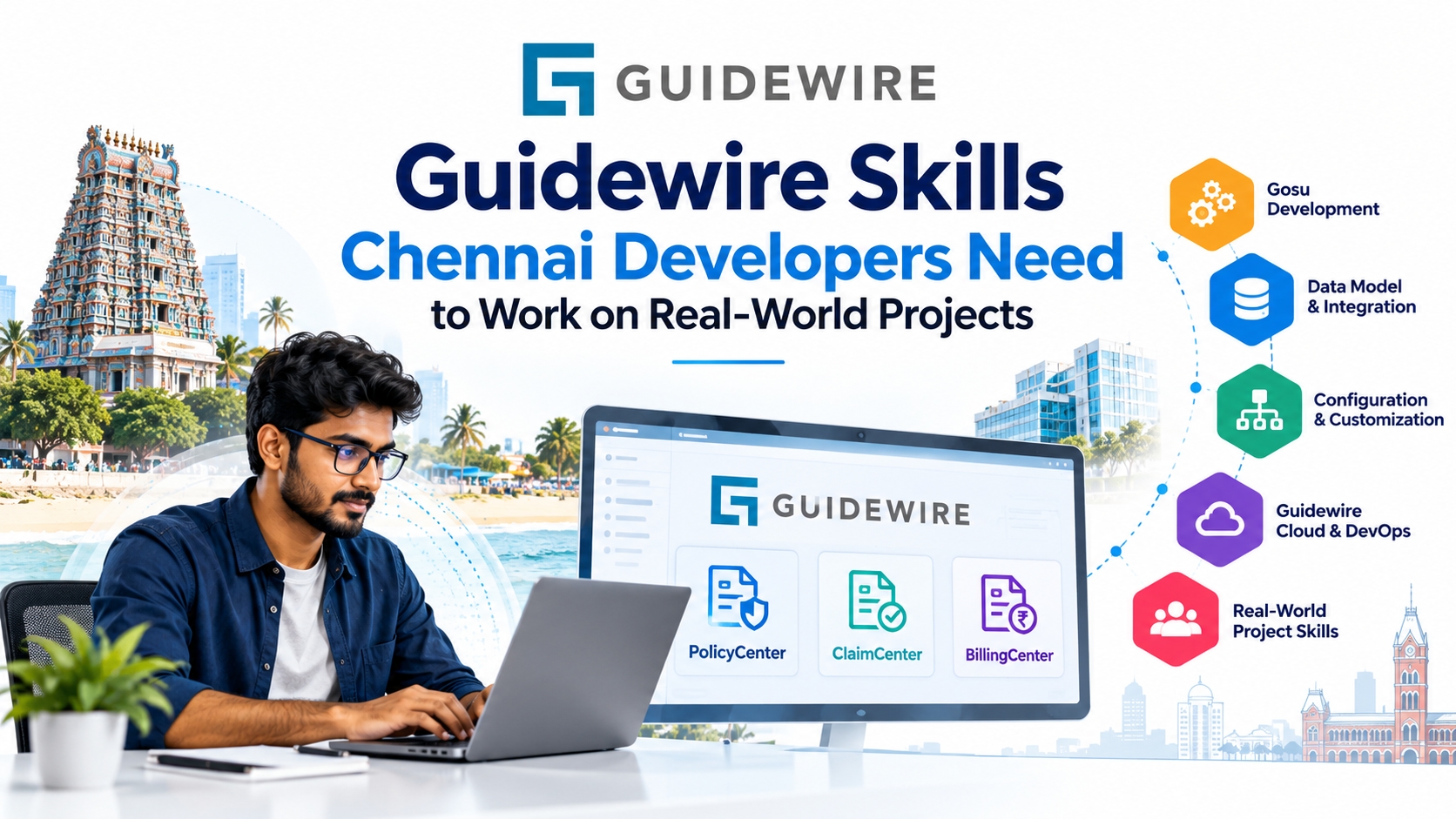
Guidewire platforms have fundamentally transformed how property and casualty insurance carriers handle their core operations, policy administration, and claims management. In recent years, major financial hubs and technology centers have experienced a massive surge in demand for certified professionals who understand how these enterprise-grade systems operate under pressure. Developers entering this ecosystem must move beyond basic configuration concepts and acquire hands-on expertise in InsuranceSuite products, Gosu programming, data dictionaries, and integration mechanisms to successfully deliver enterprise projects.
For professionals looking to build practical proficiency and accelerate their career growth within this specialized domain, enrolling in structured learning paths can bridge the gap between theoretical knowledge and enterprise execution. Aspiring professionals can explore specialized guidance through Guidewire training in Chennai to gain practical insights into local industry requirements and project workflows. Mastering these core competencies ensures that technical teams can configure, integrate, and maintain complex insurance workflows with high efficiency and minimal downtime.
Mastering Gosu Programming Fundamentals
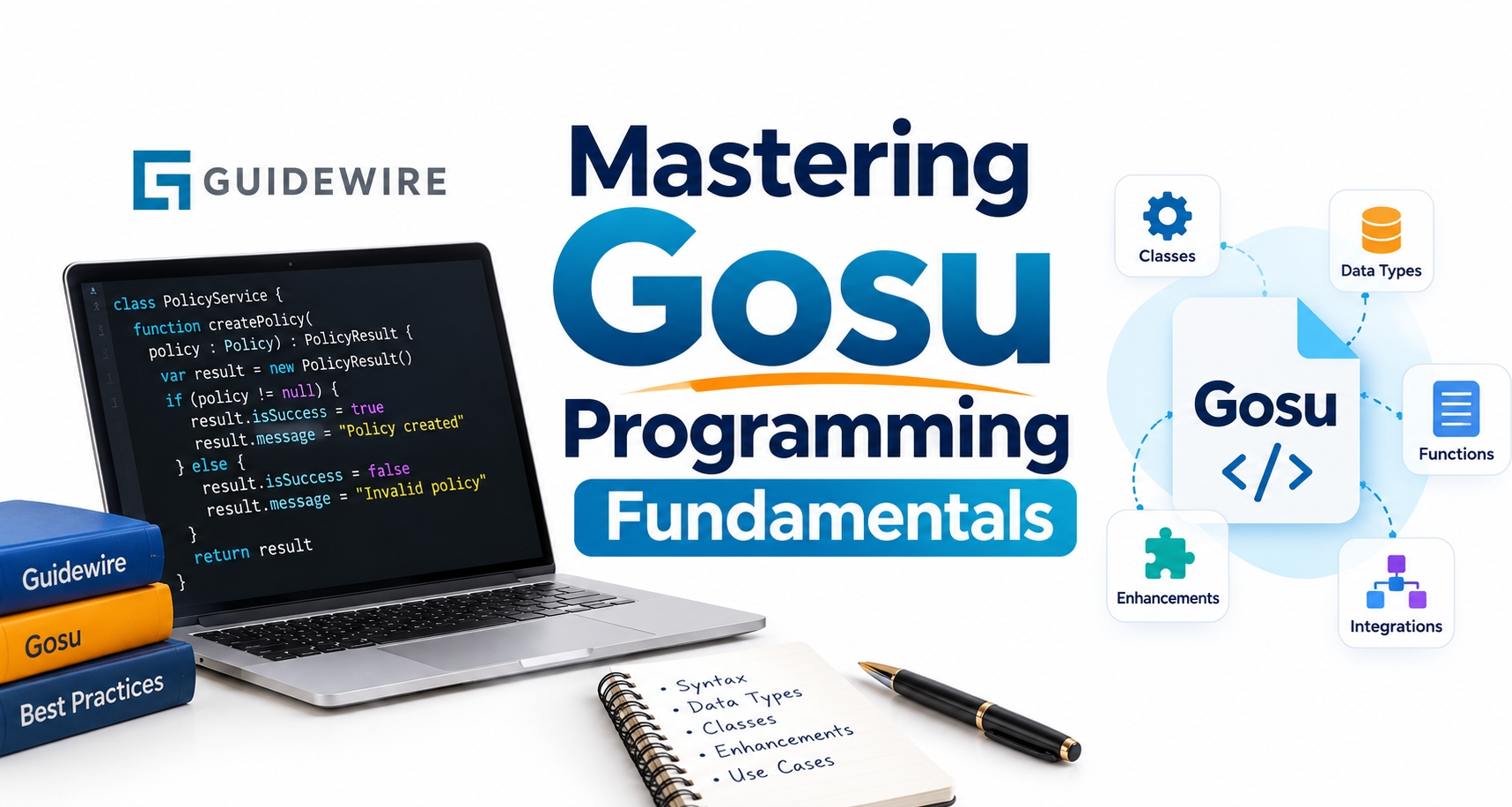
Gosu is the proprietary, object-oriented programming language designed specifically for the Guidewire InsuranceSuite platform. Unlike standard enterprise languages, Gosu integrates deeply with the type system of the underlying application, allowing developers to write concise rules, validation scripts, and enhancements. Understanding its syntax, block structures, and type safety features is the foundational step for any developer working on custom business logic.
Developers must practice writing robust Gosu classes, enhancement files, and typelists to manipulate insurance data structures effectively. Without a firm grasp of Gosu's type system and property accessors, implementing custom rating algorithms or underwriting rules becomes extremely error-prone. Writing clean, efficient code in this language directly impacts the maintainability and performance of PolicyCenter and ClaimCenter implementations.
Navigating the InsuranceSuite Architecture
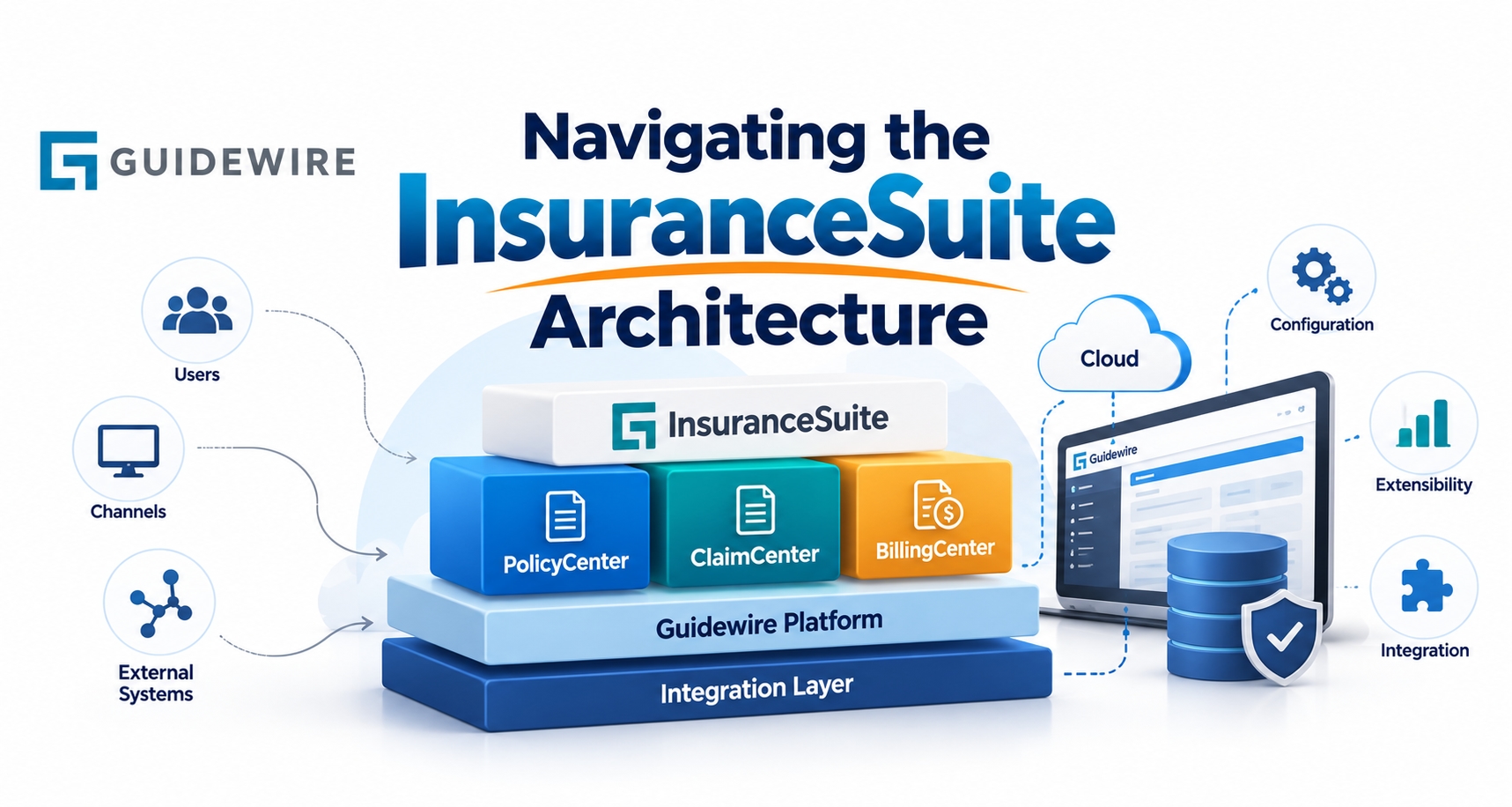
The Guidewire architecture is built on a modular multi-tier model consisting of PolicyCenter, BillingCenter, and ClaimCenter. Each application operates on a shared codebase and database schema designed to manage specific lifecycles within the insurance domain. Developers working on enterprise assignments need to understand how these modules interact, share data, and communicate via messaging plugins.
Gaining structured exposure to these architectural nuances is essential for designing scalable enterprise solutions that align with carrier objectives. To explore broader professional development options across different regions, candidates can review Guidewire training in India for comprehensive curriculum details. Understanding module boundaries ensures that customizations remain upgradeable across future platform releases.
Configuring Data Dictionaries and Entities
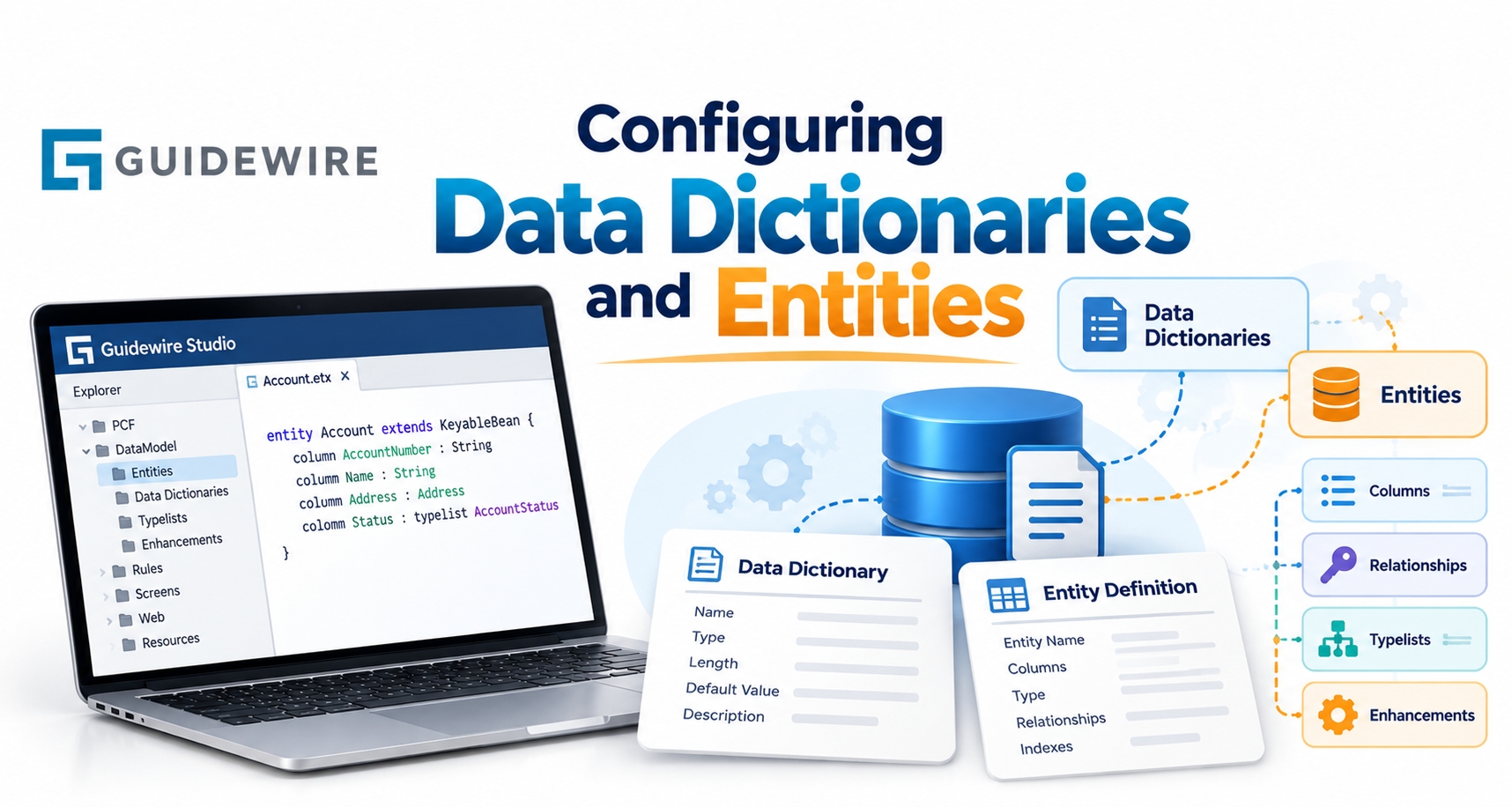
Data dictionaries form the backbone of Guidewire applications, defining how entities, fields, and relational datastores are structured. Developers frequently need to extend base entities, add custom fields, and modify datamodel XML files to accommodate unique carrier requirements. Proper management of data dictionary extensions prevents database bloat and ensures seamless schema upgrades.
Working with data models requires meticulous attention to foreign key relationships, typelists, and database indices. Inappropriate modifications can lead to severe performance bottlenecks during high-volume policy renewals or batch processing runs. Mastering data model configuration empowers developers to capture specialized insurance lines without compromising core application integrity.
Implementing User Interface Enhancements with PCF
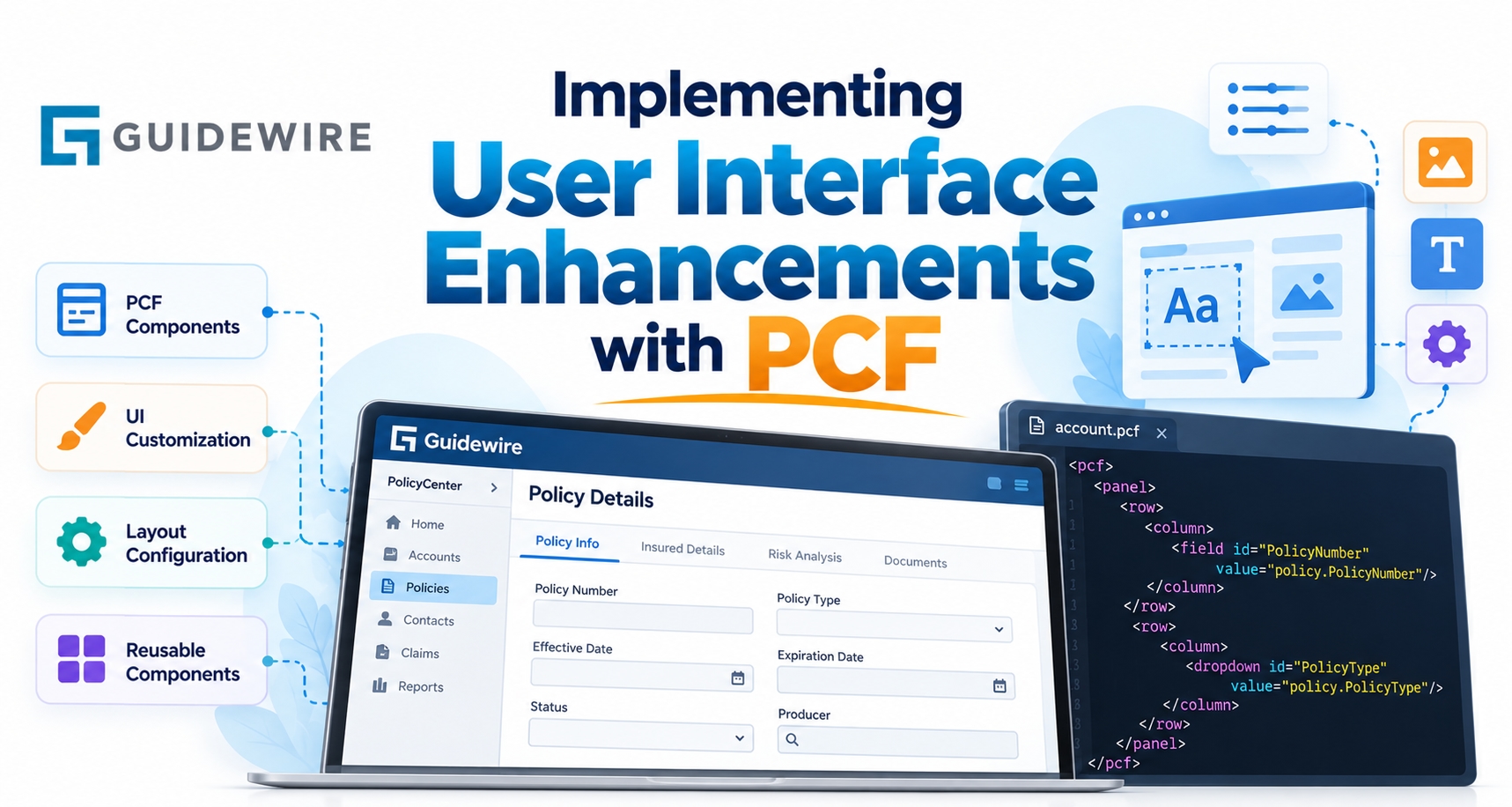
The Page Configuration Framework (PCF) dictates how users interact with Guidewire applications through web-based interfaces. Developers must master PCF files, widget properties, LV (List View) definitions, and card layouts to customize user workflows. Creating intuitive screens reduces data entry errors for underwriters and claims adjusters operating in high-pressure environments.
Customizing the user interface also involves writing appropriate Gosu validation rules tied to specific screen fields and actions. Developers need to balance aesthetic customization with platform performance guidelines to keep page load times optimal. Effective PCF implementation ensures that business users can navigate complex multi-step insurance transactions smoothly.
Building Robust Integrations and Web Services
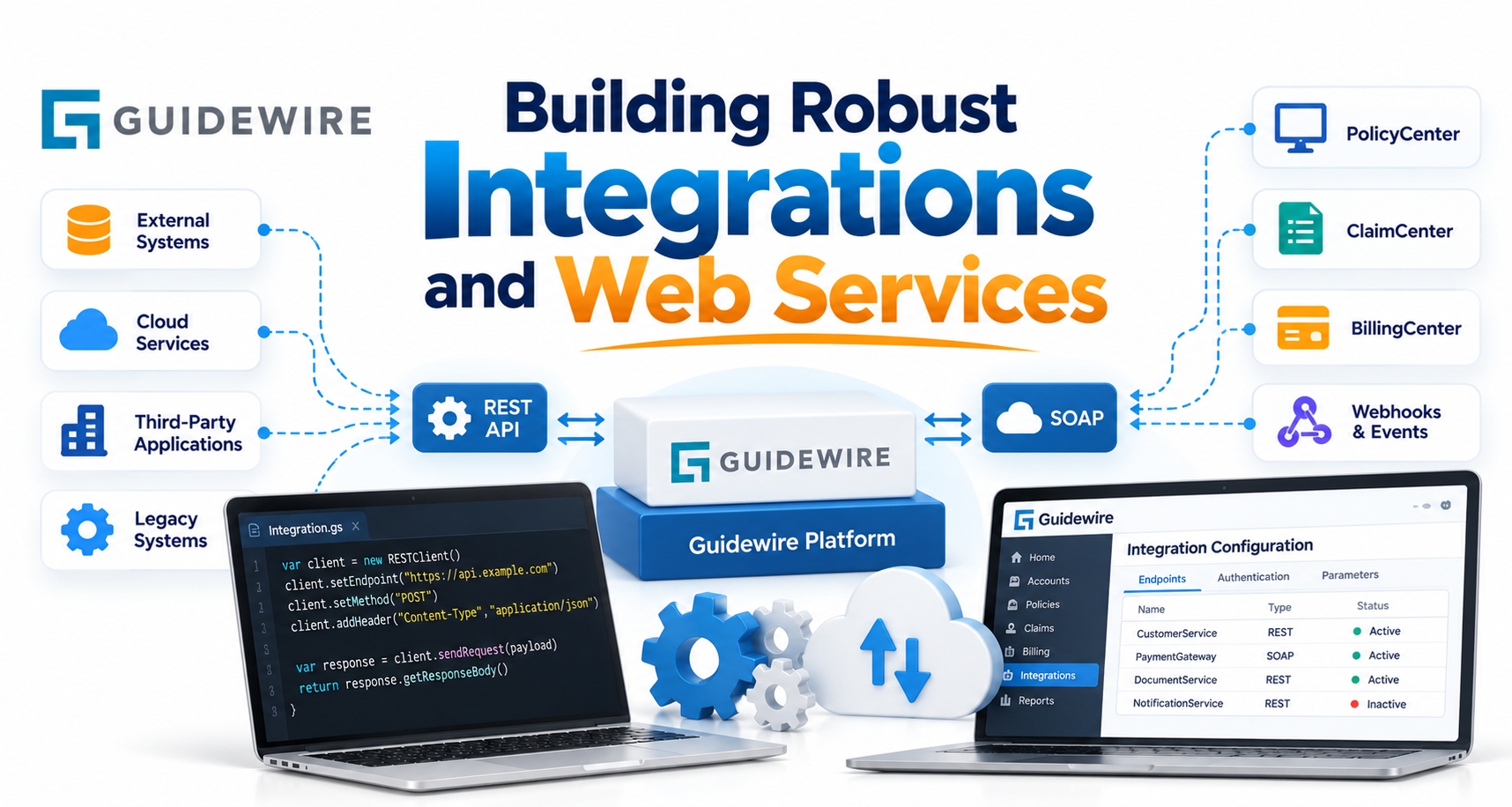
Insurance platforms rarely operate in isolation and must communicate constantly with external third-party systems such as payment gateways, credit bureaus, and legacy databases. Developers are tasked with building robust integration mechanisms using Guidewire's plugin architecture, messaging queues, and Gosu-based web services. Understanding REST and SOAP protocols within the platform context is vital for secure data exchange.
Plugin development requires handling asynchronous messaging, retry logic, and error logging to ensure data consistency across distributed enterprise systems. A poorly designed integration can cause message destination blockage and bring down core operational workflows. Building resilient integration pipelines guarantees that external system failures do not disrupt internal policy processing.
Managing Batch Processing and Performance Tuning
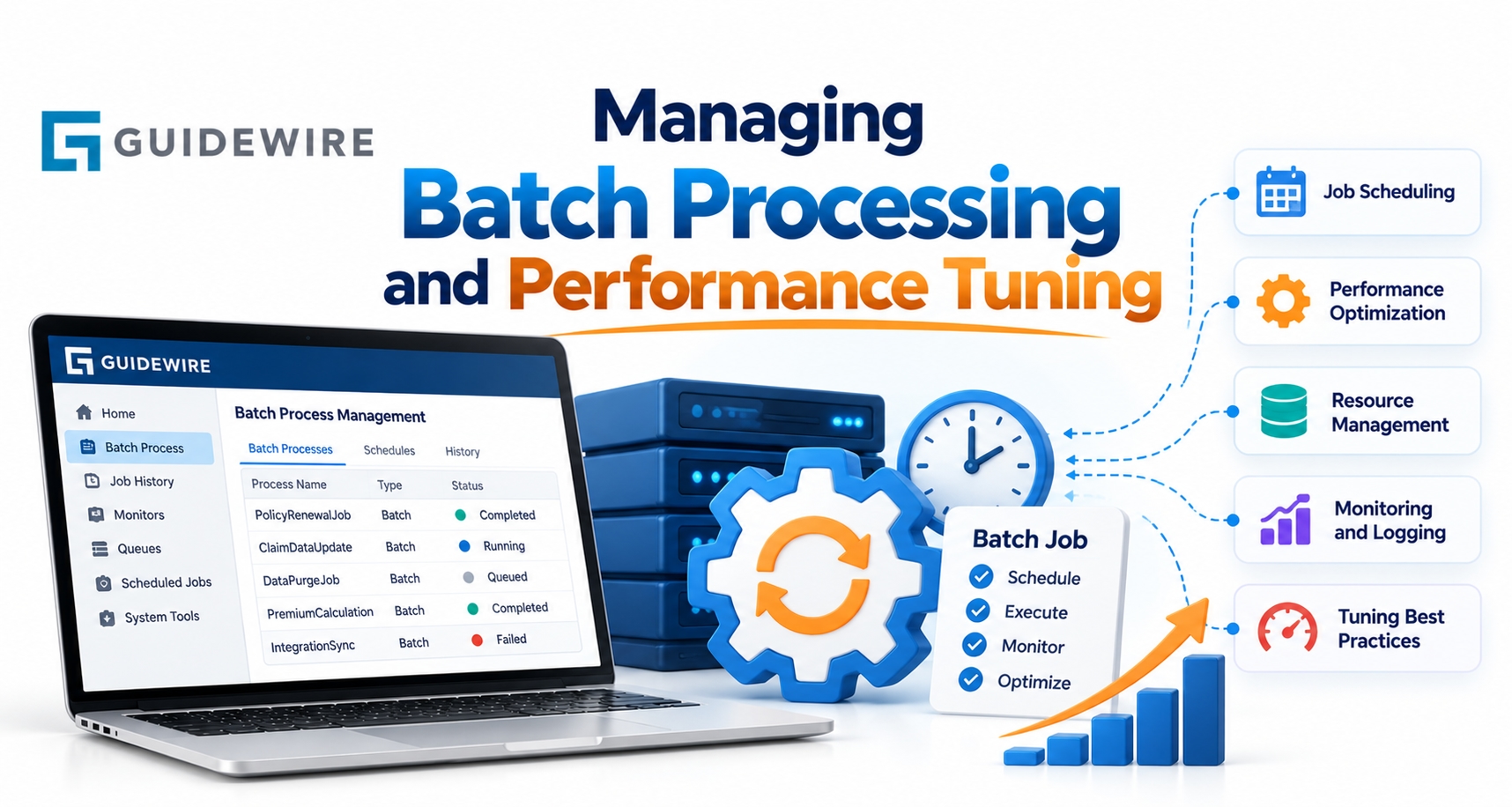
Insurance operations involve heavy background tasks, such as generating nightly renewal notices, calculating aggregate risk metrics, and purging temporary data logs. Guidewire provides a robust batch processing framework that developers configure and monitor to execute scheduled workloads efficiently. Tuning these batch processes prevents server resource contention during peak business hours.
Developers must analyze work queues, chunk sizes, and thread allocations to optimize batch execution times across large datasets. Performance tuning also involves identifying inefficient Gosu queries, database locking issues, and memory leaks within custom plugins. Mastering batch management ensures that enterprise systems maintain high availability and predictable throughput.
Executing Upgrade Assessments and Debugging
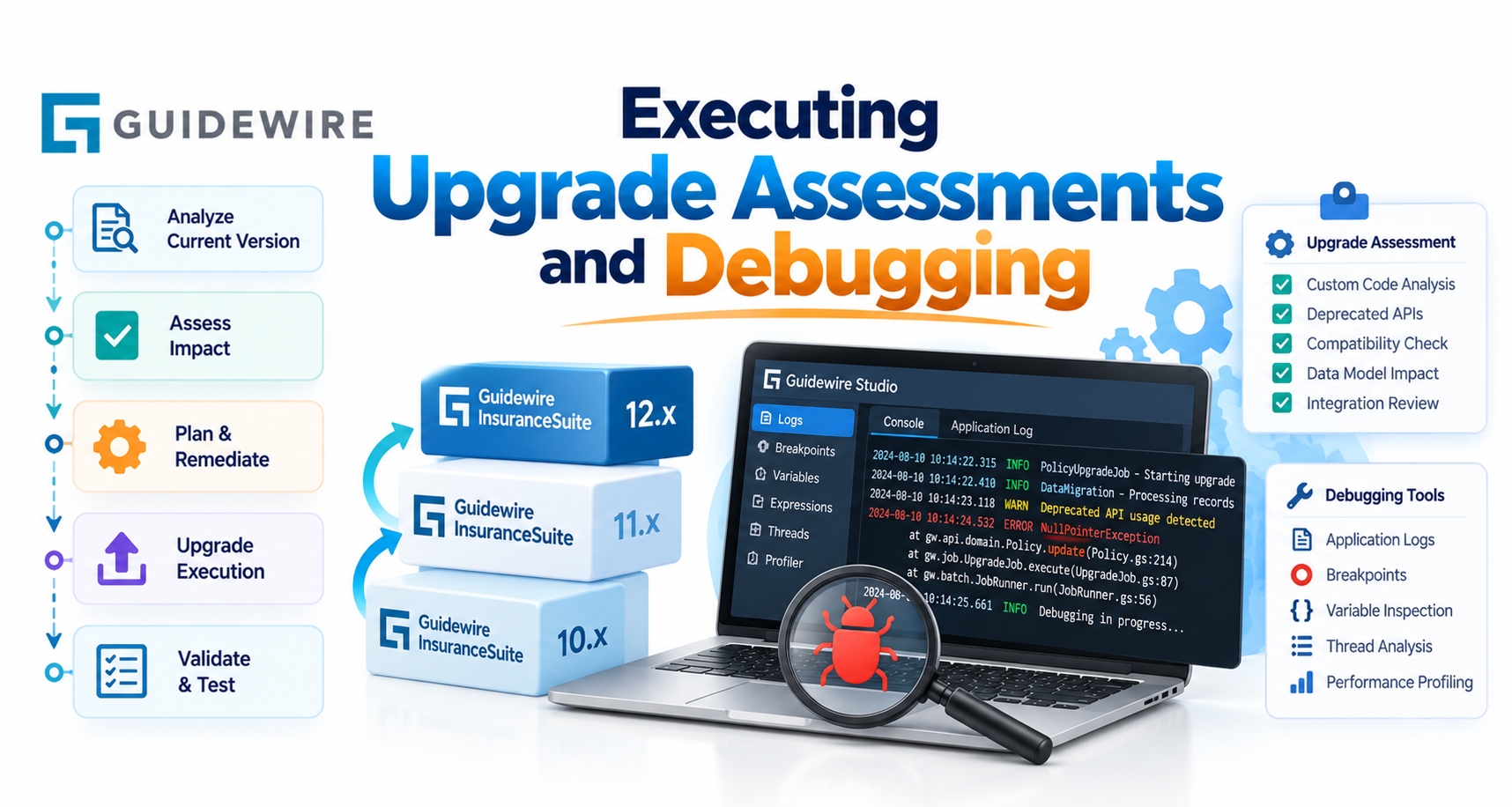
Platform upgrades are a regular part of maintaining modern insurance software environments, requiring developers to analyze custom code for deprecations and conflicts. Debugging complex enterprise issues demands proficiency with diagnostic tools, server logs, and integrated development environments. Developers must be capable of tracing exception stacks through deeply nested Gosu classes and messaging plugins.
Performing thorough impact analyses before applying patches prevents unexpected production regressions during critical business cycles. Establishing rigorous unit testing practices using Guidewire's built-in testing frameworks safeguards custom configurations against future release updates. Maintaining pristine code quality reduces long-term technical debt for insurance carriers.
Conclusion
Mastering Guidewire development requires a balanced blend of object-oriented programming, architectural awareness, and practical integration expertise. As insurance carriers continue to modernize their technology stacks, developers who possess deep technical proficiency in Gosu, data modeling, and batch optimization will remain in high demand. Committing to continuous learning and hands-on project execution ensures long-term success within the dynamic enterprise software ecosystem.