
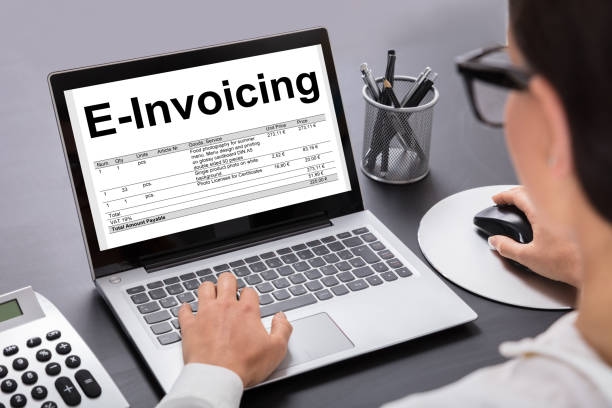
Saudi businesses are rapidly embracing digital solutions to make their financial operations faster, more accurate, and easier to manage. The transition to electronic invoicing as opposed to manual means of billing is one of the largest changes. E-Invoice Software vs Traditional Invoicing has emerged as a significant issue to businesses that want to be efficient and at the same time, abreast with current invoicing needs. Conventional invoices may also need manual data input, calculations, printing, storage and tracking payment, which may be time consuming. When companies are interested in the best e invoice software in saudi arabia, they can find a reliable online solution that helps to make the process of invoicing easier and organize the financial operation more systematically.
Handling invoices can be even more difficult as the business expands. Finance departments might have to make hundreds of invoices, follow-up payments, eliminate mistakes and keep proper records. E-invoice software assists to unify these activities into a single system. It is able to automate repetitive processes, minimize the number of mistakes, simplify the process of records management, and provide easier access to invoice information. To Saudi firms oriented on the concept of digital transformation, the transition of a traditional invoicing system to the digital one can be a viable measure toward enhancing the overall business productivity.
What Is Traditional Invoicing?
Traditional invoicing is the common form of preparing and handling invoices in paper, spreadsheets or simple office software. Customers, product, price, taxes and terms of payment are usually keyed in manually.
This process would be effective in small businesses having few transactions. But, with the growth of invoice volumes, manual invoicing may be time-consuming. It can take employees a lot of time to prepare documents, check calculations, file, and to follow up on unpaid invoices.
Common challenges include:
Manual data entry
Calculation errors
Duplicating or lost invoices.
Difficult record searching
Paper storage requirements
Time-consuming payment tracking
Increased administrative workload
Such issues may have an impact on productivity and complicate financial management.
What Is E-Invoice Software?
E-invoice software is an electronic application that enables companies to create, administer, store and monitor invoices electronically. Businesses do not have to manually prepare every invoice, but can employ automated tools to facilitate the billing process.
Depending on the software, businesses can access features like automated invoice creation, customer management, calculation of taxes, tracking of payments, reporting, storing of digital records and integration with accounting software.
In the case of Saudi Arabian businesses, it is especially critical to choose software that facilitates the use of relevant e-invoicing. An appropriate solution can assist companies in making their invoicing operations more structured and facilitate their overall digital transformation agenda.
E-Invoice Software vs Traditional Invoicing: Key Differences
The main difference between the two approaches is automation. The use of manual work is very essential in traditional invoicing; e-invoice software may be used to automate numerous monotonous tasks.
1. Faster Invoice Creation
Forming invoices manually may require a number of minutes per transaction. It can be a huge workload when the company deals with hundreds of invoices.
Digital invoicing software enables companies to store data about customers and products and reuse the data to create new invoices. This can help invoice generation to be significantly quicker.
2. Fewer Manual Errors
When employees have to input data several times or do some calculations manually, human errors are likely to occur. Mistaken prices, taxation, customer information, and invoice numbers may cause delays and extra administrative efforts.
Computerized calculations and standardized invoice templates can assist companies to remain more accurate and consistent.
3. Easier Record Management
It can be annoying to search a paper invoice that is not updated recently or locate some information in numerous spreadsheets. Digital invoicing gives centralized records which can be more effectively searched and accessed.
It can assist businesses in saving their time in the process of checking past transactions, answering customer queries or in drawing financial reports.
4. Better Payment Tracking
Cash-flow management is an essential aspect of following up on unpaid invoices. When using manual tracking, it may be hard to ascertain overdue payments within a short time.
The e-invoice software is capable of sending invoice status data which could enable the businesses to easily track pending and paid invoices.
5. Reduced Administrative Work
The old way of invoicing has employees undergoing a lot of repetitive work. Some of this process can be automated by use of digital tools, enabling the finance teams to engage more in other relevant financial and business activities.
Why Are Saudi Businesses Switching?
The trend of electronic invoicing is linked closely to the overall digital transformation in Saudi Arabia. Organizations are also turning to technology to enhance the financial processes, ensure that there are well-organized records and also to work efficiently.
Digital invoicing can be a more scalable option to a company that has to work with large volumes of transactions compared to manual approaches. It would also assist businesses to keep their invoice data constant and to systematize their financial records.
Compliance is another factor that should be taken into account. Companies must make sure that the invoicing solution they have adopted can be used to meet the requirements set on the electronic invoicing in Saudi Arabia. Systems can be kept up to date and records kept to further assist businesses in handling their invoicing duties.
What Should Businesses Consider When Choosing E-Invoice Software?
All invoicing solutions will not have the same business needs. Saudi businesses ought to take into account a number of factors before deciding on software.
Ease of Use
The software must include an easy to use interface that can be learnt by employees without being overly complicated.
Automation
Automated calculations, creation of invoices, and tracking of payments are features that can greatly decrease manual work.
Compliance Support
Businesses are advised to verify that the software can support the relevant Saudi e-invoicing requirements and offer the relevant invoice formats and information.
Security
Due to the valuable information about business and customers carried in invoices, businesses are advised to think about the data security, user permissions, backups, and access controls.
Scalability
The software must have the capacity to deal with more customers, products, and invoices, as the business expands.
Reporting
Businesses are able to track better the financial activity on sales, outstanding payments and invoicing through useful reports that can give them a better view of what is occurring.
How to Move from Traditional to Digital Invoicing
Companies can take the transition in phases by initially evaluating their existing process of invoicing. This could be done by identifying the repetitive tasks, error prone areas, and time consuming activities to ascertain the software features that are most significant.
Once a business has chosen an appropriate system, they are supposed to structure their customer and product information prior to implementing the system. Basic training to the employees should also be given in order to know how to make invoices, keep records and to monitor payment.
A transition can be planned, which will minimize disruption and ensure that the employees are more familiar with the new system.
Conclusion
The E-Invoice Software vs Traditional Invoicing comparison reveals the reasons why digital billing is gaining popularity among Saudi companies. Simple operations may be appropriate using traditional invoicing, however, manual operations might prove hard to maintain with a bigger number of transactions. E-invoice software can assist companies to automate repetitive operations, minimize errors, record keeping and payment tracking more effectively.
Digital invoicing can also be an opportunity to enhance the entire financial workflow of Saudi businesses and contribute to further digital transformation. The appropriate software enables companies to develop a more efficient, structured and scalable process in invoicing and meet any relevant e-invoicing needs.
Finally, E-Invoice Software vs Traditional Invoicing does not just involve substitution of paper invoices with electronic. It is concerned with developing a more effective method of handling billing and financial data. With the ongoing modernization of the Saudi businesses, digital invoicing can be significant in enhancing the productivity, accuracy and efficiency of the business in the long term.



