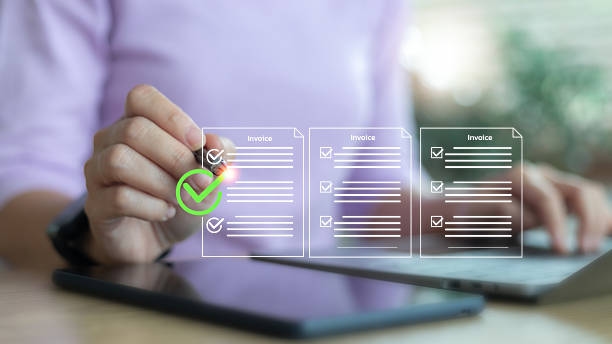
Managing invoices manually can be time-consuming and may lead to common accounting problems such as incorrect calculations, duplicate invoices, missing information, and delayed payments. As the businesses expand, there are a large number of invoices to be dealt with, which may be in a spreadsheet, paperwork or manual data entry which may lead to errors. This is where e-invoicing to reduce accounting errors comes in very handy. Businesses can minimize repetitive tasks and improve their financial records by automating invoice creation, calculations, validation, and recordkeeping.
In the case of Saudi Arabia businesses, appropriate digital invoicing solution may also enhance accounting effectiveness and management of cash flow. Modern e-invoicing accounting software in saudi arabia can help businesses create accurate invoices, organize transaction records, monitor payments, and streamline accounting workflows . E-invoicing is not merely the process of substituting paper invoices with computer-based documents; this process may assist companies in creating a quicker, more organized, and transparent financial system. How can we discuss how e-invoicing can reduce accounting mistakes and promote healthier cash flows?
What Is E-Invoicing?
E-invoicing is the electronic process of creating, issuing, receiving, processing, and storing invoices. Rather than making invoices manually, companies can employ computer programs that will help them automatize most of the invoicing procedure.
E-invoicing system is able to handle significant information like:
Customer information
Invoice numbers
Details of products or services.
Prices and quantities
Taxes
Discounts
Payment terms
Invoice status
This systemized process facilitates quicker and standardized invoice management.
How E-Invoicing Reduces Accounting Errors
1. Minimizes Manual Data Entry
One of the significant sources of accounting errors is manual data entry. Entering customer information, prices, quantities and tax information many times may lead to faulty figures or even missing information.
The e-invoicing applications will be able to automatically fill in the data based on records stored, minimizing data typing. This assists accounting teams to save time and enhance data accuracy.
2. Reduces Calculation Mistakes
Manually computing totals, taxes, discounts, and other charges may lead to error particularly where the invoice has several products or services.
Calculations using automated systems are done using established data and guidelines. This eliminates errors in mathematics and makes invoice totals calculated in the same way.
3. Prevents Duplicate Invoices
Invoices can be sent multiple times and cause confusion and alter financial records. They can also lead to the situation when customers are requested to make the same payment twice.
Digital invoicing systems work with systematic invoice numbers and transactional records, which simplifies the process of identifying current invoices and minimizes duplication.
4. Ensures Complete Invoice Information
Partial invoices may slow the approvals and payments. Before making a payment, customers might be required to call the business to get the missing information.
E-invoicing systems can require the use of fields in order to make sure that the necessary information is filled in prior to issuing an invoice. This will assist the businesses to send full and professional invoices.
5. Improves Recordkeeping
It may be hard to keep the records of paper invoices or dispersed digital documents. Locating an old invoice can be a tedious task that involves searching several files or emails.
Digital invoicing allows housing records in an organized manner and can be accessed at a short time. This simplifies reviews of accounts, reconciliation and reporting of finances.
How E-Invoicing Improves Cash Flow
Proper invoices will help in healthy cash flow. Payments can also be delayed when there are delays in the invoices or when invoices have errors. E-invoicing can assist the business to accelerate the whole process.
Faster Invoice Delivery
The process of creating and delivering digital invoices can be done electronically without printing, scanning, and physical delivery. This saves time taken to make a transaction and dispatch the invoice to the customer.
Faster Payments
Customers can comprehend what they should pay because of clear and accurate bills. The fewer the errors included in invoices and the full information included, the lesser the pay-related questions and delays might be.
Easier Payment Tracking
Companies should be aware of the invoices that have been paid and the pending ones. The e-invoicing systems are able to offer structured information on the invoice statuses, which can assist the accounting teams to keep track of receivables in a more efficient manner.
Timely Payment Reminders
Automated payment reminders can be supported by many digital invoicing solutions. Businesses are able to send reminders of the next or outstanding payments without necessarily having to use manual follow-ups.
This will enable a steady collection procedure and lessen the accountant staff load.
E-Invoicing and Better Accounting Efficiency
E-invoicing has the ability to enhance general accounting efficiency as well. Automation of repetitive tasks that are related to invoices enables the employees to utilize less time in rectifying mistakes and in handling paperwork.
Digital records make it easier to:
Search for previous invoices
Track customer transactions
Reconcile payments
Monitor outstanding balances
Prepare financial reports
Review transaction histories
Such enhanced visibility can assist owners of businesses and accounting departments to make more informed financial decisions.
E-Invoicing for Growing Businesses
The more a business expands, the higher the amount of invoices. A manual process that is working well with a small company may prove hard to handle with more transactions.
E-invoicing is a scalable solution since it automates repetitive operations and has the financial information in a single system. The businesses will be able to process more invoices without the need to work more on the administration.
This renders e-invoicing practical to companies that desire to enhance efficiency besides aligning their accounting system to further development.
Best Practices for Implementing E-Invoicing
There are a few steps that businesses ought to follow when implementing an e-invoicing solution. To begin with, analyze the current invoicing procedure and find out the frequent mistakes or time lag. Then, select software that fits accounting requirements and volume of transactions by the company.
Proper training of employees should also be provided to ensure that they know how to create, review and manage electronic invoices. Companies ought to keep proper records of customer and product and to routinely examine invoice data to detect any problems.
Lastly, key performance indicators that companies need to track include performance of invoice processing time, invoice late payments, outstanding invoices, and invoice error rates. This assists in checking whether the new system is bringing about the desired improvements.
Conclusion
E-invoicing offers businesses a practical way to improve accounting accuracy while making invoice management faster and more efficient. Businesses can alleviate typical accounting errors by automating calculations, avoiding manual data entry, duplicate invoices, and maintaining a well-organized digital record. Concurrently, improved cash flow and increased regular collections can be maintained by increased invoice delivery velocity, effortless monitoring of payments, and automatic reminders. Businesses looking for e-invoicing to reduce accounting errors can therefore benefit from adopting a reliable and well-structured digital invoicing process .
The appropriate e-invoicing solution can be a significant aspect of contemporary financial management in the case of businesses in Saudi Arabia. E-invoicing might decrease administrative efforts and enhance financial transparency when based on correct data, staff training, processes, and software. It enables accounting teams to spend less time fixing the preventable mistakes and more time on more valuable tasks like reporting, analysis, and planning. In the end, e-invoicing can enable companies to establish a better, more precise, and orderly accounting landscape and facilitate better cash flow management.