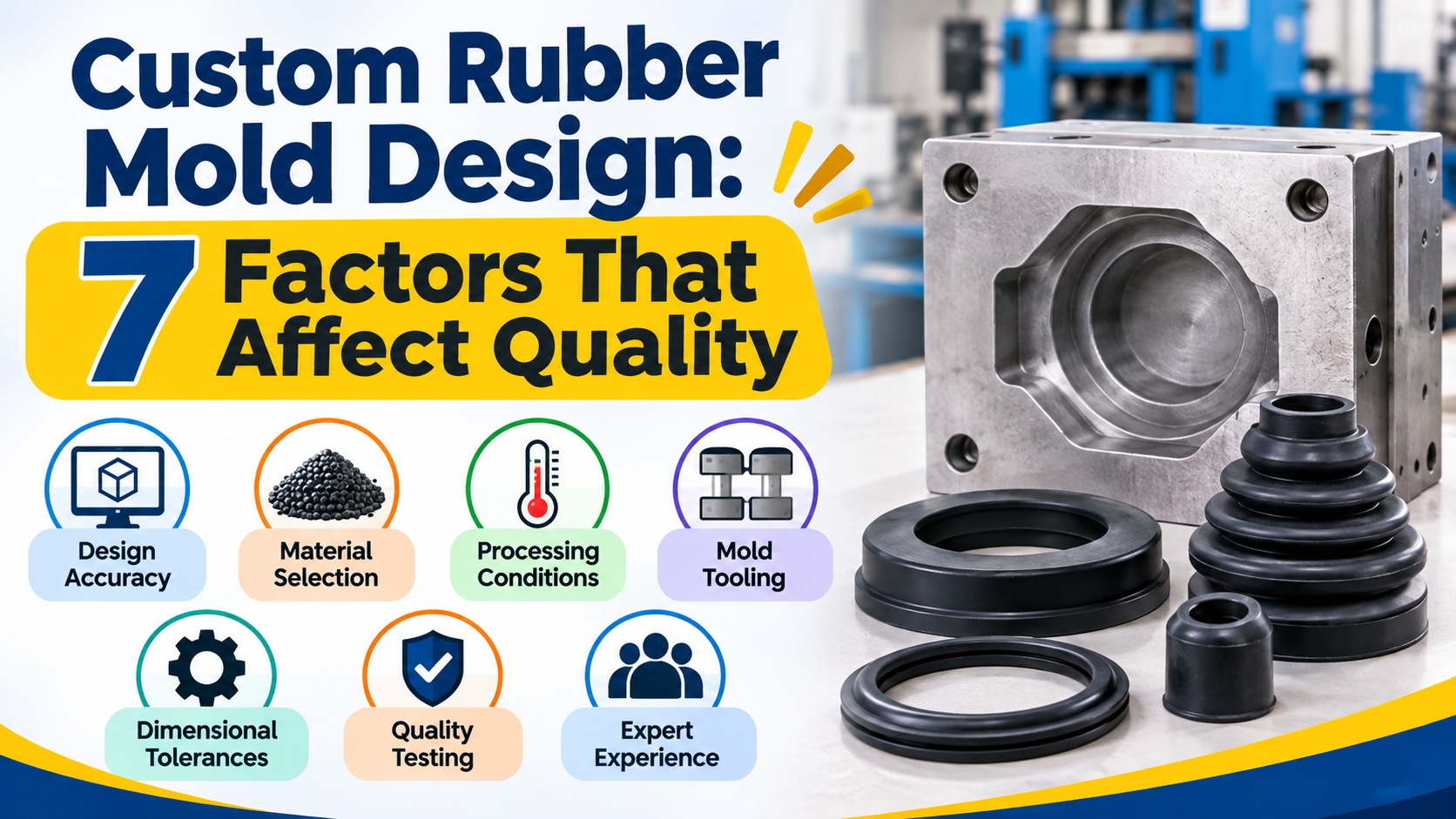
Custom rubber mold design plays a key role in the quality of molded parts. A well-planned design helps maintain even material flow and proper curing. It also supports clean part removal and steady production results. Wall thickness, cavity shape, vent paths, and mold material all influence the finished product.
Understanding these factors helps prevent common defects and keeps each part within the required design limits. A properly engineered custom rubber mold delivers consistent results across thousands of production cycles.
1. Mold Cavity Shape and Dimensional Accuracy
All part performance and consistency are based on cavity geometry. Each includes all dimensions that are cross-referenced with the original part drawings for design reviews.
Core Cavity Specification Checks for Custom Rubber Molds
● Cavity form according to the precise part design and size
● Precise length, width, depth, and surface features
● Correct alignment of cavities for even part production
● Easily transition curved to flat sections
● Strict quality control of parts' dimensions during multiple molding operations.
● Design checks for sharp corners and deep sections
A small radius is added to all corners that have sharp corners to prevent stress concentrations in finished parts. During this step, alignment pins are located in order to make sure that mold halves fit together properly. rubber mold manufacturers run full cavity simulation to validate geometry. All simulation results are saved along with other project documentation for future reference.
2. Rubber Material Selection and Mold Compatibility
The long-term life of the tool and the consistency of the part are directly related to material and mold compatibility. All material properties are logged during the initial design review stage.
Material and Mold Alignment Checks
● Rubber grade matched with the part's intended use
● Natural rubber, silicone, EPDM, NBR, and neoprene options
● Stress, strain, and reaction of the material to heat and pressure in the process of molding
● Chemical contact requirements, weather exposure requirements
● Rubber flow and cure behavior inside the mold
Surface coating is included when needed to minimize sticking and increase the longevity of the tool. The cure profile parameters are programmed into machine setup files at the machine design phase. Rubber mould suppliers provide full compatibility data for standard mold surface finish. The flow properties of incoming material batches are tested to verify proper flow characteristics in accordance with design simulation inputs.
3. Wall Thickness and Rubber Flow Control
Uniform wall thickness stands as one of the most impactful design choices for consistent quality. Uneven thickness creates uneven cure times, internal stress, and warping in finished parts. All section thickness values get mapped across the full cavity during review.
Flow Optimization Checks
● Wall thickness across the molded part
● Thick sections that may need longer cure times
● Thin areas that need proper material flow
● Reduced risk of air pockets and incomplete fills
● Smooth links between thick and thin sections
● Balanced material spread throughout the mold cavity
The gate placement is adjusted to direct material flow evenly across all cavity sections. A custom rubber molds manufacturer runs flow simulation to validate the fill pattern before final tool design. Fill time and pressure values are set based on results from these simulation runs. All flow simulation data is attached to the final tooling documentation for reference.
4. Mold Venting and Air Release Design
The trapped air inside the mold cavity is one of the most common causes of surface defects and incomplete fills. Vent paths are placed specifically in zones where air gets trapped at the end of the fill cycle. Vent depth and width are calibrated to the viscosity of the selected rubber compound. Vents are positioned around deep recesses, narrow gaps, and the farthest points from the injection gate.
The exact vents eliminate air marks, burn marks, and surface gaps on finished part surfaces. All vent paths get cleaned after every set number of cycles to maintain consistent performance. The rubber mold company, like Custom Rubber Silicone Molds, includes vent maintenance guidelines as part of every mold delivery package. Regular vent inspection reduces unplanned downtime and extends overall usable tool life.
5. Mold Surface Finish and Part Release
Cavity surface finish directly translates to the final surface quality of every molded part. Surface texture is selected based on functional requirements and cosmetic targets for the end product.
Surface and Release Specification Checks
● Smooth cavity surfaces for clean part finishes
● Surface texture based on the final part needs
● Proper draft angles for easy part removal
● Less risk of rubber sticking to mold walls
● Clean part lines and edge details
● Surface checks before mold production begins
A small release agent coating can be added to the cavity where extra demolding support is required. All surface marks from machining are fully polished out before the first test run. Rubber mold manufacturers maintain reference samples of every standard surface finish option. Draft angle values are increased for parts with higher aspect ratio vertical faces.
6. Mold Alignment and Parting Line Placement
Eliminating flash, dimensional differences, and even part formation with perfect alignment between the mold halves. Guide pins and bushings are sized and aligned to keep them aligned for thousands of cycles. The force applied to the mould closes the mould and is calibrated so that it does not exceed the capacity of the tool components.
When the parting line placement is correct, there is less post-processing, and all parts will have clean edge detail. During the first test run, alignment is validated to ensure no shift in alignment at full cycle pressure. rubber mould suppliers include spare alignment pins as part of standard mold delivery packages. It is recommended that alignment be done after a few thousand cycles to catch wear early, so it is necessary to check regularly.
7. Mold Heat Control and Curing Conditions
The temperature variation in the mould will give areas of undercuring or overcuring in various sections of the moulded part. Heating elements are equivalent to the geometry of each individual cavity design.
Thermal Performance Checks
● Even heat distribution in the mold cavity
● Zones set for uniform heating
● A mold designed for the rubber cure range
● Proper heat flow around thick and thin sections
● Minimized risk of under-cured or over-cured areas
● Smooth curing process for stable parts quality
Independent zone controls are provided for sections where there is much variation. The temperature sensors are fixed in the mould so that the data can be collected during the production run. The custom rubber molds manufacturer runs full thermal simulation to validate heat distribution before machining. The temperature values set are stored with cure time and pressure to be used in future production runs.
Predictable cure times and no unwanted production downtime due to the consistent thermal calibration. The rubber mold company supplies all the thermal parameters as well as the standard working procedure for each mold.
Conclusion
Good rubber mold design depends on several connected details. Cavity shape, material choice, wall thickness, and venting all affect part quality. The surface finish, mold alignment, and heat control also matter during production.
The careful design checks help reduce common defects and maintain accurate part dimensions. With the right design approach, manufacturers can produce rubber parts that meet their required shape, fit, and performance needs.
You can reach out to custom rubber silicone molds for support with any custom rubber mold design or fabrication project. Call +1(213)-426-1030 or send an email to info@customrubbersiliconemolds.com to schedule a free initial design review. We give detailed responses to project inquiries within one business day, with a clear timeline and cost estimates.
FAQs
What is custom rubber mold design?
Custom rubber mold design is the process of producing the mold cavities for a specific rubber part shape and size. It facilitates the production of parts with accurate dimensions, clean edges, and proper fit.
Why is wall thickness important in rubber mold design?
Even wall thickness helps to maintain rubber flow in the mold cavity. It is also used to ensure uniform curing throughout sections.
How does mold venting affect rubber part quality?
Trapped air can be released during molding with proper venting. It minimizes the chances of air marks, surface gaps, and fill gaps.
How does mold surface finish affect molded rubber parts?
A smooth cavity surface can help to form a clean and even part finish. The right surface texture also allows for easier removal after molding.