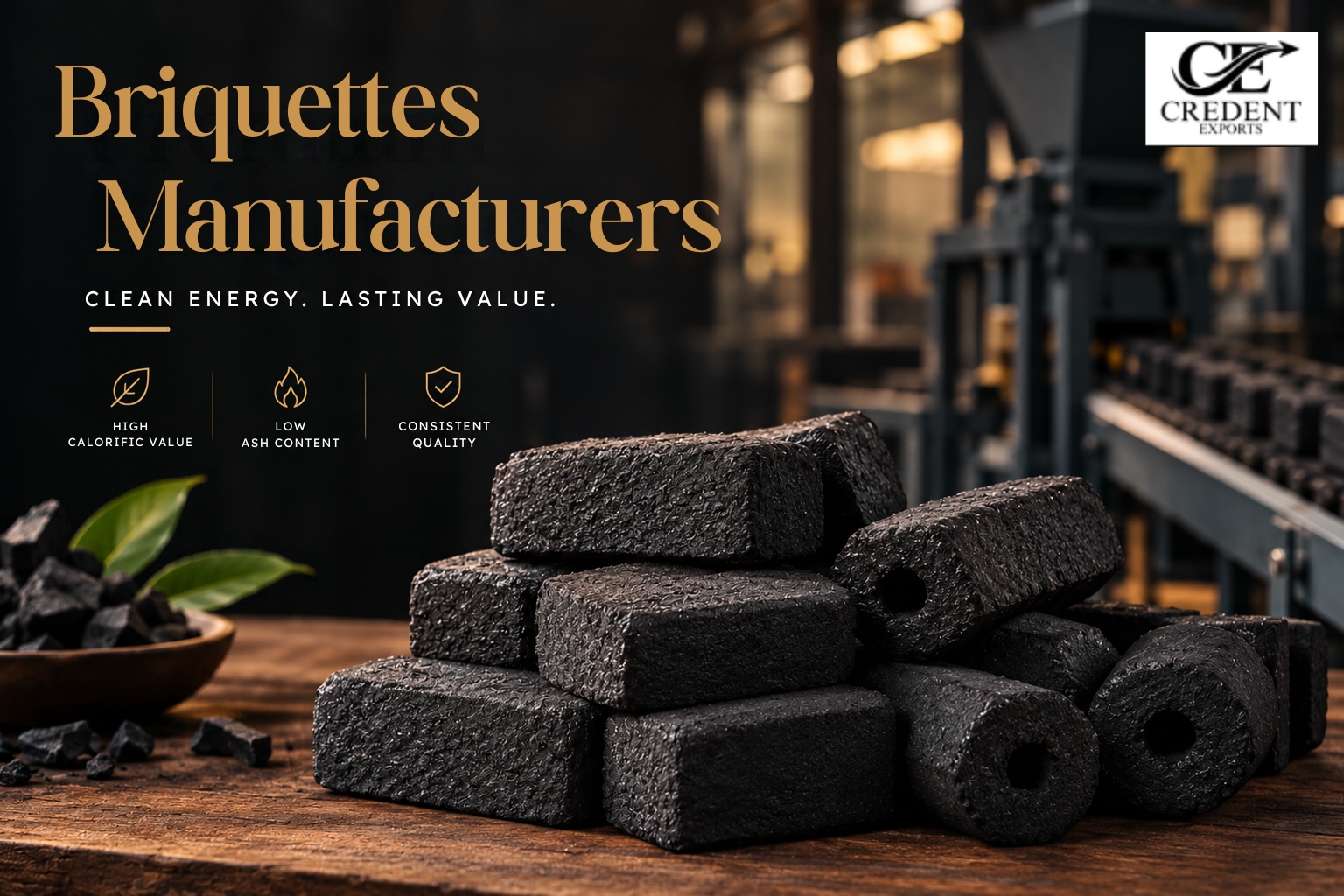
A sample can look excellent on your desk and still create problems after 500 kg, 5 MT, or a full container arrives. That is why buyers should test Briquettes Manufacturers on more than appearance before signing a supply contract.
A sample is not proof of consistency. It is evidence to investigate.
What to Check When Comparing Briquettes Manufacturers
Moisture, Ash and Calorific Value
Start with the numbers. Moisture affects usable fuel performance and transport weight, while ash affects residue and cleaning requirements. For solid biofuels, Indian Standard IS 18725:2024 identifies parameters including moisture, ash, gross calorific value, density, dimensions and additives.
Here's the detail many buyers skip: sample preparation and testing methods matter too. BIS references dedicated methods for moisture, ash, calorific value, density and sample preparation.
Dimensions and Density
Measure diameter, length and weight across several pieces. One perfect briquette proves very little.
If ten pieces vary noticeably in size or density, ask what the production tolerance is. A supplier who cannot give a defined specification is asking you to accept the factory's judgement after the order is placed.
Burning Behaviour
Run a controlled burn test using the same equipment and operating conditions you use commercially. Record ignition time, burn duration, heat behaviour, smoke and residue.
That's harder than buyers expect because different stoves, grills and furnaces produce different results.
Five Supplier Checks That Expose Problems Early
1. Batch Consistency
Good answer: “The approved sample will be matched to the production specification.”
Bad answer: “Every batch is slightly different.”
Small variation is normal. Uncontrolled variation is a contract risk.
2. Laboratory Documentation
Good answer: The supplier can provide a recent analysis tied to the relevant specification.
Bad answer: “We can send the report after shipment.”
Don't accept that. Credent Exports states that recent laboratory analysis and registration documents can be requested before ordering.
3. Commercial MOQ
Good answer: The MOQ is stated clearly before the contract.
Bad answer: A low sample quantity is advertised, but container-level terms appear later.
For Credent Exports, the standard order is one 20-foot container, generally around 10–14 MT depending on product and packing.
4. Delivery Lead Time
Good answer: Production timing starts from a defined commercial event.
Bad answer: “We'll ship as soon as possible.”
That phrase has no purchasing value. Credent Exports lists a standard production lead time of 15–20 days from advance payment.
5. Defect Handling
Good answer: Inspection, specification and documentation responsibilities are written into the agreement.
Bad answer: “We'll handle defects case by case.”
That's a negotiation you'll probably have after the shipment lands. Put acceptance criteria on paper before the first container.
Why Proper Sample Comparison Protects Your Margin
Lower rejection risk: Matching the approved sample to production specifications gives procurement teams a measurable reference.
Fewer performance surprises: Burn testing reveals behaviour that photographs and brochures cannot.
Better landed-cost control: Moisture, packing and density can affect the economics of every shipment.
Cleaner forecasting: A documented 15–20-day production window gives buyers a usable planning reference.
Stronger supplier accountability: Written specifications reduce arguments over what “acceptable quality” means.
Reduced customs friction: Correct classification and shipping documentation matter alongside the physical product.
Finding Briquette Suppliers in India Without Ignoring Logistics
Location affects more than the factory visit. Credent Exports manufactures in Coimbatore, Tamil Nadu, with loading options including Tuticorin, Cochin and Chennai.
For Briquette, ask where production occurs, where cargo is loaded and how inland movement is handled. A factory that is technically suitable can still be commercially awkward if freight adds unnecessary cost.
Briquette Wholesalers in India should also compare packing formats because container utilisation changes with product shape and packaging.
BIS's IS 18725:2024 gives Indian buyers a useful technical reference point for agro and herbaceous biomass briquettes, although buyers must confirm which standard applies to their exact product.
What We Check at Credent Exports Before Shipment
We manufacture coconut-shell charcoal briquettes in our own facility in Coimbatore rather than operating only as a trading desk. Our published specifications cover factors such as moisture, ash, fixed carbon, calorific value, density, dimensions and packaging.
We've built our buying process around samples, specifications and production communication because the sample only matters if the shipped goods match it.
Our standard MOQ is one 20-foot container, and our published lead time is 15–20 days. We also provide samples, with courier or freight paid by the buyer.
Send the Sample Data Before You Sign
If you're comparing Briquette Exporters in India, send us the product type, required dimensions, application, monthly quantity, packing format and destination port.
We normally return a quotation and specification sheet within one working day.
For a practical comparison, send your existing sample specifications too. We'll compare the requirements before discussing a commercial order.
Conclusion
Choosing Briquettes Manufacturers should start with measurable sample performance, not a polished catalogue. Compare specifications, burn behaviour, documentation, MOQ and delivery terms before committing to volume. The buyers who document the sample today have fewer quality arguments tomorrow—and a stronger supply base for the next order.
FAQs
How many samples should I test from different Briquette Suppliers?
Test enough pieces to identify variation rather than judging one piece. There is no universal number because the application, testing method and contract specification differ.
What should Briquette Wholesalers compare besides price?
Compare moisture, ash, calorific value, dimensions, density, packaging, MOQ and delivery terms. Briquette Wholesalers should calculate landed cost, not just the quoted price per tonne.
Can Briquette Exporters provide samples before a bulk order?
Yes, Credent Exports states that samples are available, with courier or freight paid by the buyer. The caveat is that a sample should still be tested against an agreed specification; free sampling does not prove production consistency.
What MOQ should I expect from Briquette Exporters in India?
It varies by supplier and product. Credent Exports currently lists one 20-foot container as its standard MOQ, generally around 10–14 MT depending on shape and packaging.
How do I compare Briquettes Manufacturers fairly?
Use one written specification for every supplier and test the samples under the same conditions. A supplier offering a cheaper sample but refusing defined production tolerances is not giving you a like-for-like comparison.