Binance remains the most recognized name in centralized crypto exchanges, and its combination of speed, liquidity, and feature depth has made it the reference point for anyone building a new trading platform. A Binance clone app isn't about copying Binance's code, it's about replicating the architecture and user experience that made it successful, then adapting it to your own brand, compliance needs, and target market. This guide walks through what actually goes into binance clone app development, from the trading engine to wallet security to the mobile experience.
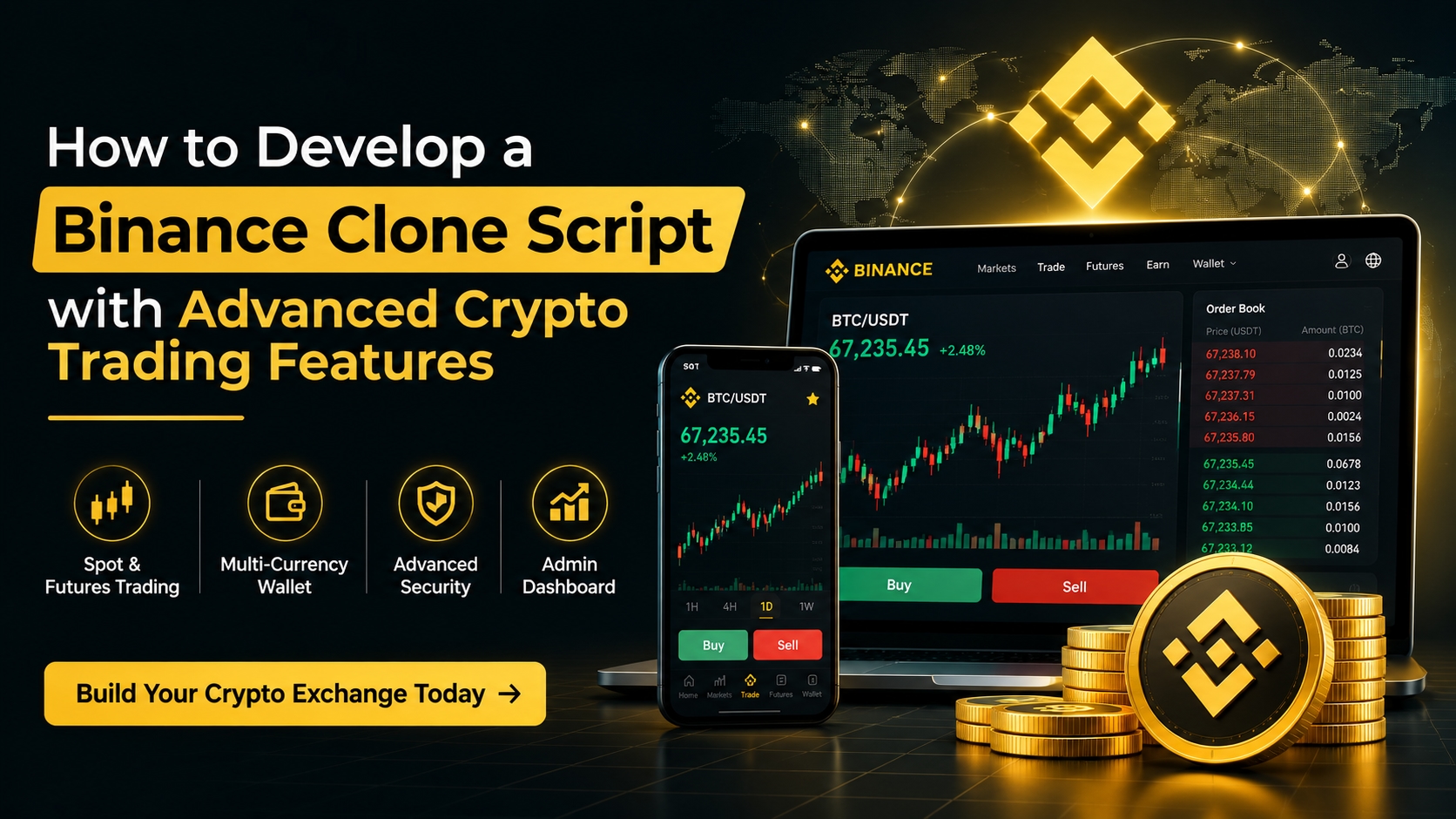
What a "Binance Clone" Really Means
A cryptocurrency exchange clone script is a pre-built or semi-custom software foundation that replicates core exchange functionality, order books, matching engines, wallet management, KYC/AML flows, and admin dashboards, so a business doesn't have to build every component from zero. Starting from a proven architecture cuts months off development time, but "clone" shouldn't mean "copy-paste." The platforms that succeed take the reference architecture and rebuild the pieces that matter most for their audience: fee structure, supported assets, regional compliance, and UX polish.
Core Components You'll Need to Build
1. The Trading Engine
The matching engine is the heart of any exchange. It needs to:
Process buy/sell orders and match them against the order book in real time
Support multiple order types (market, limit, stop-loss, OCO, trailing stop)
Handle high-throughput scenarios without latency spikes during volatile markets
Maintain an accurate, tamper-proof ledger of every trade
Most serious builds use an in-memory order book (for speed) backed by a persistent, append-only trade log (for auditability and recovery). Performance testing under simulated high-volume conditions is non-negotiable, an engine that works fine at 100 orders/second can fall over completely at 10,000.
2. Wallet Infrastructure
Exchanges typically run a hybrid wallet model:
Hot wallets for day-to-day withdrawals and liquidity, kept online but limited in balance
Cold wallets for the bulk of user funds, kept offline and accessed only for scheduled replenishment
Multi-signature wallets for withdrawal approvals, requiring multiple internal sign-offs above certain thresholds
You'll also need to decide whether to run your own blockchain nodes for each supported asset or rely on node infrastructure providers, a cost/control tradeoff that affects both your security posture and operating expenses.
3. Security Architecture
Security failures are what kill exchanges, not slow features. Baseline expectations now include:
Two-factor authentication (2FA) and biometric login on mobile
Withdrawal whitelisting and time-delayed large withdrawals
Regular smart contract and penetration audits by third-party security firms
DDoS protection at the infrastructure layer
Encrypted storage of private keys, with hardware security modules (HSMs) for institutional-grade builds
Real-time anomaly detection for suspicious login or trading patterns
4. APIs for Trading and Integration
Power users and algorithmic traders expect programmatic access. A competitive exchange needs:
REST APIs for account management, order placement, and historical data
WebSocket APIs for real-time price feeds, order book updates, and trade execution
Rate limiting and API key permission tiers (read-only vs. trade vs. withdrawal)
Comprehensive, versioned documentation, this is often what determines whether serious traders adopt your platform
5. Compliance and KYC/AML
Depending on your target jurisdictions, you'll need identity verification workflows, transaction monitoring for suspicious activity, and reporting pipelines that satisfy local regulators. This is one area where "clone" scripts vary enormously in quality, cheap, generic solutions often bolt on compliance as an afterthought, which becomes a liability the moment you operate in a regulated market.
6. Mobile Experience
Since a large share of trading volume now happens on mobile, your app needs:
Native iOS and Android apps (not just a wrapped web view) for performance and push notification reliability
Real-time charting that doesn't lag on mid-range devices
Biometric authentication and secure local storage for session tokens
Offline-friendly UX for viewing balances and history when connectivity drops
Push notifications for price alerts, order fills, and security events
Build vs. Buy: Choosing Your Development Path
Approach Pros Cons | ||
Build from scratch | Full control, no licensing constraints, fully custom | Slow (12–24+ months), expensive, high technical risk |
White-label clone script | Fast to market (weeks to a few months), lower upfront cost | Less differentiation, potential vendor lock-in, security depends on vendor quality |
Hybrid (clone script + custom modules) | Balance of speed and differentiation | Requires strong in-house technical oversight to integrate cleanly |
For most startups, the hybrid path is the pragmatic choice: license a well-audited core (matching engine, wallet framework) and invest custom development in the areas that differentiate your product, UX, fee model, supported markets, and unique features like copy trading or staking.
Technology Stack Considerations
A typical modern exchange stack includes:
Backend: Node.js, Go, or Java for the trading engine (favoring low-latency, concurrent-safe languages)
Database: PostgreSQL or a distributed SQL database for transactional data, Redis for order book caching
Blockchain integration: Node infrastructure (self-hosted or via providers) for each supported chain
Frontend: React or Vue for web, with native Swift/Kotlin (or React Native/Flutter, if performance testing supports it) for mobile
Infrastructure: Kubernetes-orchestrated microservices, with dedicated isolation for wallet and KYC services
Testing Before Launch
Before any real funds touch the platform:
Load-test the matching engine under simulated peak volume
Run third-party security audits on wallet infrastructure and smart contracts
Conduct a full KYC/AML compliance review with legal counsel in every target jurisdiction
Beta-test with a limited user group and real (small) transaction volumes
Have an incident response and fund-recovery plan documented and rehearsed
Final Thoughts
Building a platform inspired by Binance's model is a serious undertaking that blends distributed systems engineering, financial infrastructure, regulatory compliance, and security discipline. The technical bar has risen significantly since the early days of crypto exchanges, users now expect institutional-grade security and reliability by default. Whether you build from scratch, license a cryptocurrency exchange clone script, or take a hybrid approach, prioritize security audits and compliance from day one rather than treating them as post-launch add-ons. That's consistently the difference between exchanges that scale and ones that don't survive their first major incident.
Check : https://www.malgotechnologies.com/binance-clone-script
Call/WhatsApp: +918778074071
Email: info@malgotechnologies.com